TC521 Advances Smart Heavy-Duty Truck Remote Diagnostics Standard
On April 25, 2026, the National Automobile Standardization Technical Committee (TC521) announced that the national standard Remote Diagnostic Data Interface for Intelligent Heavy-Duty Trucks has entered the review submission stage, with expected publication in Q3 2026. This development directly impacts heavy-truck OEMs, Tier 1 suppliers, export-oriented manufacturers, and after-sales service providers targeting the EU market — as compliance is now a mandatory prerequisite for EU type-approval and aftermarket access from 2027 onward.
Event Overview
On April 25, 2026, TC521 issued an official notice confirming that the draft national standard Remote Diagnostic Data Interface for Intelligent Heavy-Duty Trucks has advanced to the review submission phase. The standard mandates support for ISO 27145-2 (WWH-OBD) and requires compatibility with EU eCall and Uptake platform data formats. It is scheduled for formal release in Q3 2026. Non-compliant vehicle models will be ineligible for new EU type-approval, thereby blocking market entry and authorized after-sales network participation in the EU starting in 2027.
Impact on Specific Industry Segments
Heavy-truck OEMs and Export-Focused Manufacturers: These entities face direct regulatory pressure, as EU type-approval — required for all new model introductions — will now conditionally depend on conformance with this standard. Impact manifests in product development timelines, ECU software architecture revisions, and validation requirements for remote diagnostic functionality.
Tier 1 Suppliers (especially telematics, ECU, and connectivity module providers): Their hardware and firmware must align with ISO 27145-2 messaging structures and data field definitions. Incompatibility may trigger redesign cycles, extended integration testing, and revised contractual deliverables for OEM programs targeting EU certification.
Aftermarket Service Network Operators and Diagnostic Tool Developers: EU-certified repair facilities and independent diagnostic tool vendors must ensure their platforms ingest and interpret WWH-OBD–compliant data streams. Failure to adapt risks exclusion from authorized service channels and reduced interoperability with OEM cloud services.
Homologation & Certification Service Providers: These third-party entities will need updated test protocols and verification checklists aligned with the standard’s interface specifications and data format requirements. Their scope of service for EU-bound vehicles will expand to include WWH-OBD conformance validation.
What Relevant Enterprises or Practitioners Should Monitor and Do Now
Track official TC521 updates and final standard text
The current version remains in review submission. Final clauses — especially regarding implementation timelines, transitional provisions, and conformance test methods — are not yet publicly available. Stakeholders should monitor TC521’s official announcements and draft finalization notices.
Assess exposure by model year and EU market launch schedule
Manufacturers should map all heavy-truck models planned for EU introduction between 2027–2028 against their current diagnostic architecture. Prioritize vehicles entering EU type-approval processes in H2 2026 or early 2027, as these will be first subject to the new requirement.
Distinguish between policy signal and operational readiness
This standard represents a binding regulatory threshold — not a voluntary guideline. Its linkage to EU type-approval means non-compliance carries enforceable consequences. However, full enforcement depends on EU Commission adoption of aligned technical requirements; stakeholders should verify alignment with UNECE R155/R156 updates and EU Commission Delegated Acts.
Initiate internal cross-functional alignment and supplier engagement
OEMs should convene engineering, regulatory affairs, procurement, and software teams to inventory existing remote diagnostics capabilities. Concurrently, initiate discussions with key ECU and telematics suppliers to confirm roadmap alignment with ISO 27145-2 and EU data format expectations — particularly for message structure, timing, and security handling.
Editorial Observation / Industry Perspective
From an industry perspective, this TC521 milestone is best understood as a formalized convergence point between China’s domestic smart vehicle infrastructure agenda and EU regulatory harmonization efforts. Analysis来看, it signals growing interdependence between regional standards — where Chinese national standards increasingly anticipate or mirror international regulatory thresholds to avoid market fragmentation. Observation来看, the timing suggests proactive alignment ahead of anticipated EU amendments to WWH-OBD implementation rules under Regulation (EU) 2018/858. Current更值得关注的是 whether this standard will serve as a de facto benchmark for other export markets (e.g., UK, South Korea, GCC), even if not legally binding outside the EU context.
It is not yet a fully implemented regulation — but it is no longer a distant proposal. Rather, it functions as a near-term operational trigger: one that shifts from ‘strategic consideration’ to ‘engineering and compliance execution’ for affected players within the next 12–18 months.
Conclusion
This standard marks a structural tightening of technical access conditions for the EU heavy-truck market. Its significance lies less in novelty — as WWH-OBD has long been referenced in EU legislation — and more in its codification as a mandatory national requirement with direct linkage to type-approval eligibility. For stakeholders, it is more accurately interpreted as a binding preparatory step than a standalone policy event. Current更适合理解为 a regulatory checkpoint requiring coordinated technical, contractual, and timeline adjustments — not a future risk to monitor, but an active compliance pathway to manage.
Information Source
Main source: Official notice issued by the National Automobile Standardization Technical Committee (TC521), dated April 25, 2026.
Points requiring ongoing observation: Final published standard text, EU Commission confirmation of alignment with Regulation (EU) 2018/858 implementation timelines, and any transitional arrangements for legacy models.
Trending News
- Low Bed Trailer Export to Southeast Asia: Specs That Avoid Clearance Delays
- Flatbed Trailer Supplier with Modular Design: Flexibility vs Maintenance Cost
- Construction Machinery Supplier for Municipal Engineering: What to Compare First
- Best Commercial Vehicle Parts for Warehouse Fleets with High Stop-Start Use
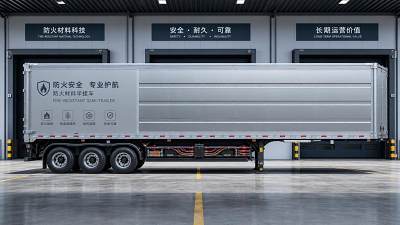
- What Fireproof Materials Mean for Semi Trailer Safety and Lifecycle Cost
Tag
Recommended News
 Truck TechnologyWhat Fireproof Materials Mean for Semi Trailer Safety and Lifecycle CostSemi trailer manufacturer with fireproof materials solutions help cut downtime, reduce repair risk, and improve resale value. Learn how smarter trailer specs lower total lifecycle cost.
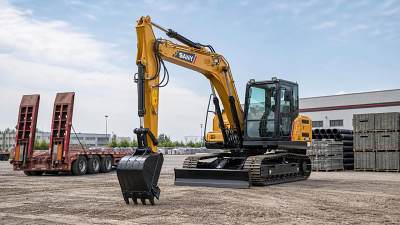
 Truck TechnologyQuick Installation Excavators: Downtime vs PerformanceExcavator manufacturer with quick installation solutions help cut downtime, speed site startup, and protect performance. Compare smarter options for faster, more reliable project delivery.
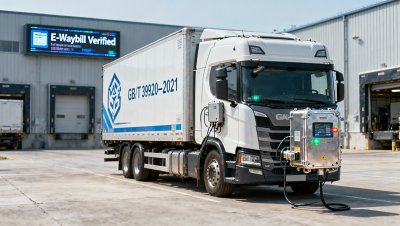
 Truck TechnologyChina-Mongolia-Russia E-Waybill Mutual Recognition UpgradedChina-Mongolia-Russia E-Waybill mutual recognition upgraded: Real-time cold-chain temperature compliance now mandatory for all cross-border road transport vehicles under GB/T 39920–2021.
 Truck TechnologyMulti-Dept Initiative Adds V2X & BeiDou Modules to Cross-Border Trucking Subsidy ListV2X & BeiDou modules now subsidy-eligible for cross-border trucks—boosting smart logistics, safety, and BRI corridor compliance. Act now to align.
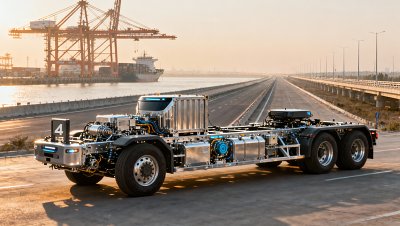
 Truck TechnologyL4 Autonomous Truck Chassis Emerges as Tech Export VehicleL4 Autonomous Truck Chassis: Now licensable globally for port drayage & mine transport—modular, multi-powertrain, backed by DP World & Chilean ports.
 Truck TechnologyMulti-Dept Action Adds V2X & BeiDou HD Positioning to Cross-Border Freight Subsidy ListV2X & BeiDou HD positioning now subsidized for cross-border freight trucks—key opportunity for intelligent transport equipment suppliers and OEMs.
 Truck TechnologyChina-Mongolia-Russia Corridor Upgrades to E-CMR with Real-Time Cold Chain MonitoringChina-Mongolia-Russia Corridor now mandates e-CMR + real-time cold chain monitoring for all refrigerated trailers — ensure compliance to avoid border delays and win tenders.
 Truck TechnologyBulldozer for Construction: Key Specs That Affect Earthmoving EfficiencyBulldozer for construction buying guide: compare weight, blade capacity, torque, and undercarriage specs to improve earthmoving efficiency and choose the right machine for your jobsite.
 Truck TechnologyL4 Autonomous Container Trucks Enter Trial on Tianjin-Xiongan RouteL4 autonomous container trucks begin trial on Tianjin-Xiongan route—pioneering China’s smart land transport revolution with dual-energy, licensable chassis platform.
 Truck TechnologyMulti-Dept Initiative to Upgrade Freight Hubs with V2X & BeiDouV2X & BeiDou: China’s 7-dept initiative offers up to 30% subsidies for intelligent retrofitting of cross-border road transport equipment—key for freight hubs, smart chassis, and trailer manufacturers.
 Truck TechnologyMulti-Dept Launch Freight Hub Upgrading InitiativeMulti-Dept Launch Freight Hub Upgrading Initiative boosts intelligent land transport equipment—smart loading, battery-swap stations & ETC-V2X modules for seamless, low-carbon cross-border logistics.
 Truck TechnologyWhat Advanced Technology Means in Heavy Truck Chassis PerformanceHeavy truck chassis manufacturer with advanced technology: discover how smarter frame design, suspension tuning, and braking integration improve stability, uptime, and long-term operating value.
 Truck TechnologyHigh-Strength Flatbed Trailers: Where Stronger Steel Pays OffFlatbed trailer supplier with high strength expertise helps fleets cut tare weight, improve durability, and lower lifecycle cost. See what specs matter most before you buy.
 Truck TechnologyBulldozer for Construction: Matching Blade Type to Ground ConditionsBulldozer for construction guide: learn how to match S, U, and SU blades to soil, clay, rock, and mixed ground for better productivity, lower fuel use, and smarter equipment selection.
 Truck TechnologyWhen Fireproof Materials Add Real Value in Semi Trailer ManufacturingSemi trailer manufacturer with fireproof materials: discover how fire-resistant designs improve cargo safety, reduce risk, and support smarter sourcing decisions.
 Truck TechnologyWhat a Durable Engine Really Means in a Light Duty TruckLight duty truck with durable engine: learn how real engine durability improves uptime, fuel savings, and lower maintenance across delivery, construction, rural, and municipal work.
 Truck TechnologySemi Trailer Manufacturer With Lightweight Design: Pros, Trade-Offs, and Use CasesSemi trailer manufacturer with lightweight design: explore key benefits, trade-offs, and best-fit use cases to improve payload efficiency, durability, and lifecycle ROI.
 Truck TechnologyTruck Tipper for Construction: Key Specs That Affect Daily ProductivityTruck tipper for construction buying guide: learn which specs most affect payload, fuel use, unloading speed, and uptime to choose a safer, more productive model.
 Truck TechnologyWhy Logging Truck Manufacturer Design Matters in Tough TerrainLogging truck manufacturer design shapes safety, traction, and uptime in tough terrain. Learn what features matter most for forestry hauling and choose trucks built for real-world performance.
 Truck TechnologyAre Fireproof Materials Worth It in a Semi Trailer ManufacturerSemi trailer manufacturer with fireproof materials: discover if the added cost delivers real safety, lower risk, and better cargo protection with a practical supplier evaluation checklist.
 Truck TechnologyWhy High-Strength Design Matters in a Flatbed Trailer SupplierFlatbed trailer supplier with high strength: learn why structural design, material quality, and fatigue resistance matter for safer transport, longer service life, and lower operating costs.
 Truck TechnologyAdvanced Technology in Heavy Truck Chassis Manufacturing: What to Look ForHeavy truck chassis manufacturer with advanced technology: learn how to assess welding, materials, precision, and validation for long-haul, construction, mining, and special-purpose fleets.
 Truck TechnologyCan Fireproof Materials Improve Semi Trailer Safety in Logisticssemi trailer manufacturer with fireproof materials solutions can reduce cargo loss, improve fleet safety, and support reliable logistics. Discover how to choose the right fire-resistant trailer design.
 Truck TechnologyWhy Advanced Technology Matters in Heavy Truck Chassis ManufacturingHeavy truck chassis manufacturer with advanced technology: learn how digital design, precision welding, and rigorous testing improve durability, safety, and sourcing confidence.
 Truck TechnologyKazakhstan Extends Zero-Tariff List for China-Europe Rail Truck Parts to 2027Kazakhstan extends zero-tariff status for China-Europe rail truck parts to 2027—boosting ADAS, CAN-FD, and EBS component exports. Act now to optimize logistics & compliance.