Why Modular Flatbed Trailer Design Matters for Mixed Cargo
For technical evaluators handling mixed cargo operations, trailer flexibility directly affects load safety, utilization, and lifecycle cost. Choosing a flatbed trailer supplier with modular design can simplify configuration for different cargo dimensions, weight distributions, and route demands. This article explains why modular flatbed trailer design matters, and how it helps improve compatibility, maintenance efficiency, and long-term transport performance.
Why a checklist approach is the fastest way to evaluate modular flatbed trailer design
In mixed cargo transport, technical decisions rarely fail because a trailer looks under-specified on paper. They usually fail because one or two practical checks were skipped: deck adaptability, axle load distribution, lashing point density, connection standardization, or maintenance access. A checklist-based review helps evaluators compare suppliers more consistently, especially when cargo profiles change across weekly or seasonal cycles.
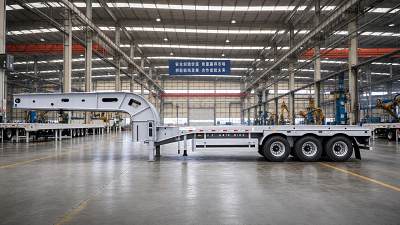
For road transport equipment buyers serving logistics, infrastructure, machinery relocation, or project cargo, modularity should be reviewed as a systems issue rather than a single feature. A modular trailer may use removable side structures, interchangeable accessories, expandable deck sections, bolt-on support components, or configurable axle and suspension arrangements. The technical value lies in how these elements work together over a 5- to 10-year operating period.
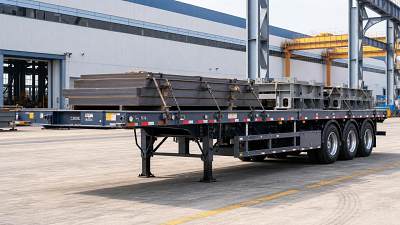
This is why many sourcing teams now prefer a flatbed trailer supplier with modular design when evaluating fleets that handle steel coils, construction materials, palletized loads, machine components, pipes, containers, or oversized industrial equipment. One base platform that can support 3 to 6 recurring cargo patterns often reduces idle equipment, lowers adaptation time, and improves utilization across multiple transport lanes.
The first items to confirm before reviewing any quotation
- Define the cargo mix by dimensions, center-of-gravity behavior, loading method, and tie-down requirement rather than by generic product name alone.
- Clarify whether the trailer must support fixed repetitive loads, variable monthly project loads, or a combination of both.
- Identify route constraints such as axle limits, ramp angles, pavement quality, port transfer frequency, and warehouse loading dock compatibility.
- Check the expected reconfiguration frequency. A trailer adapted once per quarter is a different engineering case from one adjusted 2 to 3 times per week.
When these inputs are documented early, comparisons become more reliable. Without them, even a strong flatbed trailer supplier with modular design may be judged only by price or nominal payload, which often hides long-term operating inefficiencies. For technical evaluators, the real question is not whether the trailer is modular, but whether the modularity matches transport reality.
Core checklist: what to inspect in modular flatbed trailer architecture
The core evaluation should focus on the trailer’s structural logic, not marketing terms. Some products are described as modular simply because they offer optional accessories. A true modular flatbed concept allows changes in configuration without undermining frame integrity, braking consistency, maintenance routines, or legal compliance. That distinction is critical when mixed cargo includes both dense and oversized loads.
Below is a practical technical checklist that helps evaluators compare a standard flatbed against a modular platform. The purpose is not to force one universal solution, but to reveal where modular design adds measurable value in utilization, loading efficiency, and future adaptation.
This comparison shows why architecture matters more than a simple option list. In practice, a modular trailer becomes valuable when it reduces changeover labor, improves legal loading control, and keeps the main frame usable across different contracts. Technical teams should also ask whether modular features are factory-integrated or aftermarket additions, because that affects durability and support consistency.
Key judgment standards for technical evaluators
A reliable flatbed trailer supplier with modular design should be able to explain load path logic clearly. That includes how the frame handles localized point loads, what changes when the deck is extended, how cross-members support concentrated cargo, and whether the modular connection zones are reinforced. If these explanations are vague, the modular claim may be mostly commercial rather than engineering-based.
Priority checks
- Confirm rated payload under each intended configuration, not only under one nominal condition.
- Review tie-down arrangement density; for mixed cargo, intervals in practical layouts often matter as much as total quantity.
- Check whether wear parts and modular components can be replaced independently within normal workshop service windows, often 2 to 6 hours for common items.
- Ask for documentation on braking, lighting, and connector routing after reconfiguration, especially if deck length or accessories change.
These checks help evaluators identify whether the supplier is ready for real operational demands. For mixed cargo fleets, standardization around modular interfaces often becomes as important as payload rating itself.
How modular design improves compatibility across cargo types and route conditions
Modular flatbed trailer design matters because mixed cargo is rarely stable across the year. A fleet may spend one month moving bagged materials and palletized goods, then switch to steel sections, prefabricated concrete elements, agricultural equipment, or compact construction machines. Using separate dedicated trailers for every scenario can be justified in high-volume single-use operations, but not always in diversified transport businesses.
A flatbed trailer supplier with modular design helps buyers create a transport platform that can serve multiple loading methods. Forklift loading, crane loading, side loading, and ramp-based equipment loading all place different demands on deck edge access, surface protection, and anchoring geometry. Modularity allows these functions to be supported with configurable parts rather than separate trailer purchases.
Route conditions also matter. A trailer working across industrial parks, regional highways, mining access roads, and port transfer yards may face different turning requirements, vibration levels, and legal dimensions. Over a 12- to 24-month utilization period, the ability to adapt without major structural rework can produce more practical value than a lower initial purchase price.
Scenario-based compatibility checklist
- For long cargo such as pipes, beams, or wind-related components, verify extension stability, overhang management, and marker or lighting integration.
- For heavy compact cargo such as machine blocks or coils, check localized deck reinforcement, axle distribution, and anti-slip surface options.
- For wheeled or tracked equipment, confirm ramp interface, approach angle, deck traction, and point-load capacity near loading zones.
- For palletized mixed goods, review side accessibility, securing speed, and compatibility with standard warehouse handling processes.
The following table helps technical teams map cargo type to modular design priority. This is especially useful when the same sourcing project covers logistics transport, infrastructure supply, and industrial support tasks.
This table highlights a practical sourcing insight: the same base trailer can remain effective across very different jobs if modular priorities are matched to the cargo mix. For technical evaluators, this supports more accurate lifecycle thinking and reduces the risk of buying a nominally versatile trailer that is difficult to adapt in daily use.
What buyers often overlook: maintenance, standardization, and lifecycle risk
Many teams focus heavily on payload, deck size, and procurement cost, but modularity should also be judged by service consequences. A well-designed modular trailer should reduce downtime, not create more of it. If modular parts require non-standard fasteners, irregular wiring changes, or special maintenance tools, the operational advantage may shrink quickly after the first 6 to 12 months.
This is where supplier capability matters. A flatbed trailer supplier with modular design should not only provide configuration options, but also a rational spare parts strategy, documented replacement procedures, and clear interface consistency across batches. For fleet operators with 10, 20, or more trailers, parts commonality can significantly influence inventory cost and workshop planning.
Technical evaluators should also consider fatigue behavior around modular joints, corrosion protection at connection points, and service access to frequently inspected systems such as brakes, suspensions, electrical harnesses, and fastening hardware. These are not secondary issues. In heavy-duty road transport equipment, lifecycle performance often depends on the simplest repetitive maintenance tasks.
Risk reminder checklist
- Avoid modular designs where each accessory uses a different mounting logic; that increases installation error risk and slows workshop operations.
- Check whether replacement parts can be supplied within practical lead times, often 2 to 8 weeks depending on component type and export route.
- Review corrosion-sensitive zones where removable parts meet the main frame, especially in coastal, humid, or winter de-icing environments.
- Ask whether technical documentation covers torque values, inspection intervals, and reconfiguration procedures for operators and service staff.
Operational signs of a mature modular platform
Mature modular platforms usually show consistent interface dimensions, repeatable service routines, and practical access to wear components. They also tend to support staged procurement, where buyers can order the base trailer first and add functional modules later as business needs evolve. This can improve capital planning for fleets that expect cargo diversification over the next 1 to 3 years.
In contrast, immature modular products often depend too much on one-off customization. That may work for a single contract, but it is harder to standardize across fleets, harder to maintain, and harder to scale internationally. Evaluators responsible for sourcing through a global B2B platform should prioritize suppliers that can communicate these distinctions with technical clarity.
A practical evaluation process for selecting the right supplier
Selecting a flatbed trailer supplier with modular design is easier when the review process is staged. Instead of asking for a general quotation immediately, technical evaluators should first define the cargo envelope, route conditions, loading process, and maintenance expectations. This leads to better technical discussions and reduces quotation revisions that delay sourcing decisions by several weeks.
For international buyers using a professional heavy truck and trailer marketplace, the benefit is broader supplier access combined with easier cross-comparison. A structured approach also helps distinguish between suppliers that can support long-term mixed cargo operations and those that mainly offer standard trailer variants with limited adaptation capacity.
The table below can be used as a simple working model during RFQ or technical clarification. It helps align engineering review, procurement decisions, and supplier communication in one sequence.
Using a staged process reduces ambiguity and helps buyers reach better-fit solutions faster. It also supports more transparent discussion about trade-offs such as initial cost versus reconfiguration efficiency, or standard specification versus future expansion. For mixed cargo operators, these trade-offs often determine whether the trailer remains useful as business patterns evolve.
Questions to send before final supplier comparison
- Which modular components are standard, and which are optional or project-specific?
- How does payload rating change under different deck or accessory configurations?
- What is the expected delivery period for the base trailer and for replacement modules?
- Which inspection points require routine checking every trip, every month, or every service cycle?
- Can the supplier support documentation needed for export communication, technical review, and operator familiarization?
These questions help move the discussion from brochure claims to operational readiness. That is especially important when sourcing through a global commercial vehicle platform where buyers compare multiple regions, specifications, and manufacturing approaches.
Why choose us for modular flatbed trailer sourcing support
For technical evaluators, the main challenge is not finding trailer listings. The challenge is identifying which supplier can actually support your mixed cargo requirements with a credible modular solution. As a professional international B2B platform focused on the global commercial vehicle and heavy equipment industry, we help buyers compare products, assess supplier fit, and connect with manufacturers across the heavy truck and trailer supply chain.
If you are searching for a flatbed trailer supplier with modular design, we can help you organize the decision around practical sourcing factors: configuration options, cargo compatibility, route adaptation, supplier communication efficiency, and long-term parts support. This is particularly valuable for buyers evaluating trailers for logistics transportation, infrastructure delivery, construction support, and industrial transport applications.
Contact us to discuss the points that matter most before you move to final quotation. You can send your cargo dimensions, target payload range, route limits, preferred axle arrangement, expected delivery schedule, and any customization requirements. We can also support early-stage product selection, supplier matching, specification clarification, lead time discussion, certification-related questions, and quotation communication for modular flatbed trailer projects.
Trending News
- Cab Chassis Truck for Fire Department: Key Specs Before Ordering
- When to Use an Excavator With Long Reach Boom on Site
- Choosing a Water Truck Factory for Municipal and Mining Projects
- Truck Parts Wholesale: How to Balance Price, Quality, and Lead Time
- Crane Truck Price in 2026: What Drives Total Ownership Cost
Tag
Recommended News
 Truck TechnologyWhat Fireproof Materials Mean for Semi Trailer Safety and Lifecycle CostSemi trailer manufacturer with fireproof materials solutions help cut downtime, reduce repair risk, and improve resale value. Learn how smarter trailer specs lower total lifecycle cost.
 Truck TechnologyQuick Installation Excavators: Downtime vs PerformanceExcavator manufacturer with quick installation solutions help cut downtime, speed site startup, and protect performance. Compare smarter options for faster, more reliable project delivery.
 Truck TechnologyChina-Mongolia-Russia E-Waybill Mutual Recognition UpgradedChina-Mongolia-Russia E-Waybill mutual recognition upgraded: Real-time cold-chain temperature compliance now mandatory for all cross-border road transport vehicles under GB/T 39920–2021.
 Truck TechnologyMulti-Dept Initiative Adds V2X & BeiDou Modules to Cross-Border Trucking Subsidy ListV2X & BeiDou modules now subsidy-eligible for cross-border trucks—boosting smart logistics, safety, and BRI corridor compliance. Act now to align.
 Truck TechnologyL4 Autonomous Truck Chassis Emerges as Tech Export VehicleL4 Autonomous Truck Chassis: Now licensable globally for port drayage & mine transport—modular, multi-powertrain, backed by DP World & Chilean ports.
 Truck TechnologyMulti-Dept Action Adds V2X & BeiDou HD Positioning to Cross-Border Freight Subsidy ListV2X & BeiDou HD positioning now subsidized for cross-border freight trucks—key opportunity for intelligent transport equipment suppliers and OEMs.
 Truck TechnologyChina-Mongolia-Russia Corridor Upgrades to E-CMR with Real-Time Cold Chain MonitoringChina-Mongolia-Russia Corridor now mandates e-CMR + real-time cold chain monitoring for all refrigerated trailers — ensure compliance to avoid border delays and win tenders.
 Truck TechnologyBulldozer for Construction: Key Specs That Affect Earthmoving EfficiencyBulldozer for construction buying guide: compare weight, blade capacity, torque, and undercarriage specs to improve earthmoving efficiency and choose the right machine for your jobsite.
 Truck TechnologyL4 Autonomous Container Trucks Enter Trial on Tianjin-Xiongan RouteL4 autonomous container trucks begin trial on Tianjin-Xiongan route—pioneering China’s smart land transport revolution with dual-energy, licensable chassis platform.
 Truck TechnologyMulti-Dept Initiative to Upgrade Freight Hubs with V2X & BeiDouV2X & BeiDou: China’s 7-dept initiative offers up to 30% subsidies for intelligent retrofitting of cross-border road transport equipment—key for freight hubs, smart chassis, and trailer manufacturers.
 Truck TechnologyMulti-Dept Launch Freight Hub Upgrading InitiativeMulti-Dept Launch Freight Hub Upgrading Initiative boosts intelligent land transport equipment—smart loading, battery-swap stations & ETC-V2X modules for seamless, low-carbon cross-border logistics.
 Truck TechnologyWhat Advanced Technology Means in Heavy Truck Chassis PerformanceHeavy truck chassis manufacturer with advanced technology: discover how smarter frame design, suspension tuning, and braking integration improve stability, uptime, and long-term operating value.
 Truck TechnologyHigh-Strength Flatbed Trailers: Where Stronger Steel Pays OffFlatbed trailer supplier with high strength expertise helps fleets cut tare weight, improve durability, and lower lifecycle cost. See what specs matter most before you buy.
 Truck TechnologyBulldozer for Construction: Matching Blade Type to Ground ConditionsBulldozer for construction guide: learn how to match S, U, and SU blades to soil, clay, rock, and mixed ground for better productivity, lower fuel use, and smarter equipment selection.
 Truck TechnologyWhen Fireproof Materials Add Real Value in Semi Trailer ManufacturingSemi trailer manufacturer with fireproof materials: discover how fire-resistant designs improve cargo safety, reduce risk, and support smarter sourcing decisions.
 Truck TechnologyWhat a Durable Engine Really Means in a Light Duty TruckLight duty truck with durable engine: learn how real engine durability improves uptime, fuel savings, and lower maintenance across delivery, construction, rural, and municipal work.
 Truck TechnologySemi Trailer Manufacturer With Lightweight Design: Pros, Trade-Offs, and Use CasesSemi trailer manufacturer with lightweight design: explore key benefits, trade-offs, and best-fit use cases to improve payload efficiency, durability, and lifecycle ROI.
 Truck TechnologyTruck Tipper for Construction: Key Specs That Affect Daily ProductivityTruck tipper for construction buying guide: learn which specs most affect payload, fuel use, unloading speed, and uptime to choose a safer, more productive model.
 Truck TechnologyWhy Logging Truck Manufacturer Design Matters in Tough TerrainLogging truck manufacturer design shapes safety, traction, and uptime in tough terrain. Learn what features matter most for forestry hauling and choose trucks built for real-world performance.
 Truck TechnologyAre Fireproof Materials Worth It in a Semi Trailer ManufacturerSemi trailer manufacturer with fireproof materials: discover if the added cost delivers real safety, lower risk, and better cargo protection with a practical supplier evaluation checklist.
 Truck TechnologyWhy High-Strength Design Matters in a Flatbed Trailer SupplierFlatbed trailer supplier with high strength: learn why structural design, material quality, and fatigue resistance matter for safer transport, longer service life, and lower operating costs.
 Truck TechnologyAdvanced Technology in Heavy Truck Chassis Manufacturing: What to Look ForHeavy truck chassis manufacturer with advanced technology: learn how to assess welding, materials, precision, and validation for long-haul, construction, mining, and special-purpose fleets.
 Truck TechnologyCan Fireproof Materials Improve Semi Trailer Safety in Logisticssemi trailer manufacturer with fireproof materials solutions can reduce cargo loss, improve fleet safety, and support reliable logistics. Discover how to choose the right fire-resistant trailer design.
 Truck TechnologyWhy Advanced Technology Matters in Heavy Truck Chassis ManufacturingHeavy truck chassis manufacturer with advanced technology: learn how digital design, precision welding, and rigorous testing improve durability, safety, and sourcing confidence.
 Truck TechnologyKazakhstan Extends Zero-Tariff List for China-Europe Rail Truck Parts to 2027Kazakhstan extends zero-tariff status for China-Europe rail truck parts to 2027—boosting ADAS, CAN-FD, and EBS component exports. Act now to optimize logistics & compliance.