Are Fireproof Semi Trailers Necessary for Sensitive Freight
When transporting chemicals, batteries, fuels, or other high-risk cargo, choosing the right trailer is not just a compliance issue but a safety priority. A semi trailer manufacturer with fireproof materials can help reduce fire risks, protect cargo value, and support stricter safety standards. This article explores whether fireproof semi trailers are truly necessary for sensitive freight and what quality and safety managers should consider before making a decision.
What does a fireproof semi trailer actually mean in sensitive freight transport?
For quality control teams and safety managers, a fireproof semi trailer should not be understood as a trailer that can never burn. In practical road transport equipment terms, it usually refers to a trailer designed with fire-resistant or flame-retardant materials in selected structural and interior areas, combined with thermal protection, cable routing control, compartment separation, and safer material behavior under high heat exposure. The real purpose is to delay ignition, slow flame spread, and give operators more response time during an incident.
This distinction matters because sensitive freight does not create one single fire scenario. Lithium batteries may create thermal runaway risk within minutes, certain chemicals may release heat after leakage, and fuel-related cargo may present vapor ignition hazards. A semi trailer manufacturer with fireproof materials is therefore not selling a universal promise, but a risk-reduction package built around transport conditions, cargo class, route length, and loading configuration.
In many operations, the most valuable outcome is not total fire resistance but an extra 10 to 30 minutes of structural stability or reduced flame propagation from one section to another. For fleets moving high-value or hazardous cargo over 300 to 1,500 kilometers per trip, that time window can influence driver evacuation, emergency isolation, cargo salvage, and third-party property exposure. That is why the topic has gained attention beyond regulatory departments and into procurement and operations planning.
Which trailer areas are usually upgraded?
The answer depends on cargo type, but common upgrade points include sidewall inner layers, floor coverings, insulation layers, wiring channels, brake line protection areas, bulkhead panels, underbody shielding near heat sources, and compartment partitions. On tanker or specialized enclosed configurations, material choices may also affect seals, valve protection covers, and external cladding performance under heat.
For a quality manager, material selection should be checked together with the whole trailer system. A fire-resistant panel can lose value if cable penetration points are weak, if floor joints leave open flame paths, or if the ventilation design accelerates combustion. In other words, fireproofing is not one component. It is a combination of materials, assembly detail, and layout discipline.
Key features usually associated with fireproof design
- Flame-retardant linings or panels in cargo-facing zones.
- Heat-resistant cable routing and better separation from ignition sources.
- Compartment barriers that help slow fire spread across sections.
- Surface materials chosen for lower smoke generation or reduced melt behavior.
- Protection around brakes, electrical boxes, or other high-temperature interfaces.
Are fireproof semi trailers necessary for every type of sensitive freight?
No, not every load requires the same level of trailer fire protection. The necessity depends on the cargo’s ignition potential, packaging integrity, route conditions, unloading frequency, cross-border compliance demands, and consequence of loss. For example, a short-distance movement of sealed industrial additives may not justify the same specification as cross-regional transport of battery modules, solvent products, or flammable packaged chemicals.
A practical way to decide is to assess both probability and consequence. If the chance of ignition is moderate but the consequence is severe, a fireproof trailer can still be justified. This is common with electronics batteries, laboratory chemicals, fuels, paint products, and some mixed industrial loads. In these cases, one incident can damage cargo, trailer assets, nearby vehicles, loading sites, and brand reputation in a single event.
For safety managers, a useful threshold is whether the cargo profile involves at least two of the following: heat-sensitive composition, flammable vapors, high cargo concentration per trip, enclosed loading environment, or customer-mandated safety controls. If two or more factors are present, discussing fire-resistant construction with a semi trailer manufacturer with fireproof materials is usually worthwhile during specification review.
Which cargo categories most often justify this upgrade?
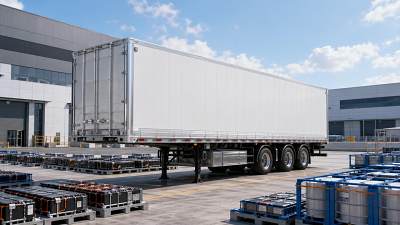
Battery transport is one of the fastest-growing examples because thermal events can escalate quickly and are harder to extinguish than ordinary surface fires. Chemical cargo, especially when moved in drums, intermediate bulk containers, or packaged form, may also justify enclosed or curtain-sided trailers with targeted fire-retardant materials. Fuel-related support logistics, aerosols, coatings, and high-value industrial compounds are other common categories.
Temperature and route duration should not be ignored. In regions where ambient temperatures can reach 35°C to 45°C, or where trailers remain parked during loading for 2 to 6 hours, passive fire performance becomes more relevant. A trailer that only meets mechanical needs may still create safety gaps if heat buildup, electrical load, and cargo sensitivity are not considered together.
The following table helps quality and safety teams make an initial decision by matching freight types with practical trailer fire-protection needs.
This comparison shows that necessity is not only about cargo label. It also depends on how cargo is packaged, how long it stays inside the trailer, and what happens if a localized heat event spreads. That is why many fleets now ask a semi trailer manufacturer with fireproof materials to quote both a standard and an upgraded configuration before final approval.
How should quality and safety managers evaluate a semi trailer manufacturer with fireproof materials?
The first step is to move beyond marketing language and ask what materials are used, where they are installed, and what performance objective they support. Quality personnel should request bill-of-material details for critical zones, while safety teams should ask how the trailer design reduces flame spread, heat transfer, or ignition exposure. Good supplier evaluation often takes 2 to 4 review rounds, not one quotation exchange.
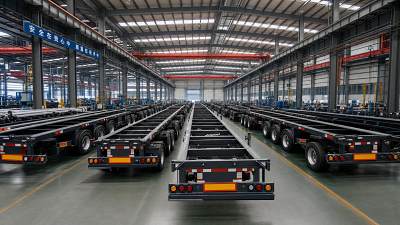
Second, look at manufacturing consistency. Even suitable materials can underperform if assembly quality is uneven. Welding around protected compartments, sealing of joints, fastening of panels, and routing of harnesses all influence actual risk. For this reason, supplier audits should include workshop observation, process checkpoints, and inspection records rather than only brochure-level product claims.
Third, verify whether the supplier understands your transport scenario. A semi trailer manufacturer with fireproof materials should be able to discuss route length, operating climate, loading cycles, axle load distribution, trailer type, and cargo handling methods. If a supplier cannot link material choices to use cases such as chemical drums, palletized batteries, or temperature-sensitive industrial goods, the recommendation may be too generic for serious procurement.
Which evaluation questions are most useful during supplier screening?
- Which parts of the trailer use fire-resistant or flame-retardant materials, and why were those zones selected?
- What is the expected material behavior under high heat, abrasion, moisture, and road vibration over 12 to 36 months?
- How are cables, brake lines, and thermal exposure points separated or shielded?
- Can the supplier support customization for enclosed, curtain-side, tank, or flatbed-related applications?
- What documentation can be shared for inspection methods, material traceability, and delivery quality control?
Supplier assessment criteria at a glance
A practical evaluation matrix helps internal teams compare manufacturers using the same standard. This is especially useful when sourcing across regions or reviewing multiple trailer categories within 30 to 60 days.
If a supplier scores well across these points, the discussion can move from product description to operational fit. That is the stage where real value appears for quality and safety departments, because they can match trailer design to inspection plans, incident prevention goals, and maintenance strategy.
What are the main differences between standard semi trailers and fireproof designs?
A standard trailer is usually optimized around payload, structural durability, cost control, and general logistics efficiency. A fireproof-oriented design keeps those basics but adds material and layout decisions intended to improve behavior during heat exposure. The difference is not always visible from outside, which is why procurement teams should ask for specification sheets and zone-level explanations rather than relying on visual inspection alone.
Another important difference is maintenance logic. Fire-resistant materials may require periodic inspection for surface damage, moisture intrusion, impact deformation, or contamination after cargo incidents. That means the total cost of ownership should include not only acquisition price but also the inspection interval, spare material availability, and average repair lead time, which can range from 7 to 21 days depending on configuration and region.
From an operations perspective, the best design is often not the one with the most added material. It is the one that protects critical areas without creating unnecessary weight, cleaning difficulty, or maintenance burden. A strong semi trailer manufacturer with fireproof materials should be able to balance payload efficiency with targeted safety enhancement.
How do they compare in real procurement discussions?
The table below summarizes the comparison points most often reviewed by fleet buyers, compliance teams, and plant logistics managers when deciding whether to upgrade specifications.
This comparison makes one point clear: necessity should be judged by risk exposure, not by price alone. For freight categories where one cargo incident may exceed the cost difference of several upgraded trailers, fireproof design becomes a controllable preventive measure rather than an optional add-on.
What common mistakes do buyers make when specifying fireproof semi trailers?
A frequent mistake is assuming that one fire-resistant material solves all safety concerns. In reality, incident prevention also depends on loading discipline, packaging quality, electrical condition, brake maintenance, parking practice, and emergency response readiness. A trailer upgrade cannot compensate for poor cargo segregation or damaged packaging entering the loading area.
Another mistake is buying to a vague requirement such as “fireproof body” without defining target zones or operational hazards. This often leads to mismatched specifications, either overbuilt and expensive or too limited to be useful. Safety managers should translate risk into clear requirements, such as compartment separation, inner lining behavior, protection of cable runs, or compatibility with specific cargo handling patterns.
A third mistake is ignoring maintenance after delivery. Fire-resistant panels, coatings, or barriers may degrade after repeated loading impact or chemical contact. If inspection is only annual, small defects can remain unnoticed for months. In sensitive freight operations, a quarterly review cycle or inspection every 20,000 to 30,000 kilometers is often more practical, especially in mixed-route or high-turnover fleets.
Which misunderstandings should be corrected early?
- “Fireproof” does not mean unlimited fire endurance or zero damage under all conditions.
- Higher-cost material does not automatically mean better protection if applied in the wrong area.
- A strong trailer design still requires compatible extinguishing plans, route procedures, and driver training.
- Supplier claims should be supported by material information, process control, and practical application logic.
Correcting these misunderstandings early helps procurement, EHS, and fleet operations work from the same objective. It also shortens approval time because internal teams stop debating general terms and start reviewing specific functions and acceptable risk boundaries.
Before purchasing, what should you confirm about cost, lead time, compliance, and customization?
Cost should be discussed in three layers: initial purchase price, operating inspection cost, and potential loss avoidance. Fireproof material upgrades may raise the upfront trailer budget, but for sensitive freight, one avoided cargo fire can outweigh that difference. Instead of asking only whether the trailer is more expensive, safety teams should ask where the cost increase comes from and what risk point it addresses.
Lead time is another practical factor. Depending on trailer type and customization depth, production and delivery can take roughly 4 to 12 weeks, sometimes longer if material sourcing or export documentation is involved. If you need sample material review, remote factory audit, or third-party inspection coordination, that timeline should be built into the procurement plan early rather than treated as a last-minute addition.
Compliance should be approached carefully and realistically. Different routes and cargo classes may require different transport, marking, or vehicle safety considerations. Since requirements vary by country and application, the buyer should clearly communicate destination market, cargo category, expected operating temperature, and loading method. A semi trailer manufacturer with fireproof materials can then adapt the configuration or documentation package more accurately.
What should be clarified before final order approval?
- Cargo type, packaging form, and whether loads are mixed or dedicated.
- Required trailer structure, such as enclosed, curtain-side, tanker-related, or flatbed adaptation.
- Target fire-resistant zones and acceptable material maintenance interval.
- Expected delivery cycle, inspection checkpoints, and pre-shipment verification method.
- Support needed for technical drawings, quotation comparison, or custom specification refinement.
Why choose a platform-driven sourcing approach for this category?
Sensitive freight equipment sourcing often involves more than price comparison. Buyers need access to multiple qualified suppliers, visibility into trailer categories, and enough technical context to compare solutions fairly. A professional global B2B platform focused on heavy trucks, trailers, construction machinery, and spare parts helps procurement and safety teams review product options across the supply chain without losing time on unrelated vendors.
The Global Heavy Truck Industry Platform connects buyers with manufacturers and suppliers across key commercial vehicle sectors, including Trailers & Semi-Trailers. For teams looking for a semi trailer manufacturer with fireproof materials, this makes it easier to compare cargo-specific configurations, ask about customization, review product scope, and align technical needs with international sourcing opportunities.
If you need to confirm parameters, evaluate product selection, discuss delivery cycles, compare custom solutions, review certification-related requirements, request sample support, or start a quotation discussion, contact us through the Global Heavy Truck Industry Platform. We can help you connect with relevant suppliers, narrow the right trailer direction for sensitive freight, and make your sourcing process more efficient and transparent.
Trending News
- Cab Chassis Truck for Fire Department: Key Specs Before Ordering
- When to Use an Excavator With Long Reach Boom on Site
- Choosing a Water Truck Factory for Municipal and Mining Projects
- Truck Parts Wholesale: How to Balance Price, Quality, and Lead Time
- Crane Truck Price in 2026: What Drives Total Ownership Cost
Tag
Recommended News
 FAQDelivery Truck Supplier for School Transportation: Safety ChecklistDelivery truck supplier for school transportation: use this safety checklist to compare compliance, braking, visibility, build quality, and supplier reliability before you buy.
 FAQHow ISO Certification Reduces Sourcing Risk in Truck Chassis SupplyHeavy truck chassis manufacturer with ISO certification: discover how certified suppliers reduce sourcing risk, improve traceability, and support safer global truck chassis procurement.
 FAQWater Sprinkler Truck Uses, Tank Sizes, and Road Safety BasicsWater sprinkler truck uses, tank sizes, and road safety basics explained. Learn how to choose the right capacity, improve dust control efficiency, and compare reliable fleet-ready options.
 FAQDelivery Truck for School Transportation: Safety Points Before OrderingDelivery truck supplier for school transportation: review key safety points before ordering, from braking and visibility to compliance and passenger protection.
 FAQDump Truck Sourcing Mistakes That Delay Construction ProjectsDump truck sourcing mistakes can delay construction projects, raise hidden costs, and disrupt site schedules. Learn the key risks to avoid and source smarter for faster, more reliable project delivery.
 FAQIs a Bulldozer for Construction the Right Fit for Your Site ConditionsBulldozer for construction: learn how terrain, soil, slope, and job size determine the right machine fit. Compare site conditions, avoid costly mismatches, and choose with confidence.
 FAQDump Truck OEM Quality Control Points Before Factory AcceptanceDump truck OEM quality control points before factory acceptance: learn the key checks for welding, hydraulics, brakes, and safety to reduce risk, avoid failures, and choose reliable suppliers.
 FAQTruck Trailer Bulk Order: How to Avoid Spec Drift Across BatchesTruck trailer bulk order quality can fail when specs drift across batches. Learn how to lock standards, align suppliers, and protect safety, compliance, and delivery consistency.
 FAQWhat a Dump Truck Distributor Should Offer After Vehicle DeliveryDump truck distributor support matters after delivery. Learn what to expect in spare parts, warranty, training, and technical service to reduce downtime and protect your investment.
 FAQHow to Vet a Truck Cement Distributor for Stable After-Sales SupportTruck cement distributor selection starts with after-sales strength. Learn how to vet parts support, technical response, and warranty handling to reduce downtime and choose a reliable partner.
 FAQHeavy Truck Chassis Manufacturer With R&D Capability: Questions Worth Asking FirstHeavy truck chassis manufacturer with R&D capability: discover the key procurement questions to assess customization, compliance, durability, and long-term supply before you buy.
 FAQHow to Read a Water Truck Quotation Without Missing Hidden CostsWater truck quotation guide: learn how to spot hidden costs in specs, logistics, compliance, and after-sales terms so you can compare offers accurately and buy with confidence.
 FAQHow to Read a Water Truck Quotation Before You SignWater truck quotation review guide: learn how to check specs, pricing, delivery terms, and warranty details before signing to reduce risk and secure better value.
 FAQSemi Trailer Bulk Order Terms That Can Hurt You After DeliverySemi trailer bulk order risks often appear after delivery. Learn which warranty, inspection, spare parts, and payment terms can raise costs, delay operations, and weaken your claims.
 FAQSemi Trailer OEM or ODM? A Practical Guide for Custom OrdersSemi trailer OEM or ODM? Learn how to compare cost, lead time, compliance, and customization to choose the right semi trailer OEM strategy for smarter custom orders.
 FAQSemi Trailer Bulk Order Checklist Before You Confirm Production SlotsSemi trailer bulk order buyers: use this pre-production checklist to lock specs, lead times, compliance, and payment terms before confirming factory slots with confidence.
 FAQTruck Cement Supplier FAQ: Delivery, Capacity, and After-SalesTruck cement supplier FAQ covering delivery lead times, transport capacity, fleet options, and after-sales support to help buyers compare suppliers and source with confidence.
 FAQDump Truck Supplier with Quick Delivery: How to Avoid Delays After SigningDump truck supplier with quick delivery: learn how to verify production, parts, logistics, and documents before signing to avoid costly delays and choose a reliable partner faster.
 FAQTruck Trailer Bulk Order: 7 Details That Prevent Spec DisputesTruck trailer bulk order success starts with clear specs. Discover 7 critical details that reduce disputes, protect compliance, and improve trailer purchasing decisions.
 FAQTruck Tipper Sourcing Mistakes That Lead to Delays and ReworkTruck tipper sourcing mistakes can trigger delays, fitment issues, and costly rework. Learn how to avoid spec gaps, compare suppliers smarter, and choose the right tipper for every job.
 FAQAre Fireproof Semi Trailers Necessary for Sensitive FreightSemi trailer manufacturer with fireproof materials: learn when fireproof semi trailers are essential for sensitive freight, how to reduce risk, and what buyers should verify before sourcing.
 FAQQuick Delivery Dump Truck Supply: When Speed Becomes a RiskChoosing a dump truck supplier with quick delivery? Learn how to balance speed, quality, compliance, and after-sales support to avoid costly downtime and project risk.
 FAQEXCAVATOR for Demolition: Common Attachment Mistakes to AvoidEXCAVATOR for demolition attachment mistakes can drive wear, downtime, and repair costs. Learn how to match tools correctly, protect hydraulics, and improve fleet uptime.
 FAQExcavator for Construction: Is Size or Reach the Bigger Limit?Excavator for construction: learn whether size or reach limits your job first. Compare excavator for sale and excavator rental options to improve productivity, access, and total cost.
 FAQWhat repeated fuse failures say about a truck electrical systemTruck electrical system fuse failures often reveal faults in the truck control unit, truck fuel system, or truck cooling system. Learn how to assess risk, uptime, and parts quality before buying.