Dump Truck Sourcing Mistakes That Delay Construction Projects
A single mistake in dump truck sourcing can slow deliveries, disrupt site coordination, and push construction timelines off track. For project managers and engineering leaders, choosing the wrong supplier, specification, or support plan often leads to hidden costs and avoidable delays. This article highlights the most common sourcing mistakes and how to prevent them before they impact project performance.
Why dump truck sourcing mistakes vary by construction scenario
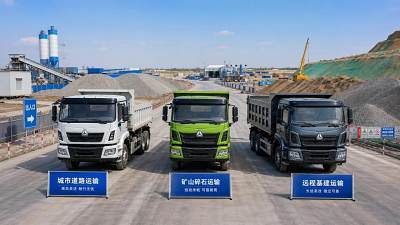
Not every construction project uses dump trucks in the same way. A municipal road upgrade, a mining support contract, a dam project, and a high-rise excavation package may all require dump truck sourcing, but the operating conditions, hauling cycles, legal constraints, and service expectations are very different. That is why many delays begin long before equipment arrives on site. The issue is not only price or lead time. It is whether the sourcing decision matches the actual project scenario.
For project managers, the real risk is misalignment. A truck that performs well on short urban routes may fail in rough quarry access conditions. A supplier with attractive pricing may not support urgent spare parts in remote regions. A specification that looks acceptable in a quotation may create payload inefficiency, road permit problems, or poor fuel economy once operations begin. Effective dump truck sourcing therefore starts with scenario-based evaluation rather than generic comparison.
Common project scenarios and what each one demands
Before comparing brands or negotiating with suppliers, project teams should identify the exact working environment. The table below shows how application context changes sourcing priorities.
This scenario view helps explain why a “good truck” is not always the right truck. The best sourcing outcome comes from matching truck configuration, supplier capability, and project timeline to actual site conditions.
Mistake 1: treating all dump truck applications as interchangeable
One of the most common dump truck sourcing errors is using a standard specification for every project. Teams often repeat what worked on a previous contract without checking whether haul distance, material density, gradeability, turning radius, and unloading conditions have changed. This creates operational bottlenecks that are hard to correct after delivery.
For example, a truck configured for aggregate transport on stable haul roads may underperform on soft ground excavation work. Likewise, a body design suitable for dry soil may not release wet clay efficiently, causing cycle time loss and manual cleanup. Project leaders should request application-based configuration review from suppliers, including axle layout, body volume, tipping system, suspension, and tire choice.
Mistake 2: focusing on purchase price instead of total project impact
Low upfront cost can look attractive during bid pressure, but delayed projects rarely fail because the original truck quotation was too high. They fail because the chosen solution creates downtime, low utilization, compliance issues, or excessive maintenance. In dump truck sourcing, the cheapest option can become the most expensive when the project depends on reliable material movement every day.
Project managers should evaluate total cost in operational terms: fuel consumption, average payload, tire life, parts replacement frequency, body wear, workshop time, and driver adaptation. In fast-track construction, one unavailable truck can affect excavators, loaders, batching plants, and subcontractor coordination. A modest price saving at sourcing stage may result in much larger losses through reduced productivity and schedule extension.
Mistake 3: underestimating lead times in different sourcing routes
Another serious mistake is assuming that quoted lead time equals usable delivery time. In reality, dump truck sourcing often includes production scheduling, customization, inspection, export documentation, inland transport, port handling, customs clearance, and final delivery to site. If body type, emission configuration, or optional safety systems are customized, lead times can expand quickly.
This risk is especially high in large infrastructure projects where multiple units are required at once. If sourcing starts too late, even a reliable supplier may not meet mobilization needs. Teams should build buffer time into procurement plans and confirm milestone dates in writing. It is also wise to separate “factory completion date” from “site-ready delivery date” during supplier evaluation.
Mistake 4: choosing the wrong supplier type for the project stage
Different sourcing channels suit different business scenarios. A direct manufacturer may offer stronger technical customization and better pricing for fleet orders. A regional distributor may provide faster local service and parts. A trading platform with verified suppliers can help buyers compare multiple qualified options across regions and specifications. Problems arise when buyers use the wrong channel for the urgency or complexity of the project.
For instance, a remote site with limited maintenance resources may benefit more from strong local support than from the lowest ex-factory price. A contractor entering a new overseas market may need a platform that improves transparency, supports supplier discovery, and shortens the evaluation cycle. In dump truck sourcing, channel choice is not secondary; it directly affects speed, risk, and supplier accountability.
Mistake 5: overlooking after-sales support in remote and high-pressure scenarios
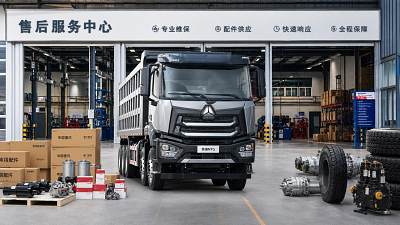
After-sales capability becomes critical when trucks operate far from urban service networks or under intense duty cycles. Yet many buyers review warranty terms only at the end of negotiations. This is a major dump truck sourcing weakness. A warranty document is useful, but what matters in practice is parts stock, response time, technical troubleshooting, and service access in the project location.
Ask suppliers whether they can support preventive maintenance schedules, emergency parts dispatch, technical manuals, remote diagnostics, and operator training. If the project is in mining, energy, or frontier infrastructure development, confirm whether critical items such as filters, hydraulic components, suspension parts, and brake systems can be stocked locally. Delays often begin with one small component that was never planned for.
Mistake 6: failing to verify compliance and route restrictions
A dump truck may be mechanically suitable and still create delay if it cannot legally or practically operate on the intended route. Axle load regulations, gross vehicle weight limits, emission rules, body dimension restrictions, and site access constraints differ across countries and regions. Buyers sometimes discover these issues only after delivery or at permit application stage.
In urban infrastructure projects, this can stop deployment immediately. In cross-border operations, it can lead to reconfiguration or approval delays. During dump truck sourcing, teams should align technical specifications with local legal requirements and actual route conditions. This includes bridge limits, turning radius, road surface quality, unloading space, and any restrictions on night transport or municipal operating windows.
How scenario-based sourcing improves decision quality
A more effective approach is to organize dump truck sourcing around the material flow of the project rather than around catalog categories alone. Start by defining the hauling task: what material is being moved, how far, on what surface, under what weather conditions, and with what loading equipment. Then connect those answers to truck selection and supplier evaluation.
This framework reduces guesswork and gives suppliers clearer technical direction, which leads to better quotations and fewer late-stage changes.
Practical sourcing advice for project managers and engineering leaders
To avoid delays, project teams should treat dump truck sourcing as an operational planning task, not just a procurement transaction. Build an internal checklist that combines engineering, logistics, procurement, and site management input. Confirm technical specs with actual usage data where possible, especially expected cycle times, material density, road condition, and planned working hours.
It is also useful to compare at least two or three supplier profiles: one focused on price competitiveness, one on strong service coverage, and one on customization capability. A professional B2B platform serving the global heavy truck supply chain can support this process by improving supplier visibility, simplifying comparison, and helping buyers identify reliable partners across truck, construction machinery, trailer, and spare parts categories. For complex international procurement, that transparency can significantly reduce sourcing risk.
Frequently overlooked warning signs during dump truck sourcing
Several warning signs often appear before a delay happens. Vague quotations, missing technical drawings, unclear delivery definitions, limited parts commitments, and weak responses to compliance questions should all trigger deeper review. If a supplier avoids discussing site conditions or pushes a standard model without understanding the application, that is usually a sign of future mismatch.
Another warning sign is incomplete communication between procurement and operations teams. If the buyer negotiates without input from site supervisors or fleet managers, practical requirements may be missed. Strong dump truck sourcing depends on shared decision-making, especially when projects involve tight deadlines or challenging terrain.
FAQ: scenario-based questions buyers should ask
How early should dump truck sourcing begin before project mobilization?
For standard units, begin as early as possible and still allow buffer for logistics and commissioning. For customized trucks or international delivery, planning should start much earlier because documentation, production, and final transport can all affect readiness.
What matters most in remote project scenarios?
In remote conditions, prioritize reliability, spare parts planning, maintenance simplicity, and technical support response. A lower-cost truck with weak service access can create serious project delays.
Can one dump truck model fit multiple project types?
Sometimes, but only if the application demands are close. Mixed-use fleets can work when route conditions, payload expectations, and compliance needs are similar. Otherwise, standardized sourcing may reduce flexibility and performance.
Final takeaway: source by scenario, not by assumption
The biggest dump truck sourcing mistakes are rarely random. They usually come from assumptions that one specification, one supplier model, or one pricing logic will fit every project. For project managers and engineering leaders, the smarter path is to define the use case first, compare supplier capability second, and confirm delivery plus support details before final commitment.
If your project involves urban transport restrictions, severe-duty hauling, remote site support, or multi-unit international procurement, a structured sourcing process is essential. Use a trusted heavy truck industry platform to compare manufacturers, suppliers, spare parts resources, and market information in one place. When dump truck sourcing is aligned with the real construction scenario, you reduce delays, improve fleet performance, and protect the project schedule from avoidable disruption.
Trending News
- Huanggang Port Freight Operations Cease, Shenzhen-Hong Kong Cross-Border Logistics Shifts to 'East-In-East-Out, West-In-West-Out'
- Erenhot-Mongolia 24-Hour Freight Clearance Boosts Trucking Efficiency
- All 27 Cross-River Bridges of the Pinglu Canal Completed
- Nanning IRP Launches Smart EV Freight Charging & Swapping Station
- Vietnam to Enforce China's Tier 6B Emission Standard for Imported Medium/Heavy Trucks from Q3 2026
Tag
Recommended News
 FAQDump Truck Sourcing Mistakes That Delay Construction ProjectsDump truck sourcing mistakes can delay construction projects, raise hidden costs, and disrupt site schedules. Learn the key risks to avoid and source smarter for faster, more reliable project delivery.
 FAQIs a Bulldozer for Construction the Right Fit for Your Site ConditionsBulldozer for construction: learn how terrain, soil, slope, and job size determine the right machine fit. Compare site conditions, avoid costly mismatches, and choose with confidence.
 FAQTruck Trailer Bulk Order: How to Avoid Spec Drift Across BatchesTruck trailer bulk order quality can fail when specs drift across batches. Learn how to lock standards, align suppliers, and protect safety, compliance, and delivery consistency.
 FAQWhat a Dump Truck Distributor Should Offer After Vehicle DeliveryDump truck distributor support matters after delivery. Learn what to expect in spare parts, warranty, training, and technical service to reduce downtime and protect your investment.
 FAQHow to Vet a Truck Cement Distributor for Stable After-Sales SupportTruck cement distributor selection starts with after-sales strength. Learn how to vet parts support, technical response, and warranty handling to reduce downtime and choose a reliable partner.
 FAQDump Truck OEM Quality Control Points Before Factory AcceptanceDump truck OEM quality control points before factory acceptance: learn the key checks for welding, hydraulics, brakes, and safety to reduce risk, avoid failures, and choose reliable suppliers.
 FAQTruck Trailer Bulk Order: How to Avoid Spec Drift Across BatchesTruck trailer bulk order quality can fail when specs drift across batches. Learn how to lock standards, align suppliers, and protect safety, compliance, and delivery consistency.
 FAQWhat a Dump Truck Distributor Should Offer After Vehicle DeliveryDump truck distributor support matters after delivery. Learn what to expect in spare parts, warranty, training, and technical service to reduce downtime and protect your investment.
 FAQHow to Vet a Truck Cement Distributor for Stable After-Sales SupportTruck cement distributor selection starts with after-sales strength. Learn how to vet parts support, technical response, and warranty handling to reduce downtime and choose a reliable partner.
 FAQDump Truck OEM Quality Control Points Before Factory AcceptanceDump truck OEM quality control points before factory acceptance: learn the key checks for welding, hydraulics, brakes, and safety to reduce risk, avoid failures, and choose reliable suppliers.
 FAQTruck Trailer Bulk Order: How to Avoid Spec Drift Across BatchesTruck trailer bulk order quality can fail when specs drift across batches. Learn how to lock standards, align suppliers, and protect safety, compliance, and delivery consistency.
 FAQWhat a Dump Truck Distributor Should Offer After Vehicle DeliveryDump truck distributor support matters after delivery. Learn what to expect in spare parts, warranty, training, and technical service to reduce downtime and protect your investment.
 FAQHow to Vet a Truck Cement Distributor for Stable After-Sales SupportTruck cement distributor selection starts with after-sales strength. Learn how to vet parts support, technical response, and warranty handling to reduce downtime and choose a reliable partner.
 FAQHeavy Truck Chassis Manufacturer With R&D Capability: Questions Worth Asking FirstHeavy truck chassis manufacturer with R&D capability: discover the key procurement questions to assess customization, compliance, durability, and long-term supply before you buy.
 FAQHow to Read a Water Truck Quotation Without Missing Hidden CostsWater truck quotation guide: learn how to spot hidden costs in specs, logistics, compliance, and after-sales terms so you can compare offers accurately and buy with confidence.
 FAQHow to Read a Water Truck Quotation Before You SignWater truck quotation review guide: learn how to check specs, pricing, delivery terms, and warranty details before signing to reduce risk and secure better value.
 FAQSemi Trailer Bulk Order Terms That Can Hurt You After DeliverySemi trailer bulk order risks often appear after delivery. Learn which warranty, inspection, spare parts, and payment terms can raise costs, delay operations, and weaken your claims.
 FAQSemi Trailer OEM or ODM? A Practical Guide for Custom OrdersSemi trailer OEM or ODM? Learn how to compare cost, lead time, compliance, and customization to choose the right semi trailer OEM strategy for smarter custom orders.
 FAQSemi Trailer Bulk Order Checklist Before You Confirm Production SlotsSemi trailer bulk order buyers: use this pre-production checklist to lock specs, lead times, compliance, and payment terms before confirming factory slots with confidence.
 FAQTruck Cement Supplier FAQ: Delivery, Capacity, and After-SalesTruck cement supplier FAQ covering delivery lead times, transport capacity, fleet options, and after-sales support to help buyers compare suppliers and source with confidence.
 FAQDump Truck Supplier with Quick Delivery: How to Avoid Delays After SigningDump truck supplier with quick delivery: learn how to verify production, parts, logistics, and documents before signing to avoid costly delays and choose a reliable partner faster.
 FAQTruck Trailer Bulk Order: 7 Details That Prevent Spec DisputesTruck trailer bulk order success starts with clear specs. Discover 7 critical details that reduce disputes, protect compliance, and improve trailer purchasing decisions.
 FAQTruck Tipper Sourcing Mistakes That Lead to Delays and ReworkTruck tipper sourcing mistakes can trigger delays, fitment issues, and costly rework. Learn how to avoid spec gaps, compare suppliers smarter, and choose the right tipper for every job.
 FAQAre Fireproof Semi Trailers Necessary for Sensitive FreightSemi trailer manufacturer with fireproof materials: learn when fireproof semi trailers are essential for sensitive freight, how to reduce risk, and what buyers should verify before sourcing.
 FAQQuick Delivery Dump Truck Supply: When Speed Becomes a RiskChoosing a dump truck supplier with quick delivery? Learn how to balance speed, quality, compliance, and after-sales support to avoid costly downtime and project risk.