What repeated fuse failures say about a truck electrical system
Repeated fuse failures often signal deeper issues in a truck electrical system, from wiring faults to overloads linked with the truck control unit, truck fuel system, or truck cooling system. For buyers, distributors, and sourcing professionals, understanding these warning signs helps evaluate vehicle reliability, maintenance risks, and component quality before selecting heavy truck parts or complete transport solutions.
In heavy-duty transport, a blown fuse is rarely an isolated event. When the same circuit fails 2 or 3 times within a short service interval, it usually points to an unresolved load problem, insulation damage, poor harness routing, moisture ingress, or a mismatched replacement component. For B2B buyers and commercial vehicle evaluators, this is not just a maintenance issue; it is a sourcing, uptime, and lifecycle cost issue.
This article explains what repeated fuse failures reveal about truck electrical systems, how these failures affect procurement decisions, and what to check when assessing complete trucks, spare parts, harnesses, relays, control units, and related subsystems. It is especially relevant for companies comparing suppliers across logistics fleets, construction transport, mining support vehicles, and municipal engineering equipment.
Why repeated fuse failures matter in heavy truck operations
A fuse is designed to protect a circuit by interrupting current when load exceeds the rated threshold. In heavy trucks, common fuse ratings range from 5A to 40A for control and auxiliary circuits, while larger protected paths may rely on higher-capacity devices or circuit breakers. If a fuse blows once after an abnormal event, that may be understandable. If it blows repeatedly over 7 to 30 days, the underlying fault is likely still active.
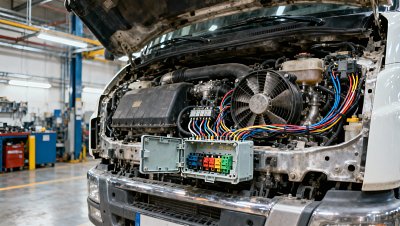
For fleet buyers and distributors, repeated fuse failures can indicate deeper risk in the electrical architecture. These failures may affect lighting, ECU communication, fuel pump circuits, cooling fan controls, cab electronics, telematics devices, and trailer connections. In a commercial context, one recurring electrical issue can increase vehicle downtime by 4 to 12 hours per event, especially when diagnosis requires harness tracing or control module inspection.
The significance is even greater in modern trucks because electrical systems are now closely tied to emissions control, engine management, safety functions, and operator interfaces. A single overloaded branch can trigger symptoms that appear unrelated, such as intermittent starting issues, unstable sensor readings, false warning lights, or cooling fan irregularities under high ambient temperatures above 35°C.
Operational impact beyond the fuse itself
The real problem is not the low cost of the fuse. It is the chain reaction behind it. A blown fuse can disable a truck for one route, delay a delivery window by 12 to 24 hours, and create uncertainty about whether the root cause sits in the wiring harness, actuator, connector, or an improperly specified aftermarket part. That uncertainty affects supplier trust and total cost of ownership.
In sourcing discussions, repeated electrical faults often become a red flag when evaluating used trucks, rebuilt assemblies, or mixed-brand spare parts. A buyer may save 5% to 8% on purchase price but absorb much higher costs in roadside service, diagnostics, replacement labor, and vehicle idle time over the next 6 to 18 months.
Typical warning patterns
- Fuse blows after engine start but before load movement, suggesting startup surge or control circuit short.
- Fuse blows only when lights, blower, cooling fan, or auxiliary equipment are activated, indicating overload under operating demand.
- Fuse blows after rain, washing, or high-humidity storage, pointing to moisture intrusion or connector corrosion.
- Fuse blows only with trailer connected, often linked to trailer socket faults, pin damage, or incompatible wiring layouts.
These patterns provide practical insight for procurement teams reviewing vehicle condition reports or supplier maintenance histories. A truck with unresolved recurring fuse failures should never be evaluated only by exterior condition or engine hours; its electrical integrity must be assessed as part of commercial due diligence.
What repeated fuse failures usually indicate inside the electrical system
Repeated fuse failure usually points to one of 4 root categories: short circuit, overload, intermittent grounding, or incorrect fuse/component pairing. In heavy truck applications, these categories often overlap. For example, a damaged harness near the chassis rail may intermittently short only when vibration increases above certain road conditions, while a non-standard replacement cooling fan motor may draw 15% to 30% more current than the original specification.
Electrical issues also frequently spread across systems. A fault that appears to come from the truck control unit may actually originate from the load side, such as a seized actuator, corroded connector, contaminated relay base, or insulation worn through at a clamp point. On vehicles operating 8 to 12 hours daily in mining, construction, or long-haul logistics, thermal cycling and vibration significantly accelerate this kind of degradation.
Truck fuel systems and truck cooling systems are common areas of concern because they combine electrical control with mechanical load. Fuel lift pumps, solenoid valves, coolant fan motors, and sensor circuits can all trigger recurring fuse problems when wiring quality, connector sealing, or component current draw is outside acceptable range.
Root-cause map for buyers and technical evaluators
The table below helps procurement teams and distributors connect the symptom of fuse failure with likely subsystem risk and sourcing implications.
From a sourcing standpoint, the strongest lesson is that repeated fuse failures are often a system-level signal rather than a single-part issue. Buyers should therefore ask for electrical inspection records, wiring diagrams where available, and replacement part traceability, especially for harnesses, relays, sensors, and motor-driven components.
Common technical triggers in road transport equipment
- Harness abrasion near brackets, battery boxes, cab tilt points, and frame cross-members.
- Water ingress in connectors rated poorly for dust, splash, or wash-down environments.
- Undersized aftermarket components with inconsistent current draw and poor heat resistance.
- Incorrect fuse rating replacement, such as using 20A in place of specified 15A, delaying protection and worsening damage.
- Ground path corrosion causing resistance buildup and unstable current behavior.
Each of these issues can appear minor during visual inspection. However, in trucks covering 60,000 to 180,000 km annually, small electrical weaknesses tend to become recurring service events. That makes electrical review an important part of supplier qualification and not just workshop troubleshooting.
How repeated fuse problems affect procurement and supplier evaluation
For procurement teams, repeated fuse failures should be treated as a purchasing signal. They reveal not only current vehicle condition but also the supplier’s quality control discipline, parts consistency, and after-sales support capability. When evaluating trucks, assemblies, or spare parts from different vendors, electrical reliability deserves a place alongside payload, engine output, axle configuration, and delivery lead time.
In practical B2B purchasing, electrical faults can reshape the economics of a deal. A lower-cost truck or component package may seem attractive at quotation stage, but if it causes 3 to 5 unscheduled service incidents per year, the cost of labor, route disruption, replacement logistics, and operator downtime can quickly exceed initial savings. This is especially relevant in fleets where vehicle utilization targets exceed 85%.
Distributors and dealers should also watch fuse failure history when deciding which product lines to represent. Recurring electrical complaints weaken customer confidence, increase warranty conversations, and complicate cross-border support when spare parts must be shipped in 7 to 21 days. Stronger supplier documentation can reduce these risks considerably.
Procurement checklist for electrical risk screening
Before confirming a truck order or selecting electrical spare parts, buyers can use the following screening framework.
- Review service records for repeated fuse replacement within the last 3 to 12 months.
- Confirm whether replacement parts were original-spec, equivalent-spec, or mixed-source items.
- Inspect wiring harness routing, clamp points, and connector sealing in high-vibration zones.
- Check whether electrical loads were modified by added lamps, telematics, refrigeration, or body equipment.
- Ask for test evidence such as continuity checks, current draw readings, or fault-code history where available.
This process is particularly useful when sourcing trucks for long-distance freight, dump operations, tanker applications, or municipal service fleets. In all of these use cases, route delays and field repair complexity have a direct effect on profitability.
Supplier evaluation factors linked to electrical reliability
The next table summarizes what buyers should compare when repeated fuse failures become part of product evaluation.
The key conclusion is that electrical reliability should be measured through evidence, not assumptions. Buyers who compare only price and visible specifications risk overlooking a failure pattern that becomes expensive later. Platforms that connect buyers with multiple vetted suppliers can simplify this comparison by centralizing product data, spare part categories, and technical sourcing discussions.
Practical diagnosis paths for truck control, fuel, and cooling circuits
When the same fuse keeps failing, diagnosis should follow a structured sequence rather than repeated fuse replacement. In heavy truck workshops, a 5-step process often delivers better results than ad hoc repairs: identify the affected circuit, isolate the load, inspect harness and connectors, measure current draw, and confirm whether the replacement component matches specification. This approach is relevant for fleet service teams as well as buyers inspecting pre-owned units before contract finalization.
Truck control unit circuits deserve close attention because they can create secondary symptoms across multiple systems. If a control-related fuse opens repeatedly, it may be caused by a shorted sensor branch, a damaged ECU power feed, or unstable grounding. In some cases, the control unit is blamed too quickly when the actual fault lies in a connected actuator or wiring branch under vibration.
Truck fuel system circuits often show repeated fuse issues when electric pumps, shutoff solenoids, or level-sender wiring degrade over time. A pump that should run within a stable current range may begin to exceed normal draw because of wear, contamination, or internal binding. That may not stop the truck immediately, but repeated fuse opening is an early warning that component stress is increasing.
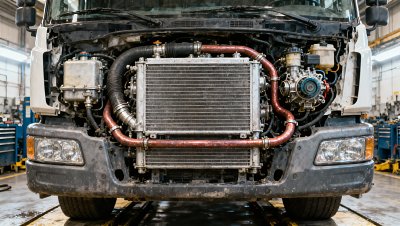
Truck cooling system circuits are another frequent source of electrical trouble, especially in warm climates, urban stop-start operation, and construction sites where dust load is high. Cooling fan motors, relays, and thermostatic controls can overload a fuse when blades are obstructed, bearings drag, or connector resistance creates heat. If this happens under engine load, the risk expands from electrical inconvenience to possible overheating and service interruption.
A field-friendly troubleshooting sequence
- Step 1: Confirm the exact fuse rating and protected circuit from the truck documentation or panel map.
- Step 2: Check whether the failure occurs at idle, startup, loaded driving, trailer coupling, or auxiliary operation.
- Step 3: Inspect connectors, relay sockets, and visible harness routes for heat marks, moisture, or abrasion within 10 to 30 cm of fixation points.
- Step 4: Measure current draw of the suspect component and compare with expected operating range.
- Step 5: Replace only with correctly specified parts and verify under real operating conditions for at least 1 duty cycle.
For distributors and sourcing managers, this diagnostic logic also helps identify whether the problem is likely due to manufacturing quality, installation quality, or incompatible spare part substitution. That distinction matters when negotiating claims, planning stock, or selecting future suppliers.
Frequent mistakes during diagnosis
Three common mistakes increase repair time and cost. First, replacing the fuse with a higher amp rating may delay failure but can allow harness damage to spread. Second, replacing the suspected control module before verifying downstream loads often leads to unnecessary expense. Third, ignoring trailer wiring or body-builder modifications leaves a major source of overload untested. In mixed-use commercial fleets, these mistakes can repeat across multiple units if maintenance procedures are not standardized.
How buyers, dealers, and sourcing teams can reduce electrical risk before purchase
The most effective way to manage repeated fuse-related risk is to push electrical validation earlier into the purchasing process. This applies whether a company is buying complete trucks, importing spare parts, selecting a distribution line, or comparing suppliers on a global B2B platform. Early checks reduce the chance of discovering hidden electrical weakness only after delivery or deployment.
For complete trucks, buyers should request maintenance records, ask whether any auxiliary systems were retrofitted, and inspect the condition of fuse boxes, relay panels, trailer sockets, and battery-area harnesses. For spare parts, focus on specification matching: voltage, current capacity, connector form, sealing level, and temperature tolerance. A small mismatch in these factors can create repeat failure over 30 to 90 days of operation.
Dealers and agents can strengthen commercial performance by choosing suppliers that offer better product traceability, technical clarification, and spare parts consistency across batches. This is especially valuable when serving markets with long transport routes, harsh weather, or limited local diagnostic capacity.
Pre-purchase electrical due diligence points
The table below translates technical concerns into practical pre-purchase actions.
For global buyers, digital sourcing platforms create an advantage here. They allow side-by-side review of truck categories, spare parts options, and supplier profiles, which supports better risk screening before a quotation becomes a purchase order. When electrical reliability is considered early, sourcing decisions become more stable and less reactive.
FAQ for commercial decision-makers
How many repeated fuse failures should be considered a serious warning?
If the same fuse fails 2 times or more within one maintenance cycle, especially within 30 days, it should be treated as a real system fault. In high-utilization fleets, even one repeat event on a mission-critical circuit deserves diagnostic review before the truck returns to regular duty.
Are fuse issues more common in older trucks only?
No. Older trucks face insulation aging and corrosion risk, but newer trucks can also experience failures when body equipment is added, trailer systems are mismatched, or non-equivalent spare parts are installed. The issue is more about electrical integrity than vehicle age alone.
What should distributors ask suppliers when electrical faults are reported?
Ask for the protected circuit definition, the exact fuse rating, recent replacement part details, basic current measurements, and whether the truck has been modified with extra electrical loads. These 5 questions can narrow the problem faster than replacing components by guesswork.
Can repeated fuse failures influence resale or commercial valuation?
Yes. Frequent unresolved electrical faults reduce buyer confidence because they suggest hidden maintenance risk. Even if the truck remains operational, recurring fuse issues can weaken resale attractiveness and raise negotiation pressure during business evaluation.
Repeated fuse failures are a practical indicator of electrical system health in trucks and other road transport equipment. They often reveal more than a damaged fuse: they may point to overload, wiring wear, moisture intrusion, poor spare part matching, or unresolved faults in the truck control unit, truck fuel system, or truck cooling system.
For information researchers, procurement teams, business evaluators, and distributors, this makes fuse history a useful screening tool when comparing complete trucks and spare parts across suppliers. A disciplined review of electrical condition can reduce downtime, improve sourcing accuracy, and support better lifecycle cost decisions.
If you are evaluating heavy truck products, supplier capability, or replacement parts for international trade, use a platform that helps you compare technical details, supplier resources, and sourcing options with greater transparency. Contact us today to explore suitable truck solutions, request product details, or get a customized sourcing plan for your market.
Trending News
- Wuhu MSA Issues Yellow Fog Warning, Affecting Roll-on/Roll-off Operations on Wanjiang River
- Yangtze River Navigational Draft Adjustment Affects Ro-Ro Heavy Truck Transport
- Yichang Yidu MSA Issues Orange Fog Warning, Temporarily Halts Ro-Ro Vessel Traffic at Three Gorges Dam
- Chongqing MSA Adjusts Ship Transit Plan at Three Gorges–Gezhouba Locks
- China to Boost Truck Containerization at Key Rail Hubs by 2026
Tag
Recommended News
 FAQWhat repeated fuse failures say about a truck electrical systemTruck electrical system fuse failures often reveal faults in the truck control unit, truck fuel system, or truck cooling system. Learn how to assess risk, uptime, and parts quality before buying.
 FAQTruck cooling system pressure loss: fix radiator or thermostat?Truck cooling system pressure loss: fix radiator or thermostat? Learn how truck pump, truck electrical system, truck fuel system, and truck exhaust system checks help buyers cut downtime.
 FAQWhat causes early failure in a truck pump system?Truck pump failures often start with issues in the truck fuel system, truck cooling system, or truck electrical system. Learn key causes, buyer checks, and sourcing tips for bulk cement tanker and water sprinkler truck fleets.
 FAQHydraulic Pump Noise Under Load May Point to CavitationHydraulic pump noise under load may signal cavitation. Learn how it affects wheel loader, truck tipper, truck trailer, truck concrete and off road truck systems before costly downtime.
 FAQWhy Truck Battery Life Drops Faster in High HeatTruck battery life drops fast in high heat, impacting truck trailer, truck tipper, and off road truck uptime. Learn how to choose durable truck battery solutions for demanding fleets.
 FAQWhat Affects Truck Excavator Stability on Uneven Ground?Truck excavator stability on uneven ground depends on truck steel, truck air system, load balance, and support design. Compare truck dumper, truck logging, truck wing, truck spreader solutions.
 FAQHow to Tell if a Truck Injector Issue Is Fuel or ElectricalTruck injector troubleshooting guide: learn whether faults are fuel or electrical, with tips for truck dumper, truck logging, truck excavator, truck spreader, truck air system and truck lighting system checks.
 FAQTruck Air System Leaks Often Hide in These Hard-to-Spot PlacesTruck air system leaks often start in hidden chassis, valve, and truck steel areas. Explore expert insights on truck lighting system routing, truck injector-adjacent wear, and smarter sourcing for safer fleets.
 FAQTruck injector DEF dosing errors: common causes behind SCR warning lightsTruck injector DEF dosing errors trigger SCR warnings—explore root causes in truck dumper, logging, excavator, spreader & wing systems. Fix air, fluid & signal issues now.
 FAQTruck spreader calibration mistakes that cause uneven fertilizer distributionAvoid uneven fertilizer distribution: discover critical truck spreader calibration mistakes—and how truck dumper, wing, injector, air system & more impact accuracy.
 FAQHow Much Weight Can a Lowbed Trailer Handle SafelyLowbed trailer guide: learn safe payload limits for construction truck and truck mining transport, with expert tips on axle setup, compliance, and choosing the right truck lowbed.
 FAQLowbed Trailer vs Truck Lowbed: What’s the Real DifferenceLowbed trailer vs truck lowbed: learn the real difference for construction truck fleets, truck mounted crane moves, and mixer truck or truck container transport. Compare smarter now.
 FAQWhat Causes Truck Mirror Blind Spots and How to Fix ThemTruck mirror blind spots affect construction truck, refrigerated truck, fuel tank truck, and truck container fleets. Learn practical fixes, smarter truck mirror setup, and safer upgrade tips.
 FAQTruck Injector Failure Signs You Shouldn’t IgnoreTruck injector warning signs explained for buyers of commercial vehicle parts. Learn how a trusted truck spare parts supplier improves truck cylinder performance and reduces fleet downtime.
 FAQAre Cheap Truck Cylinders Worth the RiskTruck cylinder buying guide for commercial vehicle parts buyers: compare risk, durability, and total cost. Find a trusted truck spare parts supplier or construction machinery supplier.
 FAQTruck Hydraulic Cylinder or Pump Issue? Signs to Check FirstTruck hydraulic trouble? Learn how to spot cylinder, truck pump, truck piston, and truck gasket faults fast for truck wing, truck tanker, truck spreader, truck aluminum, and truck export buyers.
 FAQTruck Gasket Problems That Keep Coming Back After ReplacementTruck gasket failures keep returning? Learn how truck hydraulic, truck pump, and truck piston issues affect truck tanker and truck aluminum fleets, with sourcing insights for truck export buyers and semi trailer manufacturer networks.
 FAQTruck Compressor Pressure Loss Is Not Always a Seal ProblemTruck compressor pressure loss is not always a seal issue. Learn how truck filter, truck bearing, truck gearbox, and engine assembly faults impact truck fleet uptime and smarter sourcing.
 FAQHow Long Should a Truck Bearing Last Under Heavy Loads?Truck bearing life under heavy loads depends on lubrication, truck gearbox health, truck filter care, and engine assembly condition. Learn practical fleet-saving insights.
 FAQCheap Truck Filter Choices Can Trigger Bigger Engine ProblemsTruck filter quality directly affects truck turbocharger, engine assembly, and truck gearbox life. Learn how smarter sourcing cuts downtime, protects truck fleet performance, and lowers industrial transportation costs.
 FAQTruck Gearbox Noise at Low Speed: What It Usually Points ToTruck gearbox noise at low speed may signal wear in truck bearing, truck sealer, or engine assembly parts. Learn causes, sourcing tips, and smart repair options for truck fleet uptime.
 FAQTruck Turbocharger Failure Signs That Often Show Up Too LateTruck turbocharger failure signs often appear too late. Learn how to protect engine assembly performance, reduce industrial transportation downtime, and source truck filter, truck gearbox, and truck compressor parts smarter.
 FAQTruck Off Road Specs Can Mislead if Ground Conditions Are IgnoredTruck off road specs can mislead buyers when ground conditions are ignored. Compare off road truck, construction truck, and mining truck options to source smarter and cut fleet risk.
 FAQCold Weather Truck Battery Failures Often Start Much EarlierTruck battery failures often begin before winter. Learn how construction truck, mining truck, off road truck, and truck military fleets can reduce downtime with smarter sourcing and maintenance.
 FAQExcavator Bucket Sizes Explained SimplyExcavator bucket sizes explained simply—learn how to match an excavator bucket to the job, compare excavator rental or excavator for sale options, and choose durable excavator parts.