Why Truck Battery Life Drops Faster in High Heat
In high-temperature operating environments, truck battery performance can decline far faster than many fleet managers expect, affecting everything from truck trailer transport and truck tipper operations to off road truck reliability. For buyers, distributors, and sourcing professionals evaluating truck battery durability across heavy-duty applications, understanding how heat shortens battery life is essential to reducing downtime, maintenance costs, and overall commercial vehicle risk.
For the land transport equipment sector, battery failure is not a minor maintenance issue. It can interrupt dispatch schedules, delay loading cycles, affect telematics availability, and create hidden replacement costs across mixed fleets. In hot regions where ambient temperatures regularly reach 35°C to 45°C, the battery compartment of a working truck can experience even higher heat exposure after long operating hours.
This matters to procurement teams, business evaluators, and channel partners because battery life is closely tied to total operating cost, warranty risk, and vehicle uptime. On a global B2B sourcing platform serving commercial vehicles, construction machinery, trailers, and spare parts, battery selection is no longer just a replacement purchase. It is a strategic sourcing decision that influences reliability across logistics, mining, municipal engineering, and infrastructure transport.
How High Heat Accelerates Truck Battery Degradation
Heat speeds up chemical reactions inside a truck battery. While that may temporarily improve starting power, it also increases internal corrosion, water loss in conventional lead-acid systems, and long-term plate damage. In practical fleet terms, a battery expected to last 36 to 48 months under moderate conditions may deliver only 18 to 30 months in severe heat if charging and maintenance are not optimized.
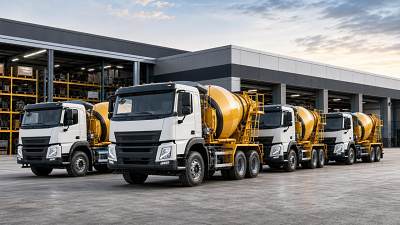
Under-hood temperatures are often much higher than outdoor air temperature. If the ambient environment is 40°C, the battery zone can exceed 50°C after stop-and-go work, uphill hauling, or extended idling. For truck tipper fleets, concrete mixers, and off road truck operations working in quarries or construction sites, vibration and dust combine with heat to further shorten battery service life.
One common misunderstanding is that only cold weather kills batteries. In reality, high heat often causes the hidden damage first, while colder mornings simply expose weakened capacity later. A battery that has spent 6 to 9 months in hot service may still crank the engine, but its reserve capacity can already be significantly reduced.
Key mechanisms behind faster failure
For heavy-duty trucks, the most common heat-related failure mechanisms include:
- Accelerated electrolyte evaporation in flooded batteries, especially when charging voltage is not properly controlled.
- Faster grid corrosion on positive plates, which weakens structural integrity over repeated operating cycles.
- Increased self-discharge during parking periods of 7 to 21 days, reducing available starting power.
- Higher sensitivity to vibration and overcharging in construction and mining transport applications.
Battery chemistry also matters. Standard flooded lead-acid batteries tend to lose water more quickly in extreme heat, while AGM designs can offer better vibration resistance and lower maintenance, although they still suffer from sustained over-temperature exposure. For fleets with high auxiliary loads, the choice between starting batteries and dual-purpose configurations should be reviewed carefully.
Typical impact by temperature range
The table below shows how typical operating temperature ranges influence battery stress in commercial truck use. These are common field ranges used for maintenance planning rather than fixed laboratory values.
For sourcing teams, the main takeaway is clear: battery life does not decline in a straight line as temperatures rise. Beyond roughly 35°C to 40°C, degradation often accelerates enough to change maintenance schedules, replacement budgets, and preferred battery specifications.
Why Heat Exposure Is a Bigger Problem in Heavy-Duty Truck Applications
Heavy trucks place different electrical demands on batteries compared with passenger vehicles. Engines are larger, cranking loads are higher, and auxiliary systems such as refrigeration controls, lifting mechanisms, onboard electronics, and telematics can increase standby consumption. In high heat, these combined loads make voltage stability more difficult, especially during multiple stop-start cycles over 8 to 12 operating hours per day.
Truck trailer transport fleets often operate across long distances, where battery systems must handle idling, lighting, ABS-related electrical needs, and repeated engine starts at terminals. Truck tipper fleets working in mines, ports, and infrastructure sites face harsher conditions, including dust ingress, engine bay heat soak, and frequent short trips that do not always allow full charging recovery.
Off road truck environments add another layer of stress. Steep terrain, shock, high vibration, and elevated engine temperatures can reduce battery retention strength and accelerate internal damage. A battery that performs adequately in regional highway distribution may fail much sooner in a quarry, desert road project, or tropical construction zone.
Operational scenarios where battery heat damage is often overlooked
Buyers and distributors should pay close attention to these overlooked conditions:
- Vehicles parked outdoors for 10 to 14 hours daily with direct sun exposure on battery compartments or cab areas.
- High-idle applications where alternators and surrounding engine components continuously radiate heat.
- Short-haul municipal or site-duty cycles with frequent starts but limited full-charge recovery time.
- Mixed fleets using one battery specification across tractors, tippers, and construction-support vehicles despite very different duty demands.
In commercial terms, this means a battery sourcing decision should be linked to application category, climate zone, and duty cycle. Procurement teams that evaluate only price per unit may overlook replacement frequency, service disruption, and labor cost over a 24-month or 36-month operating window.
Application comparison for hot-climate fleets
The following comparison highlights why battery demands vary across land transport equipment segments and why heat resilience should be matched to the actual operating profile.
This comparison helps channel partners and sourcing managers align battery procurement with real service conditions. It also supports more accurate supplier discussions when comparing batteries for complete trucks, spare parts packages, or aftermarket distribution lines.
What Buyers Should Check When Sourcing Truck Batteries for Hot Climates
When evaluating truck batteries for hot regions, buyers should move beyond nominal voltage and basic capacity labels. A suitable sourcing process should review electrical fit, durability, maintenance needs, and supply support. In many B2B transactions, the best battery is not the cheapest unit on the quotation sheet, but the one that delivers stable uptime over the full replacement cycle.
At a minimum, procurement teams should compare cold cranking ability, reserve capacity, case construction, vibration resistance, expected maintenance frequency, and compatibility with charging systems. For heavy trucks in hot conditions, even a small mismatch in charging voltage or terminal design can lead to faster aging or service complications within 3 to 6 months.
Distributors and agents should also consider inventory strategy. If the customer base includes logistics operators, municipal fleets, construction contractors, and mining support fleets, a single universal battery SKU may not be enough. A better approach is to segment products into 2 to 4 core application ranges based on climate, duty cycle, and service intensity.
Core selection criteria for commercial buyers
- Choose battery designs with strong resistance to vibration if the truck runs on unpaved roads, aggregate yards, or infrastructure sites.
- Check whether the supplier provides clear guidance on operating temperature range, charging compatibility, and storage conditions.
- Review case durability, terminal quality, and fastening configuration for heavy-duty vehicle installation.
- Confirm whether maintenance access is practical for fleets operating across dispersed service locations.
- Assess replacement lead time, MOQ terms, and after-sales support for regional distribution planning.
Practical sourcing checklist
The table below can be used by procurement staff, dealers, and business evaluators when comparing battery offers from multiple suppliers on a commercial vehicle B2B platform.
A structured checklist helps buyers reduce hidden lifecycle costs. It also improves supplier comparisons by shifting the discussion from unit price alone to fit-for-purpose performance, replacement risk, and service continuity.
For international sourcing, it is also useful to verify packaging protection, storage recommendation, and shipping conditions. Batteries stored for 3 to 6 months in hot warehouses without proper charge management may already lose part of their usable life before installation.
Maintenance, Installation, and Fleet Practices That Reduce Heat Damage
Battery sourcing is only one part of the solution. Installation quality and fleet maintenance practices have a major effect on battery life in hot climates. Even a robust heavy-duty battery can degrade early if it is mounted loosely, exposed to charging imbalance, or left in a partially discharged state for repeated parking cycles.
A practical maintenance schedule in hot regions should include voltage checks, terminal inspection, mounting verification, and charging system review at regular intervals. For severe-duty fleets, a 30-day inspection cycle is often more effective than waiting for a 90-day service window, especially when trucks operate in mining, construction, or high-idle logistics environments.
Storage conditions matter as well. Spare batteries kept in warehouses above 30°C for prolonged periods should be monitored and rotated. For distributors and agents, inventory discipline is just as important as product quality because aged stock can trigger field complaints even when the original battery specification was appropriate.
Recommended heat-control practices
- Inspect charging voltage and alternator performance every 30 to 60 days in high-temperature service regions.
- Keep battery terminals clean and secure to reduce resistance and heat buildup during high-current starts.
- Check hold-down brackets and tray condition to limit vibration-related casing stress.
- For maintainable flooded batteries, review electrolyte level at planned intervals based on operating intensity.
- Avoid extended parking with parasitic loads active for more than 7 to 10 days without recharge planning.
Fleets should also track failure patterns by route and application. If one vehicle group shows repeated battery replacements every 12 to 18 months while another reaches 30 months or more, the cause may be heat concentration, charging mismatch, or accessory load rather than battery quality alone.
Common mistakes that shorten battery life
Many avoidable failures come from routine oversights rather than manufacturing defects. The most common mistakes include:
- Using the same battery specification for long-haul tractors and harsh-duty tippers without reviewing actual load profiles.
- Ignoring charging system calibration after installing higher-capacity or different battery technology.
- Leaving trucks parked in direct heat with active electrical drain from tracking units or accessories.
- Holding spare inventory too long in non-conditioned storage before delivery to customers.
These points are especially relevant for dealers and aftermarket suppliers. Better installation guidance, faster stock rotation, and routine battery-condition checks can reduce warranty disputes and improve end-customer confidence.
FAQ for Procurement Teams, Distributors, and Fleet Decision-Makers
How much faster can truck battery life drop in high heat?
The reduction varies by battery type, duty cycle, charging quality, and installation environment. In practical fleet conditions, batteries that may last 3 to 4 years in moderate climates can fall to roughly 1.5 to 2.5 years in consistently hot service if heat, vibration, and charging stress are not managed together.
Which truck operations are most vulnerable to heat-related battery failure?
Truck tipper fleets, off road truck applications, mining support vehicles, municipal stop-start trucks, and long-idle logistics tractors are among the highest-risk categories. These operations combine 3 stress factors at once: high ambient temperature, heavy electrical load, and frequent vibration or repeated restarts.
What should buyers ask suppliers before placing an order?
Buyers should ask about recommended operating temperature range, charging compatibility, storage conditions, maintenance needs, packaging protection, and replacement lead time. It is also useful to request application guidance by vehicle type, such as tractor head, semi-trailer support fleet, construction truck, or quarry-duty vehicle.
Is a higher-capacity battery always better for hot climates?
Not always. Extra capacity can help with reserve power, but the battery must still match the vehicle’s charging system, physical installation space, and actual load profile. Oversizing without checking alternator output, mounting, and thermal conditions may create a poor charging pattern instead of solving the problem.
How can a B2B platform support better battery sourcing decisions?
A professional heavy truck industry platform can help buyers compare suppliers, review product categories, identify application-matched solutions, and access broader market information. This is especially valuable when sourcing across categories such as complete trucks, trailers, construction machinery, and spare parts, where battery requirements differ by duty environment and operating region.
High heat reduces truck battery life faster because it accelerates internal chemical aging, increases corrosion risk, weakens reserve capacity, and amplifies the impact of vibration, charging imbalance, and heavy-duty operating cycles. For commercial vehicle buyers, distributors, and fleet evaluators, the right decision is not simply choosing a battery with acceptable specifications on paper, but selecting a solution aligned with climate, vehicle type, service intensity, and after-sales support.
On a global heavy truck B2B platform, informed sourcing means comparing products with real application context in mind, from trailer transport and construction fleets to off road truck operations and spare parts distribution. If you are reviewing truck batteries, fleet components, or heavy-duty sourcing options for hot-climate markets, now is the right time to refine your specification strategy, evaluate reliable suppliers, and reduce lifecycle risk. Contact us to explore suitable products, request tailored sourcing support, and learn more solutions for the global commercial vehicle industry.
Trending News
- Cab Chassis Truck for Fire Department: Key Specs Before Ordering
- When to Use an Excavator With Long Reach Boom on Site
- Choosing a Water Truck Factory for Municipal and Mining Projects
- Truck Parts Wholesale: How to Balance Price, Quality, and Lead Time
- Crane Truck Price in 2026: What Drives Total Ownership Cost
Tag
Recommended News
 FAQDelivery Truck Supplier for School Transportation: Safety ChecklistDelivery truck supplier for school transportation: use this safety checklist to compare compliance, braking, visibility, build quality, and supplier reliability before you buy.
 FAQHow ISO Certification Reduces Sourcing Risk in Truck Chassis SupplyHeavy truck chassis manufacturer with ISO certification: discover how certified suppliers reduce sourcing risk, improve traceability, and support safer global truck chassis procurement.
 FAQWater Sprinkler Truck Uses, Tank Sizes, and Road Safety BasicsWater sprinkler truck uses, tank sizes, and road safety basics explained. Learn how to choose the right capacity, improve dust control efficiency, and compare reliable fleet-ready options.
 FAQDelivery Truck for School Transportation: Safety Points Before OrderingDelivery truck supplier for school transportation: review key safety points before ordering, from braking and visibility to compliance and passenger protection.
 FAQDump Truck Sourcing Mistakes That Delay Construction ProjectsDump truck sourcing mistakes can delay construction projects, raise hidden costs, and disrupt site schedules. Learn the key risks to avoid and source smarter for faster, more reliable project delivery.
 FAQIs a Bulldozer for Construction the Right Fit for Your Site ConditionsBulldozer for construction: learn how terrain, soil, slope, and job size determine the right machine fit. Compare site conditions, avoid costly mismatches, and choose with confidence.
 FAQDump Truck OEM Quality Control Points Before Factory AcceptanceDump truck OEM quality control points before factory acceptance: learn the key checks for welding, hydraulics, brakes, and safety to reduce risk, avoid failures, and choose reliable suppliers.
 FAQTruck Trailer Bulk Order: How to Avoid Spec Drift Across BatchesTruck trailer bulk order quality can fail when specs drift across batches. Learn how to lock standards, align suppliers, and protect safety, compliance, and delivery consistency.
 FAQWhat a Dump Truck Distributor Should Offer After Vehicle DeliveryDump truck distributor support matters after delivery. Learn what to expect in spare parts, warranty, training, and technical service to reduce downtime and protect your investment.
 FAQHow to Vet a Truck Cement Distributor for Stable After-Sales SupportTruck cement distributor selection starts with after-sales strength. Learn how to vet parts support, technical response, and warranty handling to reduce downtime and choose a reliable partner.
 FAQHeavy Truck Chassis Manufacturer With R&D Capability: Questions Worth Asking FirstHeavy truck chassis manufacturer with R&D capability: discover the key procurement questions to assess customization, compliance, durability, and long-term supply before you buy.
 FAQHow to Read a Water Truck Quotation Without Missing Hidden CostsWater truck quotation guide: learn how to spot hidden costs in specs, logistics, compliance, and after-sales terms so you can compare offers accurately and buy with confidence.
 FAQHow to Read a Water Truck Quotation Before You SignWater truck quotation review guide: learn how to check specs, pricing, delivery terms, and warranty details before signing to reduce risk and secure better value.
 FAQSemi Trailer Bulk Order Terms That Can Hurt You After DeliverySemi trailer bulk order risks often appear after delivery. Learn which warranty, inspection, spare parts, and payment terms can raise costs, delay operations, and weaken your claims.
 FAQSemi Trailer OEM or ODM? A Practical Guide for Custom OrdersSemi trailer OEM or ODM? Learn how to compare cost, lead time, compliance, and customization to choose the right semi trailer OEM strategy for smarter custom orders.
 FAQSemi Trailer Bulk Order Checklist Before You Confirm Production SlotsSemi trailer bulk order buyers: use this pre-production checklist to lock specs, lead times, compliance, and payment terms before confirming factory slots with confidence.
 FAQTruck Cement Supplier FAQ: Delivery, Capacity, and After-SalesTruck cement supplier FAQ covering delivery lead times, transport capacity, fleet options, and after-sales support to help buyers compare suppliers and source with confidence.
 FAQDump Truck Supplier with Quick Delivery: How to Avoid Delays After SigningDump truck supplier with quick delivery: learn how to verify production, parts, logistics, and documents before signing to avoid costly delays and choose a reliable partner faster.
 FAQTruck Trailer Bulk Order: 7 Details That Prevent Spec DisputesTruck trailer bulk order success starts with clear specs. Discover 7 critical details that reduce disputes, protect compliance, and improve trailer purchasing decisions.
 FAQTruck Tipper Sourcing Mistakes That Lead to Delays and ReworkTruck tipper sourcing mistakes can trigger delays, fitment issues, and costly rework. Learn how to avoid spec gaps, compare suppliers smarter, and choose the right tipper for every job.
 FAQAre Fireproof Semi Trailers Necessary for Sensitive FreightSemi trailer manufacturer with fireproof materials: learn when fireproof semi trailers are essential for sensitive freight, how to reduce risk, and what buyers should verify before sourcing.
 FAQQuick Delivery Dump Truck Supply: When Speed Becomes a RiskChoosing a dump truck supplier with quick delivery? Learn how to balance speed, quality, compliance, and after-sales support to avoid costly downtime and project risk.
 FAQEXCAVATOR for Demolition: Common Attachment Mistakes to AvoidEXCAVATOR for demolition attachment mistakes can drive wear, downtime, and repair costs. Learn how to match tools correctly, protect hydraulics, and improve fleet uptime.
 FAQExcavator for Construction: Is Size or Reach the Bigger Limit?Excavator for construction: learn whether size or reach limits your job first. Compare excavator for sale and excavator rental options to improve productivity, access, and total cost.
 FAQWhat repeated fuse failures say about a truck electrical systemTruck electrical system fuse failures often reveal faults in the truck control unit, truck fuel system, or truck cooling system. Learn how to assess risk, uptime, and parts quality before buying.