Lowbed Trailer vs Truck Lowbed: What’s the Real Difference
In heavy transport, the terms lowbed trailer and truck lowbed are often used interchangeably, but they serve different roles in fleet planning and cargo handling. For buyers comparing a construction truck, truck mounted crane, mixer truck, or truck container solution, understanding this difference is essential for safe transport, cost control, and smarter procurement decisions.
In practice, the confusion usually starts during sourcing. A procurement team may ask for a “lowbed truck” when they actually need a detachable lowbed trailer paired with a tractor head, or they may evaluate a truck lowbed as if it had the same axle flexibility and payload envelope as a semi-trailer configuration. That mismatch can affect route approval, loading efficiency, operating cost, and even cross-border compliance.
For international buyers, distributors, and commercial vehicle evaluators, the difference is not just technical wording. It influences payload range, turning radius, capital expenditure, spare parts planning, and driver training. This article explains the real difference between a lowbed trailer and a truck lowbed, when each option works best, and how to make a smarter B2B purchasing decision in heavy road transport.
What Each Term Means in Real Transport Operations
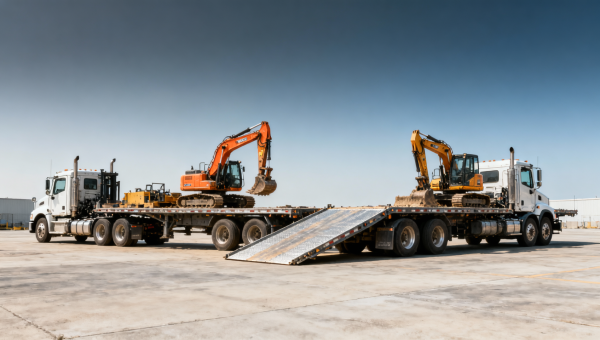
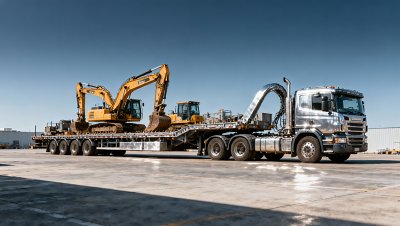
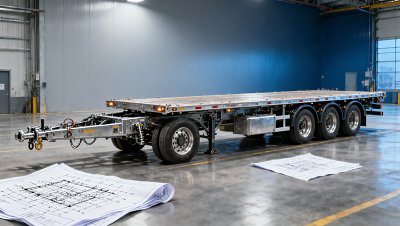
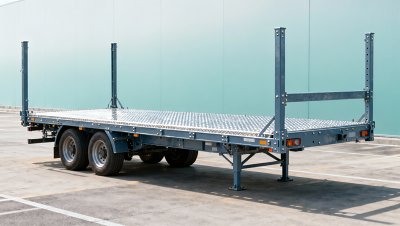
A lowbed trailer is usually a non-powered trailer or semi-trailer with a lowered deck height designed to carry oversized or heavy equipment. It relies on a tractor unit for movement. In heavy haul operations, common lowbed trailer configurations include 2-axle, 3-axle, and 4-axle models, with payload ranges often starting around 30 tons and extending beyond 100 tons in specialized multi-axle versions.
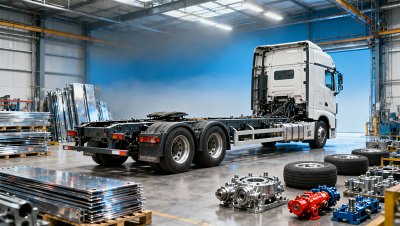
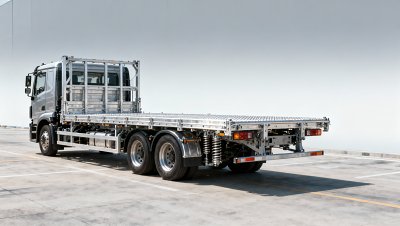
A truck lowbed, by contrast, is generally an integrated vehicle where the lowbed platform is mounted on a truck chassis. It is a complete vehicle rather than a tractor-and-trailer combination. This design is often selected for medium-duty machinery delivery, municipal engineering support, and regional equipment transfer where cargo weights may fall in the 10–30 ton range, depending on chassis strength, axle arrangement, and local road limits.
The biggest operational distinction is modularity. A lowbed trailer can be separated from the tractor, matched with different tractor heads, and configured for varied haul requirements. A truck lowbed is less modular but faster to deploy for companies that want a single integrated unit with simpler dispatch management, especially on shorter routes of 50–300 km.
This distinction matters when transporting excavators, rollers, cranes, or compact construction machinery. If the fleet frequently changes cargo type and weight class, a trailer solution often provides better flexibility. If the business mainly delivers medium-size equipment on fixed regional routes, a truck lowbed may reduce coupling time, simplify driver allocation, and shorten turnaround by 15–30 minutes per trip.
Core structural difference
- Lowbed trailer: semi-trailer or full trailer, requires a towing unit, supports flexible tractor replacement.
- Truck lowbed: integrated chassis and cargo platform, easier for direct dispatch as one complete vehicle.
- Lowbed trailer: usually preferred for heavier loads, longer distances, and broader axle customization.
- Truck lowbed: often preferred for moderate payloads, frequent loading cycles, and urban or regional movement.
Quick comparison table
The table below highlights the most practical differences that buyers should clarify before requesting quotations from suppliers or comparing road transport equipment portfolios.
The key takeaway is that a lowbed trailer is usually the better choice when transport demand varies by project, cargo dimensions, or haul distance. A truck lowbed is more suitable when speed of deployment and simplified vehicle management matter more than high modularity.
Payload, Dimensions, and Route Planning Differences
From a technical perspective, deck height is one of the first parameters buyers should review. Lowbed trailers are designed with a lower loading platform, often around 850–1250 mm depending on suspension type, wheel size, and gooseneck structure. This lower deck helps keep overall loaded height within legal road limits when moving excavators, bulldozers, or cranes with tall upper structures.
Truck lowbeds also offer a lowered platform, but they are constrained by the truck chassis architecture. In many cases, their usable deck length and load distribution window are narrower than those of a semi-trailer lowbed. That means they can handle compact pavers, skid steers, small rollers, and certain loader classes well, but may be less efficient for extra-long or ultra-heavy equipment.
Route planning is another major difference. A 3-axle or 4-axle lowbed trailer paired with a proper tractor can distribute weight more effectively across the road surface, which is critical for permit applications and bridge restrictions. For project cargo exceeding 40 tons, this axle distribution advantage often becomes a deciding factor. On the other hand, a truck lowbed may have an advantage in tighter city access, shorter turning preparation time, and easier parking at mixed-use job sites.
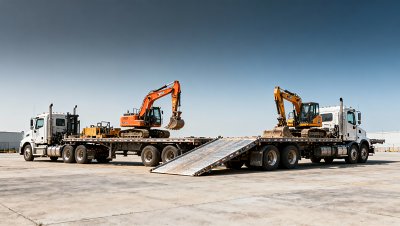
Buyers should also think about loading methods. Many lowbed trailers use rear ramps, hydraulic ramps, or detachable gooseneck designs. These options support different loading angles, especially for tracked equipment. A lower loading angle can reduce undercarriage contact risk and improve safety during self-propelled loading. Truck lowbeds may use simpler ramp systems, which work well in routine transport but may be less suitable for machinery with low ground clearance.
Practical specification checkpoints
- Confirm legal gross vehicle weight and axle load limits in the target market before selecting 2, 3, or 4 axle designs.
- Measure cargo height, width, and operating weight with a 5% safety margin for accessories, fuel, or attachments.
- Check ramp angle, deck length, and neck structure if transporting tracked equipment or machines with long wheelbases.
- Review route restrictions such as bridge class, tunnel clearance, and regional permit thresholds above 3.0 m width or 4.2 m total height.
Dimension and application comparison
To avoid specification mismatch, procurement teams can compare the common operating ranges shown below when screening suppliers and evaluating alternative transport platforms.
These ranges are not fixed standards, but they are useful reference points. The more the transport task moves toward oversized, taller, or heavier machinery, the more likely a lowbed trailer will outperform a truck lowbed in compliance and operational adaptability.
Which Option Fits Different Buyer Scenarios
The right choice depends on the business model, not just the product label. Rental fleet operators, infrastructure contractors, and heavy equipment dealers often move different machines each week. Their demand profile usually changes by project stage, which makes lowbed trailers more attractive. A trailer can be paired with different tractors depending on terrain, route distance, or the available fleet schedule.
Truck lowbeds are often a better fit for companies that operate within a city cluster or one province, where the daily mission includes 2–6 repeat deliveries of medium-size equipment. Because the truck and platform are integrated, dispatch can be simpler. There is no tractor-trailer coupling step, and maintenance planning may be easier for companies that prefer one power unit per transport asset.
Distributors and regional agents should also consider after-sales support and spare parts availability. A lowbed trailer often has a simpler non-powered structure, so the maintenance focus is on suspension, axles, braking system, ramps, and structural integrity. A truck lowbed adds powertrain, chassis electronics, cabin-related parts, and engine service intervals, which can increase service complexity over a 3–5 year operating cycle.
Commercial evaluators should compare utilization rate. If the towing tractor is needed for multiple trailer types, a lowbed trailer can improve fleet efficiency. If the operation values one dedicated vehicle for one dedicated job, a truck lowbed may deliver stronger asset control. The best decision often comes down to how many routes per week, what percentage of loads exceed 25 tons, and whether the business expects seasonal project peaks.
Typical buyer fit by scenario
- Construction contractors moving excavators over 30 tons across changing job sites usually benefit from lowbed trailers.
- Municipal service providers relocating compact road equipment within 100–200 km may prefer truck lowbeds.
- Heavy equipment dealers with varied delivery schedules often choose trailer-based systems for broader load compatibility.
- Regional service fleets seeking one driver, one vehicle, and one dispatch unit may lean toward truck lowbeds.
Decision factors for procurement teams
Before RFQ submission, buyers should create a short decision matrix built around payload, route type, loading frequency, and maintenance capability. That avoids a common sourcing problem: comparing initial purchase price without considering usable operating range and permit complexity.
For most B2B buyers, the choice becomes easier after mapping the last 12 months of actual transport tasks. If more than half of the jobs involve heavy or oversized loads, trailer-based lowbed capacity usually offers a better long-term fit. If the majority of trips are routine, moderate in weight, and operationally repetitive, truck lowbeds may offer better day-to-day convenience.
Cost, Maintenance, and Procurement Risk Control
Initial price is only one part of the investment. Buyers should compare total operating cost over at least 36 months. A lowbed trailer may appear more economical if the buyer already owns compatible tractor heads, because the new purchase is limited to the trailer body and running gear. A truck lowbed may require a larger upfront budget due to the complete vehicle nature of the asset, but it can simplify operational planning for smaller fleets.
Maintenance profiles differ as well. On a lowbed trailer, inspection intervals often focus on tires, brake chambers, axles, suspension bushings, deck weld zones, landing gear, and ramp hinges. On a truck lowbed, the operator must add engine oil cycles, drivetrain service, cooling system checks, and cabin electrical diagnosis. In many transport fleets, trailer inspections may be scheduled every 10,000–20,000 km for routine checks, while truck powertrain servicing follows manufacturer schedules that can be more frequent depending on load intensity.
Risk control starts before purchase. The most common errors include underestimating real operating weight, ignoring local permit requirements, choosing insufficient axle capacity, and failing to confirm spare parts lead time. Another frequent issue is buying based on nominal payload without checking deck length and center-of-gravity placement, which can directly affect axle overload and unsafe handling.
For international sourcing, buyers should request a technical package that covers axle brand, suspension type, brake configuration, deck dimensions, ramp design, steel grade description, and recommended cargo category. It is also practical to confirm production lead time, which in many standard configurations may range from 20–45 days, while custom heavy-duty units can take 6–10 weeks depending on design complexity and component sourcing.
Common procurement risk checklist
- Verify real payload requirement with machine operating weight, attachments, and fuel included.
- Match axle count and suspension to road conditions, not just brochure payload claims.
- Check whether the destination market requires ABS, specific lighting layouts, or reflectivity standards.
- Confirm spare parts availability for 12–24 months, especially axles, braking components, and ramp hydraulics.
- Review loading method and deck geometry to avoid damage during self-loading and unloading.
How to source more effectively on a B2B platform
A specialized industry platform can reduce sourcing friction by allowing buyers to compare suppliers, review product categories such as trailers, complete trucks, truck chassis, and spare parts, and build a more complete procurement picture. This is especially valuable when the same buyer is also evaluating related assets like construction trucks, truck mounted cranes, mixer trucks, or truck container solutions as part of one broader transport equipment strategy.
On a professional global heavy truck marketplace, buyers can narrow options by application, compare structural layouts, and discuss technical details directly with manufacturers and distributors. That process helps commercial teams move from rough terminology to precise sourcing language, which improves quotation accuracy and reduces negotiation cycles. For fleets expanding across logistics, infrastructure, mining, or municipal engineering projects, this kind of digital sourcing visibility supports faster and better-informed decisions.
FAQ: Common Questions Buyers Ask Before Ordering
Because many buyers search using overlapping terms, the questions below address practical concerns that usually appear during specification review, supplier comparison, and pre-purchase planning.
Is a lowbed trailer always better for heavy equipment?
Not always, but it is usually better once cargo moves into higher weight classes or oversized dimensions. If the machinery regularly exceeds 25–30 tons, or if the load has unusual height and length constraints, a lowbed trailer often provides a wider safety and compliance margin. For smaller machines on repeated regional deliveries, a truck lowbed may still be the more practical solution.
Can a truck lowbed replace a lowbed trailer in a mixed fleet?
It can replace it for some missions, but not for all. In a mixed fleet, a truck lowbed is effective for frequent medium-load tasks and time-sensitive dispatch. However, once the business must handle heavier construction machinery, changing project cargo, or longer intercity hauls, a dedicated lowbed trailer usually becomes necessary again. Many fleets end up using both formats to cover 2 different transport profiles.
What should buyers check first in supplier quotations?
Start with 4 essentials: payload rating, deck dimensions, axle configuration, and loading method. After that, review brake system details, suspension type, tire specification, and spare parts support. If a quotation lists only a general payload number without full dimensional and structural details, it is not yet sufficient for technical comparison.
How long is the normal delivery cycle?
For standard lowbed trailer or truck lowbed configurations, production can often be completed in about 20–45 days. Customized versions with special ramps, reinforced decks, additional axles, or export-specific lighting and braking requirements may take 6–10 weeks. Shipping time then depends on destination region, documentation readiness, and whether the order is moved as complete units or in partial disassembled form.
How can distributors and agents create better product positioning?
The best approach is to segment by use case rather than by name alone. Position lowbed trailers for heavy haul, oversized project cargo, and variable fleet requirements. Position truck lowbeds for regional delivery, fleet simplicity, and medium-size machinery transport. That clearer product logic improves lead qualification and helps end users understand why one solution costs more but delivers broader operating value.
The real difference between a lowbed trailer and a truck lowbed comes down to structure, payload range, route suitability, and fleet strategy. A lowbed trailer offers stronger modularity and broader heavy-haul capability, while a truck lowbed supports simpler dispatch and efficient regional equipment transport. For buyers, distributors, and commercial evaluators, the right choice starts with actual load data, route conditions, and maintenance capacity rather than product naming alone.
If you are comparing trailers, complete trucks, truck chassis, construction machinery transport solutions, or related spare parts, a specialized industry platform can help you evaluate suppliers more efficiently and reduce sourcing risk. Contact us today to get a tailored lowbed transport solution, discuss product details, or explore more heavy truck and trailer options for your market.
Trending News
- China's MW-Class Hydrogen Aviation Turboprop Engine First Flight
- Oil Prices Rise, Airlines Cut Capacity, Land Freight Costs Pressure
- Henan's 2026 Key Projects List: RMB 1 Trillion Investment Drives Heavy-Duty & Special Vehicle Demand
- Guangxi Xijiang Waterway Enforces Zero Discharge for Vessel Pollutants
- China Accelerates Low-Altitude Economy Clusters, Boosting Demand for Smart Airport Tugs
Tag
Recommended News
 FAQHow Much Weight Can a Lowbed Trailer Handle SafelyLowbed trailer guide: learn safe payload limits for construction truck and truck mining transport, with expert tips on axle setup, compliance, and choosing the right truck lowbed.
 FAQLowbed Trailer vs Truck Lowbed: What’s the Real DifferenceLowbed trailer vs truck lowbed: learn the real difference for construction truck fleets, truck mounted crane moves, and mixer truck or truck container transport. Compare smarter now.
 FAQTruck Injector Failure Signs You Shouldn’t IgnoreTruck injector warning signs explained for buyers of commercial vehicle parts. Learn how a trusted truck spare parts supplier improves truck cylinder performance and reduces fleet downtime.
 FAQAre Cheap Truck Cylinders Worth the RiskTruck cylinder buying guide for commercial vehicle parts buyers: compare risk, durability, and total cost. Find a trusted truck spare parts supplier or construction machinery supplier.
 FAQSemi Trailer Supplier Delays Often Start With Spec MismatchSemi trailer supplier delays often come from spec mismatch. Compare truck trailer for sale options, semi trailer price, and truck trailer wholesale quotes to reduce sourcing risk.
 FAQSemi Trailer Manufacturer Lead Times: What Causes the Delays?Semi trailer manufacturer lead times explained: learn what delays bulk cement trailer and commercial vehicle parts orders, how truck brake system supply affects delivery, and source smarter today.
 FAQWhat Delays Delivery from an Excavator Manufacturer Most Often?Excavator manufacturer delivery delays often stem from parts shortages, factory queues, and shipping issues. Learn how wing van truck, cab chassis truck, and heavy duty trucks for sale planning can reduce risk.
 FAQIs your bulldozer distributor authorized — and why it matters for warranty claimsVerify your bulldozer distributor’s authorization now—critical for warranty claims, parts support & compliance in Canada, South Africa, Australia. Trusted excavator supplier & logging truck OEM insights.
 FAQStake trailer load capacity myths — what the numbers don’t tell you about payload limitsStake trailer, van trailer & flatbed trailer payload limits hide critical real-world constraints—discover verified capacity data for gooseneck, curtain side, bulk, and water tanker trailers.
 FAQGooseneck trailer coupler compatibility isn’t universal — check before retrofittingGooseneck trailer coupler compatibility varies across van, flatbed, stake, curtain side, bulk, axle, wing van, water tanker & truck crane trailers — verify specs before retrofitting!
 FAQStake trailer load capacity myths — what the numbers don’t tell you about payload limitsVan trailer, stake trailer, gooseneck trailer & more: uncover hidden payload limits, axle trailer realities, and compliance risks—get verified capacity data before you buy.
 FAQDelivery truck supplier warranty limitations: What’s excluded when operating above 3,000m altitude?Truck spare parts supplier & delivery truck supplier: Discover warranty exclusions for SHACMAN L3000, X5000, H3000 above 3,000m—critical for heavy equipment export & high-altitude operations.
 FAQExcavator parts interchangeability myths: Why OEM part numbers don’t guarantee fit across model yearsExcavator bucket & parts interchangeability isn’t guaranteed by OEM numbers alone—discover why model-year fitment verification matters for mining, pipeline, and CE-certified excavator applications.
 FAQHeavy Truck Chassis with Warranty: What’s Covered — and What’s Almost Always ExcludedHeavy truck chassis manufacturer with warranty? Discover what’s covered—and excluded—for ambulance, mining, trailer, and last-mile applications. Compare global suppliers now.
 FAQWhat is the future energy trend for heavy trucks?Explore the future energy trends for heavy trucks, including diesel, electric, and hydrogen-powered options, shaping the global logistics industry.
 FAQAre electric trucks suitable for urban delivery?Discover why electric trucks are ideal for urban delivery with their quiet operation and zero emissions. Perfect for city transportation needs.
 FAQWhat are the future trends in the logistics industry?Discover the future of logistics with intelligent and green transportation trends, including autonomous driving, electric trucks, and smart fleet management systems.
 FAQHow much do truck drivers earn?Discover average truck driver salaries by experience and location. Long-haul CDL drivers earn $40K-$80K annually, with top earners making significantly more.
 FAQAre electric trucks cheaper to operate than diesel trucks?Discover if electric trucks are cheaper to operate than diesel trucks, including energy savings and lower maintenance costs. Learn about long-term cost advantages.
 FAQWhy do logistics companies prefer tractor trucks?Discover why logistics companies prefer tractor trucks for their flexibility in connecting to various semi-trailers like container, refrigerated, and flatbed trailers.
 FAQDo diesel prices significantly affect the trucking industry?Discover how diesel price fluctuations directly affect heavy truck transportation costs and logistics operations. Learn why fuel prices impact freight rates.
 FAQWhat is a 6×4 truck configuration?Learn what a 6×4 truck configuration means and why it's ideal for heavy-duty tractor trucks. Discover its benefits for traction, stability, and long-distance hauling.
 FAQWhat mileage is considered normal for a used truck?Discover what mileage is considered normal for used heavy trucks (300,000-800,000 km) and how proper maintenance ensures long-term operation.
 FAQIs it safe to buy a used heavy truck?Discover if buying a used heavy truck is safe. Learn key inspection points like engine, transmission & maintenance history for cost-effective heavy-duty vehicles.
 FAQWhat are the key aspects of fleet management?Discover the key aspects of effective fleet management for heavy trucks, including vehicle maintenance, driver management, route optimization, and fuel cost control. Learn how GPS and telematics technologies enhance real-time monitoring.