How Much Weight Can a Lowbed Trailer Handle Safely
When planning heavy equipment transport, understanding how much weight a lowbed trailer can handle safely is essential for cost control, compliance, and operational safety. Whether you source a lowbed trailer for construction truck fleets, truck mining projects, or specialized logistics, load capacity depends on trailer design, axle configuration, road rules, and cargo type. This guide helps buyers and industry professionals evaluate truck lowbed performance and choose the right transport solution with confidence.
In practical terms, a lowbed trailer can safely handle anywhere from around 20 tons to well over 100 tons, but the real answer depends on far more than the deck itself. Safe capacity is determined by the trailer’s rated payload, axle setup, tire and suspension limits, tractor matching, load distribution, route restrictions, and local transport regulations. For buyers, the key question is not just “How much can it carry?” but “How much can it carry legally, repeatedly, and safely in my operating conditions?”
What Is the Safe Weight Capacity of a Lowbed Trailer in Real Operations?
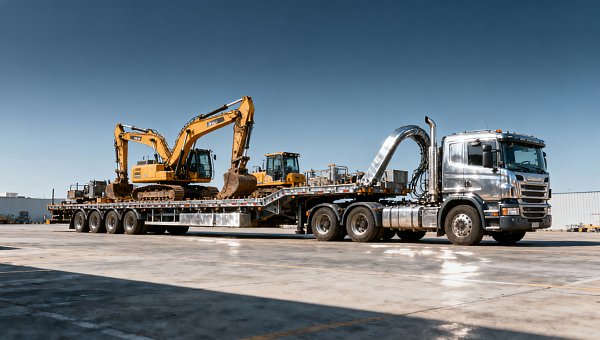
For most buyers and logistics planners, the safest starting point is the manufacturer’s rated payload rather than a rough industry estimate. Standard lowbed trailers used for machinery transport may carry approximately 30 to 60 tons, while heavy-duty lowbed or low loader trailer configurations with multiple axle lines can support 80 tons, 100 tons, or more in specialized applications.
However, “safe” capacity should always be understood in four layers:
- Structural capacity: what the trailer frame and deck are engineered to support
- Axle and suspension capacity: what the running gear can bear over time
- Legal road capacity: what regulations allow on a given route
- Operational capacity: what can be transported without creating unacceptable risk during loading, braking, turning, or uneven road travel
That is why two lowbed trailers that look similar may have very different real-world payload limits. A trailer promoted for heavy equipment transport may be structurally strong, but if its axle configuration or local road approvals are insufficient, the usable capacity may be much lower than expected.
What Actually Determines How Much Weight a Lowbed Trailer Can Handle?
Procurement teams and business evaluators should focus on the factors that directly influence safe load handling rather than only comparing headline tonnage.
1. Axle Configuration
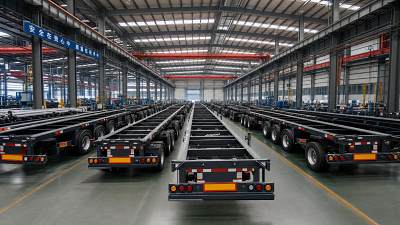
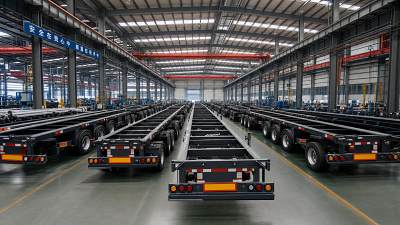
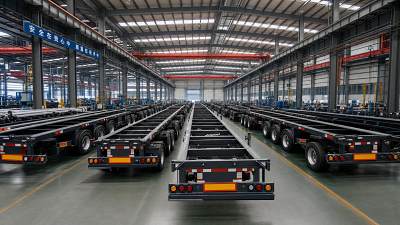
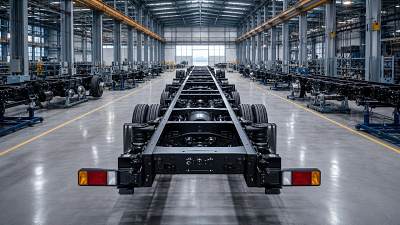
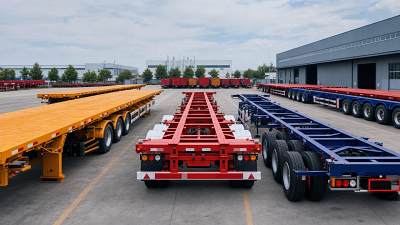
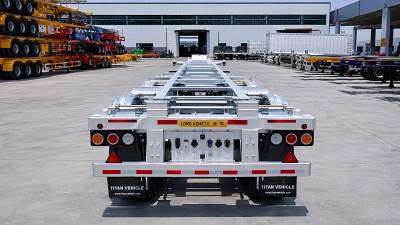
Axle count is one of the biggest factors in lowbed trailer load capacity. More axles generally distribute weight more effectively, reduce per-axle load, and help meet legal road limits. A 2-axle or 3-axle lowbed trailer may suit medium equipment transport, while 4-axle, 5-axle, or modular multi-axle lowbed trailers are used for heavier cargo such as excavators, mining equipment, transformers, or oversized construction machinery.
2. Trailer Structure and Materials
Frame design, beam strength, deck reinforcement, gooseneck construction, and steel grade all affect carrying ability. A well-designed heavy-duty trailer is not just about thicker steel; it is about engineered load paths, fatigue resistance, and structural stability under dynamic conditions.
3. Suspension and Tires
Mechanical, air, or hydraulic suspension systems have different performance characteristics. Tire ratings also matter. Even if the frame is strong enough, weak tire capacity or unsuitable suspension can limit how much weight the trailer can safely move.
4. Cargo Dimensions and Center of Gravity
A compact 50-ton machine is very different from a tall or unevenly balanced 50-ton load. The higher the center of gravity, the greater the rollover risk during cornering or on uneven roads. Length and width also affect how the weight is distributed across the deck and axles.
5. Tractor Head Matching
The prime mover must be matched to the trailer and cargo. Engine power, fifth wheel load, braking capacity, and driveline durability all influence safe operation. An underpowered or poorly matched tractor can turn a theoretically acceptable load into an operational risk.
6. Road and Regulatory Conditions
Bridge rules, axle load limits, escort requirements, permit restrictions, and road surface conditions may reduce allowable load. Cross-border buyers should be especially careful, since regulations vary significantly between countries and regions.
Why the Rated Payload Is Not the Same as the Legal or Usable Payload
This is one of the most important points for buyers. A supplier may list a lowbed trailer with a 60-ton or 80-ton capacity, but that figure often reflects engineering rating under ideal conditions. In real operations, usable payload may be lower because of:
- National axle load regulations
- Total gross vehicle weight limits
- Permit constraints for oversized or over-mass transport
- Road width, slope, and bridge limitations
- Repeated-use fatigue considerations
- Loading method and deck stress concentration
For procurement decisions, this means buyers should always ask suppliers for both rated payload data and recommended operating payload under typical road conditions. This helps avoid buying a trailer that looks suitable on paper but cannot be used efficiently in the target market.
How Buyers Can Evaluate the Right Lowbed Trailer Capacity Before Purchase
If your role involves sourcing, supplier comparison, or commercial assessment, the most useful approach is to evaluate the trailer against your actual transport tasks.
Start with the cargo, not the trailer brochure
List the equipment or machinery you expect to move most often:
- Maximum operating weight
- Transport dimensions
- Track or wheel spacing
- Center of gravity
- Loading and unloading method
This information gives a more realistic basis for choosing a trailer than relying on generic category labels such as “heavy-duty” or “mining lowbed.”
Check axle load distribution
Ask the supplier how cargo weight is distributed across the kingpin, trailer axles, and tractor drive axles. This is critical for both safety and compliance. Serious manufacturers can provide layout drawings, load distribution calculations, and technical recommendations.
Review route and market compliance
If the trailer will operate in multiple countries or in regulated sectors such as mining, infrastructure, or municipal engineering, confirm whether its configuration fits local transport rules. This is especially important for distributors and dealers serving export markets.
Assess lifecycle value, not just purchase price
A lower-cost trailer may become more expensive if it causes tire wear, structural fatigue, permit complications, or reduced cargo flexibility. Buyers should compare total business value, including:
- Expected service life
- Maintenance cost
- Parts availability
- Load versatility
- Resale value
- Downtime risk
What Weight Range Fits Different Lowbed Trailer Applications?
Although exact specifications vary by manufacturer, these broad ranges can help readers build an initial understanding:
- 20–40 tons: small to medium construction equipment, compact tracked machinery, lighter industrial cargo
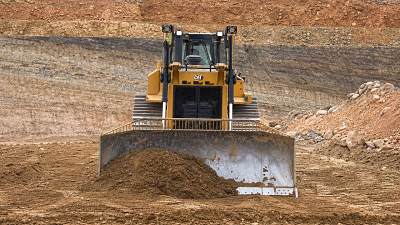
- 40–60 tons: common range for many standard heavy equipment transport tasks, including excavators, bulldozers, and road machinery
- 60–100 tons: heavy-duty lowbed trailer applications, larger construction equipment, industrial modules, some mining machinery
- 100+ tons: specialized modular transport, oversized projects, mining, energy, and infrastructure sectors
These ranges are useful for orientation, but they should never replace engineering verification. Buyers making commercial decisions should request detailed specifications, compliance support, and intended-use recommendations from suppliers.
What Questions Should You Ask a Lowbed Trailer Supplier?
To reduce sourcing risk, ask clear technical and commercial questions before making a purchase decision:
- What is the rated payload and under what conditions was it calculated?
- What is the axle configuration and individual axle capacity?
- How is the load distributed between the kingpin and axles?
- What suspension type is used, and why?
- What cargo types is this lowbed trailer best suited for?
- Can the supplier provide drawings, test data, or engineering calculations?
- What regulations or markets is this trailer designed to comply with?
- What are the maintenance requirements and spare parts availability?
- Can the deck, ramps, gooseneck, or axle setup be customized?
For international B2B buyers, these questions help distinguish between general exporters and experienced heavy transport equipment suppliers.
Common Mistakes That Lead to Unsafe Loading Decisions
Many transport risks come from incorrect assumptions rather than obvious overloading. Common mistakes include:
- Using nominal trailer capacity as the only selection criterion
- Ignoring legal axle load limits
- Overlooking the effect of cargo center of gravity
- Choosing too few axles for the intended equipment mix
- Failing to match trailer and tractor correctly
- Underestimating route conditions such as gradients, bridges, and rough surfaces
- Assuming one trailer can economically cover every heavy transport scenario
A reliable lowbed trailer decision is usually based on fit-for-purpose transport planning, not maximum theoretical tonnage.
How to Make a Safer and More Commercially Sound Buying Decision
If you are comparing lowbed trailers for procurement, resale, distribution, or project use, focus on the combination of safe payload, compliance, operational flexibility, and long-term cost efficiency. The best trailer is not always the one with the highest advertised capacity. It is the one that can legally and reliably move your target cargo across your intended routes with minimal operational risk.
For many business buyers, the smartest approach is to shortlist suppliers that can provide:
- Transparent technical specifications
- Load calculation support
- Market-specific compliance guidance
- Customization options
- After-sales service and parts support
This reduces uncertainty and improves the chances of selecting a lowbed trailer that performs well not only at delivery, but throughout its service life.
Conclusion
So, how much weight can a lowbed trailer handle safely? In most cases, the answer ranges from about 20 tons to more than 100 tons, depending on design and application. But for real-world transport decisions, safe capacity is never just a single number. It is the result of trailer engineering, axle setup, cargo characteristics, tractor matching, and legal road limits working together.
For information researchers, procurement teams, and commercial evaluators, the most practical takeaway is clear: do not judge a lowbed trailer only by its advertised tonnage. Evaluate how much weight it can carry safely, legally, and efficiently in your actual operating environment. That is the standard that leads to better sourcing decisions, lower risk, and stronger long-term value.
Trending News
- Manzhouli Highway Port Launches 24-Hour Freight Clearance
- Irkeshtam Port’s 24-Hour Freight Clearance Boosts Exports to Kyrgyzstan by 66%
- Erenhot-Mongolia 24-Hour Freight Clearance Marks One-Year Milestone
- MOF & MOT Launch New Freight Hub Resilience Initiative
- Six New Iran-Pakistan Land Crossings Opened, Land Clearance Cut to 6 Hours
Tag
Recommended News
 FAQDelivery Truck for School Transportation: Safety Points Before OrderingDelivery truck supplier for school transportation: review key safety points before ordering, from braking and visibility to compliance and passenger protection.
 FAQDump Truck Sourcing Mistakes That Delay Construction ProjectsDump truck sourcing mistakes can delay construction projects, raise hidden costs, and disrupt site schedules. Learn the key risks to avoid and source smarter for faster, more reliable project delivery.
 FAQIs a Bulldozer for Construction the Right Fit for Your Site ConditionsBulldozer for construction: learn how terrain, soil, slope, and job size determine the right machine fit. Compare site conditions, avoid costly mismatches, and choose with confidence.
 FAQTruck Trailer Bulk Order: How to Avoid Spec Drift Across BatchesTruck trailer bulk order quality can fail when specs drift across batches. Learn how to lock standards, align suppliers, and protect safety, compliance, and delivery consistency.
 FAQWhat a Dump Truck Distributor Should Offer After Vehicle DeliveryDump truck distributor support matters after delivery. Learn what to expect in spare parts, warranty, training, and technical service to reduce downtime and protect your investment.
 FAQHow to Vet a Truck Cement Distributor for Stable After-Sales SupportTruck cement distributor selection starts with after-sales strength. Learn how to vet parts support, technical response, and warranty handling to reduce downtime and choose a reliable partner.
 FAQDump Truck OEM Quality Control Points Before Factory AcceptanceDump truck OEM quality control points before factory acceptance: learn the key checks for welding, hydraulics, brakes, and safety to reduce risk, avoid failures, and choose reliable suppliers.
 FAQTruck Trailer Bulk Order: How to Avoid Spec Drift Across BatchesTruck trailer bulk order quality can fail when specs drift across batches. Learn how to lock standards, align suppliers, and protect safety, compliance, and delivery consistency.
 FAQWhat a Dump Truck Distributor Should Offer After Vehicle DeliveryDump truck distributor support matters after delivery. Learn what to expect in spare parts, warranty, training, and technical service to reduce downtime and protect your investment.
 FAQHow to Vet a Truck Cement Distributor for Stable After-Sales SupportTruck cement distributor selection starts with after-sales strength. Learn how to vet parts support, technical response, and warranty handling to reduce downtime and choose a reliable partner.
 FAQDump Truck OEM Quality Control Points Before Factory AcceptanceDump truck OEM quality control points before factory acceptance: learn the key checks for welding, hydraulics, brakes, and safety to reduce risk, avoid failures, and choose reliable suppliers.
 FAQTruck Trailer Bulk Order: How to Avoid Spec Drift Across BatchesTruck trailer bulk order quality can fail when specs drift across batches. Learn how to lock standards, align suppliers, and protect safety, compliance, and delivery consistency.
 FAQWhat a Dump Truck Distributor Should Offer After Vehicle DeliveryDump truck distributor support matters after delivery. Learn what to expect in spare parts, warranty, training, and technical service to reduce downtime and protect your investment.
 FAQHow to Vet a Truck Cement Distributor for Stable After-Sales SupportTruck cement distributor selection starts with after-sales strength. Learn how to vet parts support, technical response, and warranty handling to reduce downtime and choose a reliable partner.
 FAQHeavy Truck Chassis Manufacturer With R&D Capability: Questions Worth Asking FirstHeavy truck chassis manufacturer with R&D capability: discover the key procurement questions to assess customization, compliance, durability, and long-term supply before you buy.
 FAQHow to Read a Water Truck Quotation Without Missing Hidden CostsWater truck quotation guide: learn how to spot hidden costs in specs, logistics, compliance, and after-sales terms so you can compare offers accurately and buy with confidence.
 FAQHow to Read a Water Truck Quotation Before You SignWater truck quotation review guide: learn how to check specs, pricing, delivery terms, and warranty details before signing to reduce risk and secure better value.
 FAQSemi Trailer Bulk Order Terms That Can Hurt You After DeliverySemi trailer bulk order risks often appear after delivery. Learn which warranty, inspection, spare parts, and payment terms can raise costs, delay operations, and weaken your claims.
 FAQSemi Trailer OEM or ODM? A Practical Guide for Custom OrdersSemi trailer OEM or ODM? Learn how to compare cost, lead time, compliance, and customization to choose the right semi trailer OEM strategy for smarter custom orders.
 FAQSemi Trailer Bulk Order Checklist Before You Confirm Production SlotsSemi trailer bulk order buyers: use this pre-production checklist to lock specs, lead times, compliance, and payment terms before confirming factory slots with confidence.
 FAQTruck Cement Supplier FAQ: Delivery, Capacity, and After-SalesTruck cement supplier FAQ covering delivery lead times, transport capacity, fleet options, and after-sales support to help buyers compare suppliers and source with confidence.
 FAQDump Truck Supplier with Quick Delivery: How to Avoid Delays After SigningDump truck supplier with quick delivery: learn how to verify production, parts, logistics, and documents before signing to avoid costly delays and choose a reliable partner faster.
 FAQTruck Trailer Bulk Order: 7 Details That Prevent Spec DisputesTruck trailer bulk order success starts with clear specs. Discover 7 critical details that reduce disputes, protect compliance, and improve trailer purchasing decisions.
 FAQTruck Tipper Sourcing Mistakes That Lead to Delays and ReworkTruck tipper sourcing mistakes can trigger delays, fitment issues, and costly rework. Learn how to avoid spec gaps, compare suppliers smarter, and choose the right tipper for every job.
 FAQAre Fireproof Semi Trailers Necessary for Sensitive FreightSemi trailer manufacturer with fireproof materials: learn when fireproof semi trailers are essential for sensitive freight, how to reduce risk, and what buyers should verify before sourcing.