Truck control unit faults that look mechanical at first
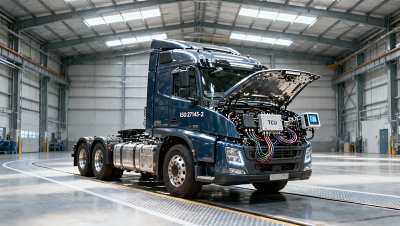
Many truck control unit problems first appear to be mechanical issues, affecting the truck steering system, truck fuel system, truck cooling system, and truck electrical system. For buyers, distributors, and fleet decision-makers, identifying these hidden faults early can reduce downtime, prevent wrong part replacement, and improve sourcing decisions across components such as the truck pump, truck exhaust system, truck tire, truck wheel, and truck cab.
In heavy truck operations, the first visible symptom is often misleading. A rough idle may suggest injector wear, hard steering may look like a hydraulic pump failure, and unstable temperature may appear to be a thermostat or radiator issue. In reality, the fault can originate in an engine control unit, body control module, transmission control unit, or a sensor network that feeds these modules inaccurate data.
For B2B buyers and channel partners, this distinction matters because a misdiagnosed electronic fault can trigger 2 to 5 unnecessary parts orders, extend service time by 1 to 3 days, and raise warranty disputes across borders. Understanding which truck control unit faults mimic mechanical failures helps procurement teams source the right spare parts, reduce return rates, and evaluate suppliers with greater confidence.
Why electronic faults are often mistaken for mechanical problems
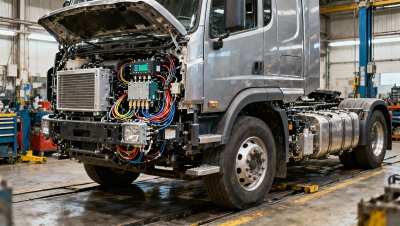
Modern heavy trucks combine mechanical systems with multiple control units and dozens of sensors. On a long-haul tractor, it is common to see 5 to 15 major electronic modules coordinating fuel injection, aftertreatment, transmission shifting, braking, cooling fan logic, and cab functions. When one module receives unstable voltage or corrupted sensor signals, the symptom can look identical to a failed mechanical assembly.
A truck fuel system is a good example. Low power under load may be blamed on a blocked fuel filter or weak truck pump. However, the actual issue may be incorrect rail pressure commands from the engine control unit, or a pressure sensor drifting outside its tolerance range by 3% to 8%. The engine then limits fueling as a protective strategy, creating a mechanical-looking complaint.
The same pattern appears in the truck steering system and truck cooling system. Intermittent steering stiffness may result from signal loss between the steering angle sensor and the control unit rather than from a damaged pump. Overheating events that happen only at low speed may be caused by fan control logic, relay output faults, or wiring resistance, not only by radiator blockage or coolant circulation failure.
For procurement teams, the cost implication is clear. Mechanical parts are typically larger-ticket items, and wrong replacement can inflate maintenance spending by 15% to 30% on one service event. Distributors that understand electronic root causes can improve parts matching, advise customers more accurately, and reduce the risk of stocking slow-moving mechanical components that are not actually needed.
Common reasons for misdiagnosis
- Symptoms are indirect: control units often trigger limp mode, delayed response, or protective shutdowns that resemble mechanical wear.
- Intermittent faults are harder to trace: vibration, heat, and moisture may affect connectors only during certain operating cycles, such as after 45 to 90 minutes of driving.
- Basic workshops may replace visible parts first: hoses, pumps, thermostats, and valves are easier to inspect than CAN communication quality or module outputs.
- Cross-border parts sourcing can separate diagnosis from supply: the buyer may receive a request for a “mechanical part” without fault code context.
Typical fault patterns by truck system
The table below helps buyers and technical sales teams distinguish first-level symptoms from likely electronic triggers before ordering major replacement parts.
The main lesson is that visible symptoms should not automatically drive the purchase decision. Before replacing a truck pump, truck exhaust system component, or cooling part, buyers should ask for fault codes, live data snapshots, and the operating conditions under which the symptom appears.
Control unit faults that commonly affect steering, fuel, cooling, and electrical systems
In heavy truck service, four groups of faults are especially likely to imitate mechanical damage. These include power supply instability, sensor signal drift, communication errors on the vehicle network, and software or calibration mismatch after part replacement. Each can disturb multiple truck systems at the same time, which is why technicians sometimes chase unrelated mechanical components one by one.
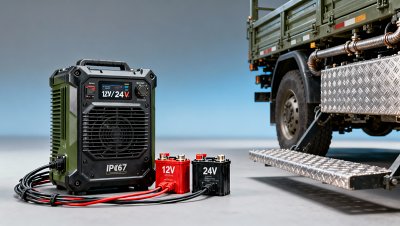
A low-voltage condition is a frequent trigger. When supply voltage drops below about 22V on a 24V truck platform during engine cranking or high electrical load, some control units may reset briefly. That can produce delayed throttle response, cooling fan non-activation, dashboard alarm bursts, or transmission irregularities. Because the symptoms spread across systems, the issue may be blamed on alternators, relays, or even driveline parts before the electronic cause is found.
Sensor drift is another major category. A coolant temperature sensor reading 8°C to 12°C higher than actual can force early fan engagement or create a false overheating complaint. A rail pressure sensor with unstable output can mimic injector wear. A wheel speed signal dropout can affect not only braking logic but also traction control and torque management, making tire, wheel, or axle components look suspicious.
Communication faults on the CAN bus often produce the most confusing complaints. A poor connector seal, water ingress, or harness abrasion can interrupt data flow for milliseconds, yet that is enough to trigger limp-home mode or deactivate auxiliary systems. Trucks working in mining, municipal engineering, or high-dust logistics routes are more exposed because vibration, mud, and temperature cycling accelerate connector fatigue.
Examples by subsystem
Truck steering system
If steering effort changes only during tight turns, loading operations, or after a warm-up period of 30 to 60 minutes, look beyond the pump. Input sensors, steering assist control logic, and voltage drop under load can all create intermittent assist loss. For buyers, this means the correct parts basket may include connectors, harness sections, or a control module rather than only hydraulic parts.
Truck fuel system
Hard starting and reduced power are classic fuel complaints. Yet if the pressure curve collapses only at specific RPM bands, for example between 1,400 and 1,800 rpm, the root cause may be command logic or sensor validation failure. Ordering injectors without reviewing data can increase downtime and still leave the original fault unresolved.
Truck cooling system and truck electrical system
Cooling fan control, cab HVAC response, and warning cluster behavior are often linked by shared power and communication architecture. A body or engine control module fault may influence the truck cab display, the fan strategy, and electrical accessories at the same time. When several “small” issues appear together, electronic diagnosis should move higher on the priority list.
How buyers and distributors should verify the root cause before ordering parts
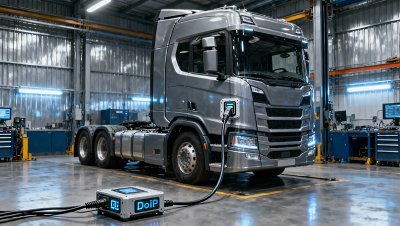
For sourcing teams, the best defense against unnecessary stock and returns is a structured verification process. In practical terms, that means asking for a fault record, usage description, environmental conditions, and previous repair history before confirming a purchase order. Even a 10-minute technical review can avoid ordering a high-value mechanical assembly that does not solve the issue.
A useful screening method is to separate faults into three levels: symptom level, confirmed component level, and root-cause level. Many purchase requests stop at symptom level, such as “overheating” or “steering heavy.” Good B2B suppliers push the discussion toward root-cause level by requesting operating temperature, voltage readings, pressure ranges, and whether the problem is constant or intermittent.
This matters even more when the request includes related products such as truck exhaust system parts, truck tire and truck wheel assemblies, or truck cab electrical accessories. A control unit issue can create side effects that mislead the buyer into bundling the wrong products together. For instance, abnormal torque delivery may be misread as tire drag or brake drag, when the powertrain is actually derated electronically.
For distributors and agents, better pre-sales verification also improves customer trust. Return handling, reverse logistics, and customs complications can easily add 2 to 4 weeks to a cross-border transaction. Preventing one incorrect shipment is often more valuable than speeding up one correct shipment by a few days.
A practical verification checklist
- Collect fault codes from all related modules, not only the engine ECU. Steering, body, braking, and transmission modules may hold linked events.
- Check supply voltage under load. On 24V systems, note static voltage, cranking drop, and charging voltage after start-up.
- Review whether the symptom occurs cold, hot, loaded, unloaded, uphill, or in stop-and-go traffic.
- Confirm what parts have already been replaced in the last 30 to 90 days to avoid repeating failed repair logic.
- Ask for connector condition, harness damage, water ingress signs, and grounding quality before approving a major mechanical purchase.
Procurement decision table for suspected mechanical faults
The following table can be used by procurement staff, parts traders, and fleet purchasing departments as a quick ordering filter.
A consistent verification routine reduces wrong orders and helps suppliers deliver more accurate quotations. It also supports better conversations between technical teams and commercial teams, especially when sourcing across different truck brands and regional specifications.
Sourcing strategy for truck control units, related components, and aftermarket support
When a fault may be electronic rather than purely mechanical, sourcing strategy should shift from single-part purchasing to system-based purchasing. That means evaluating not only the suspected module, but also associated sensors, connectors, repair kits, and compatibility documentation. In many cases, the best commercial outcome comes from ordering a targeted diagnostic package rather than a larger mechanical assembly.
This is especially relevant on a global heavy truck B2B platform where buyers compare suppliers across truck chassis and cab parts, complete trucks, construction machinery, trailers, and spare parts. The best suppliers do more than list products. They provide fitment information, voltage specification, software version guidance, connector photos, and lead-time ranges such as 7 to 15 days for stock items or 20 to 35 days for production orders.
For dealers and agents, bundling logic is important. A truck control unit order may need related items such as pressure sensors, harness plugs, seals, mounting brackets, or truck cab interface components. If the truck exhaust system is affected by derate logic, the buyer may also need sensors tied to aftertreatment control rather than only pipes or mechanical exhaust parts. A system-aware quotation is more valuable than a low unit price on one isolated part.
Commercial risk should also be assessed. Ask suppliers whether they support serial number matching, test reports, packaging protection for electronic parts, and return conditions for non-programmed versus programmed units. On control-unit purchases, returnability can be more restricted than on standard mechanical parts, so terms should be reviewed before confirming the order.
What to compare when selecting suppliers
- Compatibility depth: whether the supplier can match by OEM reference, vehicle configuration, and application environment.
- Technical documentation: whether fault logic, pin layout, sensor pairing, and installation notes are available.
- Lead time clarity: whether urgent orders can ship within 48 to 72 hours and standard replenishment within 2 to 5 weeks.
- Packaging and handling: electronic modules should be protected against moisture, vibration, and electrostatic exposure.
- After-sales response: technical feedback within 24 hours is often more important than a small price difference.
Common sourcing mistakes
Ordering by symptom only
A request for a pump, radiator, or steering gear based only on workshop suspicion often leads to repeat orders. Buyers should request evidence such as pressure logs, fault history, or module communication status.
Ignoring connector and harness condition
In real truck service, a damaged connector costing far less than the control unit can be the actual failure point. This is common in high-vibration routes, off-road construction use, and wet environments.
Separating electronics from mechanical procurement
When teams buy mechanical and electrical items through different channels without shared diagnosis data, fault resolution slows down. Integrated sourcing improves accuracy and helps fleets reduce truck downtime per event.
FAQ for fleet buyers, procurement teams, and truck parts distributors
How can I tell whether a truck control unit fault is more likely than a mechanical failure?
Look for patterns. If the problem is intermittent, affects more than one system, appears after a certain temperature or duty cycle, or leaves fault codes in multiple modules, an electronic issue becomes more likely. A purely mechanical failure is often more constant and localized, although not always. A 3-step check of voltage, fault memory, and live sensor values usually gives a better answer than replacing parts immediately.
Which truck parts are most often replaced by mistake when the root cause is electronic?
Common misordered items include truck pump assemblies, thermostats, radiators, injectors, steering hydraulic parts, and some truck exhaust system components. In wheel-end complaints, even truck tire and truck wheel related parts may be suspected when the issue is actually torque management, ABS signal loss, or speed sensor data errors.
What information should I send to a supplier before requesting a quotation?
Provide at least 6 data points: truck model or VIN reference, engine or system type, fault codes, symptom description, when the fault appears, and what parts were recently replaced. Photos of labels, connectors, and the truck cab dashboard warnings can improve matching accuracy and shorten the quotation cycle.
What is a reasonable lead time for electronic spare parts in the heavy truck sector?
For stocked aftermarket items, 7 to 15 days is a common international delivery planning range depending on region and customs process. For less common modules, specialized sensors, or configured units, 2 to 5 weeks is more realistic. Buyers should always confirm whether the part is ready stock, production-based, or requires programming support.
Truck control unit faults are easy to mistake for mechanical failures because the visible symptoms show up in steering, fuel, cooling, electrical, and even exhaust-related performance. For buyers, distributors, and fleet decision-makers, the practical solution is to combine diagnosis data with sourcing discipline: verify fault codes, review voltage and sensor behavior, and compare suppliers on compatibility support rather than price alone.
A professional global B2B sourcing platform makes this process more efficient by connecting buyers with suppliers across truck chassis and cab systems, complete trucks, trailers, construction machinery, and spare parts, while also providing the market insight needed for better technical and commercial decisions. If you need support identifying the right truck control unit, related components, or sourcing strategy for cross-border procurement, contact us to get tailored product details and practical solutions.
Trending News
- Wuhu MSA Issues Yellow Fog Warning, Affecting Roll-on/Roll-off Operations on Wanjiang River
- Yangtze River Navigational Draft Adjustment Affects Ro-Ro Heavy Truck Transport
- Yichang Yidu MSA Issues Orange Fog Warning, Temporarily Halts Ro-Ro Vessel Traffic at Three Gorges Dam
- Chongqing MSA Adjusts Ship Transit Plan at Three Gorges–Gezhouba Locks
- China to Boost Truck Containerization at Key Rail Hubs by 2026
Tag
Recommended News
 Technology & InnovationTC521 Advances Smart Heavy-Duty Truck Remote Diagnostics StandardTC521 advances smart heavy-duty truck remote diagnostics: ISO 27145-2 compliance, EU/UAE/GCC type approval readiness — act now to avoid certification delays.
 Technology & InnovationTruck control unit faults that look mechanical at firstTruck control unit faults often mimic truck steering system, truck fuel system, and truck cooling system failures. Learn how to avoid wrong truck pump parts orders and cut downtime.
 Technology & InnovationTC521 Launches Pre-Research on Remote Diagnostics Interface Standard for Smart Heavy-Duty TrucksRemote diagnostics interface standard pre-research launched for smart heavy-duty trucks — align with ACEA R19-2025 & ISO 27145 now to secure EU market access.
 Technology & InnovationMilitary truck battery systems now require dual-voltage support — legacy chargers can’t keep upHydraulic pump, fuel injection pump & truck military systems now demand dual-voltage battery support—legacy chargers fail. Upgrade for truck off road, logistics truck, and truck lowbed reliability.
 Technology & InnovationWhy Truck Steel Grades Matter in Trailer BuildsTruck steel drives trailer strength, payload, and cost. Explore bulk cement trailer and flatbed trailer supplier insights plus commercial vehicle parts tips for smarter sourcing.
 Technology & InnovationTruck Aluminum Body Panels and Corrosion: What Changes in Coastal UseTruck aluminum panels in coastal use face faster corrosion. Compare truck wing, truck hydraulic, truck tanker, truck pump and gasket solutions with tips from a semi trailer manufacturer guide.
 Technology & Innovation2026 Construction Truck Trends Point to Smarter Load MonitoringConstruction truck trends for 2026 highlight smarter load monitoring, off road truck uptime, truck battery efficiency, truck lighting upgrades, mining truck and tipper trailer sourcing insights.
 Technology & InnovationHow Excavator Bucket Choice Affects OutputExcavator bucket selection directly impacts output, fuel use, and wear. Compare excavator for sale, excavator rental, and excavator parts to boost construction efficiency.
 Technology & InnovationChina's MW-Class Hydrogen Aviation Turboprop Engine First FlightChina's MW-class hydrogen aviation turboprop engine first flight — accelerating H-ICE adoption in heavy-duty trucks and export clean transport.
 Technology & InnovationAI Dispatch Platform Launched in Yangtze River Delta Heavy-Truck HubsAI Dispatch Platform transforms land transport in Yangtze River Delta — cutting empty-running by 23%. Boost visibility, reliability & ETAs for freight forwarders, ports, EV infrastructure, and exporters.
 Technology & InnovationIs Truck Cement OEM Better for Custom Specs and Branding?Compare truck cement OEM for custom specs, branding, truck cement price and semi trailer price. Find a trusted semi trailer supplier for bulk orders and smarter sourcing.
 Technology & InnovationTruck tipper for sale: Why hydraulic system specs are rarely disclosed — and why they matterTruck tipper for sale? Discover why hydraulic specs—critical for dump truck price, durability & performance—are rarely disclosed—and how to demand transparency.
 Technology & InnovationChina's First 10,000-Ton Pure-Electric Smart Container Ship Enters ServiceChina's first 10,000-ton pure-electric smart container ship launches at Ningbo-Zhoushan Port—integrating electric heavy-duty trucks, AGVs & marine battery storage for green port logistics.
 Technology & InnovationZhouhui Auto Patents New Energy Battery Frame for Electric TrailersZhouhui Auto's new energy battery frame patent for electric trailers offers lightweight design & international safety compliance. Ideal for EU/US export models. Learn how this innovation impacts commercial EV manufacturers.
 Technology & InnovationWhy some bulldozer factory rebuild programs skip critical frame stress testingBulldozer supplier & manufacturer insights: Why frame stress testing is skipped—and how to verify structural integrity for road construction, mining, and heavy duty trucks in Canada, SA, Australia.
 Technology & InnovationWhy BULLDOZER for road construction often fails under wet clay conditionsBULLDOZER for road construction struggles in wet clay—learn why & find certified bulldozer manufacturers, suppliers, and heavy duty trucks for sale in Canada, South Africa, Australia.
 Technology & InnovationWeichai's DPF Clogging Detection Patent Boosts Heavy Truck ReliabilityWeichai's patented DPF clogging detection technology (CN121827988A) enhances heavy truck reliability, achieving EU VI Stage D certification. A game-changer for exporters and fleet operators in emission-regulated markets.
 Technology & InnovationVan trailer thermal bridging cuts refrigerated efficiency by up to 12% — where it hidesVan trailer, curtain side trailer & wing van thermal bridging cuts refrigerated efficiency by up to 12%. Discover hidden hotspots in gooseneck, axle, and stake trailer designs — and how to specify smarter.
 Technology & InnovationWater tanker residual chlorine levels drop faster in aluminum tanks vs. stainless steel — lab comparisonwater tanker material matters: stainless steel outperforms aluminum for chlorine retention. Compare van trailer, flatbed trailer, bulk trailer & more on Global Heavy Truck Platform.
 Technology & InnovationWhy some van trailers fail cold-weather testing below -20°C — material brittleness overlookedVan trailer, stake trailer, gooseneck trailer & more fail below -20°C due to material brittleness — discover why and how to source cold-certified units now.
 Technology & InnovationEXCAVATOR for demolition: When hydraulic hammer specs don’t match your site’s concrete densityEXCAVATOR for demolition? Match hydraulic hammer specs to concrete density. Get excavator for sale, price, attachment & OEM solutions—accurate construction machinery quotation guaranteed.
 Technology & InnovationWater truck OEM production timelines now include mandatory corrosion validationWater truck OEM, construction machinery OEM & crane truck OEM partners now face mandatory corrosion validation—impacting bulk order timelines, logging truck cost, and truck parts OEM durability. Act now.
 Technology & InnovationWater truck OEM design flexibility drops after first 5 units — plan accordinglyWater truck OEM flexibility drops after 5 units—optimize design, cost & lead time for water truck bulk order, construction machinery OEM, and logging truck cost savings.
 Technology & InnovationWater truck pump cavitation becomes common above 1,800m elevationWater truck pump cavitation surges above 1,800m—impacting dump truck, concrete pump truck, logging truck & other heavy duty truck operations. Discover proven mitigation strategies and altitude-certified truck parts.
 Technology & InnovationRefrigerated truck evaporator coil icing recurred despite updated defrost algorithms — what’s missing from the control logic?Refrigerated truck icing persists? Discover why garbage truck, logging truck & low bed trailer operators need multi-signal defrost logic—not just firmware updates.