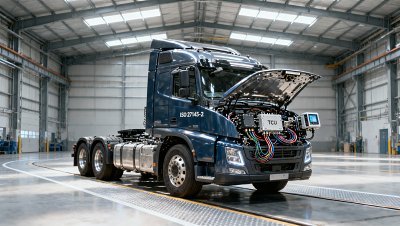
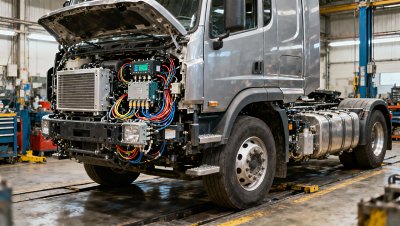
TC521 Advances Smart Heavy-Duty Truck Remote Diagnostics Standard
China’s National Automotive Standardization Technical Committee (TC521) announced on April 24, 2026, the completion of the third round of overseas technical alignment for the national standard Remote Diagnostic Data Interface for Intelligent Heavy-Duty Trucks. The development directly affects exporters, OEMs, and after-sales service providers targeting the EU, UAE, and GCC markets — where compliance is now a de facto prerequisite for type approval.
Event Overview
On April 24, 2026, TC521 reported that the draft national standard Remote Diagnostic Data Interface for Intelligent Heavy-Duty Trucks has completed its third round of overseas technical alignment, with key references to EU Regulation (EU) 2023/1877 and UAE SIR-2025. The standard is expected to enter the approval-draft submission phase in Q3 2026. It will mandate ISO 27145-2 protocol support and pre-integrated local remote diagnostic cloud platform access modules for intelligent heavy-duty trucks exported to the EU, UAE, and Saudi Arabia. Non-compliant vehicles may fail E-Mark or GCC certification processes.
Impact on Specific Industry Segments
Direct Exporters & OEMs Serving EU/UAE/GCC Markets
These entities face immediate regulatory gatekeeping: vehicle type approval in target markets now hinges on conformance with the upcoming standard. Impact manifests in product homologation timelines, software architecture revisions, and cloud integration requirements — all preceding market entry.
Heavy-Duty Vehicle Telematics & Cloud Platform Providers
Suppliers of remote diagnostics solutions must align their cloud APIs, data models, and authentication mechanisms with ISO 27145-2 and local platform specifications (e.g., EU’s OBD-II+ extensions, UAE’s SIR-2025 telemetry schema). Delayed adaptation risks exclusion from OEM integration pipelines.
Aftermarket Parts & Service Network Operators
Independent service centers and parts distributors in export markets may encounter interoperability barriers if third-party diagnostic tools lack certified ISO 27145-2 support. Certification-dependent workshop authorization programs (e.g., under EU’s Type Approval Framework) could restrict access to vehicle-level diagnostic data.
Supply Chain Integrators & Tier-1 ECUs Suppliers
Manufacturers of telematics control units (TCUs), gateway modules, and diagnostic ECUs must verify hardware/firmware readiness for ISO 27145-2 message handling, secure OTA update channels, and regional cloud endpoint configuration — adding validation scope to existing development cycles.
Key Focus Areas and Practical Responses
Monitor official TC521 updates and draft release timelines
Track TC521’s public notifications for the formal release of the approval-draft (expected Q3 2026), including annexes specifying mandatory message sets, security requirements, and cloud handshake protocols — not just high-level scope statements.
Prioritize EU and GCC-bound vehicle platforms for early technical gap analysis
Conduct ISO 27145-2 protocol mapping against current vehicle communication stacks (e.g., CAN FD bandwidth allocation, UDS over IP support, certificate management), focusing first on models scheduled for EU/ECE R100 or GCC Type Approval in 2027–2028.
Distinguish between regulatory signal and enforceable requirement
The current status reflects active standard development — not yet an enforceable regulation. However, EU 2023/1877 is already in force; TC521’s alignment signals that Chinese export compliance will mirror those obligations. Treat the draft as a binding design reference for new platforms, not merely advisory guidance.
Initiate cross-functional alignment on cloud platform integration scope
Engage cloud infrastructure teams, cybersecurity leads, and regional certification consultants now to define responsibilities for local cloud onboarding (e.g., UAE-certified data residency, EU GDPR-compliant logging), rather than deferring to post-draft implementation phases.
Editorial Observation / Industry Perspective
From an industry perspective, this TC521 initiative is best understood not as a standalone standard but as China’s institutional response to converging global regulatory expectations — particularly the EU’s tightening control over vehicle-generated data access and aftermarket interoperability. Analysis来看, it signals a shift from voluntary interoperability toward mandatory, protocol-level harmonization for export-oriented heavy-duty platforms. Observation来看, while the standard itself remains in draft form, its technical anchors (ISO 27145-2, EU 2023/1877) are already operational in target markets — meaning real-world certification pressure precedes formal Chinese adoption. Current more appropriate interpretation is that TC521 is formalizing a de facto export precondition, not introducing novel technical requirements.
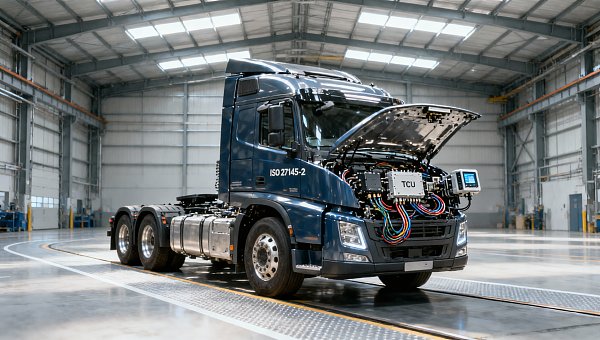
In summary, this development marks a structural tightening of technical access conditions for intelligent heavy-duty trucks entering regulated international markets. It does not introduce new vehicle safety or emissions rules — but redefines what constitutes baseline digital compatibility for type approval. For stakeholders, the priority is not waiting for final publication, but treating the aligned technical framework as the functional benchmark for ongoing platform development and certification planning.
Source: Official notification issued by the National Automotive Standardization Technical Committee (TC521), dated April 24, 2026. Note: The approval-draft submission timeline (Q3 2026) and exact technical annexes remain subject to further TC521 disclosure.
Trending News
- Heavy Equipment Export to Africa: Cost Risks and Market Priorities
- Low Bed Trailer Export for Mining: Load Limits and Route Planning
- Construction Machinery for Mining: Key Specs That Affect Output
- Bulldozer Price vs Operating Cost: What Matters Before Purchase
- Truck Cement Mixer Supplier Comparison: Price, Lead Time, and Service
Tag
Recommended News
 Technology & InnovationL4 Autonomous Trucks Launch on Tianjin Port–Xiong’an RouteL4 autonomous trucks launch on Tianjin Port–Xiong’an route—first routine platooned operations in China’s strategic logistics corridor. Watch EU & Gulf certification unfold.
 Technology & InnovationAre Energy-Saving Excavators Worth It for Long-Term Operations?Excavator manufacturer with energy-saving features: discover if lower fuel use, reduced downtime, and stronger long-term ROI make these machines the smart choice for demanding operations.
 Technology & InnovationSouth China Pioneer Studio Wins Youth May 4th Award for Smart Truck CertificationSmart truck certification breakthrough: South China Pioneer Studio wins Youth May 4th Award for EU R155/R156 compliance — a game-changer for global陆路运输设备 exports.
 Technology & InnovationL4 Autonomous Container Trucks Begin Trial on Tianjin Port–Xiong'an CorridorL4 autonomous container trucks begin trial on Tianjin Port–Xiong'an Corridor—key milestone for cross-border logistics, heavy-equipment transport & smart intermodal supply chains.
 Technology & InnovationQuick Installation Excavators: Do They Reduce Setup Time on Real Sites?Excavator manufacturer with quick installation: discover whether fast-deploy excavators truly cut real-site setup time, lower labor costs, and improve uptime before you buy.
 Technology & InnovationModular Flatbed Trailers: When Design Flexibility Improves UtilizationFind out how a flatbed trailer supplier with modular design helps fleets boost utilization, adapt to varied loads, cut idle assets, and improve long-term ROI.
 Technology & InnovationPortable Construction Machinery: Where Flexible Equipment Saves TimeConstruction machinery supplier with portable options helps cut relocation time, improve transport efficiency, and keep projects moving faster across changing job sites.
 Technology & InnovationSemi Trailer Manufacturer with Lightweight Design: Is Lower Weight Worth It?Semi trailer manufacturer with lightweight design: discover when lower weight boosts payload, fuel savings, and fleet ROI—and when durability, compliance, and repair costs matter more.
![]() Technology & InnovationWhy Quick Installation Matters When Choosing an Excavator ManufacturerExcavator manufacturer with quick installation: discover how faster setup cuts downtime, simplifies maintenance, improves reliability, and keeps heavy equipment projects on schedule.
Technology & InnovationWhy Quick Installation Matters When Choosing an Excavator ManufacturerExcavator manufacturer with quick installation: discover how faster setup cuts downtime, simplifies maintenance, improves reliability, and keeps heavy equipment projects on schedule. Technology & InnovationHow Modular Design Changes the Value of a Flatbed Trailer SupplierFlatbed trailer supplier with modular design: discover how modular platforms cut lifecycle costs, boost fleet flexibility, and improve ROI for logistics, construction, and industrial buyers.
 Technology & InnovationHow Portable Construction Machinery for Mining Helps Remote Projects Move FasterConstruction machinery for mining helps remote projects move faster with easier transport, quick setup, and flexible deployment. Learn how to cut delays and improve site efficiency.
 Technology & InnovationTruck Tipper OEM: How Custom Body Design Changes Worksite PerformanceTruck tipper OEM solutions with custom body design can boost unloading efficiency, durability, and site safety. Learn how to compare suppliers and choose the right fit for demanding jobs.
 Technology & InnovationHow Energy-Saving Features Change Excavator Value Over TimeDiscover how an excavator manufacturer with energy-saving features can lower fuel costs, improve uptime, and boost resale value with a smart long-term buying checklist.
 Technology & InnovationDo Energy-Saving Features Really Matter in an Excavator ManufacturerExcavator manufacturer with energy-saving features: learn how to verify fuel savings, uptime, service support, and ROI before choosing the right supplier.
 Technology & InnovationKunming Blue Jacaranda-Themed Buses Launch with Domestic V2X & LMPF BatteryKunming's blue jacaranda buses feature domestic V2X & LMPF battery tech — a proven, export-ready blueprint for urban transit and airport GSE suppliers targeting Middle East & LATAM markets.
 Technology & InnovationPortable Construction Machinery: Where Flexible Equipment Delivers More ValueConstruction machinery supplier with portable options: use this practical checklist to compare mobility, setup, service, and lifecycle value for faster, smarter project decisions.
 Technology & InnovationHow Construction Machinery for Mining Is Shifting Toward Higher UptimeConstruction machinery for mining is shifting from raw power to higher uptime. Learn how smarter maintenance, diagnostics, and parts support help cut risk, control costs, and improve project performance.
 Technology & InnovationHow a Truck Cement Manufacturer Controls Tank and Discharge QualityTruck cement manufacturer insights: learn how leading factories control tank strength, weld quality, pressure testing, and discharge performance to improve safety, uptime, and sourcing confidence.
 Technology & InnovationWhen Portable Construction Machinery Makes More Sense for Remote ProjectsConstruction machinery supplier with portable options: learn when compact, mobile equipment is the smarter choice for remote projects, cutting transport costs, delays, and setup time.
 Technology & InnovationWhy R&D Capability Matters in a Heavy Truck Chassis ManufacturerHeavy truck chassis manufacturer with R&D capability: discover how stronger engineering improves durability, customization, compliance, and fleet uptime for global B2B sourcing.
 Technology & InnovationPortable Construction Machinery for Infrastructure Projects: What Works BestConstruction machinery supplier for infrastructure buyers: discover the best portable machines for roads, utilities, and municipal projects to boost mobility, uptime, and cost control.
 Technology & InnovationWhen a BULLDOZER for Road Construction Delivers Better Site EfficiencyBULLDOZER for road construction buying guide: learn how the right machine improves grading accuracy, reduces downtime, and boosts site efficiency for faster project delivery.
 Technology & InnovationExcavator Attachment Choices That Can Slow a Job Instead of HelpingExcavator attachment mistakes can delay truck loading and raise costs. Learn how excavator bucket choice, excavator rental, excavator for sale, and excavator parts affect productivity.
 Technology & InnovationTC521 Advances Smart Heavy-Duty Truck Remote Diagnostics StandardTC521 advances smart heavy-duty truck remote diagnostics: ISO 27145-2 compliance, EU/UAE/GCC type approval readiness — act now to avoid certification delays.
 Technology & InnovationTruck control unit faults that look mechanical at firstTruck control unit faults often mimic truck steering system, truck fuel system, and truck cooling system failures. Learn how to avoid wrong truck pump parts orders and cut downtime.