2026 Construction Truck Trends Point to Smarter Load Monitoring
From smarter load monitoring to connected safety systems, 2026 is reshaping the construction truck market. Buyers and distributors are paying closer attention to off road truck performance, truck battery efficiency, truck lighting upgrades, and the evolving role of mining truck and tipper trailer solutions. This overview highlights the trends that matter most for sourcing, evaluation, and global business decisions.
For procurement teams, market researchers, distributors, and commercial evaluation professionals, the shift is no longer only about payload, engine power, or purchase price. The 2026 construction truck market is moving toward measurable uptime, safer loading cycles, better energy management, and digital visibility across fleets that may operate 8 to 20 hours per day in mining, municipal engineering, quarry, and infrastructure environments.
This creates a more demanding sourcing environment. A truck that performs well on paper may still underdeliver if load sensing is inaccurate, if battery systems cannot support auxiliary electronics, or if lighting systems are not suited to low-visibility sites. For global B2B buyers, comparing suppliers now means reviewing system integration, maintenance logic, export readiness, and aftermarket support—not just vehicle specifications.
Within this environment, the Global Heavy Truck Industry Platform serves as a practical sourcing and evaluation hub for the commercial vehicle and heavy equipment supply chain. By connecting manufacturers, suppliers, distributors, and buyers across truck chassis, complete trucks, construction machinery, trailers, and spare parts, it helps decision-makers identify suitable products, compare options more efficiently, and reduce uncertainty in cross-border purchasing.
Why Smarter Load Monitoring Is Becoming a Core Buying Requirement
Load monitoring has moved from a nice-to-have feature to a core performance indicator in construction truck procurement. In 2026, buyers are increasingly looking for systems that can track axle load, body weight distribution, tipping angle, and overload alerts in real time. On rough terrain or short-haul site operations, even a 5% to 10% load imbalance can increase tire wear, suspension stress, and braking distance.
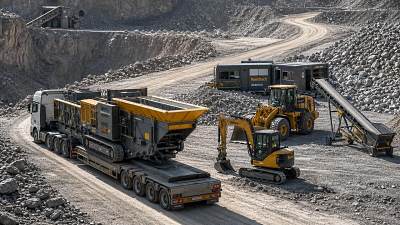
For off road truck and mining truck applications, the value is especially clear. Trucks often cycle through loading, transport, and unloading 20 to 60 times per shift. Without reliable load data, operators may underload and lose productivity or overload and increase the risk of structural fatigue. In both cases, the cost impact extends beyond fuel consumption to maintenance intervals, site safety, and parts replacement frequency.
Operational benefits buyers should verify
A smarter load monitoring system should do more than display gross weight. Procurement teams should ask whether the system supports in-cab alerts, telematics output, overload event recording, and calibration routines. In practical terms, a useful system helps reduce manual checking time by 10 to 20 minutes per loading cycle and improves dispatch consistency across mixed fleets.
For distributors and agents, these features also create stronger product differentiation. Customers are increasingly comparing trucks by lifecycle cost and fleet data visibility rather than by headline horsepower alone. A supplier that can show how load monitoring integrates with maintenance planning and driver behavior management is often better positioned in commercial negotiations.
The table below outlines the practical evaluation points many buyers now use when comparing construction truck load monitoring solutions.
The key takeaway is that buyers should not evaluate load monitoring as an isolated electronic add-on. It should be treated as part of the truck’s core productivity system, especially in tipper trailer operations, quarry hauling, and mining logistics where payload control has direct financial and safety consequences.
Off Road Truck Performance Is Being Measured by Uptime, Not Just Power
What performance means in 2026 jobsite conditions
In the past, many buyers focused on engine output and nominal payload first. Those metrics remain important, but 2026 purchasing decisions increasingly prioritize total uptime. For an off road truck working in mud, aggregate, sand, or uneven rock surfaces, traction reliability, cooling performance, frame durability, and braking consistency may influence productivity more than a small difference in rated horsepower.
A truck that loses 2 hours per week to repeated overheating, tire damage, or suspension repairs can create larger operating losses than a higher-priced truck with better site durability. That is why experienced buyers now ask for duty-cycle matching: how the truck performs over gradients of 8% to 15%, repeated stop-start hauling, and loaded operation in temperatures from -10°C to 45°C.
High-priority technical checks
For construction and mining truck sourcing, the following checks are increasingly standard:
- Verify axle capacity against actual site loads rather than brochure payload only.
- Review ground clearance, approach angle, and departure angle for uneven haul roads.
- Check brake retarder options for downhill control in loaded operation.
- Confirm air intake and filtration suitability for dusty work zones.
- Assess whether key wear parts can be replaced within 2 to 6 hours on site.
Dealers and distributors should also evaluate spare parts turnover rates. A truck with strong field performance but poor parts availability can become commercially difficult to support. In many export markets, buyers now prefer platforms with common service parts, practical documentation, and maintenance intervals that align with real operating cycles instead of ideal laboratory conditions.
The Global Heavy Truck Industry Platform is relevant here because it allows buyers to compare not only complete trucks but also related chassis, components, spare parts, and supplier capabilities across multiple heavy-duty application categories. This is particularly useful when assessing whether a supplier can support long-term operations rather than a one-time shipment.
Truck Battery Efficiency and Lighting Upgrades Are Now Strategic Fleet Factors
Construction truck electrification does not always mean a fully electric drivetrain. In many fleets, the more immediate issue is battery efficiency for auxiliary systems, telematics, sensors, lift controls, cab electronics, and advanced truck lighting. As more monitoring and safety systems are added, the electrical load profile becomes more complex. Batteries that were adequate for basic starting duty may no longer support 24-hour site usage reliably.
This is particularly relevant for tipper trucks, municipal engineering vehicles, and mining support fleets that spend long periods idling or operating accessories. Buyers should review battery chemistry, reserve capacity, cold-start consistency, charging compatibility, and protection ratings. In practical sourcing discussions, many teams compare 12V and 24V systems, battery capacities in the 100Ah to 240Ah range, and expected replacement cycles of 18 to 36 months depending on duty level.
Why lighting upgrades matter more than before
Truck lighting is also changing from a simple compliance item into a productivity and safety investment. LED work lights, adaptive front lighting, reverse warning lamps, and body-edge illumination improve visibility during night operation, tunnel work, rain, and dust-heavy unloading. Better lighting can reduce maneuvering errors, improve loading alignment, and support site safety protocols across low-visibility zones.
For buyers, the issue is not only brightness. They should check beam distribution, waterproof rating, vibration resistance, and replacement convenience. Lighting systems exposed to frequent vibration should be specified for heavy-duty use, especially where trucks operate 5 or 6 days per week under repeated shock loads. The right configuration can lower unplanned electrical faults and reduce operator fatigue during early morning or late evening shifts.
The following table summarizes common battery and lighting considerations in heavy-duty construction truck selection.
For B2B sourcing, battery and lighting systems should be included in total cost evaluation rather than treated as small accessories. As trucks become more connected, weak electrical architecture can undermine otherwise strong vehicle performance.
Mining Truck and Tipper Trailer Demand Is Shifting Toward Application-Specific Configurations
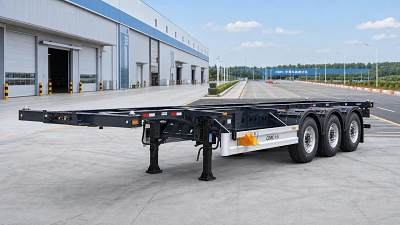
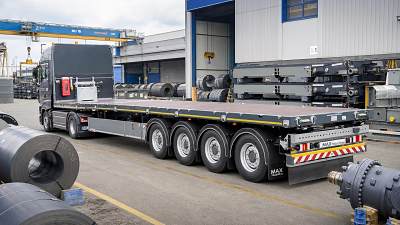
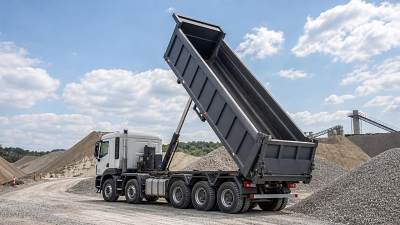
Mining truck and tipper trailer procurement is becoming more application-specific in 2026. Buyers are no longer satisfied with general heavy-duty claims. They want body material options, dump angle suitability, suspension matching, and trailer compatibility that fit exact site conditions. A mining route carrying abrasive rock differs significantly from a municipal earthmoving project or a regional aggregates distribution operation.
In practical terms, this means procurement teams are evaluating payload class, trailer structure, hydraulic system response, body wear resistance, and unloading stability as a combined system. For example, tipper trailer buyers may compare steel body thickness ranges, hydraulic lift cycle times of around 20 to 45 seconds, and whether the design supports high-frequency loading without excessive frame fatigue.
Application matching by use case
A mining truck built for long-haul internal mine roads may prioritize reinforced frame sections, high-capacity cooling, and heavy braking support. A construction-site tipper, by contrast, may need tighter turning radius, faster body cycle time, and easier maintenance access. If the supplier cannot clearly explain this match, the buyer risks overbuying, underbuying, or creating expensive fitment problems later.
The table below provides a practical comparison framework for common heavy-duty haulage applications.
The major insight is that body type, trailer type, and haul route must be evaluated together. Smart sourcing now means asking not only “How much can it carry?” but also “How often can it carry safely, how fast can it cycle, and how easily can it be maintained?”
How Procurement Teams Can Evaluate Suppliers More Effectively in a Global Market
As the construction truck market becomes more technical, supplier evaluation needs a more structured process. Price comparison alone is rarely enough. Procurement teams should review product consistency, engineering responsiveness, export documentation quality, spare parts planning, and communication speed. In cross-border B2B purchasing, a delay of 2 to 4 weeks in confirming technical details can affect bidding schedules and project deployment timelines.
A practical 5-step sourcing process
- Define operating conditions, including payload, route type, climate range, and expected daily working hours.
- Shortlist suppliers based on product scope, relevant category coverage, and responsiveness within 24 to 72 hours.
- Compare technical documents, component compatibility, and maintenance logic, not just headline vehicle specs.
- Review delivery cycle, spare parts support, and packaging or shipping readiness for the destination market.
- Confirm after-sales communication process, warranty boundaries, and the availability of replacement components.
This is where a specialized industry marketplace offers practical value. The Global Heavy Truck Industry Platform brings together suppliers, product categories, and industry resources in one environment, making it easier for buyers to compare complete trucks, truck chassis, construction machinery, trailers, and spare parts with better market visibility. For research teams and distributors, this reduces the time spent gathering fragmented supplier information from multiple channels.
Common mistakes in construction truck sourcing
Several recurring mistakes still appear in heavy truck procurement:
- Choosing a truck by engine rating without checking axle, frame, and body match.
- Ignoring battery and electrical load planning when adding sensors, cameras, and work lights.
- Assuming local service support exists without confirming parts stock and response workflow.
- Comparing tipper trailer price without reviewing hydraulic stability and unloading conditions.
- Failing to define inspection standards before shipment, which can create acceptance disputes later.
The best procurement outcomes usually come from structured technical comparison, clear documentation, and supplier communication that addresses lifecycle use rather than one-time shipment alone.
Frequently Asked Questions for 2026 Construction Truck Sourcing
How do I choose between a standard construction truck and a more specialized off road truck?
Start with terrain, duty cycle, and load repetition. If the truck works mostly on prepared roads with moderate site access, a standard heavy-duty construction truck may be sufficient. If it operates on steep grades, soft ground, or abrasive haul roads for 10 to 16 hours per day, an off road truck with reinforced chassis, higher ground clearance, and stronger cooling support is usually the safer investment.
Which indicators matter most when reviewing smarter load monitoring systems?
Focus on four areas: measurement accuracy, calibration frequency, warning capability, and data integration. A practical system should provide overload alerts, support fleet data export, and maintain reliable readings across different load conditions. In high-cycle construction or mining operations, calibration intervals of 3 to 6 months are common checkpoints.
What should buyers check in truck battery and lighting packages?
Check whether the battery system can support all installed accessories, not just engine starting. Review voltage, amp-hour capacity, replacement cycle, and charging compatibility. For lighting, verify durability under vibration, weather resistance, and usable visibility coverage for work zones rather than relying on brightness claims alone.
How long is the typical delivery and implementation cycle for heavy truck export orders?
Delivery cycles vary by specification complexity, quantity, and destination. For standard heavy truck or trailer configurations, buyers often plan around 4 to 10 weeks for production and order preparation, plus shipping time. Custom body, lighting, hydraulic, or monitoring configurations can extend technical confirmation and inspection by another 1 to 3 weeks.
What role do industry platforms play in distributor and buyer decisions?
A specialized B2B platform improves sourcing efficiency by centralizing product discovery, supplier comparison, and category-level market information. For distributors, it supports portfolio expansion and brand evaluation. For procurement teams, it shortens the early research stage, improves supplier visibility, and helps align product selection with actual application needs.
The 2026 construction truck market is clearly moving toward smarter, more connected, and more application-specific equipment. Load monitoring, off road truck uptime, truck battery efficiency, lighting performance, and mining truck or tipper trailer suitability are now central decision factors for serious buyers and distributors.
For companies involved in sourcing, evaluation, and channel development, the most effective strategy is to compare trucks as complete operating systems rather than isolated products. That means combining technical review, lifecycle thinking, supplier responsiveness, and aftermarket planning into one procurement process.
The Global Heavy Truck Industry Platform supports that process by connecting global buyers, manufacturers, suppliers, and distributors across the heavy truck supply chain, while offering access to product categories, industry insights, and practical sourcing resources. To explore suitable construction truck, mining truck, tipper trailer, chassis, or spare parts solutions for your market, contact us today, request a tailored sourcing plan, or learn more about available heavy-duty transport equipment options.
Trending News
- Are Energy-Saving Excavators Worth It for Long-Term Operations?
- Dump Truck Supplier With Quick Delivery: What to Verify First
- Choosing Commercial Vehicle Parts for Cold Storage Reliability
- How ISO Certification Reduces Supplier Risk in Heavy Truck Chassis
- Cab Chassis Truck for Fire Department: Key Fitment Points
Tag
Recommended News
 Technology & InnovationAre Energy-Saving Excavators Worth It for Long-Term Operations?Excavator manufacturer with energy-saving features: discover if lower fuel use, reduced downtime, and stronger long-term ROI make these machines the smart choice for demanding operations.
 Technology & InnovationSouth China Pioneer Studio Wins Youth May 4th Award for Smart Truck CertificationSmart truck certification breakthrough: South China Pioneer Studio wins Youth May 4th Award for EU R155/R156 compliance — a game-changer for global陆路运输设备 exports.
 Technology & InnovationL4 Autonomous Container Trucks Begin Trial on Tianjin Port–Xiong'an CorridorL4 autonomous container trucks begin trial on Tianjin Port–Xiong'an Corridor—key milestone for cross-border logistics, heavy-equipment transport & smart intermodal supply chains.
 Technology & InnovationQuick Installation Excavators: Do They Reduce Setup Time on Real Sites?Excavator manufacturer with quick installation: discover whether fast-deploy excavators truly cut real-site setup time, lower labor costs, and improve uptime before you buy.
 Technology & InnovationModular Flatbed Trailers: When Design Flexibility Improves UtilizationFind out how a flatbed trailer supplier with modular design helps fleets boost utilization, adapt to varied loads, cut idle assets, and improve long-term ROI.
 Technology & InnovationPortable Construction Machinery: Where Flexible Equipment Saves TimeConstruction machinery supplier with portable options helps cut relocation time, improve transport efficiency, and keep projects moving faster across changing job sites.
 Technology & InnovationSemi Trailer Manufacturer with Lightweight Design: Is Lower Weight Worth It?Semi trailer manufacturer with lightweight design: discover when lower weight boosts payload, fuel savings, and fleet ROI—and when durability, compliance, and repair costs matter more.
![]() Technology & InnovationWhy Quick Installation Matters When Choosing an Excavator ManufacturerExcavator manufacturer with quick installation: discover how faster setup cuts downtime, simplifies maintenance, improves reliability, and keeps heavy equipment projects on schedule.
Technology & InnovationWhy Quick Installation Matters When Choosing an Excavator ManufacturerExcavator manufacturer with quick installation: discover how faster setup cuts downtime, simplifies maintenance, improves reliability, and keeps heavy equipment projects on schedule. Technology & InnovationHow Modular Design Changes the Value of a Flatbed Trailer SupplierFlatbed trailer supplier with modular design: discover how modular platforms cut lifecycle costs, boost fleet flexibility, and improve ROI for logistics, construction, and industrial buyers.
 Technology & InnovationHow Portable Construction Machinery for Mining Helps Remote Projects Move FasterConstruction machinery for mining helps remote projects move faster with easier transport, quick setup, and flexible deployment. Learn how to cut delays and improve site efficiency.
 Technology & InnovationTruck Tipper OEM: How Custom Body Design Changes Worksite PerformanceTruck tipper OEM solutions with custom body design can boost unloading efficiency, durability, and site safety. Learn how to compare suppliers and choose the right fit for demanding jobs.
 Technology & InnovationHow Energy-Saving Features Change Excavator Value Over TimeDiscover how an excavator manufacturer with energy-saving features can lower fuel costs, improve uptime, and boost resale value with a smart long-term buying checklist.
 Technology & InnovationDo Energy-Saving Features Really Matter in an Excavator ManufacturerExcavator manufacturer with energy-saving features: learn how to verify fuel savings, uptime, service support, and ROI before choosing the right supplier.
 Technology & InnovationKunming Blue Jacaranda-Themed Buses Launch with Domestic V2X & LMPF BatteryKunming's blue jacaranda buses feature domestic V2X & LMPF battery tech — a proven, export-ready blueprint for urban transit and airport GSE suppliers targeting Middle East & LATAM markets.
 Technology & InnovationPortable Construction Machinery: Where Flexible Equipment Delivers More ValueConstruction machinery supplier with portable options: use this practical checklist to compare mobility, setup, service, and lifecycle value for faster, smarter project decisions.
 Technology & InnovationHow Construction Machinery for Mining Is Shifting Toward Higher UptimeConstruction machinery for mining is shifting from raw power to higher uptime. Learn how smarter maintenance, diagnostics, and parts support help cut risk, control costs, and improve project performance.
 Technology & InnovationHow a Truck Cement Manufacturer Controls Tank and Discharge QualityTruck cement manufacturer insights: learn how leading factories control tank strength, weld quality, pressure testing, and discharge performance to improve safety, uptime, and sourcing confidence.
 Technology & InnovationWhen Portable Construction Machinery Makes More Sense for Remote ProjectsConstruction machinery supplier with portable options: learn when compact, mobile equipment is the smarter choice for remote projects, cutting transport costs, delays, and setup time.
 Technology & InnovationWhy R&D Capability Matters in a Heavy Truck Chassis ManufacturerHeavy truck chassis manufacturer with R&D capability: discover how stronger engineering improves durability, customization, compliance, and fleet uptime for global B2B sourcing.
 Technology & InnovationPortable Construction Machinery for Infrastructure Projects: What Works BestConstruction machinery supplier for infrastructure buyers: discover the best portable machines for roads, utilities, and municipal projects to boost mobility, uptime, and cost control.
 Technology & InnovationWhen a BULLDOZER for Road Construction Delivers Better Site EfficiencyBULLDOZER for road construction buying guide: learn how the right machine improves grading accuracy, reduces downtime, and boosts site efficiency for faster project delivery.
 Technology & InnovationExcavator Attachment Choices That Can Slow a Job Instead of HelpingExcavator attachment mistakes can delay truck loading and raise costs. Learn how excavator bucket choice, excavator rental, excavator for sale, and excavator parts affect productivity.
 Technology & InnovationTC521 Advances Smart Heavy-Duty Truck Remote Diagnostics StandardTC521 advances smart heavy-duty truck remote diagnostics: ISO 27145-2 compliance, EU/UAE/GCC type approval readiness — act now to avoid certification delays.
 Technology & InnovationTruck control unit faults that look mechanical at firstTruck control unit faults often mimic truck steering system, truck fuel system, and truck cooling system failures. Learn how to avoid wrong truck pump parts orders and cut downtime.
 Technology & InnovationTC521 Launches Pre-Research on Remote Diagnostics Interface Standard for Smart Heavy-Duty TrucksRemote diagnostics interface standard pre-research launched for smart heavy-duty trucks — align with ACEA R19-2025 & ISO 27145 now to secure EU market access.