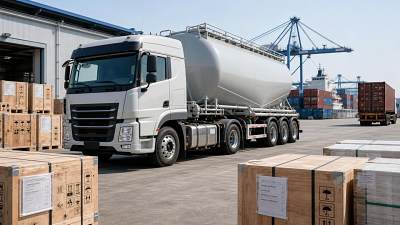
Used bulk cement tanker checks that matter before export shipment
Before a used bulk cement tanker leaves for export shipment, every critical system must be checked to reduce risk and protect buyer value. From the truck steering system, truck brake-related components, truck tire, truck wheel, truck fuel system, truck cooling system, and truck exhaust system to the truck cab, truck electrical system, and truck control unit, smart inspection helps procurement teams, distributors, and evaluators make confident decisions.
In cross-border trade, a used bulk cement tanker is not simply a second-hand asset. It is a transport unit that must match route conditions, loading frequency, maintenance capability, and destination-country compliance expectations. For buyers, one missed defect in steering, braking, or pneumatic discharge equipment can turn a cost-saving purchase into a delayed project or an expensive refurbishment case.
This is why export inspection should go beyond a quick walk-around. Procurement teams, dealers, and commercial evaluators need a structured checklist that covers roadworthiness, tank integrity, operating safety, and documentation readiness. A disciplined pre-shipment review can reduce avoidable disputes, improve resale confidence, and support faster transaction decisions on global B2B platforms.
Why pre-export checks matter for used bulk cement tankers
A used bulk cement tanker often works in high-dust, high-load, and stop-start transport environments. Over 3 to 8 years of service, wear can accumulate in the chassis, suspension, air system, and tank-related discharge components. If these areas are not checked before export shipment, the buyer may receive a unit that looks acceptable visually but fails under operational pressure within the first 30 to 90 days.
For importers and distributors, inspection is also a commercial filter. A tanker with stable brake response, even tire wear, intact tank welds, and clean system records is easier to price, easier to recondition, and easier to place in local inventory. In contrast, hidden defects increase post-arrival labor hours, spare parts demand, and downtime risk, especially when replacement components require 2 to 6 weeks of sourcing time.
In many export transactions, buyers cannot physically inspect every vehicle before shipping. They rely on photos, videos, condition reports, and supplier credibility. That makes a detailed pre-export checklist more than a technical step; it becomes a trust mechanism that supports transparent negotiation, commercial evaluation, and smoother customs and delivery planning.
The most effective inspection process usually combines 4 layers: visual review, mechanical testing, pneumatic or system functionality checks, and document verification. This layered approach helps separate cosmetic issues from operational risks and gives procurement teams a more realistic view of refurbishment cost.
Key export risks buyers try to avoid
- Brake imbalance or air leakage that reduces stopping stability during loaded operation.
- Tank shell corrosion, weld cracking, or discharge pipe wear that affects powder unloading efficiency.
- Steering looseness, axle wear, or suspension fatigue that creates unsafe road behavior.
- Electrical faults in lighting, indicators, sensors, or control units that delay road registration.
- Missing maintenance records, VIN mismatch, or incomplete export documents that slow shipment release.
A practical inspection priority sequence
Most experienced buyers review the tanker in a logical order: identity and documents first, structural condition second, safety systems third, operational systems fourth, and cosmetic items last. This sequence prevents teams from spending too much time on appearance before confirming whether the core truck and tanker systems are commercially viable.
The table below summarizes how different check categories affect export decision-making and post-arrival cost exposure.
The main conclusion is simple: safety systems and structural condition should carry more weight than cosmetic appearance. A unit with paint wear but sound mechanical condition is often a better export purchase than a visually polished tanker with hidden air system or axle problems.
Core mechanical and safety checks before shipment
The first technical focus should be road safety. On a used bulk cement tanker, the truck steering system, truck brake-related components, truck tire, and truck wheel directly determine whether the unit can be safely moved from port to yard and later enter service. Even when the buyer plans refurbishment, these systems should be inspected before shipping because severe defects can change total landed cost by 10% to 25%.
Steering checks should include free play, linkage condition, hydraulic assist response if equipped, and visible leakage around steering components. Excessive steering play, irregular front tire wear, or unstable return-to-center behavior may indicate hidden front-axle wear. For a practical field assessment, buyers often flag noticeable steering looseness, asymmetric tire shoulder wear, and impact damage around steering arms as high-priority concerns.
Braking checks should cover air pressure build-up speed, hose condition, chamber integrity, brake lining wear, drum or disc condition, and parking brake response. In many used heavy vehicles, pressure build-up that is unusually slow or pressure loss after a short idle period is an early warning sign. A basic hold test over 10 to 15 minutes can reveal leaks that may not be obvious in a static visual inspection.
Tires and wheels need more than tread depth review. Buyers should compare tire age, sidewall condition, retread consistency, and wear pattern across all positions. Uneven wear can point to alignment problems, suspension fatigue, or overloading history. On export units, replacing 6 to 12 tires after arrival can quickly erase any advantage gained from a low purchase price.
Mechanical checks that should not be skipped
- Test service brake response under low-speed movement if site conditions allow.
- Inspect air lines, couplings, and reservoirs for leakage, rust, or temporary repairs.
- Measure or estimate remaining brake lining thickness and compare left-right wear.
- Review wheel rims for cracks, deformation, or serious corrosion around the bead seat.
- Record tire brand mix, tread condition, and production age where visible.
Field-level acceptance benchmarks
Not every buyer requires laboratory testing, but even a field inspection can use basic acceptance thresholds. For example, consistent tire wear across axle positions, no major rim deformation, stable brake pressure behavior, and no severe steering looseness are minimum indicators that the unit is commercially inspectable rather than salvage-oriented.
The table below gives a practical reference for procurement teams comparing used tanker condition before export shipment.
For buyers sourcing through an international B2B platform, this kind of inspection framework makes supplier comparison more objective. Instead of relying on generic “good condition” descriptions, teams can compare measurable points and negotiate on the basis of actual repair exposure.
Tank body, powertrain support systems, and operating reliability
Beyond chassis safety, a used bulk cement tanker must be evaluated as a working pneumatic transport unit. The truck fuel system, truck cooling system, and truck exhaust system all influence reliability during transfer, road movement, and unloading operations. At the same time, the tank shell, air pipes, valves, manholes, and discharge lines determine whether bulk powder can be handled efficiently after arrival.
Fuel system inspection should look for seepage, hose aging, contamination signs, and unstable engine feeding under idle and load transition. Cooling system checks should include radiator cleanliness, coolant leakage, hose condition, fan operation, and visible overheating history. On older heavy trucks, cooling neglect is common, and overheating during inland delivery can create immediate service disruption even if the tanker passed a simple start-up test.
The exhaust system matters for both operating safety and market usability. Damaged exhaust piping, missing clamps, or excessive smoke under acceleration may indicate engine wear or poor maintenance history. While smoke level alone does not give a full engine diagnosis, it is a valuable screening signal for procurement teams comparing multiple used units in the 5-year to 10-year age range.
Tank-related checks should focus on corrosion level, weld seam quality, pressure line condition, valve functionality, and residue buildup. For cement and powder transport, internal moisture exposure or poor cleaning practices can accelerate localized corrosion. Even where the outer shell looks acceptable, discharge efficiency may drop if internal deposits, valve wear, or line restrictions are present.
Areas that often reveal hidden operating cost
- Radiators partially blocked by dust and cement residue, reducing cooling performance.
- Discharge pipes with internal abrasion, causing pressure loss during unloading.
- Tank outlet valves that open, but do not seal consistently under repeated use.
- Fuel line repairs done with temporary fittings rather than proper component replacement.
- Exhaust leaks near mounting points, often linked to vibration fatigue.
Typical condition ranges buyers can use
In practical export evaluation, buyers often classify used bulk cement tankers into 3 groups: ready for service with minor maintenance, suitable for light refurbishment, or suitable only for major repair and price-sensitive resale. The difference often depends less on paint and more on whether the powertrain support systems and tank handling components remain operational without immediate overhaul.
The table below helps commercial teams connect technical findings with procurement decisions.
For bulk powder logistics, the tank and support systems should be evaluated together. A mechanically sound truck with a compromised tanker body is still a risky purchase, because discharge inefficiency can affect turnaround time, customer service quality, and fleet productivity in daily operations.
Cab, electrical system, control unit, and document review
The truck cab, truck electrical system, and truck control unit are sometimes treated as secondary during used tanker inspections, but they have strong practical impact on export readiness. Lighting faults, unstable instrumentation, poor cabin sealing, or dashboard warning issues can create registration problems, delivery delays, or immediate workshop visits after import.
Cab inspection should include seat mounts, door locks, windshield condition, mirror brackets, wiper function, dashboard instruments, and visible evidence of water ingress. Water entry around the cab can lead to corrosion, electrical instability, and driver comfort complaints. For distributors planning resale, cab condition also affects perceived quality and final marketability more than many technical teams expect.
Electrical checks should cover headlamps, tail lamps, indicators, brake lights, horn, battery condition, wiring condition, fuse areas, and charging behavior. A used truck may still start normally while hiding wiring deterioration caused by dust, heat, vibration, or improvised repairs. Export buyers should request video verification of light function and dashboard startup where in-person inspection is not possible.
The control unit or key electronic control areas should be checked for warning signals, tampering signs, and fault indications that suggest deeper problems. For older units, full diagnostic access may not always be available, but buyers can still ask for startup footage, instrument response, idle behavior, and maintenance history records. This is particularly important when the tanker will be sold onward through dealer channels that require predictable condition disclosure.
Documents that should match the physical unit
- Vehicle identification and chassis number should match inspection photos and export paperwork.
- Tank registration or equipment-related records, where applicable, should be reviewed for consistency.
- Maintenance records from the past 12 to 24 months help confirm service history and replacement patterns.
- Shipping documents should clearly describe used equipment condition to reduce customs misunderstanding.
Common mistakes in remote buying
A frequent mistake is relying only on exterior photos and engine-start videos. These materials are useful, but they do not replace a condition sheet covering at least 20 to 30 checkpoints across the cab, electrical system, running gear, and tank functionality. Another mistake is ignoring document consistency until the booking stage, when correction costs and delays are harder to manage.
On a professional B2B sourcing platform, the best transactions usually involve clear asset descriptions, multi-angle inspection evidence, and commercially relevant condition notes. This allows research teams, procurement officers, and business evaluators to compare not only price, but also operational certainty and resale feasibility.
A practical export inspection workflow for buyers, distributors, and evaluators
To make inspection results useful for decision-making, teams need a process rather than a loose checklist. A practical workflow typically has 5 steps: listing review, remote evidence screening, on-site or third-party inspection, cost adjustment analysis, and shipment release approval. This structure helps buyers move from general interest to defensible procurement judgment.
At the listing review stage, commercial teams should confirm basic configuration, age, application history, and available photos. During evidence screening, they should request close-up images of tires, wheels, brake chambers, tank outlets, cab interior, instrument panel, and chassis underside. A supplier who can provide this level of detail is usually better prepared for serious export business than one offering only broad exterior images.
The inspection stage should convert observations into commercial categories: acceptable as-is, acceptable with minor repair, acceptable only with price revision, or not recommended for export purchase. This is where procurement discipline matters. Small issues such as mirror replacement or lamp renewal may be acceptable, but combined defects across brakes, tires, and tank discharge components often signal a deeper maintenance problem.
After inspection, the buyer should build a landed-cost view that includes purchase price, inland movement, ocean freight, local taxes where applicable, repair parts, labor, and estimated downtime. A used bulk cement tanker that is 8% cheaper upfront may become 12% more expensive after arrival if it needs urgent brake work, tire replacement, and valve rebuilding.
Suggested decision workflow
- Step 1: Confirm unit identity, basic age, and visible application type.
- Step 2: Request 360-degree visual evidence and targeted system photos.
- Step 3: Use a mechanical checklist covering at least 25 critical points.
- Step 4: Quantify repair exposure in parts, labor hours, and downtime days.
- Step 5: Approve shipment only after technical and document alignment.
How platforms support better buying decisions
For global buyers, a specialized heavy truck industry platform adds value by making supplier comparison faster and more transparent. It helps users explore used tankers, compare product categories, access industry insights, and identify suppliers that understand export preparation. This is especially useful for distributors and agents managing multiple opportunities across truck chassis, complete trucks, trailers, and spare parts at the same time.
When inspection standards are integrated into sourcing decisions, the result is better procurement control. Buyers can reduce negotiation uncertainty, distributors can improve inventory quality, and business evaluators can make decisions with stronger evidence. For used bulk cement tanker exports, that difference directly affects transaction reliability and downstream operating value.
FAQ for used bulk cement tanker export assessment
How many inspection points should a buyer review before export shipment?
A practical review usually covers 20 to 30 points at minimum, including steering, braking, tires, wheels, suspension, tank shell, discharge valves, fuel system, cooling system, exhaust system, cab condition, electrical function, and document consistency. For higher-value deals or fleet purchases, third-party inspection reports may expand that number to 40 points or more.
What condition level is acceptable for a used bulk cement tanker?
Acceptable condition depends on the buyer’s business model. End users usually prefer units needing only minor maintenance within 7 to 15 days of arrival. Dealers may accept light refurbishment if the resale margin supports it. Units requiring immediate brake overhaul, multiple tire replacement, and tank valve rebuilding should be priced accordingly and treated as repair-based inventory rather than ready assets.
Which defects should trigger a shipment hold?
Shipment should usually be paused when there is severe brake air leakage, major rim damage, structural tank cracking, clear steering instability, heavy exhaust abnormality, or document mismatch. These issues affect either safety, legal transferability, or total cost in a way that cannot be treated as minor reconditioning.
How can remote buyers reduce risk when they cannot inspect in person?
Remote buyers should request timestamped photos, startup and lighting videos, underbody images, close-ups of critical wear areas, and a written checklist signed by the seller or inspector. If the shipment value is significant, using a local third-party inspection service before port delivery is often more cost-effective than resolving hidden defects after import.
A used bulk cement tanker can be a strong value purchase when the export inspection is disciplined, evidence-based, and commercially focused. The most important checks are not limited to surface condition. Buyers should verify steering, brake-related components, tires, wheels, fuel, cooling, exhaust, cab systems, electrical condition, control functions, tank integrity, and document consistency before shipment approval.
For information researchers, procurement teams, business evaluators, and distributors, a structured review process turns uncertainty into comparable decision data. On a professional global heavy truck B2B platform, that means faster supplier screening, better risk control, and clearer alignment between purchase price and real operating value. To evaluate used bulk cement tankers more efficiently, contact us for product details, sourcing support, or a tailored inspection-oriented procurement solution.
Recommended News
 Truck ExportDalian–Middle East Route Opens for Truck ExportsDalian–Middle East Route Opens for Truck Exports: explore a new direct option for heavy-duty trucks, special vehicles, and KD kits with more flexible multimodal delivery planning.
 Truck ExportTruck Tipper Distributor Selection: Margin, Support, TerritoryTruck tipper distributor selection starts with margin, after-sales support, and territory protection. Learn how to compare suppliers, reduce risk, and choose a profitable long-term partner.
 Truck ExportDump Truck Exporter Checklist: Cost, Lead Time, ComplianceDump truck exporter checklist covering total landed cost, realistic lead time, and compliance essentials. Compare suppliers smarter, reduce delivery risk, and source with confidence.
 Truck ExportChina’s Zero-Tariff Move Cuts Africa Truck Import CostsChina’s Zero-Tariff Move Cuts Africa Truck Import Costs. Learn how lower duties on trucks, chassis, axles, and braking systems may reshape African sourcing, pricing, and delivery plans.
![]() Truck ExportWhat to Check Before Choosing a Truck Tipper ExporterTruck tipper exporter selection starts with the right checks. Learn how to compare quality, compliance, customization, and after-sales support before placing an order.
Truck ExportWhat to Check Before Choosing a Truck Tipper ExporterTruck tipper exporter selection starts with the right checks. Learn how to compare quality, compliance, customization, and after-sales support before placing an order. Truck ExportChina Opens U.S. Trade Barrier Probe on Green RulesChina Opens U.S. Trade Barrier Probe on Green Rules: discover how this China-U.S. trade review could affect new energy heavy-duty truck batteries, electronic control systems, compliance, and export market access.
 Truck ExportChina Share Rises as Indonesia Trailer Imports JumpChina’s share rises as Indonesia trailer imports jump 41.2%, boosting opportunities in semi-trailers, refrigerated trailers, logistics fleets, and supply-chain services.
 Truck ExportHow to Choose a Reliable Dump Truck Exporter in 2026Find a reliable dump truck exporter in 2026 with tips on compliance, specs, delivery, after-sales support, and scenario-based sourcing for global projects.
 Truck ExportRCEP E-Certs Speed China-Vietnam Vehicle ClearanceRCEP e-certs accelerate China-Vietnam vehicle clearance with real-time origin checks, helping exporters cut delays, align VIN data, and move land transport equipment faster.
 Truck ExportVietnam Requires Local After-Sales Pledge for TrucksVietnam’s new local after-sales pledge for imported heavy trucks reshapes compliance, warranty, parts response, and port acceptance for exporters and importers.
 Truck ExportLow Bed Trailer Export to Southeast Asia: 2026 Cost RisksLow bed trailer export to Southeast Asia in 2026 faces freight, duty, compliance, and supplier cost risks. Learn how to control landed cost and source smarter.
 Truck ExportTruck Trailer Wholesale Risks to Check Before OrderingTruck trailer wholesale can boost margins, but hidden risks matter. Review supplier credibility, specs, compliance, payment, inspection, and shipping before you order.
 Truck ExportWhat Makes a Reliable Truck Trailer Distributor in Export MarketsTruck trailer distributor selection shapes export success. Learn how to assess compliance, supply stability, technical fit, and after-sales support for safer global sourcing.
 Truck ExportZhengzhou-Moscow Postal Test Train Launches New 'Mail-Level' Clearance for Heavy-Duty CKD ExportsZhengzhou-Moscow postal test train enables 'mail-level' clearance for heavy-duty CKD exports — faster, cheaper, and simpler customs for SMEs targeting Eurasia.
 Truck ExportHorgos Port Handles Over 3,000 China-Europe & Central Asia Trains in 2026Horgos Port handled 3,000+ China–Europe & Central Asia trains in early 2026 — 37% carried new-energy heavy trucks. Discover logistics, compliance & market insights.
 Truck ExportChina-Europe Railway Express Surpasses 130,000 TrainsChina-Europe Railway Express surpasses 130,000 trains — boosting reliability for heavy-duty truck exporters, KD kit suppliers & specialized vehicle firms.
 Truck ExportWhat Makes a Reliable Truck Tipper Distributor in New Export MarketsTruck tipper distributor selection can define export success. Learn how to assess local reach, compliance, parts support, and service strength before entering new markets.
 Truck ExportShatian Customs Releases May H1 Transport Vehicle Inspection ResultsShatian Customs' May 2026 transport vehicle inspection reveals 98.7% HS code accuracy for heavy-duty trucks & KD kits — critical insights for exporters, forwarders, and compliance teams targeting Turkey, Mexico, Vietnam.
 Truck ExportShengsi Customs Clears 4 Ro-Ro Vessels for EAC/CE Dual ComplianceShengsi Customs clears 4 Ro-Ro vessels for EAC/CE dual compliance — streamlining heavy-truck exports to Russia, Kazakhstan & EAEU markets with 'one inspection, two certificates' efficiency.
 Truck ExportQingdao Port Adds 13 Foreign Trade Routes, Boosts CKD Export to MEAQingdao Port adds 13 foreign trade routes & CKD dedicated customs channel — accelerating heavy-duty truck CKD exports to Middle East and Africa with 48-hour clearance.
 Truck ExportYichang Hazardous Cargo Waiting Anchorage LaunchedYichang Hazardous Cargo Waiting Anchorage launched—supports 28 vessels, smart inspection & e-waybill verification. Critical for chemical logistics, trucking & Yangtze supply chains.
 Truck ExportTruck Trailer Exporter Comparison: Pricing, Certification, and After-SalesTruck trailer exporter comparison guide covering pricing, certification, factory capability, and after-sales support. Learn how to compare suppliers smarter and reduce sourcing risk.
 Truck ExportTruck Cement Exporter Selection: Compliance Points for Cross-Border DealsTruck cement exporter selection starts with compliance. Learn how to verify documents, technical standards, and service terms to reduce cross-border risk and secure smoother deals.
 Truck ExportCrane Truck Exporter Options: Matching Lifting Capacity to Project NeedsCrane truck exporter insights for matching lifting capacity to real project needs. Compare specs, reduce risk, control costs, and choose the right truck with confidence.
 Truck ExportDump Truck Exporter Costs Explained: Shipping, Duties, and Hidden FeesDump truck exporter costs go far beyond the factory price. Learn how shipping, duties, compliance paperwork, and hidden fees affect landed cost and smarter sourcing decisions.