Truck Off Road Use Cases That Demand a Different Axle Setup
From rugged mining routes to remote construction sites, truck off road applications place unique demands on axle configuration, durability, and load control. Whether supporting an off road truck, truck tipper, truck trailer, or wheel loader operation, the right axle setup directly affects traction, stability, and operating cost. This guide explores the use cases where standard configurations fall short and why specialized solutions matter for buyers and industry professionals.
For information researchers, procurement teams, commercial evaluators, and distributors, axle selection is rarely a minor component decision. In off road transport equipment, the axle setup shapes payload distribution, suspension behavior, tire wear, drivetrain stress, and service intervals. A truck designed for paved highways may perform adequately on short mixed routes, but once gradients rise above 10%, haul roads remain loose for 8 to 12 months of the year, or loads become uneven, a different specification is often required.
On a global B2B sourcing platform focused on heavy trucks, trailers, construction machinery, and spare parts, understanding these differences helps buyers compare suppliers more accurately and avoid under-specification. The real question is not simply whether an axle is “strong enough,” but whether the complete configuration fits the terrain, duty cycle, maintenance environment, and total cost target of the operation.
Why Standard Axle Configurations Fail in Off Road Truck Duty
A standard road-going axle setup is usually engineered around predictable traction, stable load paths, and smoother shock input. Off road truck work is different. Repeated torsional stress, wheel articulation, sudden side loading, and irregular surface impact can push a normal axle housing, differential, or suspension package beyond its practical design range long before rated payload is reached.
In many off road transport projects, failure does not come from a single overload event. It develops over 3 to 6 months of repetitive abuse. Common symptoms include cracked spring seats, accelerated bearing wear, axle wrap, uneven brake response, and overheating in hub reduction systems. For truck tipper fleets running quarry routes, these failures can reduce vehicle availability by 10% to 20% compared with a correctly specified off road axle arrangement.
Procurement teams also need to distinguish between nominal capacity and real operating capacity. A rear axle rated for a certain tonnage on-road may need a de-rating factor when the truck works on steep haul roads, loose stone surfaces, or muddy access points. In practice, buyers often consider terrain severity, average loaded speed, tire size, and suspension type together, rather than evaluating axle load rating alone.
Key stress factors in off road use
- High shock loads from rock edges, potholes, and uneven ramps that create impact spikes well above normal cruising forces.
- Continuous low-speed, high-torque operation, especially in mining and earthmoving support routes where drivetrain heat buildup is significant.
- Load shift during tipping, side slope travel, or trailer articulation, increasing stress on axle shafts, hubs, and suspension mounts.
- Water, slurry, and dust ingress, which can shorten seal life and contaminate lubricants within 500 to 1,000 working hours if protection is inadequate.
The table below compares common operating differences between road-biased and off road axle expectations. It is useful for buyers screening complete trucks, chassis, or spare axle assemblies from multiple international suppliers.
The practical takeaway is clear: when trucks spend a large share of operating hours beyond paved roads, axle design should be evaluated as a duty-specific system. Buyers comparing quotations on a B2B marketplace should request details on axle ratio, reduction type, housing design, brake package, and recommended use scenario instead of relying on payload figures alone.
Off Road Use Cases That Usually Require a Different Axle Setup
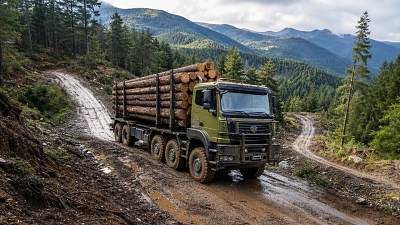
Not every unpaved route requires a heavy off road axle, but several applications consistently do. The most common are mining haul support, quarry and aggregate transport, forestry extraction, remote infrastructure construction, municipal landfill operation, and oilfield or energy-site logistics. In these environments, axle selection must support traction, ground clearance, durability, and predictable repair planning.
Mining support trucks are a clear example. A truck moving ore, fuel, service parts, or water across internal mine roads may run 12 to 20 hours per day under dust, vibration, and steep grade conditions. Here, tandem rear drive axles with higher torque tolerance, cross-axle differential locks, and stronger hub assemblies are often preferred over lighter highway-focused designs.
Construction fleets also create special requirements. A truck tipper that enters soft subgrade areas, climbs temporary ramps, and unloads on uneven platforms faces a complex mix of axle articulation and lateral load transfer. If the suspension and axle package are not matched, tire scrub, frame twist, and premature spring or bushing failure may appear within the first 1,500 to 2,500 operating hours.
Typical application scenarios
Mining and quarry logistics
These operations usually require reinforced rear axles, heavy-duty suspension, and higher resistance to contamination. Speeds may stay below 35 km/h, but the torque demand is persistent and surface impact is severe.
Remote construction and earthmoving support
Where wheel loaders, excavators, and concrete equipment are active, haul roads change weekly. Axles must handle mixed loading, temporary road geometry, and repeated reversing on unstable ground.
Forestry, landfill, and municipal off road service
Mud, organic debris, and water exposure raise sealing and traction requirements. Wider tires, suitable final drive ratios, and differential locking become more important than top speed.
The following table helps map common use cases to likely axle priorities. This can support early supplier discussions and improve RFQ accuracy when sourcing complete trucks or axle components internationally.
This comparison shows why use-case clarity matters. A truck trailer moving palletized goods to a temporary project yard may need only moderate reinforcement, while a quarry tipper with 6x4 or 8x4 architecture often needs a much more robust rear axle and suspension strategy. Application detail directly improves sourcing accuracy.
How to Choose Axle Configuration: Ratio, Capacity, Reduction, and Suspension Match
Selecting the right axle setup starts with four core variables: gross vehicle weight, terrain severity, drivetrain torque demand, and working speed. Buyers should then match these with axle ratio, reduction design, suspension layout, and tire specification. In off road projects, the most expensive error is often not over-buying, but buying a road-oriented configuration that delivers lower productivity and higher maintenance costs over 24 to 36 months.
Axle ratio matters because low-speed climbing and heavy pulling need torque multiplication. A lower final drive ratio can support traction and startability, but it may reduce road speed and fuel efficiency during transfer runs. For mixed-use fleets, this trade-off should be quantified route by route rather than assumed. Even a difference in average cycle speed of 5 to 8 km/h can change daily output on repetitive haul jobs.
Reduction type is another critical issue. Single reduction axles can be suitable in lighter mixed-duty applications, while hub reduction is often selected for harsher terrain, larger tires, and higher torque load. Suspension compatibility also matters. A strong axle paired with a poorly matched suspension may still generate premature wear in bushings, torque rods, and tires.
Four procurement questions to ask suppliers
- What is the recommended duty profile: paved road, mixed road, quarry, mining, or full off road operation?
- Is the axle a single reduction or hub reduction design, and what service interval is typical under dusty conditions?
- Which tire sizes, suspension types, and differential lock options are approved for the offered configuration?
- What spare parts availability and lead time can be expected for bearings, seals, shafts, brake components, and housings?
The next table summarizes practical selection factors. It is intended for procurement comparisons across truck chassis suppliers, trailer manufacturers, and spare parts vendors on a heavy truck B2B platform.
For dealers and distributors, this framework also supports portfolio planning. Stocking only highway-oriented axles may limit competitiveness in regions with mining, agriculture, municipal engineering, or infrastructure growth. Offering a range that includes off road truck axle solutions can open higher-value demand from project-based buyers.
Common Procurement Risks, Cost Drivers, and Delivery Considerations
The biggest procurement risk is specifying an axle by price or nominal tonnage alone. In cross-border sourcing, buyers may compare several quotations that appear similar but differ significantly in housing thickness, gear set design, brake protection, seal quality, or parts interchangeability. Those differences may not be obvious in the first quotation sheet, yet they can determine whether service life reaches 2,000 hours or extends beyond 5,000 hours under similar working conditions.
Lead time is another factor. Depending on specification complexity, spare axle assemblies may have a common delivery window of 2 to 6 weeks, while special ratios, reinforced housings, or low-volume trailer axle options can extend beyond 8 weeks. For project fleets, buyers should calculate not only purchase timing but also commissioning risk, customs timelines, and spare kit readiness before the trucks enter service.
Maintenance cost often outweighs small upfront savings. If a lower-cost axle causes tire wear, lubricant contamination, or repeated seal replacement, the cost difference can reverse within one operating season. Commercial evaluators should look at three layers of cost: acquisition, downtime, and parts support. A better-supported axle option may be financially stronger even if the initial quotation is 5% to 12% higher.
Frequent buyer mistakes
- Using highway fleet experience as the main reference for quarry, mine, or landfill operations.
- Failing to ask about spare parts interchangeability across axle families and model generations.
- Ignoring service environment details such as water crossings, dust density, and average slope percentage.
- Comparing complete truck quotations without matching suspension, tires, brakes, and axle ratio line by line.
Practical evaluation checklist
A disciplined sourcing process usually includes 6 checks: duty cycle confirmation, axle specification review, route severity rating, spare parts plan, delivery timeline validation, and after-sales communication path. For B2B platforms connecting buyers and suppliers globally, this checklist can improve transparency and reduce rework during quotation rounds.
For distributors or regional agents, after-sales planning is especially important. If local customers operate in remote zones, basic stock of seals, bearings, brake linings, axle shafts, and lubricants should be planned in advance. Waiting 3 to 5 weeks for a critical replacement part during a peak construction period can damage customer trust and future order potential.
Maintenance Strategy, Supplier Collaboration, and FAQ for Buyers
A suitable axle setup does not end with specification approval. Off road truck fleets need preventive inspection schedules, lubricant control, and supplier communication that reflects operating severity. In difficult terrain, daily visual checks and weekly underbody inspections can prevent minor seal or housing issues from becoming full axle failures. For high-hour fleets, some operators shorten lubricant inspection intervals to every 250 to 500 hours depending on contamination exposure.
Supplier collaboration should also extend beyond first delivery. Reliable manufacturers and parts suppliers should be able to provide exploded diagrams, wear part lists, service interval guidance, and recommendation boundaries for actual applications. This is where a professional heavy truck industry platform adds value: buyers can compare product categories, identify suitable suppliers, review adjacent parts availability, and align sourcing decisions with maintenance reality rather than only brochure claims.
For commercial buyers, the best result usually comes from a package approach: axle setup, suspension compatibility, tire strategy, spare parts support, and delivery planning discussed together. This improves lifecycle predictability and gives dealers or agents a stronger basis for long-term customer support in mining, logistics, infrastructure, and municipal engineering markets.
FAQ
How do I know if a truck really needs an off road axle setup?
If more than 30% to 40% of operating distance is on loose, uneven, muddy, or steep surfaces, or if the truck carries heavy loads at low average speed for most of the shift, a standard road axle may be insufficient. Repeated traction loss, tire scrub, and frequent seal or bearing issues are early warning signs.
Is hub reduction always better for off road trucks?
Not always. Hub reduction is often beneficial in harsh terrain and high torque applications, but it also adds complexity, weight, and cost. For lighter mixed-duty fleets that still spend meaningful time on paved roads, a properly selected single reduction axle may remain the more balanced choice.
What delivery information should buyers request before placing an order?
Request production lead time, spare parts availability, packaging details, documentation support, and whether critical wear parts can ship separately. A complete answer should cover at least the first 12 months of likely service parts demand, especially for remote projects.
What is the best way to compare suppliers on a B2B platform?
Use a structured comparison sheet. Check application fit, axle design, suspension matching, service documentation, parts support, and delivery realism. Comparing 5 or 6 technical and commercial criteria side by side is more reliable than choosing based on price alone.
Truck off road operations expose axle systems to a very different set of demands than highway logistics. Mining routes, quarry haul roads, remote construction projects, forestry work, and municipal off road duties all require a closer look at axle rating, reduction design, traction support, and serviceability. For researchers, procurement teams, and distributors, better specification at the sourcing stage reduces lifecycle risk and improves uptime.
If you are evaluating complete trucks, truck trailers, construction machinery support vehicles, or spare axle components, a professional heavy truck B2B platform can help you compare suppliers, review product categories, and identify solutions that match your real working environment. Contact us to get a tailored sourcing plan, discuss axle configuration details, or explore more heavy truck and off road transport solutions.
Trending News
- Cab Chassis Truck for Fire Department: Key Specs Before Ordering
- When to Use an Excavator With Long Reach Boom on Site
- Choosing a Water Truck Factory for Municipal and Mining Projects
- Truck Parts Wholesale: How to Balance Price, Quality, and Lead Time
- Crane Truck Price in 2026: What Drives Total Ownership Cost
Tag
Recommended News
 Truck TechnologyWhat Fireproof Materials Mean for Semi Trailer Safety and Lifecycle CostSemi trailer manufacturer with fireproof materials solutions help cut downtime, reduce repair risk, and improve resale value. Learn how smarter trailer specs lower total lifecycle cost.
 Truck TechnologyQuick Installation Excavators: Downtime vs PerformanceExcavator manufacturer with quick installation solutions help cut downtime, speed site startup, and protect performance. Compare smarter options for faster, more reliable project delivery.
 Truck TechnologyChina-Mongolia-Russia E-Waybill Mutual Recognition UpgradedChina-Mongolia-Russia E-Waybill mutual recognition upgraded: Real-time cold-chain temperature compliance now mandatory for all cross-border road transport vehicles under GB/T 39920–2021.
 Truck TechnologyMulti-Dept Initiative Adds V2X & BeiDou Modules to Cross-Border Trucking Subsidy ListV2X & BeiDou modules now subsidy-eligible for cross-border trucks—boosting smart logistics, safety, and BRI corridor compliance. Act now to align.
 Truck TechnologyL4 Autonomous Truck Chassis Emerges as Tech Export VehicleL4 Autonomous Truck Chassis: Now licensable globally for port drayage & mine transport—modular, multi-powertrain, backed by DP World & Chilean ports.
 Truck TechnologyMulti-Dept Action Adds V2X & BeiDou HD Positioning to Cross-Border Freight Subsidy ListV2X & BeiDou HD positioning now subsidized for cross-border freight trucks—key opportunity for intelligent transport equipment suppliers and OEMs.
 Truck TechnologyChina-Mongolia-Russia Corridor Upgrades to E-CMR with Real-Time Cold Chain MonitoringChina-Mongolia-Russia Corridor now mandates e-CMR + real-time cold chain monitoring for all refrigerated trailers — ensure compliance to avoid border delays and win tenders.
 Truck TechnologyBulldozer for Construction: Key Specs That Affect Earthmoving EfficiencyBulldozer for construction buying guide: compare weight, blade capacity, torque, and undercarriage specs to improve earthmoving efficiency and choose the right machine for your jobsite.
 Truck TechnologyL4 Autonomous Container Trucks Enter Trial on Tianjin-Xiongan RouteL4 autonomous container trucks begin trial on Tianjin-Xiongan route—pioneering China’s smart land transport revolution with dual-energy, licensable chassis platform.
 Truck TechnologyMulti-Dept Initiative to Upgrade Freight Hubs with V2X & BeiDouV2X & BeiDou: China’s 7-dept initiative offers up to 30% subsidies for intelligent retrofitting of cross-border road transport equipment—key for freight hubs, smart chassis, and trailer manufacturers.
 Truck TechnologyMulti-Dept Launch Freight Hub Upgrading InitiativeMulti-Dept Launch Freight Hub Upgrading Initiative boosts intelligent land transport equipment—smart loading, battery-swap stations & ETC-V2X modules for seamless, low-carbon cross-border logistics.
 Truck TechnologyWhat Advanced Technology Means in Heavy Truck Chassis PerformanceHeavy truck chassis manufacturer with advanced technology: discover how smarter frame design, suspension tuning, and braking integration improve stability, uptime, and long-term operating value.
 Truck TechnologyHigh-Strength Flatbed Trailers: Where Stronger Steel Pays OffFlatbed trailer supplier with high strength expertise helps fleets cut tare weight, improve durability, and lower lifecycle cost. See what specs matter most before you buy.
 Truck TechnologyBulldozer for Construction: Matching Blade Type to Ground ConditionsBulldozer for construction guide: learn how to match S, U, and SU blades to soil, clay, rock, and mixed ground for better productivity, lower fuel use, and smarter equipment selection.
 Truck TechnologyWhen Fireproof Materials Add Real Value in Semi Trailer ManufacturingSemi trailer manufacturer with fireproof materials: discover how fire-resistant designs improve cargo safety, reduce risk, and support smarter sourcing decisions.
 Truck TechnologyWhat a Durable Engine Really Means in a Light Duty TruckLight duty truck with durable engine: learn how real engine durability improves uptime, fuel savings, and lower maintenance across delivery, construction, rural, and municipal work.
 Truck TechnologySemi Trailer Manufacturer With Lightweight Design: Pros, Trade-Offs, and Use CasesSemi trailer manufacturer with lightweight design: explore key benefits, trade-offs, and best-fit use cases to improve payload efficiency, durability, and lifecycle ROI.
 Truck TechnologyTruck Tipper for Construction: Key Specs That Affect Daily ProductivityTruck tipper for construction buying guide: learn which specs most affect payload, fuel use, unloading speed, and uptime to choose a safer, more productive model.
 Truck TechnologyWhy Logging Truck Manufacturer Design Matters in Tough TerrainLogging truck manufacturer design shapes safety, traction, and uptime in tough terrain. Learn what features matter most for forestry hauling and choose trucks built for real-world performance.
 Truck TechnologyAre Fireproof Materials Worth It in a Semi Trailer ManufacturerSemi trailer manufacturer with fireproof materials: discover if the added cost delivers real safety, lower risk, and better cargo protection with a practical supplier evaluation checklist.
 Truck TechnologyWhy High-Strength Design Matters in a Flatbed Trailer SupplierFlatbed trailer supplier with high strength: learn why structural design, material quality, and fatigue resistance matter for safer transport, longer service life, and lower operating costs.
 Truck TechnologyAdvanced Technology in Heavy Truck Chassis Manufacturing: What to Look ForHeavy truck chassis manufacturer with advanced technology: learn how to assess welding, materials, precision, and validation for long-haul, construction, mining, and special-purpose fleets.
 Truck TechnologyCan Fireproof Materials Improve Semi Trailer Safety in Logisticssemi trailer manufacturer with fireproof materials solutions can reduce cargo loss, improve fleet safety, and support reliable logistics. Discover how to choose the right fire-resistant trailer design.
 Truck TechnologyWhy Advanced Technology Matters in Heavy Truck Chassis ManufacturingHeavy truck chassis manufacturer with advanced technology: learn how digital design, precision welding, and rigorous testing improve durability, safety, and sourcing confidence.
 Truck TechnologyKazakhstan Extends Zero-Tariff List for China-Europe Rail Truck Parts to 2027Kazakhstan extends zero-tariff status for China-Europe rail truck parts to 2027—boosting ADAS, CAN-FD, and EBS component exports. Act now to optimize logistics & compliance.