How Low-Maintenance Truck Spare Parts Suppliers Help Cut Downtime
For after-sales maintenance teams, every hour a truck sits idle means lost revenue and mounting pressure. Choosing a truck spare parts supplier with low maintenance advantages can significantly reduce downtime by improving parts reliability, simplifying replacement cycles, and ensuring faster access to essential components. This article explores how the right supplier helps maintenance professionals keep fleets running efficiently while lowering long-term service costs.
Understanding Low-Maintenance Supply in Heavy Truck After-Sales Service
In the road transport equipment industry, the phrase truck spare parts supplier with low maintenance refers to more than a company that simply sells replacement parts. It describes a supplier whose products, inventory support, technical consistency, and service response help maintenance teams reduce failure frequency and shorten repair time. For after-sales professionals, that difference is critical. A part that lasts longer, fits correctly the first time, and arrives quickly can prevent a minor issue from becoming a major operational interruption.
Heavy trucks operate in demanding conditions: long-haul logistics, construction routes, mining roads, municipal duty cycles, and cross-border freight corridors. Under these conditions, downtime is rarely caused by a single factor. It often comes from a chain of issues such as poor part quality, delayed delivery, wrong specifications, repeated disassembly, and lack of technical documentation. A truck spare parts supplier with low maintenance value helps break that chain by making maintenance more predictable and efficient.
This matters especially for after-sales teams responsible for service continuity. Their goal is not only to repair trucks, but to restore availability fast, manage lifecycle costs, and prevent repeat failures. That is why supplier choice has become part of maintenance strategy rather than a simple purchasing decision.
Why the Industry Is Paying More Attention to Downtime Reduction
Global logistics expansion, infrastructure construction, and industrial transportation have increased the utilization intensity of commercial vehicles. Fleets today are expected to run longer routes, carry heavier loads, and maintain tighter delivery schedules. In that environment, maintenance windows are shorter and expectations are higher. Even a small delay in sourcing brake parts, suspension components, filters, clutch assemblies, or electrical systems can disrupt operations across an entire fleet.
At the same time, the heavy truck ecosystem has become more global. Buyers and service teams often source components from different countries, brands, and manufacturing standards. Platforms that connect manufacturers, suppliers, distributors, and buyers across the heavy truck supply chain now play an important role in helping maintenance personnel compare suppliers, verify product categories, and access broader aftermarket resources. In this setting, a truck spare parts supplier with low maintenance characteristics stands out because it supports both operational speed and decision clarity.
The growing focus is also driven by cost structure. Downtime affects not only repair labor but also driver schedules, cargo commitments, customer trust, workshop capacity, and emergency inventory spending. As a result, maintenance leaders increasingly evaluate suppliers based on total service impact rather than unit price alone.
What Makes a Supplier “Low Maintenance” in Practical Terms
A supplier becomes low maintenance when it reduces the effort required to keep vehicles in service. This can be seen in several practical dimensions. First is product durability. Parts that resist wear, heat, vibration, and contamination typically extend service intervals. Second is fitment accuracy. Correct dimensions and stable quality control reduce installation errors and repeat repairs. Third is supply consistency. When common parts are available without long lead times, maintenance plans become far more reliable.
Another important factor is technical support. After-sales teams often need cross-reference data, model compatibility information, and installation guidance. A truck spare parts supplier with low maintenance value usually provides clearer catalogs, traceable specifications, and better communication. This lowers diagnosis time and helps technicians avoid preventable mistakes.
Packaging and logistics also matter. Parts that arrive damaged, poorly labeled, or mixed with similar variants can create hidden delays. Reliable suppliers reduce these frictions through proper packaging, batch identification, and organized dispatch processes. In short, low maintenance is not just a feature of the part itself; it is a result of the whole supply experience.
Industry Overview: Supplier Capabilities That Influence Downtime
For after-sales maintenance teams, the following supplier capabilities have a direct impact on vehicle uptime and service efficiency.
Application Value for After-Sales Maintenance Teams
The value of a truck spare parts supplier with low maintenance performance becomes most visible in daily workshop operations. First, it improves maintenance planning. When service teams know that high-rotation components are dependable and available, they can schedule preventive work more confidently instead of waiting for failures to occur.
Second, it supports first-time fix rates. Many truck repair delays come from incorrect replacement parts, uncertain compatibility, or poor installation guidance. A supplier that delivers standardized, well-documented components helps technicians complete jobs correctly during the first service event. That saves labor hours and workshop slots.
Third, it lowers total lifecycle cost. Durable spare parts may not always be the lowest-priced items at purchase, but they often reduce emergency callouts, roadside failures, and repeated maintenance. For fleet operators, fewer disruptions mean better asset utilization. For after-sales service teams, it means less reactive pressure and more control over service quality.
Fourth, it improves communication between service departments and procurement. When suppliers provide organized product data and predictable lead times, maintenance teams can forecast demand more accurately. This is especially important in multinational sourcing environments where multiple truck brands and equipment categories must be managed at once.
Typical Spare Parts Categories Where Low-Maintenance Supply Matters Most
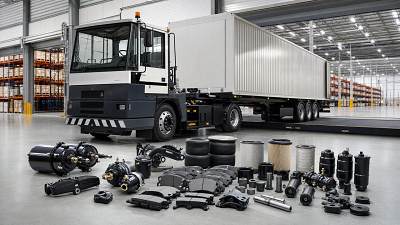
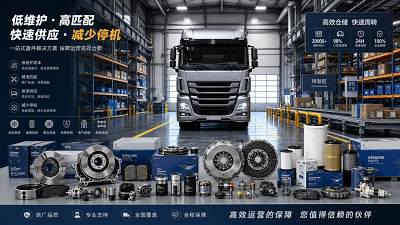
Not all truck components affect downtime in the same way. Some categories are especially important because failures are frequent, safety-critical, or operationally disruptive.
How Digital Platforms Strengthen Supplier Selection
As the heavy truck market becomes broader and more international, digital B2B platforms are increasingly useful for identifying the right supplier base. A specialized industry platform can help maintenance teams and sourcing managers review spare parts categories, compare supplier profiles, explore product coverage, and access industry news or buying guides. This is valuable because downtime reduction depends on informed decisions, not only fast transactions.
For after-sales professionals, a platform focused on the global commercial vehicle and heavy equipment supply chain can provide visibility across truck chassis and cab parts, complete trucks, construction machinery, trailers, and spare parts. That ecosystem is useful when fleets operate mixed equipment or when maintenance planning requires coordination across several vehicle applications. In such an environment, finding a truck spare parts supplier with low maintenance strengths becomes more efficient because supplier discovery is supported by broader market information and transparent comparison.
Practical Evaluation Points Before Working With a Supplier
When assessing suppliers, after-sales teams should look beyond catalog size. A large product range is useful, but consistency matters more. Start by reviewing whether the supplier can support your core fleet models and your highest-failure parts categories. Then examine quality stability through samples, technical specifications, or prior service records. A truck spare parts supplier with low maintenance value should show evidence of repeatable quality, not just broad claims.
Next, check response capability. Ask how quickly common components can be dispatched, how backorders are handled, and whether urgent replacements are supported. Evaluate documentation quality as well. Good suppliers make it easier to identify cross-model compatibility, installation points, and maintenance intervals.
It is also wise to measure service friction. How often do returns happen due to incorrect part matching? Are labels clear? Is communication timely? These operational details strongly affect workshop efficiency. Finally, consider long-term cooperation value. The best supplier is one that supports reliability, data clarity, and supply continuity across the full service lifecycle.
Frequently Asked Questions
Does low maintenance mean only longer part life?
No. Longer service life is important, but low maintenance also includes accurate fitment, fast availability, lower installation complexity, and better technical support. All of these reduce downtime.
Why is supplier quality so important for after-sales maintenance teams?
Because after-sales teams are measured by turnaround time, repair quality, and fleet availability. Poor supplier performance creates repeat failures, delayed repairs, and higher labor pressure.
Can a truck spare parts supplier with low maintenance benefits reduce inventory pressure?
Yes. If supply is stable and lead times are predictable, maintenance teams can reduce excess stock while still keeping essential parts available for planned and urgent repairs.
Moving From Reactive Repairs to Smarter Uptime Management
For maintenance professionals in the heavy truck sector, downtime control is no longer just a workshop issue. It is a supply chain issue, a service quality issue, and a business continuity issue. Choosing a truck spare parts supplier with low maintenance strengths helps teams reduce repeat work, improve repair speed, and support more predictable fleet operations.
In a global market shaped by logistics growth, infrastructure demand, and increasingly connected equipment ecosystems, supplier selection should be approached strategically. By using trusted industry platforms, comparing supplier capabilities carefully, and focusing on reliability over short-term price alone, after-sales teams can build a stronger foundation for uptime. The result is practical and measurable: fewer service interruptions, lower long-term maintenance costs, and better support for the trucks that keep transport networks moving.
Trending News
- Truck Cement Wholesale: What Determines Stable Delivery and Margin?
- Truck Trailer Bulk Order Cost Breakdown for 2026 Budget Planning
- Truck Trailer Sourcing: 7 Checks Before You Compare Suppliers
- Truck Trailer OEM vs ODM: Which Model Lowers Supply Risk?
- How to Evaluate a Heavy Truck Chassis Manufacturer With R&D Capability in 2026
Tag
Recommended News
 Fleet ManagementBest Commercial Vehicle Parts for Warehouse Fleets with High Stop-Start UseCommercial vehicle parts for warehouse fleets should handle heavy stop-start use with fewer failures. Discover proven brake, battery, suspension, and steering choices that cut downtime.
 Fleet ManagementDelivery Truck Supplier in USA: What Matters Most for Fleet ExpansionDelivery truck supplier in USA selection impacts uptime, cost, and fleet growth. Learn how to compare suppliers by route needs, service support, and long-term scalability.
 Fleet ManagementHow to Choose Commercial Vehicle Parts for Warehouse Fleet UptimeCommercial vehicle parts for warehouse fleets directly impact uptime. Learn how to choose durable, accurate-fit parts and reliable suppliers to reduce downtime and control maintenance costs.
 Fleet ManagementWhy a Light Duty Truck Manufacturer in USA Still Matters for Fleet ReliabilityLight duty truck manufacturer in USA choices still shape fleet uptime, parts access, and lifecycle value. See what buyers should compare for more reliable operations.
 Fleet ManagementHow to Plan a Dump Truck Bulk Order for Multi-Site ProjectsDump truck bulk order planning for multi-site projects made simple. Learn how to balance specs, delivery, support, and total cost for smarter fleet decisions.
 Fleet ManagementWhat Makes a Delivery Truck Supplier Cost-Effective in Real OperationsDelivery truck supplier with cost-effective solutions: learn how to cut fuel, maintenance, and downtime costs with a practical checklist for smarter fleet purchasing.
 Fleet ManagementHow Low-Maintenance Truck Spare Parts Suppliers Help Cut DowntimeTruck spare parts supplier with low maintenance benefits help fleets cut downtime, speed repairs, and lower service costs. Discover how smarter sourcing boosts uptime.
 Fleet ManagementHow Commercial Vehicle Parts for Warehouse Improve Daily UptimeCommercial vehicle parts for warehouse operations help reduce downtime, improve safety, and keep trucks and trailers moving efficiently. Discover how the right parts boost daily uptime.
 Fleet ManagementCommercial Vehicle Parts for Cold Storage: Reducing Failure in Daily UseCommercial vehicle parts for cold storage help reduce daily failures, protect cargo quality, and improve fleet uptime. Discover scenario-based maintenance insights for refrigerated transport.
 Fleet ManagementDelivery Truck Supplier in USA: What to Compare Before Expanding a FleetDelivery truck supplier in USA comparison guide for fleet expansion. Learn how to evaluate quality, service, parts support, and lifecycle cost before you invest.
 Fleet ManagementBest Commercial Vehicle Parts for Warehouse OperationsCommercial vehicle parts for warehouse operations should boost safety, uptime, and load control. Explore the best brake, tire, steering, and lighting solutions for efficient fleet performance.
 Fleet ManagementTruck Cement Mixer Supplier: What to Check Before Fleet ExpansionTruck cement mixer supplier selection can make or break fleet expansion. Learn the key checks on quality, compliance, parts support, and total cost before you buy.
 Fleet ManagementTruck Trailer Supplier Checklist for Long-Haul Fleet ExpansionTruck trailer supplier checklist for long-haul fleet expansion: compare compliance, lifecycle cost, delivery, and support to reduce sourcing risk and scale with confidence.
 Fleet ManagementIs a Lightweight Semi Trailer Manufacturer the Right Fit for High-Frequency RoutesFind out if a semi trailer manufacturer with lightweight design is the smart choice for high-frequency routes, balancing payload, durability, compliance, and long-term fleet savings.
 Fleet ManagementDump Truck Wholesale for Growing Fleets: What to Watch FirstDump truck wholesale buyers: learn what to check first for growing fleets, from specs and compliance to supplier reliability, to cut risk, control costs, and buy with confidence.
 Fleet ManagementDump Truck Bulk Order Timing: How to Avoid Capacity BottlenecksDump truck bulk order timing can make or break delivery schedules. Learn when to order, spot supplier bottlenecks early, and secure reliable capacity for faster project execution.
 Fleet ManagementHow to Plan a Semi Trailer Bulk Order Without Stock PressureSemi trailer bulk order planning made simple: learn how to balance demand, product mix, supplier control, and phased delivery to reduce stock pressure and improve trailer sales.
 Fleet ManagementChoosing Commercial Vehicle Parts for Cold Storage Without DowntimeCommercial vehicle parts for cold storage: learn how to choose reliable batteries, seals, hoses, and brake parts to reduce downtime, protect cargo, and improve fleet uptime.
 Fleet ManagementBest Commercial Vehicle Parts for Warehouse Fleet UptimeCommercial vehicle parts for warehouse fleets: discover the best brake, electrical, suspension, and service parts to reduce downtime, speed repairs, and keep operations moving.
 Fleet ManagementHow an Excavator Supplier Affects Uptime After DeliveryExcavator supplier performance directly affects uptime after delivery. Learn how parts speed, technical support, and service response reduce downtime and protect fleet efficiency.
 Fleet ManagementCold weather truck cooling system mistakes that lead to downtimeTruck cooling system mistakes in cold weather can cause costly downtime. Learn how truck pump, truck fuel system, truck electrical system, and truck control unit issues affect fleet reliability.
 Fleet ManagementTruck steering system play: repair now or monitor longer?Truck steering system play: repair now or monitor longer? Learn when to act, how truck wheel, truck tire, truck control unit, truck fuel system, cooling and exhaust checks affect fleet safety and cost.
 Fleet ManagementWater sprinkler truck capacity choices that affect route efficiencyWater sprinkler truck capacity choices affect route efficiency, fuel cost, and uptime. Compare truck pump, truck fuel system, truck tire, and truck control unit factors before you buy.
 Fleet ManagementOff Road Truck Tires: When Lower Cost Leads to More DowntimeOff road truck tire costs go beyond price. Learn how downtime, wheel loader workflow, hydraulic pump efficiency, truck trailer use, and fleet reliability are affected—and how to buy smarter.
 Fleet ManagementTruck Logging Systems: Which Data Actually Improves Fleet Control?Truck logging insights that improve fleet control: compare fuel, maintenance, and safety data for truck dumper, truck excavator, truck wing, lighting and air system decisions.