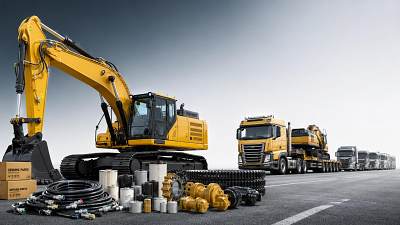
Best Commercial Vehicle Parts for Warehouse Operations
Choosing the right commercial vehicle parts for warehouse operations is essential for keeping fleets efficient, safe, and ready for daily material handling tasks. From brake systems and suspension components to lighting, tires, and engine parts, reliable equipment helps operators reduce downtime, improve workflow, and maintain consistent performance in demanding warehouse environments.
For warehouse operators, the best parts are not simply the most expensive or the most popular. They are the components that match stop-and-go driving, short-route movements, heavy loading cycles, tight turning spaces, and constant pressure to avoid delays. If a vehicle is frequently moving goods between docks, yards, storage zones, and nearby delivery points, every part needs to support uptime, control, and predictable performance.
This is why selecting commercial vehicle parts for warehouse use should begin with the real operating environment. A warehouse vehicle faces different stresses than a long-haul truck. It brakes more often, idles more, turns in tighter spaces, and may carry repeated heavy loads over uneven surfaces. The right parts reduce maintenance interruptions, improve driver confidence, and help operations stay on schedule.
What warehouse operators actually need from commercial vehicle parts
The core search intent behind “best commercial vehicle parts for warehouse operations” is practical. Operators are usually trying to identify which parts matter most for daily performance, which upgrades reduce breakdowns, and how to choose reliable components without wasting money. They want answers that help with real decisions, not generic lists.
In most warehouse environments, the biggest concerns are safety, uptime, load stability, maneuverability, visibility, and maintenance frequency. Operators want vehicles that start reliably, stop smoothly, handle repeated loads without excessive wear, and remain easy to inspect. They also care about how quickly parts can be replaced when failures happen.
That means the most useful buying guidance should focus on high-wear components, clear part-selection criteria, warning signs of early failure, and the relationship between part quality and operational efficiency. Broad brand claims or overly technical discussions are less helpful unless they connect directly to warehouse performance.
Brake system parts are a top priority in stop-and-go warehouse work
Brake components are among the most important commercial vehicle parts for warehouse fleets because warehouse driving involves constant stopping, reversing, docking, and low-speed control. A truck or yard vehicle may brake hundreds of times in a shift, especially in busy loading areas. This makes brake wear both faster and more operationally significant.
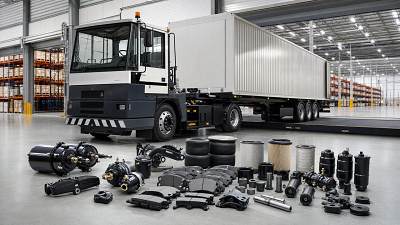
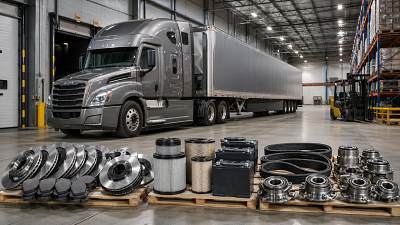
The key brake parts to monitor include brake pads, brake discs or drums, calipers, air brake components, hoses, valves, and brake fluid-related systems where applicable. For heavier applications, air brake reliability is especially important because inconsistent pressure or delayed brake response can create serious safety risks around workers and cargo.
Operators should look for brake parts designed for durability under frequent-use conditions rather than only maximum highway mileage. Heat resistance, predictable response, and low fade matter more in warehouse settings than high-speed performance. If vehicles often carry dense loads such as palletized materials, metal products, machinery parts, or construction supplies, robust braking becomes even more important.
Warning signs that brake parts need attention include squealing, reduced stopping confidence, pulling to one side, soft pedal feel, vibration during braking, or delayed air pressure build-up. Replacing worn brake components early is usually far less costly than dealing with an accident, damaged goods, or a vehicle unexpectedly taken out of service.
Suspension and steering parts support load stability and driver control
Warehouse operations often involve repeated loading and unloading, uneven yard surfaces, dock transitions, ramps, and tight directional changes. Because of this, suspension and steering parts directly affect not only ride quality but also cargo stability, tire wear, and vehicle control.
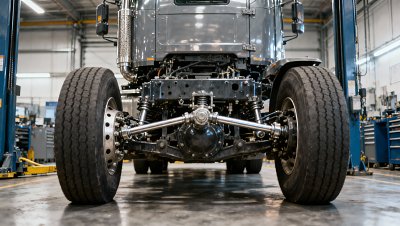
Important suspension components include shock absorbers, leaf springs, bushings, air springs, stabilizer links, and mounting hardware. In steering systems, tie rods, drag links, steering arms, kingpins, power steering pumps, and related joints should be inspected regularly. These parts help vehicles remain stable when moving with heavy or shifting loads.
When suspension parts wear out, warehouse vehicles may bounce excessively, lean during turns, or place uneven stress on tires and axles. Steering wear can lead to loose handling, poor turning accuracy, and extra operator fatigue. In narrow warehouse lanes or crowded dock areas, even minor steering problems can reduce safety and productivity.
The best suspension and steering parts for warehouse use are typically those built for repeated load-bearing cycles and rougher ground contact. Operators should prioritize parts with reliable sealing, strong materials, and proven compatibility with vehicle weight class and axle design. Choosing the wrong grade may lower upfront cost, but it often increases total maintenance expenses.
Tires are one of the most visible and most overlooked warehouse performance factors
Tires have a major effect on warehouse vehicle safety, fuel efficiency, traction, and handling. Yet they are often replaced only after obvious wear appears. For warehouse-related trucks, the right tire choice depends on whether the vehicle operates mostly indoors, in yards, on mixed pavement, or between warehouses and urban routes.
For vehicles serving loading bays and industrial yards, tire durability against scrubbing, curb contact, punctures, and repeated low-speed turning is essential. Sidewall strength can be especially important where space is tight and minor impact is common. Tread design should match the surface conditions, especially if vehicles move between wet outdoor zones and smooth indoor areas.
Operators should also pay close attention to load rating. Under-specified tires can wear quickly, overheat, or compromise handling when trucks carry dense goods regularly. Proper inflation matters just as much as tire quality. Overinflated tires may reduce grip and create a harsher ride, while underinflated tires increase wear, rolling resistance, and the risk of failure.
Routine tire checks should include tread depth, sidewall damage, irregular wear, embedded debris, pressure consistency, and alignment-related patterns. In warehouse operations, tire condition has a direct effect on turning precision and stopping reliability, which makes it a critical category of commercial vehicle parts for warehouse safety.
Lighting and visibility parts improve safety in busy dock and yard environments
Warehouse vehicles often operate in low-light loading zones, covered docks, early morning schedules, night shifts, and crowded workspaces where pedestrians are nearby. Because of this, lighting and visibility parts are not minor accessories. They are essential safety equipment.
Key components include headlights, tail lights, brake lights, reverse lights, turn signals, marker lamps, reflectors, warning beacons, mirrors, camera systems, and wiper assemblies. In some warehouse fleets, upgraded work lights or additional side lighting can help operators reverse more accurately and reduce blind spots around trailers and loading docks.
If vehicles are regularly backing into bays or moving through mixed pedestrian zones, reverse lighting and audible warning systems deserve special attention. Clear mirrors and reliable camera systems can reduce low-speed collision risks. In modern fleet operations, small investments in visibility parts often deliver outsized safety benefits.
Operators should choose lighting components with strong vibration resistance and weather protection, especially if vehicles move between indoor and outdoor environments. Moisture, dust, and impact can shorten service life. Sealed units and durable housings usually perform better in demanding warehouse logistics conditions.
Engine and cooling parts matter even in low-speed warehouse duty cycles
Some operators assume engine-related components are less important in warehouse work because travel distances are short. In reality, warehouse vehicles often experience heavy idling, frequent starts, short runs, and limited airflow, all of which can increase stress on engines and cooling systems.
Critical engine and support parts include filters, belts, hoses, radiators, water pumps, thermostats, injectors, starter motors, alternators, batteries, and turbo-related components where applicable. Short-cycle operation can cause carbon buildup, battery strain, and uneven thermal performance if maintenance is delayed.
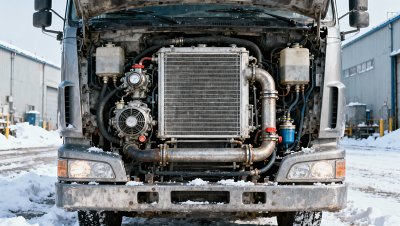
Cooling system reliability is especially important in warehouse fleets that idle for long periods while waiting at docks or operating auxiliary functions. Overheating risk may increase when airflow is limited and payload stress is high. A failed hose or weak water pump can stop a vehicle just as effectively as a major engine fault.
Battery and charging system parts also deserve close attention. Warehouse vehicles may use lights, liftgate systems, telematics, refrigeration support, or other electrical loads throughout the day. If batteries and alternators are not matched to real usage demands, no-start situations become more common, especially during shift changes or colder weather.
Body, cab, and access parts can improve workflow more than many operators expect
Not every valuable warehouse vehicle part is hidden under the chassis. Exterior and cab-related parts also influence efficiency. Door handles, steps, grab bars, seat components, window regulators, locks, mirrors, mudguards, liftgate parts, and cargo securing hardware all affect how smoothly daily tasks are completed.
For drivers and loaders, repeated entry and exit is part of the job. Worn access steps or damaged grab handles increase injury risk. Poor seat condition contributes to fatigue. Faulty mirrors or windows reduce visibility. Broken cargo restraints can delay loading and create safety concerns during short-distance transfers inside industrial compounds.
In fast-moving warehouse operations, these issues may seem small until they interrupt a shift. Choosing durable replacement parts for access and cab-use areas can reduce lost time and improve operator comfort. Better ergonomics can also support more consistent performance across long workdays.
How to choose the best commercial vehicle parts for warehouse operations
The best way to choose parts is to start with actual operating conditions rather than catalog descriptions alone. First, identify the vehicle’s daily pattern: load weight, trip frequency, idle time, surface type, turning intensity, and whether it works mostly in yards, docks, urban roads, or mixed environments. This reveals which components wear fastest.
Second, prioritize parts by operational impact. Brake, tire, steering, suspension, lighting, and battery-related components usually deserve early attention because failure in these systems quickly affects safety and uptime. Cosmetic or non-essential items can wait, but high-risk wear parts should not be deferred.
Third, compare part quality based on material strength, service life expectations, compatibility, supplier reliability, and replacement support. In B2B purchasing, consistency is often more valuable than buying the absolute lowest-cost option. A cheaper part that fails early can create more downtime, labor cost, and scheduling disruption than a higher-quality alternative.
Fourth, consider parts availability. Even an excellent component can become a problem if replacement lead times are long. For warehouse fleets, fast access to commonly needed spare parts is a major advantage. This is one reason many buyers use specialized industry platforms to compare suppliers, verify product categories, and build stronger sourcing channels.
Signs your warehouse fleet may be using the wrong parts
If vehicles experience repeated brake jobs, uneven tire wear, unstable handling under normal loads, frequent battery failures, or recurring lighting issues, the problem may not be maintenance discipline alone. It may be that the installed parts are not suitable for warehouse duty cycles.
Another common sign is when different vehicles in similar use conditions show inconsistent performance. If one truck remains stable and reliable while another develops frequent steering play or suspension wear, part quality and fitment should be investigated. Installation quality matters too, but recurring patterns often point to sourcing choices.
High operator complaints are also useful signals. If drivers repeatedly mention poor braking feel, rough ride, weak turning response, or visibility issues, those concerns should not be dismissed as minor preferences. Operators experience the vehicle every shift, and their feedback often identifies part-related weaknesses early.
Why sourcing through a professional industry platform adds value
For buyers and operators in the commercial vehicle sector, finding dependable warehouse-use parts is easier when suppliers can be compared across product range, specialization, and market reputation. A professional global heavy truck industry platform can simplify this process by giving access to manufacturers, distributors, and spare parts suppliers in one place.
This type of sourcing environment helps buyers review a wider selection of commercial vehicle parts for warehouse applications, including chassis components, braking systems, lighting products, engine parts, and trailer-related items. It can also support better supplier evaluation through product visibility, industry data, and broader market insight.
For operational teams, the value is practical. Better sourcing improves the chance of finding parts that match duty requirements, budget targets, and replacement schedules. For purchasing teams, it creates more transparency and makes it easier to identify reliable long-term partners instead of making rushed one-off purchases after a failure occurs.
Final thoughts: the best parts are the ones that protect uptime and safety
In warehouse operations, the best commercial vehicle parts are the ones that keep vehicles safe, stable, and ready for constant use. Brake components, suspension parts, steering systems, tires, lighting, batteries, and cooling parts all play a direct role in preventing downtime and supporting efficient material movement.
The smartest approach is to evaluate parts based on real workload, not general assumptions. Warehouse duty is demanding in its own way, and vehicles need components that can handle repeated stops, tight turns, heavy loads, and long operating hours. Choosing well-matched parts helps operators work with more confidence and helps businesses maintain steady workflow.
When selecting commercial vehicle parts for warehouse environments, focus on durability, fit, replacement support, and safety impact. A well-maintained fleet built with reliable parts does more than reduce repair bills. It strengthens productivity, lowers operational risk, and keeps warehouse logistics moving without unnecessary interruption.
Trending News
- Truck Cement Wholesale: What Determines Stable Delivery and Margin?
- Truck Trailer Bulk Order Cost Breakdown for 2026 Budget Planning
- Truck Trailer Sourcing: 7 Checks Before You Compare Suppliers
- Truck Trailer OEM vs ODM: Which Model Lowers Supply Risk?
- How to Evaluate a Heavy Truck Chassis Manufacturer With R&D Capability in 2026
Tag
Recommended News
 Fleet ManagementBest Commercial Vehicle Parts for Warehouse Fleets with High Stop-Start UseCommercial vehicle parts for warehouse fleets should handle heavy stop-start use with fewer failures. Discover proven brake, battery, suspension, and steering choices that cut downtime.
 Fleet ManagementDelivery Truck Supplier in USA: What Matters Most for Fleet ExpansionDelivery truck supplier in USA selection impacts uptime, cost, and fleet growth. Learn how to compare suppliers by route needs, service support, and long-term scalability.
 Fleet ManagementHow to Choose Commercial Vehicle Parts for Warehouse Fleet UptimeCommercial vehicle parts for warehouse fleets directly impact uptime. Learn how to choose durable, accurate-fit parts and reliable suppliers to reduce downtime and control maintenance costs.
 Fleet ManagementWhy a Light Duty Truck Manufacturer in USA Still Matters for Fleet ReliabilityLight duty truck manufacturer in USA choices still shape fleet uptime, parts access, and lifecycle value. See what buyers should compare for more reliable operations.
 Fleet ManagementHow to Plan a Dump Truck Bulk Order for Multi-Site ProjectsDump truck bulk order planning for multi-site projects made simple. Learn how to balance specs, delivery, support, and total cost for smarter fleet decisions.
 Fleet ManagementWhat Makes a Delivery Truck Supplier Cost-Effective in Real OperationsDelivery truck supplier with cost-effective solutions: learn how to cut fuel, maintenance, and downtime costs with a practical checklist for smarter fleet purchasing.
 Fleet ManagementHow Low-Maintenance Truck Spare Parts Suppliers Help Cut DowntimeTruck spare parts supplier with low maintenance benefits help fleets cut downtime, speed repairs, and lower service costs. Discover how smarter sourcing boosts uptime.
 Fleet ManagementHow Commercial Vehicle Parts for Warehouse Improve Daily UptimeCommercial vehicle parts for warehouse operations help reduce downtime, improve safety, and keep trucks and trailers moving efficiently. Discover how the right parts boost daily uptime.
 Fleet ManagementCommercial Vehicle Parts for Cold Storage: Reducing Failure in Daily UseCommercial vehicle parts for cold storage help reduce daily failures, protect cargo quality, and improve fleet uptime. Discover scenario-based maintenance insights for refrigerated transport.
 Fleet ManagementDelivery Truck Supplier in USA: What to Compare Before Expanding a FleetDelivery truck supplier in USA comparison guide for fleet expansion. Learn how to evaluate quality, service, parts support, and lifecycle cost before you invest.
 Fleet ManagementBest Commercial Vehicle Parts for Warehouse OperationsCommercial vehicle parts for warehouse operations should boost safety, uptime, and load control. Explore the best brake, tire, steering, and lighting solutions for efficient fleet performance.
 Fleet ManagementTruck Cement Mixer Supplier: What to Check Before Fleet ExpansionTruck cement mixer supplier selection can make or break fleet expansion. Learn the key checks on quality, compliance, parts support, and total cost before you buy.
 Fleet ManagementTruck Trailer Supplier Checklist for Long-Haul Fleet ExpansionTruck trailer supplier checklist for long-haul fleet expansion: compare compliance, lifecycle cost, delivery, and support to reduce sourcing risk and scale with confidence.
 Fleet ManagementIs a Lightweight Semi Trailer Manufacturer the Right Fit for High-Frequency RoutesFind out if a semi trailer manufacturer with lightweight design is the smart choice for high-frequency routes, balancing payload, durability, compliance, and long-term fleet savings.
 Fleet ManagementDump Truck Wholesale for Growing Fleets: What to Watch FirstDump truck wholesale buyers: learn what to check first for growing fleets, from specs and compliance to supplier reliability, to cut risk, control costs, and buy with confidence.
 Fleet ManagementDump Truck Bulk Order Timing: How to Avoid Capacity BottlenecksDump truck bulk order timing can make or break delivery schedules. Learn when to order, spot supplier bottlenecks early, and secure reliable capacity for faster project execution.
 Fleet ManagementHow to Plan a Semi Trailer Bulk Order Without Stock PressureSemi trailer bulk order planning made simple: learn how to balance demand, product mix, supplier control, and phased delivery to reduce stock pressure and improve trailer sales.
 Fleet ManagementChoosing Commercial Vehicle Parts for Cold Storage Without DowntimeCommercial vehicle parts for cold storage: learn how to choose reliable batteries, seals, hoses, and brake parts to reduce downtime, protect cargo, and improve fleet uptime.
 Fleet ManagementBest Commercial Vehicle Parts for Warehouse Fleet UptimeCommercial vehicle parts for warehouse fleets: discover the best brake, electrical, suspension, and service parts to reduce downtime, speed repairs, and keep operations moving.
 Fleet ManagementHow an Excavator Supplier Affects Uptime After DeliveryExcavator supplier performance directly affects uptime after delivery. Learn how parts speed, technical support, and service response reduce downtime and protect fleet efficiency.
 Fleet ManagementCold weather truck cooling system mistakes that lead to downtimeTruck cooling system mistakes in cold weather can cause costly downtime. Learn how truck pump, truck fuel system, truck electrical system, and truck control unit issues affect fleet reliability.
 Fleet ManagementTruck steering system play: repair now or monitor longer?Truck steering system play: repair now or monitor longer? Learn when to act, how truck wheel, truck tire, truck control unit, truck fuel system, cooling and exhaust checks affect fleet safety and cost.
 Fleet ManagementWater sprinkler truck capacity choices that affect route efficiencyWater sprinkler truck capacity choices affect route efficiency, fuel cost, and uptime. Compare truck pump, truck fuel system, truck tire, and truck control unit factors before you buy.
 Fleet ManagementOff Road Truck Tires: When Lower Cost Leads to More DowntimeOff road truck tire costs go beyond price. Learn how downtime, wheel loader workflow, hydraulic pump efficiency, truck trailer use, and fleet reliability are affected—and how to buy smarter.
 Fleet ManagementTruck Logging Systems: Which Data Actually Improves Fleet Control?Truck logging insights that improve fleet control: compare fuel, maintenance, and safety data for truck dumper, truck excavator, truck wing, lighting and air system decisions.