What Makes a Truck Spare Parts Supplier Reliable
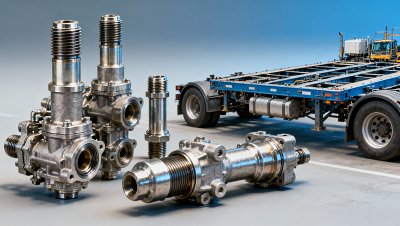
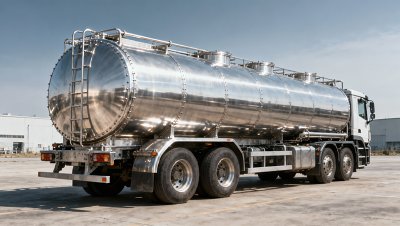
Choosing a reliable truck spare parts supplier is critical for buyers seeking durable commercial vehicle parts, truck cylinder solutions, and truck injector components. For procurement teams, distributors, and business evaluators, the right partner can also provide access to construction machinery supplier networks, flatbed trailer supplier resources, and products such as bulk cement trailer, bulk cement tanker, truck steel, and truck skeleton systems with consistent quality, transparent service, and global trade support.
Why reliability matters more than low price in truck spare parts sourcing
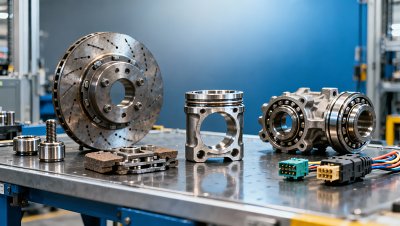
In the road transport equipment industry, spare parts failures do not stay inside the workshop. A poor-quality brake component, injector, suspension part, or truck cylinder can stop a vehicle on a logistics route, delay a construction schedule, or disrupt fleet utilization across multiple sites. For buyers, a reliable truck spare parts supplier reduces not only product risk but also operational downtime, claim disputes, and hidden replacement costs.
Many procurement teams first compare quoted prices, yet long-term purchasing performance is shaped by at least 5 core factors: product consistency, traceable specifications, delivery stability, communication speed, and after-sales response. In practical B2B sourcing, a part that arrives 7–15 days late or fits inconsistently across batches can create a much larger commercial loss than a moderate unit price difference.
This is especially true when the sourcing scope extends beyond truck spare parts into trailer parts, construction machinery components, truck steel structures, or bulk cement tanker systems. Buyers often need one supplier network that can support multiple categories with aligned documentation, packaging, and export coordination. Reliability therefore means commercial predictability, not simply acceptable product appearance.
For information researchers, distributors, and business evaluation teams, a dependable supplier should be assessed as a long-term operating partner. The supplier should help reduce sourcing friction across 3 stages: pre-purchase evaluation, order execution, and post-delivery support. That broader view is what separates a workable supplier from a truly reliable one.
- Pre-purchase: clear product descriptions, drawings, fitment details, material information, and confirmation of applicable truck models.
- Order execution: stable lead times, practical MOQ communication, export packing control, and document accuracy.
- After-sales: issue tracing, replacement logic, technical feedback, and support for repeat orders or distributor development.
How to judge a reliable truck spare parts supplier before placing an order
A reliable truck spare parts supplier is not identified by one promise. Buyers need a structured screening method. In most B2B transactions, the most useful review framework includes 6 checkpoints: category expertise, specification control, sample consistency, supply capacity, export readiness, and communication discipline. If a supplier is weak in 2 or 3 of these areas, future order risk rises quickly.
Category expertise matters because truck injector parts, truck cylinder assemblies, suspension parts, chassis components, and trailer accessories have very different fitment and performance requirements. A supplier that truly understands road transport equipment should be able to explain material choices, wear conditions, replacement cycles, and common field failures without relying on vague language.
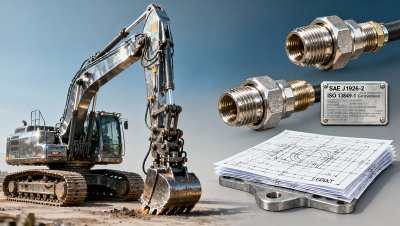
Specification control is another decisive sign. Reliable suppliers can confirm dimensions, thread types, installation positions, matching brands, packaging methods, and batch labeling before production starts. In cross-border procurement, even a small mismatch such as connector type, mounting hole spacing, or seal material may cause the entire shipment to become slow-moving inventory.
Communication discipline is often underestimated. In many procurement cases, the issue is not only product quality but response delay. If technical questions take 3–5 working days to answer, the sourcing cycle becomes inefficient. Strong suppliers usually respond with a clear commercial and technical process, often within 24–48 hours for standard inquiries and with longer lead confirmation for customized products.
Supplier evaluation checklist for procurement and business review teams
The table below can be used by procurement managers, distributors, and sourcing analysts when comparing truck spare parts suppliers, flatbed trailer suppliers, and construction machinery suppliers in one decision workflow.
This checklist is useful because it turns a general sourcing discussion into a measurable decision process. It also helps buyers compare suppliers that offer truck spare parts together with related categories such as bulk cement trailer components, truck skeleton structures, or trailer chassis systems.
Key questions to ask in the first review round
- Can you confirm fitment by drawing, OEM reference, or vehicle model rather than by photo only?
- What is the normal lead time for standard items and for customized packaging or private labeling?
- How do you handle batch variation, incoming inspection, and replacement claims if defects appear after delivery?
- Can you support mixed-category procurement across truck parts, trailer parts, and construction machinery components?
Which capabilities separate a dependable supplier from a trading source with limited control
Not every supplier in the commercial vehicle market has the same depth of control over products and service. Some companies can quote many items but cannot validate compatibility, trace batch issues, or coordinate delivery across categories. Buyers should therefore distinguish between a source that only forwards offers and a supplier network that can support practical procurement execution.
In truck spare parts procurement, dependable supply usually shows up in 4 areas: technical clarity, sourcing transparency, order coordination, and market continuity. Technical clarity means the supplier can discuss part specifications in realistic terms. Sourcing transparency means the buyer knows whether the item is standard stock, production-based, or mixed from multiple factories. Order coordination means shipment planning and documentation are managed with discipline.
Market continuity is especially important for distributors and agents. If a supplier cannot maintain continuity over 6–12 months, the distributor faces repeated listing changes, customer complaints, and unstable margins. In categories such as truck injector parts, wear parts for construction machinery, or flatbed trailer accessories, continuity often matters as much as the initial quotation.
This is where a professional B2B platform creates value. The Global Heavy Truck Industry Platform connects buyers with suppliers across truck chassis and cab, complete trucks, light trucks, trailers, semi-trailers, construction machinery, and spare parts. That broader ecosystem helps buyers compare options, verify category coverage, and reduce the time spent searching across disconnected channels.
Practical comparison: reliable supplier vs limited-control source
The following comparison highlights why procurement teams should review control capability, not only product availability.
For business evaluators, this comparison helps reveal whether a supplier can support sustainable purchasing. It is also helpful when selecting partners for mixed sourcing projects involving truck steel parts, truck skeleton components, bulk cement tanker structures, or trailer systems with recurring replenishment needs.
Signals that usually indicate stronger supplier reliability
- The supplier requests drawings, original part numbers, or installation photos from multiple angles before confirming the order.
- The quotation distinguishes between stocked items, scheduled production, and custom-made parts instead of using one generic lead time.
- The supplier can coordinate spare parts with related heavy equipment categories, which is valuable for buyers managing one procurement plan across several product lines.
What procurement teams should check for quality, compliance, and delivery risk
A reliable truck spare parts supplier should support more than quotation speed. Procurement teams need evidence that the supplier understands inspection points, packaging requirements, and common compliance expectations in international trade. While exact standards vary by market and part type, buyers can still assess whether the supplier works with a disciplined documentation and control process.
For many spare parts categories, 3 layers of review are useful: product-level confirmation, shipment-level verification, and market-entry documentation. Product-level confirmation includes material, dimension, fitment, and function. Shipment-level verification includes carton marking, quantity checks, and damage prevention. Market-entry documentation may include commercial invoice details, packing list consistency, and any requested conformity or technical statements that are customary for the destination market.
Delivery risk should also be discussed early. Common lead times in this industry often range from 2–4 weeks for standard repeat items and longer for custom fabrication, mixed containers, or private-label packaging. Buyers should ask what happens if one category is ready earlier than another, especially when ordering truck spare parts together with flatbed trailer components or construction machinery parts.
If the order includes structural products such as truck steel assemblies, truck skeleton parts, or bulk cement trailer components, packaging and loading methods become even more important. Damage during handling can turn an acceptable production result into a costly receiving issue. Reliable suppliers usually discuss palletization, anti-rust protection, labeling, and loading sequence before shipment release.
A practical risk-control table for cross-border truck parts procurement
The table below summarizes common checkpoints that help buyers reduce technical and commercial risk across truck spare parts and related transport equipment categories.
These controls are especially valuable for distributors and agents who must protect resale credibility. Stable documentation and shipment discipline help them manage inventory, service local customers, and reduce disputes during repeat procurement cycles.
Four common mistakes that make supplier selection risky
- Selecting only by unit price without checking whether the quoted item matches the required specification or duty cycle.
- Assuming all truck injector or truck cylinder products have the same interchangeability across brands and production years.
- Ignoring packaging, labeling, and shipment planning for heavy or irregular products such as bulk cement tanker parts or structural trailer components.
- Failing to define a claim-handling process before the first order, then facing delays after arrival issues appear.
How a specialized B2B platform helps buyers find reliable truck spare parts suppliers
For many global buyers, the problem is not finding suppliers. The real problem is filtering them efficiently. A specialized industry platform shortens the search cycle by organizing suppliers, product categories, and decision resources within one ecosystem. This is particularly useful when the sourcing requirement covers not only truck spare parts but also complete trucks, trailers, semi-trailers, construction machinery, and related accessories.
The Global Heavy Truck Industry Platform supports this process by connecting manufacturers, suppliers, distributors, and buyers across the heavy truck supply chain. Buyers can review products, compare supplier positioning, and access industry resources such as truck brand directories, market insights, and practical buying guides. That multi-layer view is valuable during the first 2–3 rounds of supplier screening.
For procurement professionals, one key advantage is category integration. A buyer looking for truck cylinder parts may also need trailer components, truck steel products, or construction machinery wear parts for the same project. Instead of searching separate channels, the platform helps consolidate product discovery and supplier evaluation. This reduces communication repetition and improves sourcing efficiency across linked categories.
For distributors and agents, the platform also supports business development. It helps identify supply partners with broader category coverage and stronger export readiness, which can improve local portfolio planning. In markets where delivery timing, spare parts availability, and after-sales support influence brand reputation, this kind of sourcing structure offers real commercial value.
A practical 4-step sourcing workflow
- Define the technical need: confirm part numbers, application, quantity range, and any required packaging or labeling details.
- Compare supplier capability: review category fit, response speed, export support, and whether the supplier can handle mixed product groups.
- Validate execution details: confirm lead time, sample support if needed, inspection points, and shipping plan before order release.
- Prepare repeat procurement: evaluate delivery performance, issue handling, and documentation quality for future orders over the next 6–12 months.
This workflow is effective because it aligns technical review with commercial decision-making. It also supports buyers who need to balance price, quality, sourcing speed, and long-term partnership potential.
FAQ: common questions about choosing a reliable truck spare parts supplier
How can I verify whether a truck spare parts supplier is suitable for repeat orders?
Check more than the first sample. Ask about batch consistency, standard lead times, packaging control, and issue response procedures. A supplier suitable for repeat orders should be able to explain how it manages at least 3 areas: specification confirmation, production or stock planning, and after-sales handling. If the supplier can only discuss the current quotation, repeat-order stability may be weak.
What is a normal delivery cycle for commercial vehicle spare parts?
It depends on whether the items are standard stock, scheduled production, or customized. In many common sourcing situations, standard parts may move within 7–15 days if available, while factory-scheduled items often require 2–4 weeks. Mixed-category orders, customized labels, or structural products such as bulk cement trailer parts may take longer. Buyers should request a product-by-product lead breakdown, not one average estimate.
Should I source truck spare parts and trailer or machinery parts from the same platform?
If your project includes multiple categories, using a specialized B2B platform can improve efficiency. It allows you to compare truck spare parts suppliers together with flatbed trailer suppliers and construction machinery suppliers in one sourcing environment. This is particularly useful for distributors, contractors, and fleet-related buyers who need consolidated communication and coordinated delivery planning.
What are the most common red flags during supplier evaluation?
Typical red flags include unclear fitment confirmation, generic answers on material or application, unrealistic lead times, weak packaging discussion for heavy parts, and no defined process for claims or replacement. If a supplier cannot answer detailed questions within 24–48 hours for standard items, or keeps changing basic commercial terms, buyers should review the risk carefully before placing an order.
Why choose us for truck spare parts sourcing and supplier matching
The Global Heavy Truck Industry Platform is built for buyers who need more than a product listing. It supports practical sourcing across the global commercial vehicle and heavy equipment chain, covering truck chassis and cab, complete trucks, light trucks, trailers, semi-trailers, construction machinery, and spare parts. This wider industry structure helps buyers identify reliable truck spare parts suppliers with stronger category relevance and market visibility.
If you are comparing truck injector suppliers, truck cylinder sources, flatbed trailer suppliers, or construction machinery suppliers, we help you narrow options through product discovery tools, industry information, and supplier comparison support. That means less time spent searching disconnected channels and more time focused on practical decisions such as model matching, order planning, and supplier communication quality.
You can contact us for specific procurement support, including parameter confirmation, product selection, delivery cycle discussion, custom sourcing plans, certification-related document preparation, sample support, and quotation communication. If your requirement includes mixed categories such as truck steel components, truck skeleton systems, bulk cement tanker products, or trailer spare parts, we can also help you organize the sourcing scope more efficiently.
For information researchers, procurement teams, business evaluators, and distributors, the goal is not simply to find a supplier. It is to find a sourcing path that is clear, traceable, and commercially workable. Contact us with your target part numbers, application scenarios, quantity range, and delivery expectations, and we can help you move from broad market search to focused supplier evaluation.
- construction machinery supplier
- flatbed trailer supplier
- truck spare parts supplier
- commercial vehicle parts
- truck chassis
- heavy truck
- cement tanker
- construction machinery
- truck parts
- bulk cement trailer
- truck spare parts
- flatbed trailer
- truck injector
- truck cylinder
- truck skeleton
- truck steel
- commercial vehicle
- heavy equipment
- bulk cement tanker
Trending News
- China's MW-Class Hydrogen Aviation Turboprop Engine First Flight
- Oil Prices Rise, Airlines Cut Capacity, Land Freight Costs Pressure
- Henan's 2026 Key Projects List: RMB 1 Trillion Investment Drives Heavy-Duty & Special Vehicle Demand
- Guangxi Xijiang Waterway Enforces Zero Discharge for Vessel Pollutants
- China Accelerates Low-Altitude Economy Clusters, Boosting Demand for Smart Airport Tugs
Tag
Recommended News
 Truck Parts IndustryIrkeshtam Port Launches 24/7 Freight Clearance for China-Kyrgyzstan Truck Parts TradeIrkeshtam Port’s 24/7 freight clearance boosts China-Kyrgyzstan truck parts trade—faster customs (15-min avg), higher throughput, and JIT delivery for chassis, brakes & axles.
 Truck Parts IndustryNingbo Huaxiang's PEEK Production Line Begins Trial, Boosting Localization of Lightweight Commercial Vehicle PartsNingbo Huaxiang's PEEK production line begins trial, boosting localization of lightweight commercial vehicle parts. Certified by Continental AG and Volvo Trucks, this 4,000-ton/year project enhances supply chain resilience and helps meet EU emissions standards. Discover how this impacts manufacturers and suppliers.
 Truck Parts IndustryNingbo Huaxiang's PEEK Production Line Trial Boosts Localization of Lightweight Commercial Vehicle PartsNingbo Huaxiang's PEEK production line trial cuts costs by 25%, boosting lightweight commercial vehicle parts localization. Explore how this impacts NEV suppliers & export competitiveness.
 Truck Parts IndustryWhat Makes a Truck Spare Parts Supplier ReliableTruck spare parts supplier guide for sourcing commercial vehicle parts, truck cylinder, truck injector, bulk cement tanker and trailer systems with reliable quality, stable delivery, and global B2B support.
 Truck Parts IndustryBULLDOZER for land clearing: When undercarriage wear outpaces engine lifeBULLDOZER for land clearing undercarriage wear beats engine life—compare dump truck price, truck tipper for sale & semi trailer for sale with data-driven TCO insights.
 Truck Parts IndustryHow to Spot Quality Gaps in Commercial Vehicle Parts SupplyCommercial vehicle parts buyers: learn to spot quality gaps in truck engine parts and truck brake system sourcing for wing van truck, light duty truck, cab chassis truck, and heavy duty trucks for sale.
 Truck Parts IndustryAftermarket or OEM Truck Engine Parts? Where the Risk Really IsTruck engine parts guide: compare OEM vs aftermarket risk for light duty truck and wing van truck fleets, reduce downtime, source commercial vehicle parts smarter.
 Truck Parts IndustryTruck Engine Parts That Commonly Fail Under High MileageTruck engine parts often fail first on high-mileage wing van truck, light duty truck, and cab chassis truck fleets. Learn key risks, warning signs, and smart sourcing tips for reliable commercial vehicle parts.
 Truck Parts IndustryTruck parts cost vs. OEM rebuilds: When remanufactured beats new on total lifecycle valueWater truck cost, construction machinery quotation & truck parts cost—discover why remanufactured beats new on total lifecycle value. Get verified quotes now!
 Truck Parts IndustryTruck parts quotation validity periods: Why 14 days is now standard—and riskyTruck parts quotation validity is now a critical risk—discover why 14-day windows threaten water truck cost control, construction machinery quotation accuracy, and distributor margins.
 Truck Parts IndustryTruck parts distributor certifications matter—here’s which ones actually affect qualityTruck parts distributor certifications directly impact water truck cost, construction machinery quotation & crane truck quotation—verify scope, not just logos.
 Truck Parts IndustryBulldozer manufacturer or distributor: where do service parts really come from?Bulldozer manufacturer, excavator supplier & bulldozer distributor insights—discover where genuine service parts truly originate for road construction, heavy duty trucks in Canada, South Africa, Australia & logging truck OEMs.
 Truck Parts IndustryWing van door alignment issues: When minor wear becomes major cargo lossSolve wing van door alignment issues before they cause cargo loss—critical for light commercial vehicle, refrigerated truck & truck mounted crane operations. OEM-grade truck spare parts, axle, suspension & transmission support.
 Truck Parts IndustryFuel tank truck corrosion patterns you won’t find in the manualFuel tank truck corrosion secrets revealed—linked to truck axle, suspension, transmission & more. Discover real-world patterns missing from manuals. Essential for light commercial vehicle, refrigerated truck & truck mounted crane buyers.
 Truck Parts IndustryWing van curtain rail fatigue: A hidden failure point in high-frequency deliveriesWing van curtain rail fatigue threatens light commercial vehicle & refrigerated truck reliability—discover fatigue-resistant truck spare parts, certified for 500k+ cycles.
 Truck Parts IndustryTruck spare parts counterfeit risk: How to spot fake brake shoes without lab testingSpot fake truck spare parts fast—especially brake shoes for light commercial vehicle, refrigerated truck & truck mounted crane. No lab needed!
 Truck Parts IndustryWing van hinge wear accelerates when used for frequent palletized freight — signs to watchWing van hinges wear fast in palletized freight—spot early signs on van, curtain side, stake & gooseneck trailers. Prevent downtime now!
 Truck Parts IndustryWater tanker residual moisture leads to internal corrosion even with stainless steel liningWater tanker corrosion risks persist even with stainless steel lining—learn how van trailer, flatbed trailer, gooseneck trailer & bulk trailer fleets can prevent costly failures.
 Truck Parts IndustryCurtain side trailer fabric durability drops after 18 months — here’s whyCurtain side trailer fabric durability drops after 18 months—impacting van, stake, gooseneck, flatbed, bulk, axle, wing van, water tanker & truck crane operations. Discover why & how to cut TCO.
 Truck Parts IndustryWing van hinge corrosion begins earlier than expected — coastal operation case studyWing van, curtain side trailer & flatbed trailer hinges corrode fast in coastal areas—discover why and how to extend service life with AISI 316, zinc-nickel, and smart procurement.
 Truck Parts IndustryWater tanker interior coating failure often starts near manhole welds — corrosion patterns revealedWater tanker interior coating failure starts near manhole welds — critical for van, flatbed, gooseneck, curtain side & bulk trailer buyers. Discover corrosion-proof specs now.
 Truck Parts IndustryCurtain side trailer fabric durability drops after 18 months — here’s what accelerates wearCurtain side trailer fabric durability plummets after 18 months—discover why van, flatbed, gooseneck & bulk trailer operators overlook critical wear accelerants and how to extend service life with ISO-certified solutions.
 Truck Parts IndustryWater tanker tank lining delamination often begins at weld seams—not surface scratcheswater tanker, curtain side trailer, flatbed trailer & more: Discover why weld seams—not scratches—trigger lining delamination. Get supplier-verified solutions now.
 Truck Parts IndustryWater tanker corrosion starts earlier than expected—material choices that matterWater tanker corrosion starts early—choose smart materials for curtain side trailer, flatbed trailer, bulk trailer & more. Discover data-backed durability insights now.
 Truck Parts IndustryExcavator attachment compatibility isn’t universal — here’s what breaks when you mix brandsExcavator attachment compatibility isn’t universal—learn why cross-brand swaps risk downtime, void warranties & inflate TCO. Get expert insights on excavator for sale, EXCAVATOR for demolition, and construction machinery quotation.