How to Choose Truck Steel for Heavy-Duty Use
Choosing the right truck steel for heavy-duty use is essential for durability, payload performance, and long-term operating efficiency. For buyers sourcing commercial vehicle parts, evaluating material strength, corrosion resistance, and application fit is just as important as selecting a trusted truck spare parts supplier or construction machinery supplier. This guide helps procurement teams, distributors, and market researchers understand how truck steel affects chassis reliability, trailer performance, and overall fleet value.
For most heavy-duty applications, the best truck steel is not simply the “strongest” grade. The right choice depends on where the steel is used, how much load the vehicle carries, the road and climate conditions, fabrication requirements, and the total cost of ownership over time. Buyers who focus only on price or tensile strength often end up with avoidable problems such as cracking, premature corrosion, excess vehicle weight, or difficult repairs. A better approach is to match steel properties to the actual operating duty cycle and supplier capability.
What buyers really need to evaluate when choosing truck steel
If you are comparing materials for truck chassis, trailer frames, dump bodies, cross members, or other structural components, there are five decision factors that matter most:
- Strength-to-weight ratio: Higher-strength steel can reduce dead weight and improve payload efficiency, but only if the design and fabrication quality support it.
- Toughness and fatigue resistance: Heavy-duty trucks face vibration, impact, repeated loading, and twisting stress. Steel must perform under long-term cyclic use, not just in lab test conditions.
- Corrosion resistance: Trucks operating in coastal regions, mining sites, snowy roads, or chemical transport environments need better protection against rust and surface degradation.
- Formability and weldability: Some advanced steels offer better strength but require tighter manufacturing control. Poor welding practices can reduce performance.
- Application fit: Steel for a long-haul logistics tractor is not the same as steel for a mining dump truck or a cement mixer chassis.
For procurement teams and distributors, this means truck steel selection should be treated as a business decision, not only a technical one. The correct material affects maintenance cost, vehicle uptime, warranty risk, resale value, and customer satisfaction.
Why “stronger steel” is not always the best steel
One of the most common buying mistakes is assuming that the highest-strength steel automatically delivers the best result. In reality, heavy-duty truck performance depends on material balance.
For example, ultra-high-strength steel may help reduce frame weight, but if the operating environment includes high torsional stress, poor road conditions, frequent overloading, or basic repair infrastructure, a slightly lower grade with better toughness and easier weldability may be the safer and more economical option.
Here is the practical rule: choose steel based on real service conditions, not brochure claims. Buyers should ask:
- Will the truck operate on highways, rough construction roads, quarry routes, or mixed conditions?
- Is the load static, shifting, abrasive, or impact-heavy?
- How often will the vehicle be overloaded in actual use?
- What is the expected service life?
- Can local workshops repair the material correctly?
In many fleet and B2B purchasing situations, reliability and repair practicality are more valuable than chasing the highest mechanical specification.
Key steel properties that matter for heavy-duty truck applications
When evaluating truck steel for heavy-duty use, buyers should understand the main material properties that directly affect field performance.
Yield strength
Yield strength shows how much stress the steel can withstand before permanent deformation begins. This is important for chassis rails, structural beams, and trailer frames carrying heavy loads. Higher yield strength can support lighter structures, but design quality remains critical.
Tensile strength
Tensile strength measures the maximum stress the steel can handle before fracture. It is useful, but on its own it does not guarantee good service life.
Impact toughness
Toughness indicates how well steel resists sudden shock or impact without cracking. This is especially important in cold climates, off-road hauling, and mining or construction use.
Fatigue resistance
Heavy trucks are exposed to repeated stress cycles. Over time, even moderate loads can cause fatigue cracks in poorly selected or poorly processed steel. For long-term durability, fatigue performance is often more important than maximum static strength.
Corrosion resistance
Steel used in regions with humidity, salt, chemicals, or frequent washing should have strong anti-corrosion treatment or suitable alloy characteristics. Corrosion can reduce structural integrity and increase lifecycle cost.
Weldability
Many truck frames and bodies rely on welded assemblies. Steel that is difficult to weld may increase production defects or repair challenges. Buyers sourcing from international suppliers should confirm welding standards and process control.
How truck application changes the right steel choice
Different vehicles and working conditions require different steel strategies. This is where business buyers can make better sourcing decisions than competitors who buy only on generic specification.
Long-haul freight trucks
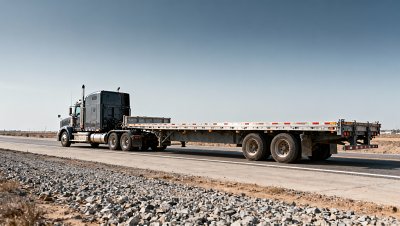
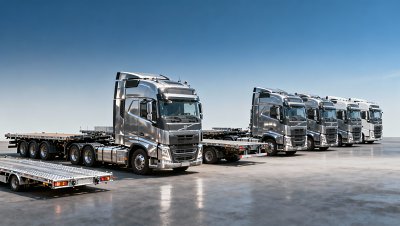
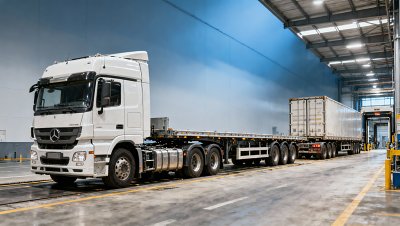
For highway transport, reducing vehicle weight while maintaining structural integrity is often a priority. High-strength low-alloy steel can be a good choice for chassis and structural parts because it supports payload optimization and fuel efficiency.
Construction and infrastructure trucks
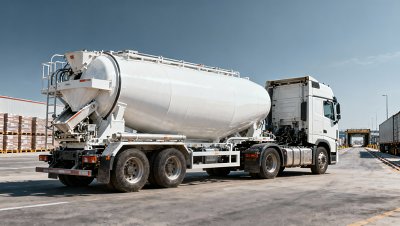
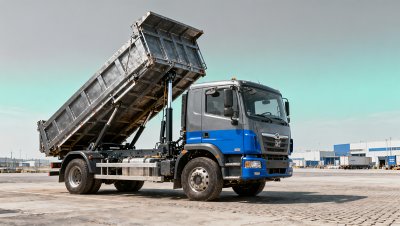
Tipper trucks, concrete mixers, and site transport vehicles usually operate on uneven roads with heavy impact and twisting loads. In these cases, toughness, fatigue resistance, and weld reliability often matter more than extreme weight reduction.
Mining and quarry transport
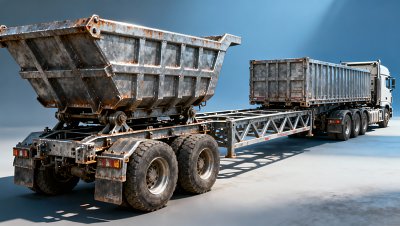
Mining trucks and related trailers face abrasive materials, high payloads, and severe impact conditions. Wear-resistant steel may be required for dump bodies and high-contact surfaces, while structural areas need strong crack resistance and durability.
Municipal and special-purpose vehicles
Refuse trucks, tanker trucks, and service vehicles may require steel that balances corrosion resistance, forming performance, and localized structural strength depending on the body design and operating environment.
For distributors and sourcing managers, application-based steel matching is one of the most effective ways to reduce post-sale complaints and improve customer trust.
Common truck steel categories buyers should know
You do not need to be a metallurgist to make a good sourcing decision, but you should understand the broad categories commonly used in heavy-duty truck manufacturing.
Carbon steel
Carbon steel is widely used because it is cost-effective and easy to process. However, standard carbon steel may be too heavy or less durable for demanding heavy-duty applications unless properly designed and protected.
High-strength low-alloy steel (HSLA)
HSLA steel is one of the most important material groups in modern truck manufacturing. It offers a better strength-to-weight ratio than conventional carbon steel and is widely used in chassis, frames, and structural components.
Wear-resistant steel
This type of steel is often used in dump bodies, mining applications, and components exposed to abrasive materials such as ore, sand, gravel, or demolition waste.
Weathering or corrosion-resistant steel
In specific environments, corrosion-resistant steel can improve service life and reduce maintenance requirements, although suitability depends on design, coating systems, and local climate.
Advanced high-strength steel
These steels can deliver major weight savings and structural benefits, but they may require advanced forming, welding, and quality control processes. Buyers should confirm whether the supplier has proven manufacturing capability.
How to assess supplier quality before choosing truck steel products
For B2B buyers, steel selection is only half the decision. The other half is whether the supplier can consistently deliver the material quality, fabrication accuracy, and documentation needed for heavy-duty use.
When evaluating a truck spare parts supplier, trailer manufacturer, or construction machinery supplier, ask for evidence in these areas:
- Material certificates: Confirm steel grade, mechanical properties, and traceability.
- Manufacturing process control: Ask about cutting, bending, welding, heat treatment, and surface treatment standards.
- Application references: Suppliers with proven exports or experience in similar heavy-duty applications are usually safer choices.
- Testing capability: Look for fatigue testing, weld inspection, hardness checks, dimensional inspection, and anti-corrosion validation where relevant.
- Quality management systems: ISO and industry-specific process controls improve consistency, though they should not replace practical due diligence.
- After-sales support: Good suppliers can explain where their steel is appropriate and where it is not, helping avoid mismatched purchases.
This is especially important in international sourcing, where material substitution, unclear specifications, or inconsistent production can create serious commercial risk.
Cost versus lifecycle value: what procurement teams should compare
The lowest purchase price rarely represents the best value in heavy-duty truck steel sourcing. Buyers should compare lifecycle economics across the full operating period.
Key cost factors include:
- Initial material and manufacturing cost
- Vehicle weight and payload efficiency
- Fuel consumption impact
- Maintenance frequency
- Corrosion protection and repainting needs
- Repair difficulty and downtime
- Expected service life
- Residual or resale value
For example, a higher-grade steel may cost more upfront but reduce structural failures, cut maintenance interruptions, and improve payload capacity over years of use. On the other hand, paying extra for advanced steel without the right application or fabrication quality may not generate return on investment.
Procurement professionals should therefore compare total operating value, not just invoice price.
Red flags that suggest a truck steel sourcing risk
Whether you are a distributor, OEM buyer, or market evaluator, certain warning signs should trigger deeper review:
- Supplier cannot provide clear steel grade documentation
- Mechanical properties are listed vaguely without standard references
- Welding quality requirements are not defined
- Surface protection details are missing for corrosion-prone applications
- Claims of “high strength” are used without fatigue or impact data
- There are no customer references in comparable heavy-duty markets
- Prices are significantly below market with no transparent explanation
These issues do not always mean the supplier is unsuitable, but they often indicate a higher risk of inconsistency, limited technical support, or product mismatch.
A practical checklist for choosing truck steel for heavy-duty use
To make a better buying decision, use this simplified checklist:
- Define the exact application: chassis, trailer frame, body, wear surface, or reinforcement part.
- Identify real operating conditions: road type, climate, load pattern, impact level, and overload frequency.
- Set the priority: weight savings, toughness, corrosion resistance, wear life, or repairability.
- Compare suitable steel categories rather than comparing all materials at once.
- Review fabrication needs such as welding, forming, and coating compatibility.
- Verify certificates, standards, and supplier production capability.
- Estimate lifecycle value, not only purchase cost.
- Confirm after-sales and technical communication support for international transactions.
This process helps buyers move from generic inquiry to informed commercial evaluation.
Final thoughts
Choosing truck steel for heavy-duty use is ultimately about matching material performance to real-world operating demands. The best steel is the one that delivers reliable structural performance, manageable maintenance, practical repairability, and strong lifecycle value for the intended application.
For procurement teams, distributors, and business evaluators in the commercial vehicle sector, the smartest decision comes from combining material knowledge with supplier due diligence. If you are sourcing truck chassis parts, trailer structures, or heavy equipment components through a global B2B marketplace, focus on application fit, documented quality, and long-term operating outcomes. That is how you reduce risk, improve fleet value, and choose truck steel with confidence.
Trending News
- China's MW-Class Hydrogen Aviation Turboprop Engine First Flight
- Oil Prices Rise, Airlines Cut Capacity, Land Freight Costs Pressure
- Henan's 2026 Key Projects List: RMB 1 Trillion Investment Drives Heavy-Duty & Special Vehicle Demand
- Guangxi Xijiang Waterway Enforces Zero Discharge for Vessel Pollutants
- China Accelerates Low-Altitude Economy Clusters, Boosting Demand for Smart Airport Tugs
Tag
Recommended News
 Used Truck MarketLinquan Court Auctions HOWO Tractor + Dump Semi-trailer Combo, Highlighting Potential Supply for Used Trailer ExportsExplore Linquan Court's HOWO tractor & dump semi-trailer auction - a rare opportunity for used commercial vehicle exporters targeting Middle East, Africa & Latin America markets. Starting bid 86,500 RMB with full documentation.
 FAQHow Much Weight Can a Lowbed Trailer Handle SafelyLowbed trailer guide: learn safe payload limits for construction truck and truck mining transport, with expert tips on axle setup, compliance, and choosing the right truck lowbed.
 FAQLowbed Trailer vs Truck Lowbed: What’s the Real DifferenceLowbed trailer vs truck lowbed: learn the real difference for construction truck fleets, truck mounted crane moves, and mixer truck or truck container transport. Compare smarter now.
 Buying GuideHow to Choose a Construction Truck for Tight Job SitesConstruction truck selection for tight job sites: compare lowbed trailer, truck mounted crane, mixer truck, and truck loader options to improve safety, efficiency, and sourcing decisions.
 Buying GuideTruck Mounted Crane Buying Mistakes That Cost More LaterTruck mounted crane buying mistakes can raise costs fast. Learn how construction truck, truck loader, lowbed trailer, and mixer truck buyers avoid hidden risks and choose smarter.
 Buying GuideRefrigerated Truck Checklist Before You Compare QuotesRefrigerated truck checklist before you compare quotes: assess cooling, insulation, and supplier strength while aligning construction truck, lowbed trailer, mixer truck, and fuel tank truck fleet needs.
 Buying GuideTruck Van or Box Truck: Which Fits Urban Delivery BetterTruck van or box truck—which fits urban delivery better? Compare truck van options with refrigerated truck, fuel tank truck, and truck container solutions to choose smarter, lower-cost fleet setups.
 Used Truck MarketWhat to Check Before Buying a Used Truck VanUsed truck van buying guide: inspect service history, load capacity, body wear, and supplier reliability. Compare truck van, lowbed trailer, refrigerated truck, mixer truck, and construction truck options with confidence.
 Buying GuideTruck Lowbed Selection Tips for Heavy Equipment TransportTruck lowbed selection tips for heavy equipment transport: compare lowbed trailer types, axle options, and route fit for construction truck, truck mounted crane, and truck mining needs.
 Buying GuideHow to Pick a Truck Loader for Mixed Cargo WorkTruck loader buying guide for mixed cargo work: compare construction truck, lowbed trailer, and truck mounted crane options to improve payload, safety, and operating cost.
 Fleet ManagementIs a Truck Mounted Crane Worth It for Small FleetsTruck mounted crane vs lowbed trailer: learn when small fleets gain more value than with a construction truck, refrigerated truck, mixer truck, or fuel tank truck.
 FAQTruck Injector Failure Signs You Shouldn’t IgnoreTruck injector warning signs explained for buyers of commercial vehicle parts. Learn how a trusted truck spare parts supplier improves truck cylinder performance and reduces fleet downtime.
 Buying GuideHow to Choose Truck Steel for Heavy-Duty UseTruck steel buying guide for heavy-duty fleets: compare truck steel, commercial vehicle parts, and trusted truck spare parts supplier options to improve durability, payload, and lifecycle value.
 Buying GuideHow to Vet a Flatbed Trailer Supplier QuicklyFlatbed trailer supplier vetting made simple: learn how buyers of commercial vehicle parts, bulk cement trailer solutions, and truck spare parts can verify quality, compliance, and export reliability fast.
 FAQAre Cheap Truck Cylinders Worth the RiskTruck cylinder buying guide for commercial vehicle parts buyers: compare risk, durability, and total cost. Find a trusted truck spare parts supplier or construction machinery supplier.
 Fleet ManagementTruck Injector vs Repair: Which Saves MoreTruck injector repair or replacement—which saves more? Compare costs, downtime, and sourcing tips from a trusted truck spare parts supplier for commercial vehicle parts buyers.
 Buying GuideFinding a Truck Trailer for Sale That Fits Local Road ConditionsTruck trailer for sale tips for real road conditions: compare truck trailer price, choose the right semi trailer supplier, and improve fleet value with smarter wholesale sourcing.
 Buying GuideTruck Cement Sourcing Options Compared by Lead Time and RiskCompare truck cement sourcing by lead time, risk, and truck cement price. Find the right semi trailer supplier, check semi trailer price trends, and plan bulk orders with confidence.
 Fleet ManagementTruck Cement Price vs Operating Cost: Which Matters More?Compare truck cement price with real operating costs, semi trailer price, and truck trailer for sale options. Find the right semi trailer supplier for smarter sourcing and higher fleet ROI.
 Buying GuideTruck Trailer Wholesale or Factory Direct? The Real DifferenceCompare truck trailer wholesale vs factory direct to find the best truck trailer for sale, truck trailer price, and reliable semi trailer supplier for smarter sourcing.
 FAQSemi Trailer Supplier Delays Often Start With Spec MismatchSemi trailer supplier delays often come from spec mismatch. Compare truck trailer for sale options, semi trailer price, and truck trailer wholesale quotes to reduce sourcing risk.
 Used Truck MarketWhat to Inspect Before Choosing a Used Truck Trailer for SaleTruck trailer for sale guide: inspect frame, axles, brakes, and records before comparing truck trailer price or choosing a semi trailer supplier for safer, smarter sourcing.
 Buying GuideWhen Truck Trailer Wholesale Makes More Sense Than Small OrdersCompare truck trailer for sale options and see when truck trailer wholesale beats small orders. Learn how semi trailer supplier support, stable semi trailer price, and better margins drive smarter bulk buying.
 Buying GuideHow to Compare a Truck Trailer for Sale Without Missing Key SpecsTruck trailer for sale comparison guide: evaluate truck trailer price, specs, and supplier strength to choose the right semi trailer supplier and reduce sourcing risk.
 Fleet ManagementTruck tipper price vs. operating cost — when higher upfront spend pays off in under 18 monthsDump truck for sale? Compare truck tipper price vs. operating cost: smart buyers recoup higher upfront spend in <18 months. See real TCO data.