How to Spot Quality Gaps in Commercial Vehicle Parts Supply
In the fast-moving market for commercial vehicle parts, even small quality gaps can lead to costly downtime and supply chain risks. Whether you source truck engine parts, evaluate a truck brake system, or compare suppliers for a light duty truck, cab chassis truck, or heavy duty trucks for sale, knowing what to check is essential. This guide helps buyers and distributors identify weak points, assess supplier reliability, and make smarter sourcing decisions.
For procurement teams, market researchers, commercial evaluators, and distributors, the challenge is rarely limited to comparing prices. A part that is 8% cheaper but fails after 3 months can create a far higher total cost than a part with a longer service interval, stable fitment, and documented production control. In the road transport equipment sector, quality gaps often hide in material consistency, machining accuracy, batch traceability, packaging standards, and after-sales responsiveness.
This is especially important in cross-border B2B sourcing, where buyers may compare multiple suppliers for brake components, suspension parts, filters, bearings, chassis parts, electrical systems, and truck engine parts across different production regions. A professional industry platform can shorten this evaluation cycle by helping buyers compare products, verify supplier capabilities, and reduce sourcing uncertainty before volume orders are placed.
Where Quality Gaps Usually Appear in Commercial Vehicle Parts Supply
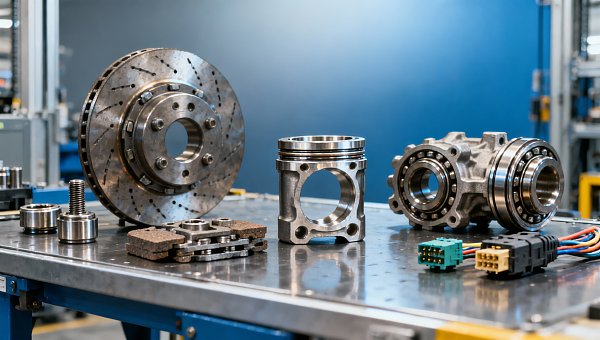
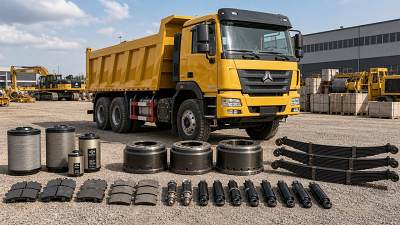
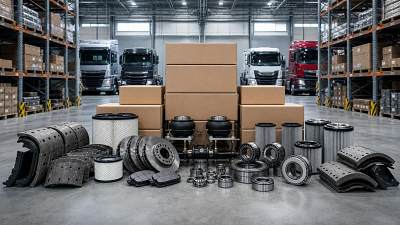
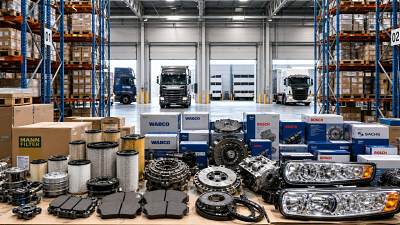
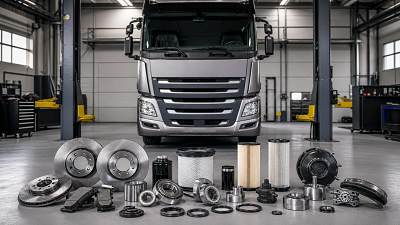
Quality gaps in commercial vehicle parts supply are not always visible during the first inspection. In many cases, the external appearance looks acceptable, but problems emerge after 5,000 to 20,000 km of operation. This is common in brake linings, clutch assemblies, wheel hubs, air suspension components, seals, and electrical connectors, where durability depends on internal consistency rather than surface finish alone.
For heavy-duty trucks used in mining, logistics, municipal transport, and infrastructure projects, parts are exposed to higher vibration, heavier loads, and longer duty cycles than standard passenger vehicles. A cab chassis truck operating 10 to 14 hours per day places much greater stress on steering, braking, and drivetrain components. As a result, even minor defects in hardness, coating, or dimensional tolerance can quickly become operational risks.
The most common supply-side weaknesses typically fall into 4 categories: inconsistent raw materials, unstable production processes, incomplete quality control records, and weak post-delivery support. Buyers who only compare unit price often overlook these factors, especially when purchasing mixed categories such as truck brake system parts, engine components, filters, axles, and body hardware from several suppliers at once.
Typical warning signs during sourcing
A supplier may present attractive samples yet struggle to maintain batch consistency over 3 to 5 production runs. This can lead to uneven thickness in brake pads, poor sealing in gaskets, abnormal wear in bushings, or inconsistent casting density in housings. For distributors and agents, such variation increases warranty exposure and damages channel credibility.
- Large price differences of 15% to 30% without a clear explanation of material grade or process route.
- Technical sheets that list basic dimensions but omit tolerance range, heat treatment, or service-life expectations.
- Sample approval available, but no clear statement on batch inspection frequency, traceability code, or packaging test method.
- Slow response times exceeding 48 to 72 hours for quality complaints or replacement requests.
The table below shows where quality gaps most often appear across key commercial vehicle part categories and what buyers should review before confirming a supplier.
The key takeaway is that quality gaps often sit between the drawing and the delivered batch. A reliable sourcing process must go beyond catalogs and ask how the supplier controls variation over time, not just how a single sample performs on arrival.
How to Evaluate Supplier Reliability Before You Place an Order
A strong supplier evaluation process should combine commercial review, technical review, and operational review. For most B2B buyers, at least 5 checkpoints are needed before placing a trial order: company profile verification, product documentation review, sample testing, production capability confirmation, and after-sales policy alignment. Skipping even 1 of these steps can increase sourcing risk significantly.
When comparing suppliers for heavy duty trucks for sale, spare parts packages, or replacement components for fleet maintenance, buyers should look at both visible and hidden capacity. Visible capacity includes catalog breadth, MOQ, lead time, and export readiness. Hidden capacity includes process discipline, issue response speed, tooling stability, and the ability to repeat quality across 2 or 3 consecutive orders.
On a professional B2B platform serving the global heavy truck industry, buyers can shorten the research cycle by reviewing supplier portfolios across Truck Chassis & Cab, Complete Trucks, Light Trucks, Construction Machinery, Trailers & Semi-Trailers, and Spare Parts. This is useful for distributors who need not only one-off products but long-term supply partners with consistent category support.
A practical 5-step supplier screening method
- Review product range and application match. Confirm whether the supplier focuses on light duty truck parts, cab chassis truck components, or heavy commercial applications.
- Request technical data. A serious supplier should provide drawings, material references, testing items, and packaging details within 2 to 5 working days.
- Order samples and compare 2 to 3 competing sources. Check fitment, finish consistency, labeling, and packaging protection.
- Verify supply stability. Ask about monthly output, production planning cycle, and how many export markets the supplier already serves.
- Clarify claims handling. Define the feedback window, replacement process, and expected response time for field quality issues.
Questions buyers should ask directly
Instead of asking only, “What is your best price?”, ask, “How do you control dimensional consistency from lot to lot?” or “What records are kept for each batch?” For truck engine parts and braking components, it is reasonable to ask whether the supplier checks key dimensions every batch, every 500 pieces, or at another defined frequency. This reveals process maturity much better than a sales brochure.
The comparison table below can help procurement teams and commercial evaluators rank suppliers using practical B2B criteria rather than relying on price alone.
In practice, suppliers that score well across these 4 factors are more likely to support long-term distribution, regional stocking programs, and repeat orders for commercial vehicle parts. This is especially valuable when buyers manage mixed fleets or need multiple spare part categories under one sourcing plan.
Technical and Commercial Checks That Reduce Procurement Risk
A good sourcing decision combines technical compliance with commercial practicality. For example, a truck brake system supplier may offer acceptable product performance, but if the packaging fails during 25 to 40 days of sea transport, the delivered quality still falls below requirement. Procurement risk therefore includes not only manufacturing quality but also packing, labeling, warehousing, and document accuracy.
For parts used in long-haul logistics, construction machinery support fleets, and municipal service vehicles, tolerance control and installation consistency are critical. If fitment variation causes even 1 extra hour of workshop labor per vehicle, the hidden cost rises quickly for fleets of 20, 50, or 100 units. This is why commercial evaluators should involve technical staff before approving bulk orders.
Another common mistake is ignoring packaging and identification. In international trade, poor carton strength, unclear part numbers, and missing batch labels increase the risk of receiving mixed goods or damaged products. For distributors and regional agents, that can delay resale by 7 to 14 days and create unnecessary inventory checks.
Core technical checks for commercial vehicle parts
- Dimensional consistency: ask for critical tolerance ranges and inspection frequency for each batch.
- Material stability: confirm whether material inputs remain consistent across repeat orders and whether substitutions are controlled.
- Surface protection: check anti-rust, coating, plating, or paint treatment for storage periods of 3 to 6 months.
- Packaging integrity: verify inner protection, carton strength, pallet condition, and shipping marks for export handling.
- Traceability: require part numbers, production date references, and lot identification for complaint handling.
Commercial terms that should not be overlooked
Commercial quality is just as important as technical quality. Buyers should confirm MOQ, sample cost policy, standard lead time, claim window, spare replacement method, and whether the supplier can support mixed loads. For example, if the MOQ is 500 pieces per item but demand is only 120 pieces every 2 months, inventory pressure may offset any unit price advantage.
On a specialized international B2B platform, buyers can compare suppliers more efficiently by checking product categories, application coverage, and industry resources in one place. This is useful for sourcing decisions that involve not just one part number, but a broader package including chassis, spare parts, and equipment-related components across the heavy truck ecosystem.
Building a Smarter Sourcing Process for Distributors and Fleet Buyers
The most effective way to reduce quality gaps is to build a repeatable sourcing workflow. Instead of treating each order as a standalone transaction, distributors and fleet buyers should use a 3-stage process: supplier prequalification, controlled trial order, and performance review after delivery. This approach creates measurable checkpoints before volume expansion.
In stage 1, buyers narrow the supplier list based on product match, communication quality, and documentation. In stage 2, they place a small or medium trial order, often enough to test 1 to 3 applications or several vehicle models. In stage 3, they review installation feedback, complaint rate, packaging losses, and delivery accuracy over a defined period such as 30 to 90 days.
This method is particularly useful for distributors handling broad product lines, from light duty truck replacement parts to heavy-duty truck chassis components. It helps separate suppliers that are good at quotation from suppliers that are good at reliable fulfillment. Over time, the buyer builds a supply base that supports both margin control and service quality.
Recommended sourcing workflow
The following table outlines a practical workflow that B2B buyers can use when evaluating commercial vehicle parts suppliers through a global digital marketplace or direct export channel.
This kind of workflow helps buyers turn quality into a managed variable rather than a post-shipment surprise. It also creates a better foundation for long-term cooperation with suppliers found through a professional heavy truck industry platform, where product access and supplier comparison happen in a more transparent environment.
Common sourcing mistakes to avoid
- Approving a supplier based on one attractive sample without checking repeat batch consistency.
- Using the same quality expectation for passenger vehicle parts and commercial truck parts with far heavier load cycles.
- Ignoring packaging quality for export shipments that may spend 4 to 8 weeks in transit.
- Failing to document agreed specifications before placing repeat orders.
Frequently Asked Questions About Spotting Quality Gaps
Many buyers entering the global commercial vehicle parts market ask the same practical questions: how much testing is enough, what lead time is reasonable, and how to compare multiple suppliers without slowing down procurement. The answers depend on part type, order volume, application severity, and whether the buyer is sourcing for fleet use, resale, or project-based equipment support.
The FAQ below addresses common decision points for information researchers, purchasing managers, business evaluators, and channel partners working across truck parts, heavy equipment components, and related road transport equipment categories.
How many samples should a buyer test before a bulk order?
For high-risk parts such as brake components, steering parts, and truck engine parts, testing more than 1 sample is advisable. A practical approach is to compare 2 to 3 suppliers and inspect multiple units where possible. The goal is not only to confirm fitment but also to observe whether quality is consistent across pieces from the same batch.
What is a reasonable lead time for commercial vehicle spare parts?
For standard export orders, a common production window is around 15 to 30 days, although complex items or mixed orders may take longer. What matters more than the shortest lead time is whether the schedule is stable and supported by clear packaging, labeling, and shipment planning.
Which indicators matter most when comparing suppliers?
The top indicators are usually batch consistency, technical documentation, communication speed, complaint handling process, and packaging quality. Price remains important, but in B2B road transport equipment sourcing it should be weighed together with service life, installation efficiency, and reorder reliability.
Can a digital B2B platform improve sourcing efficiency?
Yes, especially when buyers need access to multiple categories such as Truck Chassis & Cab, Complete Trucks, Light Trucks, Trailers & Semi-Trailers, Construction Machinery, and Spare Parts. A specialized global heavy truck platform helps users compare suppliers, explore product options, review industry resources, and make faster decisions with more market visibility.
Spotting quality gaps in commercial vehicle parts supply requires more than a visual check or a low quotation. Buyers need to assess material consistency, process control, documentation, packaging, delivery discipline, and post-sale response as a complete sourcing system. That approach helps reduce downtime, protect inventory value, and support more reliable operations across fleets, workshops, and distribution channels.
For companies active in the global commercial vehicle and heavy equipment market, a specialized digital platform can make this process more efficient by connecting buyers with relevant suppliers, product categories, market insights, and practical buying resources. If you are evaluating truck engine parts, truck brake system components, chassis products, or broader heavy-duty truck supply options, now is the right time to build a more disciplined sourcing framework.
To explore suppliers, compare product categories, and get closer to reliable cross-border sourcing decisions, contact us today, request a tailored sourcing plan, or learn more about commercial vehicle and heavy equipment solutions through the Global Heavy Truck Industry Platform.
Trending News
- Water Truck Factory Checklist: What to Confirm Before Factory Audit
- High-Strength Flatbed Trailers: Where Stronger Steel Pays Off
- Excavator Manufacturer in China: How to Compare Quality Across Factories
- Heavy Equipment Export to Africa: Market Openings and Compliance Challenges
- Quick Installation Excavators: Do They Reduce Setup Time on Real Sites?
Tag
Recommended News
 Truck Parts IndustryHeavy Truck Parts for Construction: Which Components Fail Most OftenHeavy truck parts manufacturer for construction insights: discover which brake, suspension, filter, and drivetrain components fail most often—and how smarter sourcing cuts downtime and repair costs.
 Truck Parts IndustryBulk Order Discounts on Truck Spare Parts: When Savings Become RiskTruck spare parts supplier with bulk order discounts: learn when lower prices increase downtime, quality, and inventory risk—and how to source smarter for reliable fleet performance.
 Truck Parts IndustryTruck Parts Wholesale: How to Balance Price, Quality, and Stock RiskTruck parts wholesale success depends on balancing price, quality, and inventory risk. Learn practical sourcing checks to protect margins, reduce dead stock, and choose reliable suppliers.
 Truck Parts IndustryHow OEM Services Reduce Downtime in Heavy Truck Parts SupplyHeavy truck parts manufacturer with OEM services helps cut downtime with accurate fit, faster lead times, and stable supply—discover smarter sourcing for fleet maintenance.
 Truck Parts IndustryErenhot-Mongolia 24-Hour Freight Clearance Boosts Trucking EfficiencyErenhot-Mongolia 24-hour freight clearance slashes truck clearance time by 40%—boosting efficiency for auto parts, cold-chain & cross-border trucking.
 Truck Parts IndustryKazakhstan Extends Zero-Tariff for Truck Parts on China-Europe Rail Routes to 2027Kazakhstan extends zero-tariff for truck parts—including ADAS controllers, ECUs & T-BOX units—on China-Europe rail routes until 2027. Boost your logistics & export strategy now!
 Truck Parts IndustryHow Low-Maintenance Truck Spare Parts Reduce Downtime Over TimeTruck spare parts supplier with low maintenance solutions help fleets cut downtime, reduce repair frequency, and improve workshop efficiency. Discover how durable parts boost long-term truck performance.
![]() Truck Parts IndustryHeavy Truck Parts Manufacturer for Construction: How to Judge Product ConsistencyHeavy truck parts manufacturer for construction selection starts with consistency. Learn how to judge batch stability, traceability, and quality control to reduce risk and improve fleet safety.
Truck Parts IndustryHeavy Truck Parts Manufacturer for Construction: How to Judge Product ConsistencyHeavy truck parts manufacturer for construction selection starts with consistency. Learn how to judge batch stability, traceability, and quality control to reduce risk and improve fleet safety.![]() Truck Parts IndustryTruck Parts Price in 2026: What Is Driving Replacement Cost HigherTruck parts price in 2026 is rising fast. Discover the key cost drivers, category risks, and sourcing tips buyers need to reduce replacement costs and make smarter purchasing decisions.
Truck Parts IndustryTruck Parts Price in 2026: What Is Driving Replacement Cost HigherTruck parts price in 2026 is rising fast. Discover the key cost drivers, category risks, and sourcing tips buyers need to reduce replacement costs and make smarter purchasing decisions. Truck Parts IndustryHow to Compare Truck Tipper Distributors by Parts Response TimeTruck tipper distributor comparison starts with parts response time. Learn how to assess stock speed, technical support, and supply reliability to cut downtime and choose the right partner.
![]() Truck Parts IndustryTruck Parts Price in 2026: What Is Driving Replacement Cost HigherTruck parts price in 2026 is rising fast. Discover the key cost drivers, category risks, and sourcing tips buyers need to reduce replacement costs and make smarter purchasing decisions.
Truck Parts IndustryTruck Parts Price in 2026: What Is Driving Replacement Cost HigherTruck parts price in 2026 is rising fast. Discover the key cost drivers, category risks, and sourcing tips buyers need to reduce replacement costs and make smarter purchasing decisions. Truck Parts IndustryHow to Compare Truck Tipper Distributors by Parts Response TimeTruck tipper distributor comparison starts with parts response time. Learn how to assess stock speed, technical support, and supply reliability to cut downtime and choose the right partner.
![]() Truck Parts IndustryTruck Parts Price in 2026: What Is Driving Replacement Cost HigherTruck parts price in 2026 is rising fast. Discover the key cost drivers, category risks, and sourcing tips buyers need to reduce replacement costs and make smarter purchasing decisions.
Truck Parts IndustryTruck Parts Price in 2026: What Is Driving Replacement Cost HigherTruck parts price in 2026 is rising fast. Discover the key cost drivers, category risks, and sourcing tips buyers need to reduce replacement costs and make smarter purchasing decisions. Truck Parts IndustryHow to Compare Truck Tipper Distributors by Parts Response TimeTruck tipper distributor comparison starts with parts response time. Learn how to assess stock speed, technical support, and supply reliability to cut downtime and choose the right partner.
 Truck Parts IndustryCommercial Vehicle Parts for Cold Storage: What Improves ReliabilityCommercial vehicle parts for cold storage that boost uptime, temperature stability, and fleet reliability. Learn which components reduce breakdowns and protect cargo in demanding cold-chain transport.
 Truck Parts IndustryTruck Parts Wholesale: How to Balance Price, Lead Time, and QualityTruck parts wholesale guide for distributors: learn how to balance price, lead time, and quality to reduce risk, protect margins, and choose suppliers with confidence.
 Truck Parts IndustryWhen OEM Services Matter in Heavy Truck Parts ManufacturingHeavy truck parts manufacturer with OEM services: learn when OEM capability improves quality, fit, branding, and supply reliability for global B2B buyers.
 Truck Parts IndustryChoosing a Heavy Truck Parts Manufacturer in Germany for Stable SupplyHeavy truck parts manufacturer in Germany: learn how to compare suppliers by scenario, secure stable supply, reduce sourcing risk, and improve fleet uptime with smarter procurement decisions.
 Truck Parts IndustryAre Low-Maintenance Truck Spare Parts Suppliers Worth Switching ToIs a truck spare parts supplier with low maintenance worth the switch? Learn how better fitment, fewer failures, and reliable delivery can cut downtime and lower fleet service costs.
 Truck Parts IndustryTruck Parts Wholesale: How to Balance Price, Stock, and ReliabilityTruck parts wholesale success depends on balancing price, stock, and reliability. Learn how to compare suppliers, reduce risk, protect margins, and make smarter buying decisions.
 Truck Parts IndustryWhen OEM Services Matter in Heavy Truck Parts ManufacturingLearn why a heavy truck parts manufacturer with OEM services helps buyers improve quality consistency, customization, and supply stability for stronger long-term market performance.
 Truck Parts IndustryWhat Sets a Heavy Truck Parts Manufacturer in Germany ApartHeavy truck parts manufacturer in Germany insights: discover how German engineering, strict quality control, and reliable supply help buyers reduce risk, improve uptime, and choose stronger long-term partners.
 Truck Parts IndustryNew Railway Cargo Transport Rules Take Effect May 1, 2026New Railway Cargo Transport Rules (2026): 72-hour certified load-securing plans required for oversized rail freight—key for wind, tunneling & crane transport equipment.
 Truck Parts IndustryYerkeshkan Port 24-Hour Freight: +87.4% Truck Parts Export to KyrgyzstanYerkeshkan Port 24-hour freight boosts truck parts exports to Kyrgyzstan by +87.4% — optimize JIT logistics, customs compliance & aftermarket supply chains now.
 Truck Parts IndustryBulk Order Discounts on Truck Spare Parts: Savings vs Supply RiskTruck spare parts supplier with bulk order discounts: learn how to cut procurement costs without raising supply risk, downtime, or inventory pressure in road transport operations.