Bulk Cement Trailer Capacity: Bigger Is Not Always Better
When choosing a bulk cement trailer, bigger capacity does not always mean better efficiency or lower operating cost. For buyers comparing bulk cement trailer options alongside heavy duty trucks for sale, cab chassis truck solutions, and support from a reliable semi trailer manufacturer, understanding payload balance, road limits, and delivery scenarios is essential. This article explains how to evaluate trailer capacity with a practical, procurement-focused perspective.
For information researchers, procurement teams, business evaluators, and distributors, trailer capacity is not just a number in cubic meters. It affects route compliance, tractor matching, unloading speed, maintenance cost, tire wear, and fleet utilization. In many projects, a trailer that looks more productive on paper may actually create hidden costs if axle loading, road restrictions, and silo discharge requirements are not considered early.
In bulk powder transport, especially cement, fly ash, lime powder, and mineral powder, the right capacity depends on density, distance, loading frequency, and local transport regulations. A 45 cbm trailer may be a strong choice for one market, while a 35 cbm or 40 cbm configuration may deliver better real-world turnover in another. Buyers need a selection method based on operating conditions rather than headline volume.
Why Bulk Cement Trailer Capacity Must Be Evaluated as a System
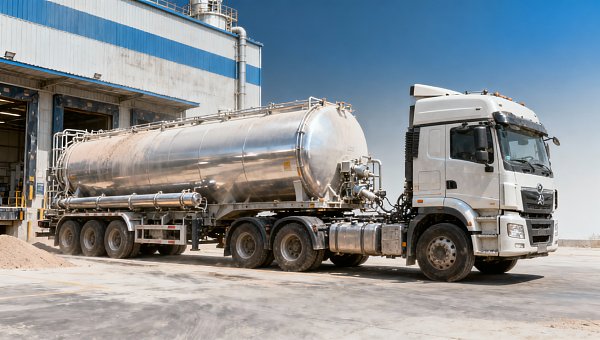
A bulk cement trailer works as part of a complete road transport system. Capacity must be matched with the tractor unit, axle arrangement, discharge system, loading terminal, and receiving site. If one part of the system is undersized or oversized, overall efficiency drops. This is why buyers should assess trailer volume together with payload in tons, gross combination weight limits, and the duty cycle of each route.
Cement density often ranges from about 1.1 t/m³ to 1.5 t/m³ depending on material type, moisture, and compaction condition. That means a trailer rated at 40 cbm does not simply equal 40 tons. In many markets, legal road weight limits will cap practical payload well before the tank volume is fully used. A larger tank may therefore carry more air space than billable product on regulated highways.
Procurement teams should also consider discharge performance. On-site unloading commonly depends on an air compressor system, pipeline layout, and silo back pressure. If the trailer is too large for the discharge setup, unloading may take 45–70 minutes instead of 25–40 minutes. Over a fleet running 3 to 5 trips per day, this difference affects driver hours, fuel use, and customer turnaround.
For distributors and trading companies, overspecification can reduce market flexibility. A high-volume trailer may fit one cement plant contract but not urban delivery, cross-border movement, or secondary roads with bridge restrictions. In contrast, a medium-capacity unit can often serve more than 2 customer segments, improving resale potential and inventory movement.
Key variables that influence practical capacity
- Material density: ordinary cement, lime powder, and fly ash can vary enough to change payload calculations by 10%–25%.
- Road regulation: common legal limits for axle load and gross vehicle weight often define the usable payload before tank volume does.
- Trip distance: on routes under 80 km, unloading speed and turnaround may matter more than maximum tank size.
- Tractor compatibility: 4x2, 6x4, and cab chassis truck configurations affect total combination compliance and traction on site.
- Customer receiving capacity: silo size, compressor pressure, and pipeline diameter can bottleneck larger trailer discharge.
The practical takeaway is simple: bulk cement trailer capacity should be measured in delivered tons per legal trip and delivered tons per operating day, not just in cubic meters. This gives procurement managers a more realistic benchmark when comparing offers from different semi trailer manufacturers.
Common Capacity Ranges and Where They Fit Best
In international B2B sourcing, buyers usually compare bulk cement trailer capacity in the 30–50 cbm range. The right specification depends on whether the trailer is intended for cement plants, concrete batching stations, infrastructure projects, mining support, or dealer stock. Below is a practical comparison framework for commonly sourced configurations.
In many markets, the 36–42 cbm segment is the most commercially balanced. It can support a wide range of cement and powder transport jobs without becoming too specialized. For dealers and distributors, this range is easier to market because it addresses both end-user practicality and resale liquidity.
Why mid-range volume often outperforms maximum volume
A larger trailer can increase nominal capacity, but it may also require a more powerful tractor, stronger compressor setup, and stricter route planning. If the operator frequently runs partially loaded due to bridge rules or municipal entry restrictions, the extra tank volume becomes underutilized capital. That creates a lower return on investment over 12–36 months.
Medium-capacity trailers are often easier to pair with mainstream heavy duty trucks for sale in 6x4 configuration. This reduces sourcing complexity for fleet buyers that want standardized tractors, common spare parts, and simpler driver training. It is especially relevant in emerging markets where maintenance infrastructure may vary by region.
Selection signals for procurement teams
- If more than 60% of routes involve secondary roads, favor balanced capacity over maximum tank size.
- If average unloading windows are under 40 minutes, verify whether larger volume can still meet site turnaround targets.
- If customer orders are fragmented across 2 to 4 job sites daily, maneuverability and schedule flexibility may outweigh extra cubic meters.
- If the trailer will be stocked for resale, choose specifications with wider regional acceptance rather than niche maximum-volume builds.
For business evaluation teams, the best decision is rarely the largest trailer on the quotation sheet. It is the one that aligns with legal payload, dispatch rhythm, serviceability, and customer operating reality.
How Road Limits, Axles, and Tractor Matching Change the Equation
Bulk cement trailer selection becomes more accurate when axle layout and tractor specifications are reviewed together. A 3-axle powder tanker matched with a 6x4 tractor is common in many export markets, but the real benefit depends on local weight law, terrain, and loading frequency. On steep quarry or plant access roads, traction reserve matters as much as gross payload.
Cab chassis truck planning is also relevant when buyers are building a complete fleet package. The trailer cannot be evaluated in isolation from wheelbase, fifth wheel height, engine output, and braking system compatibility. A mismatch can cause poor weight transfer, unstable handling, and increased maintenance intervals for suspension, brake lining, and tires.
As a rule of thumb, buyers should compare at least 4 matching dimensions: legal combined weight, engine horsepower, fifth wheel and kingpin height alignment, and compressor drive capability. In cross-border trade, this review helps avoid a common problem where a competitively priced trailer arrives but cannot be deployed efficiently with the existing tractor fleet.
Practical matching checklist
The table shows that capacity should be validated against mechanical and legal matching conditions. For fleet sourcing, this is where a professional B2B platform adds value: buyers can compare tractors, trailers, and spare parts in one procurement workflow rather than making disconnected decisions.
Risks of choosing capacity without system matching
- Underused tank volume because legal payload is reached too early.
- Longer unloading cycles due to compressor and pipeline mismatch.
- Higher fuel consumption per ton delivered over hilly or stop-and-go routes.
- Faster wear on tires, brake components, and suspension if load balance is poor.
- Reduced fleet standardization when one oversized trailer requires a separate tractor category.
These issues are not theoretical. They appear in daily operations and directly influence lifecycle cost, which is often more important than the initial purchase price difference between two trailer options.
A Procurement Framework for Comparing Bulk Cement Trailer Offers
For procurement specialists and commercial evaluators, the most effective approach is to score trailer offers across technical fit, route suitability, service readiness, and total operating cost. Price remains important, but it should not dominate the decision if the unit will be used intensively for 2 to 5 years. Even a modest 5% increase in uptime can offset a higher initial purchase value.
A professional semi trailer manufacturer should be able to explain tank volume, tare weight, axle option, compressor recommendation, and parts availability in a clear and consistent way. If the quotation focuses only on capacity and headline price, the buyer should request a deeper specification review before moving forward.
Cross-border buyers should also clarify delivery scope. Typical lead times may range from 20–45 days for standard configurations, while customized builds may require 45–75 days depending on axle brand, valve package, and paint or documentation requirements. This matters for project timelines and dealer stock planning.
Recommended evaluation matrix
This matrix helps buyers compare offers beyond brochure language. It is especially useful on a global heavy truck industry platform where multiple suppliers can be screened side by side using consistent commercial and technical criteria.
Four-step sourcing process
- Define route conditions and legal weight limits for at least the top 3 operating corridors.
- Match trailer volume with material density and target tons per day, not just tons per trip.
- Verify tractor, compressor, and unloading compatibility before price negotiation.
- Review spare parts access, delivery lead time, and after-sales response expectations.
For distributors, this process also improves stock planning. Standardized, mid-range capacity units with clear after-sales support are typically easier to move than highly customized oversized trailers aimed at a narrow user segment.
Operational Mistakes, Maintenance Realities, and Frequently Asked Questions
Even well-specified bulk cement trailers can underperform if operators ignore loading discipline and maintenance timing. Excessive loading pressure, poor moisture control, and delayed seal replacement can reduce discharge efficiency and increase compressor wear. In many fleets, preventive checks every 250–500 operating hours are more economical than reactive repair after a pressure-loss event.
Maintenance planning matters because larger-capacity trailers may place greater demand on air systems and running gear. If a buyer increases tank volume but does not adjust maintenance intervals, tire rotation, valve inspection, and compressor servicing, the fleet may face more unplanned downtime during peak delivery windows.
For B2B buyers, the lesson is clear: capacity choice should include a service strategy from day one. Reliable supply of hoses, gaskets, valves, brake parts, and compressor consumables can be as important as the trailer shell itself, particularly for remote infrastructure or mining-related transport routes.
Common mistakes to avoid
- Choosing the largest available tank without checking legal payload on local roads.
- Ignoring unloading conditions at customer silos, especially pipe length and back pressure.
- Matching a high-volume trailer to an underpowered tractor to reduce upfront cost.
- Comparing quotations without reviewing tare weight and service parts availability.
- Assuming one trailer specification will perform equally well in urban, highway, and construction-site environments.
How do I know if a larger bulk cement trailer will improve productivity?
Check 3 numbers: legal tons per trip, average unloading time, and trips per day. If legal payload does not rise, or if unloading time increases enough to cut daily trip count, the larger trailer may not improve delivered tonnage. Productivity should be measured over a full operating day or week, not by tank size alone.
What capacity is usually the safest commercial choice for dealers?
In many markets, 36–42 cbm is a commercially safe range because it suits more route types and more mainstream tractor setups. It also gives dealers better resale flexibility than specialized maximum-volume trailers, especially when customers operate under mixed road conditions.
How long does sourcing and delivery usually take?
Standard export orders often move in about 20–45 days, while more customized units may need 45–75 days. Buyers should confirm not only production lead time but also document preparation, spare parts packing, and technical confirmation for tractor matching before shipment.
Which support items should be included in a serious offer?
A strong offer should include basic dimensional data, tare weight, axle and suspension details, compressor information, valve list, recommended tractor range, common spare parts list, and expected service items. These details reduce procurement risk and make supplier comparison more transparent.
Selecting the right bulk cement trailer capacity is ultimately about fit, not maximum size. Buyers who compare route conditions, legal payload, unloading performance, tractor compatibility, and service support usually make stronger long-term decisions than those who focus only on cubic meters. Whether you are sourcing for fleet use, dealer inventory, or project delivery, a practical and data-based review will protect operating margins and improve equipment utilization.
On a global heavy truck industry platform, buyers can evaluate bulk cement trailer options together with heavy duty trucks for sale, cab chassis truck solutions, semi-trailer configurations, and spare parts support in one connected sourcing environment. To discuss suitable capacity ranges, compare supplier options, or request a tailored procurement plan, contact us today to get customized solutions and detailed product support.
Trending News
- Water Truck Factory Checklist: What to Confirm Before Factory Audit
- High-Strength Flatbed Trailers: Where Stronger Steel Pays Off
- Excavator Manufacturer in China: How to Compare Quality Across Factories
- Heavy Equipment Export to Africa: Market Openings and Compliance Challenges
- Quick Installation Excavators: Do They Reduce Setup Time on Real Sites?
Tag
Recommended News
 Fleet ManagementDelivery Truck Supplier in USA: What Matters Most for Fleet ExpansionDelivery truck supplier in USA selection impacts uptime, cost, and fleet growth. Learn how to compare suppliers by route needs, service support, and long-term scalability.
 Buying GuideCost-Effective Delivery Truck Supply: What Low Price May Leave OutDelivery truck supplier with cost-effective solutions: learn what low prices may leave out, from compliance and after-sales support to lifecycle value, so you can source smarter and avoid hidden costs.
 FAQDelivery Truck for School Transportation: Safety Points Before OrderingDelivery truck supplier for school transportation: review key safety points before ordering, from braking and visibility to compliance and passenger protection.
 Buying GuideHow to Choose a Truck Trailer Distributor for Stable After-Sales SupportTruck trailer distributor selection starts with after-sales strength. Learn how to compare service networks, parts support, warranty response, and technical help for long-term uptime.
 Buying GuideWhat to Check Before Choosing a Truck Cement Mixer SupplierTruck cement mixer supplier selection starts with the right checks. Learn how to compare quality, compliance, delivery, and after-sales support to reduce risk and choose with confidence.
 Buying GuideBulldozer Price Guide: What Affects Cost Across Jobsite TypesBulldozer price guide for construction, mining, roadwork, and municipal projects. Compare key cost drivers, avoid overbuying, and source the right dozer with confidence.
 Buying GuideHow to Evaluate a Heavy Truck Chassis Manufacturer with R&D CapabilityHeavy truck chassis manufacturer with R&D capability: learn how to assess engineering strength, validation, compliance, and customization support to choose a reliable supplier.
 Fleet ManagementHow to Choose Commercial Vehicle Parts for Warehouse Fleet UptimeCommercial vehicle parts for warehouse fleets directly impact uptime. Learn how to choose durable, accurate-fit parts and reliable suppliers to reduce downtime and control maintenance costs.
 Buying GuideLogging Truck Supplier Selection: Durability Points That Matter in Tough TerrainLogging truck supplier selection starts with durability. Discover the key strength, traction, braking, and support factors that reduce downtime in tough terrain.
 FAQDump Truck Sourcing Mistakes That Delay Construction ProjectsDump truck sourcing mistakes can delay construction projects, raise hidden costs, and disrupt site schedules. Learn the key risks to avoid and source smarter for faster, more reliable project delivery.
 Buying GuideWhat Makes a Delivery Truck Supplier Suitable for School TransportationDelivery truck supplier for school transportation: learn how to assess safety, compliance, body design, and after-sales support for urban, rural, and school logistics needs.
 Buying GuideHow to Plan a Semi Trailer Bulk Order Without Costly Specification MistakesSemi trailer bulk order planning starts with the right specs. Learn how to avoid costly mistakes, compare suppliers wisely, and secure compliant, fleet-ready trailers.
 Fleet ManagementWhy a Light Duty Truck Manufacturer in USA Still Matters for Fleet ReliabilityLight duty truck manufacturer in USA choices still shape fleet uptime, parts access, and lifecycle value. See what buyers should compare for more reliable operations.
![]() Buying GuideFlatbed Trailer Supplier for Logistics Transportation: What to Check Before OrderingFlatbed trailer supplier for logistics transportation: learn what to check before ordering, from load capacity and compliance to customization and supplier reliability.
Buying GuideFlatbed Trailer Supplier for Logistics Transportation: What to Check Before OrderingFlatbed trailer supplier for logistics transportation: learn what to check before ordering, from load capacity and compliance to customization and supplier reliability. FAQIs a Bulldozer for Construction the Right Fit for Your Site ConditionsBulldozer for construction: learn how terrain, soil, slope, and job size determine the right machine fit. Compare site conditions, avoid costly mismatches, and choose with confidence.
![]() Buying GuideBulldozer Price Guide: What Changes the Final Cost MostBulldozer price explained for finance buyers: compare size, brand, used vs. new, shipping, and service factors that shape total cost and smarter budget decisions.
Buying GuideBulldozer Price Guide: What Changes the Final Cost MostBulldozer price explained for finance buyers: compare size, brand, used vs. new, shipping, and service factors that shape total cost and smarter budget decisions. Buying GuideChoosing a Truck Cement Mixer Supplier for Stable Long-Term OperationTruck cement mixer supplier selection affects uptime, parts access, and lifecycle cost. Use this practical checklist to compare suppliers and choose reliable equipment for stable long-term operation.
 Buying GuideHow to Evaluate a Heavy Truck Chassis Manufacturer With R&D CapabilityHeavy truck chassis manufacturer with R&D capability: learn how to assess engineering strength, testing standards, customization, and reliability to choose the right supplier.
 Buying GuideHow to Shortlist a Water Truck Supplier for Municipal ContractsWater truck supplier shortlist guide for municipal contracts: compare compliance, chassis reliability, service support, and lifecycle value to choose with confidence.
 FAQTruck Trailer Bulk Order: How to Avoid Spec Drift Across BatchesTruck trailer bulk order quality can fail when specs drift across batches. Learn how to lock standards, align suppliers, and protect safety, compliance, and delivery consistency.
 Used Truck MarketSemi Trailer Wholesale: Which Specs Matter Most for Resale ValueSemi trailer wholesale buyers: learn which specs most influence resale value, from axle layout to payload, materials, and parts compatibility—make smarter, higher-margin sourcing decisions.
 FAQWhat a Dump Truck Distributor Should Offer After Vehicle DeliveryDump truck distributor support matters after delivery. Learn what to expect in spare parts, warranty, training, and technical service to reduce downtime and protect your investment.
 Fleet ManagementHow to Plan a Dump Truck Bulk Order for Multi-Site ProjectsDump truck bulk order planning for multi-site projects made simple. Learn how to balance specs, delivery, support, and total cost for smarter fleet decisions.
 Buying GuideDump Truck Wholesale: How to Balance Price, Spec, and Lead TimeDump truck wholesale buyers must balance price, spec, and lead time. Learn how to compare suppliers, reduce sourcing risk, and secure trucks that fit project demands.
 Buying GuideTruck Tipper Wholesale vs Direct Factory Supply: A Practical ComparisonTruck tipper wholesale vs direct factory supply: compare cost, lead time, customization, and risk to choose the best sourcing model for reliable, high-value fleet procurement.