Bulk Cement Trailer Cleaning Time Can Hurt Fleet Utilization
Bulk cement trailer cleaning time can quietly reduce fleet utilization, increase downtime, and affect delivery efficiency across road transport operations. For buyers, distributors, and fleet evaluators comparing bulk cement trailer options alongside heavy duty trucks for sale, understanding cleaning efficiency is essential. This article explores why maintenance time matters, how it impacts operating costs, and what to consider when sourcing reliable equipment from a trusted semi trailer manufacturer.
In bulk powder transport, the trailer does not stop working when unloading ends. It often enters another critical phase: cleaning, inspection, and preparation for the next load. If this process takes 2 hours instead of 40 minutes, the hidden impact can be larger than many procurement teams expect. Across multi-shift fleets, those lost hours reduce daily trip capacity, complicate dispatch planning, and increase the cost per delivered ton.
For B2B buyers and commercial evaluators, cleaning time should be treated as an operational specification, not a minor maintenance detail. Trailer design, discharge system layout, tank interior finish, access points, and residue management all influence how quickly a unit can be turned around. When reviewing offers on a global heavy truck industry platform, these factors can help separate lower-cost equipment from assets that deliver stronger long-term utilization.
Why Cleaning Time Directly Affects Fleet Utilization
Fleet utilization is usually measured by how many revenue-generating hours a vehicle or trailer achieves within a day, week, or month. In bulk cement transport, cleaning downtime can take away 5% to 15% of productive operating time depending on route length, unloading frequency, and cargo changeover requirements. That is a meaningful loss in sectors where dispatch margins are already tight.
A bulk cement trailer may complete 2 to 4 cycles per day on short- to medium-distance routes. If each cleaning process adds 60 to 90 minutes after unloading, a fleet of 20 units can lose 20 to 30 labor hours in one operating day. This affects not only trailer availability but also tractor scheduling, driver waiting time, yard congestion, and loading bay allocation.
The issue becomes more visible when operators transport different grades of cement, fly ash, lime powder, or other dry bulk materials. Cross-contamination risks can require stricter cleaning intervals. In these cases, trailer turnaround is not just a workshop matter; it becomes part of delivery reliability and contract compliance.
Where utilization loss usually appears
Utilization loss often comes from several small delays rather than one major stoppage. Residual powder in cone sections, slow access to internal surfaces, awkward hose removal, and poor dust discharge design can each add 10 to 20 minutes. When those delays stack up across multiple runs, the annual impact becomes significant.
The table below shows how cleaning duration can influence daily cycle potential in a typical road transport scenario. Figures vary by route and site conditions, but the operational direction is clear.
For procurement teams, the key conclusion is simple: when two trailers have similar payload and price, the one that saves 20 to 30 minutes per cleaning cycle may create a stronger return over 3 to 5 years. Utilization is earned through small design efficiencies, not only headline capacity figures.
What Makes a Bulk Cement Trailer Faster or Slower to Clean
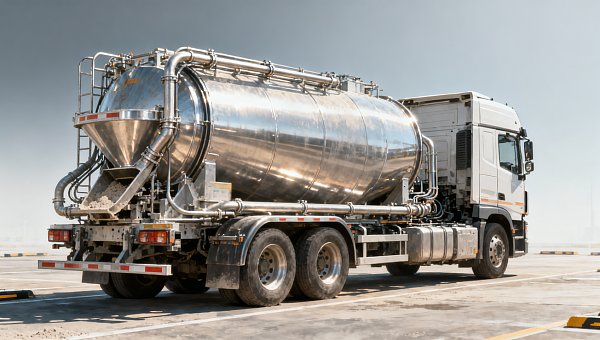
Cleaning efficiency depends on engineering details that are often overlooked in product listings. Internal tank geometry matters because dead zones collect powder residue. A smoother cone transition, well-positioned fluidization pads, and cleaner discharge piping reduce buildup and make post-delivery residue removal faster.
Access design is another major factor. A trailer with practical manhole placement, safe ladder arrangement, and service-friendly valve locations can reduce manual handling time. In field operations, even a 15-minute reduction in hose disconnection, inspection, and residue clearing can improve trailer rotation across a busy week.
Material choice also influences cleaning. Powder-coated or properly finished internal and external surfaces can improve dust release and simplify exterior wash-down. By contrast, rough weld areas, difficult corners, or exposed components can increase retained material and extend cleaning intervals.
Key design elements to evaluate during sourcing
- Tank structure: V-shape, W-shape, or multi-cone layouts affect material flow and residual powder retention.
- Discharge system: Pipe routing, valve quality, and air compressor compatibility influence emptying efficiency.
- Access points: Manholes, inspection ports, and ladders should support safe cleaning in 3 to 5 steps without unnecessary disassembly.
- Surface finish: Smooth internal surfaces can reduce residue accumulation after repeated dry bulk transport cycles.
- Dust sealing: Better sealing lowers cleanup demand around outlets, walkways, and chassis components.
Typical design comparison for buyers
The comparison below helps buyers evaluate which configurations may shorten cleaning and reduce labor intensity. Exact results depend on material type, route conditions, and maintenance discipline, but these are common decision signals in road transport equipment sourcing.
A sourcing team should ask suppliers to explain how their trailer design reduces retained material after unloading. This question often reveals whether a semi trailer manufacturer understands the practical needs of cement haulers or focuses only on nominal tank volume and sale price.
How Cleaning Time Influences Operating Cost and Procurement Value
Cleaning time affects cost in at least four areas: labor, equipment downtime, dispatch disruption, and maintenance wear. If a cleaning team spends an extra 45 minutes per trailer and labor is allocated across 25 units, weekly cost escalation can become substantial even before counting lost delivery opportunities.
Downtime cost is especially important for distributors and fleet investors comparing trailers with heavy duty trucks for sale. A truck tractor may be available, the driver may be ready, and the route may be confirmed, but revenue is still delayed if the dry bulk trailer is not clean and cleared for loading. That mismatch lowers whole-fleet efficiency, not just trailer-level performance.
There is also a quality cost. In industries moving cement, fly ash, lime, or mineral powder, insufficient cleaning increases contamination risk. One rejected load or one site complaint can offset what looked like a cheaper purchasing decision. Over a 12-month operating period, maintenance efficiency and cargo cleanliness often matter more than a small initial price difference.
A practical cost review framework
Buyers can use a simple total-cost review before shortlisting suppliers. Instead of comparing only factory price, evaluate the trailer as a working asset over 36 to 60 months.
- Estimate average cleaning time per unloading cycle, such as 30, 60, or 90 minutes.
- Multiply by projected cycles per week, often 8 to 20 depending on route structure.
- Add labor, water or air use, yard occupancy, and waiting time cost.
- Review contamination risk if the trailer handles more than one powder category.
- Compare that result against the trailer’s purchase price gap and expected service life.
Procurement decision factors that deserve more weight
The table below highlights where procurement teams often underestimate cleaning-related value when sourcing road transport equipment for construction materials and industrial logistics.
This cost-based view helps distributors, agents, and procurement managers defend purchasing decisions internally. In many cases, the most economical trailer is not the one with the lowest invoice value, but the one that protects fleet productivity every operating day.
What Buyers Should Check When Comparing Suppliers and Equipment
When using a global B2B sourcing platform for commercial vehicles and heavy equipment, buyers should compare suppliers using operational questions, not only brochures. A strong supplier should be able to explain cleaning workflow, recommended maintenance intervals, service access, and expected wear points across 1 year, 3 years, and longer-term operation.
It is also useful to compare how a trailer integrates with the rest of the fleet. Bulk cement trailers do not operate in isolation. Their turnaround speed affects tractor allocation, driver shift efficiency, and even decisions around heavy duty trucks for sale if the fleet is expanding. Better trailer serviceability can delay the need for extra tractor investment because existing assets are used more efficiently.
For importers, distributors, and agents, after-sales readiness matters. Cleaning-related downtime is manageable when replacement valves, seals, hoses, and pneumatic components are available within 7 to 15 days. It becomes more expensive when support lead time extends to 30 days or more, especially in high-volume construction seasons.
Supplier screening checklist
- Request a clear explanation of discharge, purge, and cleaning procedures in real operating order.
- Confirm whether routine cleaning can be completed by 1 operator or requires 2 people for safe handling.
- Ask which components typically require inspection every 250 to 500 operating hours.
- Review spare parts response capability for valves, air lines, seals, and dust-control components.
- Check whether the manufacturer can support local compliance, export packing, and documentation for your market.
Common sourcing mistakes
One common mistake is focusing only on payload volume, such as 30 m³ to 45 m³, without asking how quickly the tank can be emptied and cleaned. Another is assuming all pneumatic bulk trailers have similar maintenance behavior. In reality, layout differences can produce noticeably different cleaning times even when gross size looks similar.
A second mistake is ignoring operator safety. If service access is awkward, cleaning may be delayed or performed inconsistently. That increases residue buildup, dust spread, and long-term maintenance difficulty. Safety-friendly access design is not only a compliance consideration; it also supports repeatable, faster daily operations.
Implementation, Maintenance Planning, and FAQ for Road Transport Operators
Even the best trailer design needs a disciplined operating routine. Fleets that reduce cleaning downtime usually standardize unloading, residue checking, line purging, and final inspection in a fixed sequence. A 4-step cleaning workflow can often deliver better consistency than relying on operator habit or site-by-site improvisation.
Maintenance planning should separate daily, weekly, and periodic tasks. Daily items may include outlet checks, hose cleaning, visible dust leak inspection, and compressor condition review. Weekly tasks can include valve inspection and seal checks. More detailed inspections may be scheduled every 1,000 to 2,000 operating hours depending on workload and operating environment.
For buyers working through a specialized heavy truck industry platform, this planning view adds decision depth. A supplier that can explain not only trailer features but also maintenance rhythm, spare parts support, and operational training is often better suited for cross-border fleet deployment.
Recommended cleaning and readiness workflow
- Complete discharge and air purge to minimize retained powder in lines and cone sections.
- Inspect outlet valves, hoses, and manholes for buildup, leaks, or damaged sealing surfaces.
- Remove residue from key internal and external accumulation zones using site-approved methods.
- Record trailer status and release the unit for the next dispatch only after visual confirmation.
How long should acceptable cleaning take?
For routine same-material operation, many fleets target roughly 30 to 60 minutes depending on trailer size, site equipment, and cleaning method. If the process regularly exceeds 90 minutes, operators should review whether the issue comes from trailer design, unloading completeness, staff training, or maintenance gaps.
Which fleets benefit most from cleaning-efficient trailer design?
High-frequency regional distributors, cement logistics contractors, and fleets serving multiple plants usually benefit the most. These operators often run 2 to 4 delivery cycles per day, so every 20-minute improvement in turnaround can materially increase weekly output.
What should distributors and agents prioritize for resale markets?
Distributors should prioritize practical value points that end users can verify quickly: accessible service points, manageable cleaning routines, common spare parts, and realistic maintenance instructions. These features are easier to demonstrate during sales conversations than abstract quality claims.
Bulk cement trailer cleaning time should be treated as a commercial performance indicator, not a minor maintenance note. Faster cleaning supports higher fleet utilization, lower operating cost, improved route reliability, and better asset coordination with tractors and other road transport equipment. For information researchers, procurement managers, commercial evaluators, and distributors, the most effective sourcing approach is to compare trailer design, serviceability, residue control, and support readiness together. If you are reviewing bulk cement trailer options or looking for a dependable semi trailer manufacturer through a global heavy truck industry platform, contact us to discuss product details, compare supplier capabilities, and get a tailored sourcing solution for your market.
Trending News
- Water Truck Factory Checklist: What to Confirm Before Factory Audit
- High-Strength Flatbed Trailers: Where Stronger Steel Pays Off
- Excavator Manufacturer in China: How to Compare Quality Across Factories
- Heavy Equipment Export to Africa: Market Openings and Compliance Challenges
- Quick Installation Excavators: Do They Reduce Setup Time on Real Sites?
Tag
Recommended News
 Fleet ManagementDelivery Truck Supplier in USA: What Matters Most for Fleet ExpansionDelivery truck supplier in USA selection impacts uptime, cost, and fleet growth. Learn how to compare suppliers by route needs, service support, and long-term scalability.
 Fleet ManagementHow to Choose Commercial Vehicle Parts for Warehouse Fleet UptimeCommercial vehicle parts for warehouse fleets directly impact uptime. Learn how to choose durable, accurate-fit parts and reliable suppliers to reduce downtime and control maintenance costs.
 Fleet ManagementWhy a Light Duty Truck Manufacturer in USA Still Matters for Fleet ReliabilityLight duty truck manufacturer in USA choices still shape fleet uptime, parts access, and lifecycle value. See what buyers should compare for more reliable operations.
 Fleet ManagementHow to Plan a Dump Truck Bulk Order for Multi-Site ProjectsDump truck bulk order planning for multi-site projects made simple. Learn how to balance specs, delivery, support, and total cost for smarter fleet decisions.
 Fleet ManagementHow to Plan a Dump Truck Bulk Order for Multi-Site ProjectsDump truck bulk order planning for multi-site projects made simple. Learn how to balance specs, delivery, support, and total cost for smarter fleet decisions.
 Fleet ManagementHow to Plan a Dump Truck Bulk Order for Multi-Site ProjectsDump truck bulk order planning for multi-site projects made simple. Learn how to balance specs, delivery, support, and total cost for smarter fleet decisions.
 Fleet ManagementWhat Makes a Delivery Truck Supplier Cost-Effective in Real OperationsDelivery truck supplier with cost-effective solutions: learn how to cut fuel, maintenance, and downtime costs with a practical checklist for smarter fleet purchasing.
 Fleet ManagementHow Low-Maintenance Truck Spare Parts Suppliers Help Cut DowntimeTruck spare parts supplier with low maintenance benefits help fleets cut downtime, speed repairs, and lower service costs. Discover how smarter sourcing boosts uptime.
 Fleet ManagementHow Commercial Vehicle Parts for Warehouse Improve Daily UptimeCommercial vehicle parts for warehouse operations help reduce downtime, improve safety, and keep trucks and trailers moving efficiently. Discover how the right parts boost daily uptime.
 Fleet ManagementCommercial Vehicle Parts for Cold Storage: Reducing Failure in Daily UseCommercial vehicle parts for cold storage help reduce daily failures, protect cargo quality, and improve fleet uptime. Discover scenario-based maintenance insights for refrigerated transport.
 Fleet ManagementDelivery Truck Supplier in USA: What to Compare Before Expanding a FleetDelivery truck supplier in USA comparison guide for fleet expansion. Learn how to evaluate quality, service, parts support, and lifecycle cost before you invest.
 Fleet ManagementBest Commercial Vehicle Parts for Warehouse OperationsCommercial vehicle parts for warehouse operations should boost safety, uptime, and load control. Explore the best brake, tire, steering, and lighting solutions for efficient fleet performance.
 Fleet ManagementTruck Cement Mixer Supplier: What to Check Before Fleet ExpansionTruck cement mixer supplier selection can make or break fleet expansion. Learn the key checks on quality, compliance, parts support, and total cost before you buy.
 Fleet ManagementTruck Trailer Supplier Checklist for Long-Haul Fleet ExpansionTruck trailer supplier checklist for long-haul fleet expansion: compare compliance, lifecycle cost, delivery, and support to reduce sourcing risk and scale with confidence.
 Fleet ManagementIs a Lightweight Semi Trailer Manufacturer the Right Fit for High-Frequency RoutesFind out if a semi trailer manufacturer with lightweight design is the smart choice for high-frequency routes, balancing payload, durability, compliance, and long-term fleet savings.
 Fleet ManagementDump Truck Wholesale for Growing Fleets: What to Watch FirstDump truck wholesale buyers: learn what to check first for growing fleets, from specs and compliance to supplier reliability, to cut risk, control costs, and buy with confidence.
 Fleet ManagementDump Truck Bulk Order Timing: How to Avoid Capacity BottlenecksDump truck bulk order timing can make or break delivery schedules. Learn when to order, spot supplier bottlenecks early, and secure reliable capacity for faster project execution.
 Fleet ManagementHow to Plan a Semi Trailer Bulk Order Without Stock PressureSemi trailer bulk order planning made simple: learn how to balance demand, product mix, supplier control, and phased delivery to reduce stock pressure and improve trailer sales.
 Fleet ManagementChoosing Commercial Vehicle Parts for Cold Storage Without DowntimeCommercial vehicle parts for cold storage: learn how to choose reliable batteries, seals, hoses, and brake parts to reduce downtime, protect cargo, and improve fleet uptime.
 Fleet ManagementBest Commercial Vehicle Parts for Warehouse Fleet UptimeCommercial vehicle parts for warehouse fleets: discover the best brake, electrical, suspension, and service parts to reduce downtime, speed repairs, and keep operations moving.
 Fleet ManagementHow an Excavator Supplier Affects Uptime After DeliveryExcavator supplier performance directly affects uptime after delivery. Learn how parts speed, technical support, and service response reduce downtime and protect fleet efficiency.
 Fleet ManagementCold weather truck cooling system mistakes that lead to downtimeTruck cooling system mistakes in cold weather can cause costly downtime. Learn how truck pump, truck fuel system, truck electrical system, and truck control unit issues affect fleet reliability.
 Fleet ManagementTruck steering system play: repair now or monitor longer?Truck steering system play: repair now or monitor longer? Learn when to act, how truck wheel, truck tire, truck control unit, truck fuel system, cooling and exhaust checks affect fleet safety and cost.
 Fleet ManagementWater sprinkler truck capacity choices that affect route efficiencyWater sprinkler truck capacity choices affect route efficiency, fuel cost, and uptime. Compare truck pump, truck fuel system, truck tire, and truck control unit factors before you buy.
 Fleet ManagementOff Road Truck Tires: When Lower Cost Leads to More DowntimeOff road truck tire costs go beyond price. Learn how downtime, wheel loader workflow, hydraulic pump efficiency, truck trailer use, and fleet reliability are affected—and how to buy smarter.