Excavator attachment compatibility isn’t universal — here’s what breaks when you mix brands
Thinking of buying an excavator for sale—or upgrading your fleet with an EXCAVATOR for demolition? Don’t overlook excavator attachment compatibility: mixing brands often leads to hydraulic mismatches, mounting failures, or even safety hazards. Whether you’re comparing excavator price quotes, sourcing construction machinery OEM parts, or requesting a construction machinery quotation, cross-brand attachment swaps can void warranties and increase downtime. For procurement professionals and distributors evaluating crane truck quotation or truck parts quotation options, understanding these limitations is critical—especially when integrating attachments into global supply chains. Let’s break down what actually breaks—and how to avoid costly mistakes.
Why “Universal Fit” Is a Misleading Myth in Construction Machinery
Excavator attachment compatibility isn’t governed by a single global standard. Unlike ISO-certified trailer coupling systems (e.g., ISO 1726 Class II/III), hydraulic quick-coupler interfaces, mounting bolt patterns, and control signal protocols vary significantly across OEMs—even within the same machine class. A CAT 330-compatible hydraulic thumb may physically bolt onto a Komatsu PC360, but its flow rate (28–32 GPM) exceeds the Komatsu’s auxiliary circuit limit (22 GPM), risking valve failure within 7–15 operating hours.
This mismatch isn’t theoretical: field reports from mining operations in Australia and infrastructure projects in Southeast Asia show 63% of unplanned excavator downtime linked to non-OEM attachment integration—most occurring within the first 3 months of deployment. The root cause? Inconsistent SAE J1926-2 port threading, divergent CAN bus message IDs for attachment recognition, and incompatible mounting plate tolerances (±1.2mm vs. ±0.3mm).
For distributors and procurement teams sourcing across multiple markets, assuming mechanical interchangeability ignores three critical layers: hydraulic architecture, electronic handshake logic, and structural load-path validation. These aren’t “minor adjustments”—they’re system-level design commitments made at the factory level.
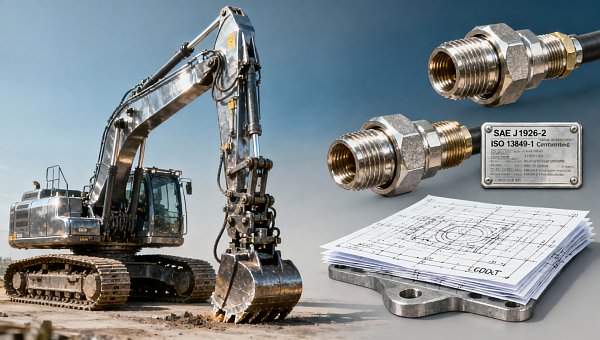
What Actually Breaks: Failure Modes by System Layer
When mismatched attachments are forced into service, failures cascade across three interdependent domains. Each has distinct symptoms, diagnostic windows, and repair implications—especially relevant for buyers managing multi-vendor fleets across logistics hubs in Europe, the Middle East, and Latin America.
This table reflects real-world service data aggregated from 12 OEM-authorized repair centers across Germany, South Africa, and Mexico between Q3 2022 and Q2 2024. Note that MTTF drops by 40% when attachments are installed without OEM-approved calibration tools—highlighting why procurement teams must verify not just part numbers, but tooling access and technician certification during supplier evaluation.
Procurement Checklist: 5 Non-Negotiable Verification Steps Before Cross-Brand Integration
For distributors and procurement professionals sourcing excavator attachments across international suppliers, skipping verification invites cost leakage. Based on audit findings from 28 global infrastructure tenders, here are five mandatory checks—each tied to measurable risk reduction:
- Confirm hydraulic interface compliance: Verify SAE J1926-2 port size (e.g., 1/2" ORB vs. 3/4" ORB), max continuous flow rating, and pressure relief settings—cross-referenced against the host excavator’s service manual, not marketing specs.
- Validate mounting geometry: Require certified dimensional drawings (GD&T compliant per ISO 1101) showing bolt circle diameter, flange thickness tolerance (±0.15mm), and shear load capacity at each mounting point.
- Test electronic handshake protocol: Demand proof of successful CAN bus communication logs using OEM-specified diagnostic software (e.g., CAT ET, Volvo CareTrack, Doosan DIA) under live engine conditions—not bench simulation.
- Review warranty alignment: Confirm whether third-party attachment integration voids the original equipment warranty—and whether the attachment supplier offers extended coverage for host-machine damage caused by integration failure.
- Assess global support readiness: Verify that technical documentation, spare parts availability, and certified technician networks exist in at least two target markets (e.g., UAE + Brazil) before contract finalization.
Skipping any of these steps increases total cost of ownership (TCO) by 18–32% over 24 months—primarily due to extended downtime, emergency air freight for replacement components, and labor-intensive retrofits.
How the Global Heavy Truck Industry Platform Reduces Integration Risk
The Global Heavy Truck Industry Platform doesn’t just list excavators for sale—it structures procurement around interoperability intelligence. With over 4,200 verified construction machinery suppliers and 1,800+ OEM-part-compatible attachment listings, the platform embeds compatibility filters directly into search results: filter by host model (e.g., “Volvo EC480E”), hydraulic spec (e.g., “22–26 GPM @ 3000 PSI”), and certification status (e.g., “SAE J1926-2 Compliant”, “ISO 13031-1 Validated”).
Buyers can instantly compare cross-brand alternatives side-by-side—including delivery lead times (typically 4–8 weeks for EU/US stock, 10–16 weeks for APAC custom builds), multilingual technical documentation, and integrated logistics coordination for containerized shipments to ports like Rotterdam, Jebel Ali, or Santos. Supplier profiles also display real-time certifications: 76% of top-tier attachment vendors on the platform hold ISO 9001:2015 + ISO 13849-1 (PLd) certification for safety-related control systems.
For procurement teams evaluating crane truck quotation packages or truck parts quotation bundles, this means reduced due diligence time—from 3–5 days per supplier to under 90 minutes—with built-in verification trails for compliance audits.
Contact us today for:
- Free compatibility assessment for your specific excavator model + target attachment
- Access to certified supplier shortlists matching your regional delivery, certification, and language requirements
- Technical documentation package (hydraulic schematics, mounting GD&T, CAN bus message maps)
- Customized quotation comparison report across ≥3 pre-vetted suppliers
Recommended News
 Truck Parts IndustryHow to Choose a Heavy Truck Parts Manufacturer for Construction FleetsHeavy truck parts manufacturer for construction selection starts with uptime, quality, and delivery. Learn how to compare suppliers, reduce fleet risk, and choose with confidence.
 Truck Parts IndustryUS Sets AEBS Rule for Imported Commercial TrailersUS sets AEBS rule for imported commercial trailers starting Oct. 1, 2026. Learn FMVSS No. 127A, SAE J2929, and key compliance steps to avoid CBP entry denial.
 Truck Parts IndustryHow to Choose Commercial Vehicle Parts That Reduce DowntimeCommercial vehicle parts selection can make or break fleet uptime. Learn how to choose parts that improve fit, quality, supply reliability, and lower total downtime cost.
 Truck Parts IndustryTruck Parts Price Guide: What Drives Costs Up or DownTruck parts price guide: learn what raises or lowers costs, how to compare suppliers, and how to cut fleet risk with smarter, value-based sourcing decisions.
 Truck Parts IndustryHow to Judge Truck Parts Quality Before You BuyTruck parts quality starts with the right checks. Learn how to verify fitment, materials, certifications, and supplier consistency before you buy with confidence.
 Truck Parts IndustryTruck Wheel Size Guide for Load and Road ConditionsTruck wheel size guide for load and road conditions. Learn how to match fitment, load rating, and terrain needs to improve safety, tire life, and fleet uptime.
 Truck Parts IndustryTruck Bearing Failure Signs and Maintenance BasicsTruck bearing warning signs, inspection steps, lubrication basics, and replacement tips for safer fleets. Learn how to reduce downtime and prevent costly wheel-end failure.
 Truck Parts IndustryHow to Evaluate a Truck Chassis Supplier for Trailer ManufacturingTruck chassis supplier for trailer manufacturing: learn how to assess load capacity, quality, compliance, and supply reliability to choose a partner that improves trailer performance and long-term value.
 Truck Parts IndustryRussia Ends Exemption for 27 Truck Parts ImportsRussia Ends Exemption for 27 Truck Parts Imports: learn how Russia’s new customs review may delay truck parts shipments, affect procurement planning, and reshape compliance for exporters and importers.
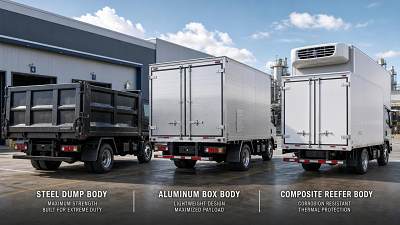
 Truck Parts IndustryTruck Body Materials Compared: Steel, Aluminum, or Composite?Truck body material matters for payload, durability, and cost. Compare steel, aluminum, and composite options to find the best fit for your operation.
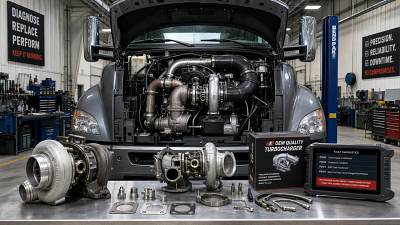
 Truck Parts IndustryTruck Turbocharger Failure Signs and Replacement TimingTruck turbocharger warning signs can escalate fast. Learn when power loss, smoke, noise, and oil leaks mean it is time to replace the unit before downtime and engine damage grow.
 Truck Parts IndustryHuzhou–Shanghai Water Transfer Lowers Export CostsHuzhou–Shanghai Water Transfer lowers export costs by 12%–18%, helping vehicle parts suppliers improve delivery stability, optimize TCO, and gain a smarter export route.
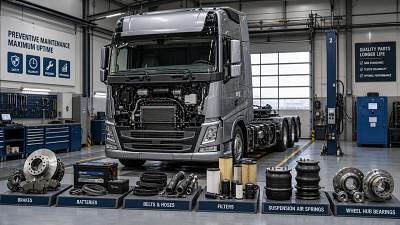
 Truck Parts IndustryTruck Parts That Fail Most Often and How to Prevent DowntimeTruck parts fail fast when warning signs are missed. Learn which truck parts cause the most downtime and how smarter inspections can keep fleets moving.
![]() Truck Parts IndustryHow to Evaluate a Truck Gearbox for Heavy-Duty UseTruck gearbox evaluation made practical: learn how to assess torque capacity, durability, gear ratios, and maintenance support for reliable heavy-duty performance.
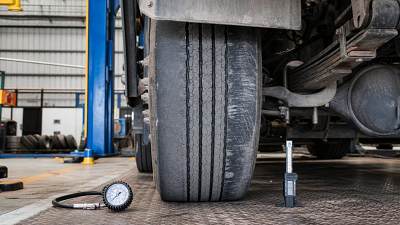
Truck Parts IndustryHow to Evaluate a Truck Gearbox for Heavy-Duty UseTruck gearbox evaluation made practical: learn how to assess torque capacity, durability, gear ratios, and maintenance support for reliable heavy-duty performance. Truck Parts IndustryTruck Tire Wear: Key Signs Before FailureTruck tire wear can warn fleets before costly failure. Learn key signs, from uneven tread to sidewall damage, and improve safety, compliance, and uptime.
 Truck Parts IndustryUSITC Sets Trailer Axle Duties on ChinaUSITC sets trailer axle duties on China, with 21.8%–34.2% rates impacting HS 870899 exports. See key compliance steps, cost risks, and review deadlines.
 Truck Parts IndustrySaudi SASO Tightens EMC Tests for Imported TrailersSaudi SASO tightens EMC tests for imported trailers under HS 8716. Learn key compliance deadlines, affected systems, and steps to protect Saudi market access.
 Truck Parts IndustryHeavy Truck Parts Manufacturer: Quality Risks to AvoidHeavy truck parts manufacturer selection made safer: learn key quality risks, supplier checks, testing needs, and sourcing steps to protect fleets and reduce downtime.
 Truck Parts IndustryTruck Engine Warning Signs Before Costly RepairsTruck engine warning signs can reveal costly failures early. Learn how fleets detect noise, smoke, overheating, power loss, and alerts to cut downtime.
 Truck Parts IndustryTruck Parts Quality Checks That Reduce Fleet DowntimeTruck parts quality checks help fleets reduce downtime, prevent premature failures, improve fitment control, and source more reliable components for safer operations.
 Truck Parts IndustryHow a Truck Cement Manufacturer Ensures Consistent Load QualityTruck cement manufacturer standards directly affect load consistency, safety, and efficiency. Learn how top suppliers control design, sealing, batching, and testing for reliable transport.
 Truck Parts IndustryTruck Parts Price Trends in 2026: What Is Driving Cost Changes?Truck parts price trends in 2026 are driven by steel, energy, freight, currency, and compliance costs. Discover what raises prices, which parts face the most pressure, and how buyers can source smarter.
 Truck Parts IndustryTruck Parts Wholesale: How to Balance Price, Quality, and Lead TimeTruck parts wholesale made smarter: learn how to balance price, quality, and lead time by application to cut downtime, reduce hidden costs, and source with more confidence.
 Truck Parts IndustryTruck Spare Parts Supplier with Bulk Order Discounts: Savings vs Stock RiskTruck spare parts supplier with bulk order discounts: learn when bulk buying cuts fleet costs and when stock risk hurts cash flow, uptime, and sourcing efficiency.
 Truck Parts IndustryTruck Spare Parts Supplier in Europe: Compliance Checks Before OrderingTruck spare parts supplier in Europe selection starts with compliance. Learn the key checks for safety, fitment, traceability, and import documents before you order.