Truck Engine Warning Signs Before Costly Repairs
A truck engine rarely fails without warning. For aftermarket maintenance teams, recognizing early symptoms—unusual noises, power loss, smoke, overheating, oil pressure changes, or dashboard alerts—can prevent minor issues from becoming costly repairs and unexpected downtime. This guide explains the key warning signs technicians should monitor during inspections, diagnostics, and routine service, helping fleets improve reliability, reduce operating costs, and keep heavy-duty vehicles performing safely on demanding routes.
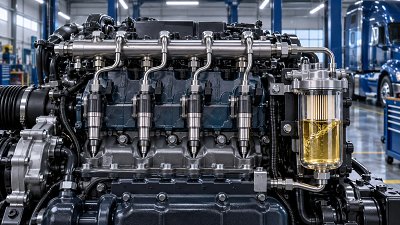
In land transportation equipment, engine health directly affects fleet availability, delivery schedules, fuel economy, and driver safety. A delayed truck engine diagnosis can turn a 2-hour inspection into a multi-day repair involving turbochargers, injectors, cooling components, or internal engine parts.
For aftermarket service teams, the goal is not only to repair faults, but to identify patterns early. That means combining visual checks, driver feedback, diagnostic trouble codes, oil analysis, temperature trends, and parts history into a repeatable maintenance process.
Why Early Truck Engine Warning Signs Matter for Fleet Maintenance
A heavy-duty truck engine operates under high load for long hours, often in heat, dust, hills, stop-start urban service, or long-haul routes exceeding 500 miles per day. Small changes in sound, temperature, pressure, or exhaust color can indicate stress before a breakdown occurs.
Aftermarket maintenance personnel should treat warning signs as decision points. A technician may choose a quick roadside check, a 30-minute diagnostic scan, a scheduled workshop inspection, or immediate vehicle removal from service depending on severity.
The cost difference between detection and failure
Preventive action usually costs less than corrective repair. For example, replacing a leaking coolant hose during scheduled service may take under 1 hour, while an overheated truck engine may require head gasket inspection, cooling system flushing, and 1–3 days of downtime.
The same logic applies to low oil pressure, excessive smoke, injector imbalance, turbo noise, or irregular idle. Each symptom should trigger a defined inspection path rather than waiting for the dashboard warning lamp to reappear.
Key maintenance impacts
- Reduced unplanned downtime by addressing issues within the first 24–72 hours after symptom detection.
- Better spare parts planning for filters, sensors, hoses, belts, injectors, oil, coolant, and turbo-related components.
- Improved driver confidence because abnormal engine behavior is documented and resolved systematically.
- More accurate supplier evaluation when sourcing replacement parts through a professional B2B platform.
Common Truck Engine Warning Signs Technicians Should Not Ignore
The most useful warning signs are observable, repeatable, and measurable. Maintenance teams should compare current symptoms with normal baseline values, such as stable idle speed, standard oil pressure range, usual coolant temperature, and expected fuel consumption.
A single symptom may have 3–5 possible causes. The table below helps technicians prioritize inspections and decide whether the truck engine can continue operating or needs immediate service intervention.
The main conclusion is simple: symptoms that affect lubrication, cooling, or combustion should receive priority. These 3 systems protect the truck engine from rapid internal wear and expensive secondary damage.
Unusual noises and vibration
A healthy diesel engine has a consistent mechanical rhythm. New knocking, sharp ticking, belt squeal, turbo whine, or irregular vibration should be documented with operating conditions such as rpm, load, temperature, and gear range.
If the noise appears only during cold start, technicians may inspect oil viscosity, valve adjustment, starter behavior, and fuel quality. If it increases with load, internal wear or combustion imbalance may be more likely.
Smoke color and exhaust behavior
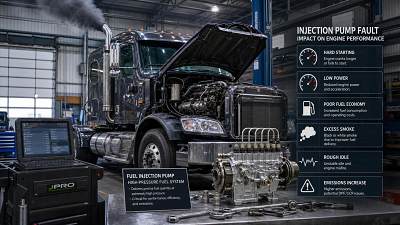
Black smoke often indicates excessive fuel or insufficient air. Common causes include clogged air filters, boost leakage, injector issues, or exhaust gas recirculation faults. A truck engine showing heavy black smoke may also lose fuel efficiency quickly.
Blue smoke usually points toward oil entering combustion, while white smoke may involve unburned fuel or coolant leakage. Persistent smoke for more than 10–15 minutes after warm-up deserves immediate diagnostic attention.
Overheating and unstable coolant temperature
Coolant temperature should remain stable once the engine reaches operating range. Fluctuations, sudden spikes, repeated coolant topping, or heater performance changes may reveal air pockets, radiator blockage, thermostat failure, or fan control problems.
A severe overheating event can damage gaskets, cylinder heads, sensors, and aftertreatment components. Maintenance teams should avoid sending trucks back to service after topping coolant without pressure testing and leak verification.
Diagnostic Workflow for Aftermarket Service Teams
A consistent workflow reduces guesswork. Instead of replacing parts based only on symptoms, technicians should follow a 5-step diagnostic sequence that verifies the fault, identifies root cause, and confirms repair effectiveness.
A practical 5-step inspection process
- Interview the driver and record when the truck engine symptom appears: cold start, idle, hill climbing, highway speed, or loaded operation.
- Perform visual checks for leaks, loose clamps, cracked hoses, wiring damage, blocked radiator fins, and contaminated fluids.
- Connect diagnostic equipment and record active codes, pending codes, freeze-frame data, and sensor readings.
- Measure physical values such as oil pressure, fuel pressure, compression, coolant pressure, and boost pressure where applicable.
- Road-test or load-test the vehicle, then confirm that the warning sign is resolved before releasing it.
Useful baseline checks
Baseline data is essential for fleets operating mixed brands and different vehicle ages. A 3-year-old tractor with 300,000 miles may have different normal behavior than a newer municipal truck with frequent idle hours.
Technicians should maintain service records for oil consumption, coolant loss, regeneration frequency, average fuel economy, and recurring diagnostic codes. Tracking trends over 3–6 service intervals often reveals problems earlier than one-time inspections.
When to remove the truck from service
Not every warning sign requires immediate shutdown, but some conditions create high risk. Low oil pressure, severe overheating, rapid coolant loss, visible fuel leakage, or loud metallic knocking should trigger service removal.
For safety-critical routes, fleets may define 3 priority levels: monitor within 7 days, inspect within 24 hours, or stop operation immediately. This system helps dispatchers and service managers make consistent decisions.
Parts, Tools, and Supplier Selection for Reliable Repairs
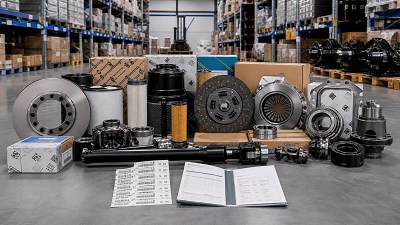
Correct diagnosis must be matched with suitable parts. A truck engine repair can fail prematurely if replacement components do not match engine specification, duty cycle, emissions configuration, or installation requirements.
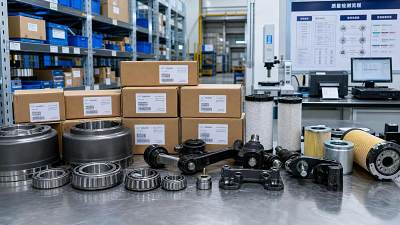
Aftermarket teams sourcing through a global heavy truck industry platform should compare suppliers by fitment accuracy, technical documentation, order quantity, delivery window, warranty terms, and responsiveness.
The following table outlines practical sourcing factors for common engine-related parts used in heavy-duty maintenance programs.
The key lesson is that sourcing decisions should be technical, not only price-based. For a truck engine, the wrong seal, sensor, injector, or thermostat can create repeat failures that cost more than the initial parts saving.
Using a B2B platform for maintenance procurement
The Global Heavy Truck Industry Platform supports aftermarket teams by helping them discover suppliers, compare product categories, and access information across truck chassis, complete trucks, trailers, construction machinery, and spare parts.
For maintenance departments, this digital sourcing approach is especially useful when fleets operate multiple brands or require cross-border procurement. Buyers can shortlist 3–5 suppliers, compare specifications, and request documentation before placing orders.
Supplier evaluation checklist
- Confirm whether the supplier can identify parts by VIN, engine code, OEM reference, or detailed measurements.
- Ask for clear photos, technical drawings, packaging details, and installation notes when relevant.
- Check lead time expectations, especially for urgent repairs requiring 3–10 day shipment windows.
- Review warranty conditions, return procedure, and evidence required for fault claims.
Preventive Maintenance Practices That Reduce Engine Repair Risk
A strong preventive program converts warning signs into planned work orders. Instead of reacting after breakdowns, technicians inspect known risk points at set intervals based on mileage, engine hours, route severity, and payload conditions.
For long-haul trucks, mileage-based intervals may dominate. For construction, mining, municipal, and port vehicles, engine hours and idle percentage may be more meaningful because the truck engine works hard even when vehicle speed is low.
Recommended inspection rhythm
A practical schedule may include daily driver checks, weekly visual inspection, monthly diagnostic review, and deeper service every 10,000–30,000 miles depending on engine type, lubricant, fuel quality, and operating environment.
Severe-duty fleets should shorten intervals by 20–30% when operating in dust, high heat, heavy stop-start traffic, steep grades, or overloaded conditions. The maintenance plan should reflect real work, not only the brochure interval.
Six inspection items to standardize
- Oil level, oil condition, pressure readings, and evidence of dilution or sludge.
- Coolant level, concentration, leaks, hose swelling, radiator blockage, and cap pressure.
- Air intake restriction, filter condition, clamps, charge air cooler, and boost leaks.
- Fuel filter condition, water separator status, fuel pressure, and injector balance data.
- Belts, pulleys, tensioners, alternator load, and battery condition for stable electrical supply.
- Dashboard alerts, active codes, stored codes, regeneration history, and sensor plausibility.
Common maintenance mistakes
One common mistake is clearing fault codes without documenting them. Codes may not return immediately, but freeze-frame information can show coolant temperature, rpm, load, or sensor values at the exact fault event.
Another mistake is replacing the same failed part repeatedly without investigating root cause. A damaged turbocharger, for example, may be the result of oil starvation, foreign object damage, blocked air intake, or excessive exhaust restriction.
FAQ for Truck Engine Warning Signs in Aftermarket Service
Service teams often face pressure from dispatchers to release vehicles quickly. The following answers support practical decisions during inspections, repair planning, and parts procurement.
Can a truck keep operating with a check engine light?
It depends on the code severity and symptoms. If the light is accompanied by low oil pressure, overheating, misfire, severe smoke, or derating, the truck engine should be inspected immediately before continued operation.
How should technicians handle intermittent power loss?
Intermittent power loss requires data capture. Record operating conditions, load, rpm, boost pressure, fuel pressure, and fault codes. A short road test of 20–30 minutes may reproduce the issue better than idle inspection.
When is smoke considered serious?
Smoke is serious when it persists after warm-up, increases under load, appears with coolant or oil loss, or triggers emissions-related fault codes. In those cases, inspection should not wait until the next routine service.
What records help reduce repeat engine failures?
The most useful records include repair date, mileage, engine hours, replaced parts, diagnostic codes, fluid analysis notes, supplier details, and technician findings. Reviewing 6–12 months of records helps identify recurring problems.
Building a More Reliable Heavy Truck Maintenance Strategy
A truck engine gives warning signs before many costly failures. Noise, smoke, overheating, pressure changes, power loss, abnormal vibration, and dashboard alerts should be treated as structured maintenance inputs, not isolated complaints.
For aftermarket maintenance teams, the best results come from combining disciplined inspections, accurate diagnostics, reliable spare parts, and supplier transparency. This approach reduces downtime, protects asset value, and supports safer heavy-duty operation.
The Global Heavy Truck Industry Platform helps fleets and service organizations explore parts, compare suppliers, and make informed purchasing decisions across the commercial vehicle supply chain. To strengthen your maintenance program, consult product details, compare sourcing options, or get a customized solution for your fleet requirements.
Trending News
- How to verify spare parts availability with a crane truck supplier
- How to verify a truck trailer OEM's claimed payload capacity
- How does operating weight affect the price of a new excavator?
- How to compare concrete mixer truck suppliers by total landed cost
- How axle load limits affect low bed trailer exports to Southeast Asia
Tag
Recommended News
 Truck Parts IndustryWhat causes a truck injector to fail prematurely?Truck injector failure can stem from fuel contamination, water, wiring faults, heat, or incorrect installation. Discover practical diagnostic steps to prevent repeat repairs.
 Truck Parts IndustryEU REACH Rule Takes Effect for Truck Rubber PartsEU REACH Rule takes effect for truck rubber parts exported to the EU. Learn how SCIP reporting, SVHC declarations, and supply chain compliance now impact truck manufacturers and suppliers.
 Truck Parts IndustryHow to Evaluate Commercial Vehicle Parts With Eco-Friendly Materials for Durability and ComplianceCommercial vehicle parts with eco-friendly materials require more than green claims. Learn how to assess durability, compliance, and supplier reliability for smarter sourcing.
 Truck Parts IndustryHow to Evaluate a Truck Parts Supplier Beyond Unit PriceTruck parts supplier selection should go beyond unit price. Learn how to assess quality, traceability, compliance, delivery, and support to reduce fleet risk and total cost.
 Truck Parts IndustryVietnam to Require QR Traceability Labels on Imported Heavy-Truck PartsVietnam to Require QR Traceability Labels on Imported Heavy-Truck Parts from Aug 1, 2026. Learn scope, VNQR-2025 rules, VITRAC links, and how to avoid port refusal and fines.
 Truck Parts IndustryHow to Evaluate a Truck Spare Parts Supplier for Long-Term Cost ControlTruck spare parts supplier selection affects far more than price. Learn how to compare quality, delivery, traceability, and hidden costs to protect fleet uptime and control long-term expenses.
 Truck Parts IndustryFuel Injection Pump Failure Signs and What They Mean for Engine PerformanceFuel injection pump failure signs can quickly reduce truck power, raise fuel use, and trigger hard starts. Learn what each symptom means and when to act before costly downtime.
 Truck Parts IndustryExcavator Attachment Selection for Demolition and Site PrepExcavator attachment selection for demolition and site prep: compare breakers, grapples, crushers, and buckets to boost productivity, safety, and ROI.
 Truck Parts IndustryTruck Engine Overhaul or Replacement: Which Costs Less Long Term?Truck engine overhaul or replacement? Compare long-term cost, downtime, fuel efficiency, and reliability to choose the smarter option for your fleet.
 Truck Parts IndustryHow to Choose Excavator Parts That Last LongerExcavator parts buying guide: learn how to choose excavator parts that last longer by comparing fit, material quality, operating conditions, and supplier reliability.
 Truck Parts IndustryAre Eco-Friendly Commercial Vehicle Parts Durable Enough for Daily Use?Commercial vehicle parts with eco-friendly materials can be durable for daily use—if tested right. Explore where they perform best, key risks, and smarter sourcing insights.
 Truck Parts IndustryTruck Parts OEM vs Aftermarket: Cost, Fit, and Warranty RisksTruck parts OEM vs aftermarket: compare true cost, fit accuracy, and warranty risks to reduce downtime, avoid disputes, and make smarter fleet sourcing decisions.
 Truck Parts IndustryTruck Spare Parts Buying Guide: How to Reduce Downtime and Fitment RiskTruck spare parts buying guide for fleet maintenance teams: learn how to reduce downtime, avoid fitment risk, verify suppliers, and make smarter sourcing decisions.
 Truck Parts IndustryHow to Evaluate a Truck Parts Supplier Beyond PriceTruck parts supplier selection should go beyond price. Learn how to compare quality, delivery, service, and total cost to reduce risk and keep fleets running efficiently.
 Truck Parts IndustryHeavy Truck Parts for Construction: Signs of a Reliable ManufacturerHeavy truck parts manufacturer for construction: learn how to identify reliable suppliers through quality control, traceability, testing, and support to reduce downtime and improve fleet safety.
 Truck Parts IndustryHow to Compare Truck Spare Parts Suppliers on Quality and Lead TimeTruck spare parts supplier comparison starts with quality and lead time. Learn how to assess consistency, delivery reliability, and sourcing fit for smarter purchases.
 Truck Parts IndustryEU REACH Sets PAH Limit for Heavy Truck Rubber PartsEU REACH sets a new PAH limit for heavy truck rubber parts, affecting brake hoses, bushings, and export compliance. Learn what suppliers must prepare now to avoid testing delays and customs risks.
 Truck Parts IndustryWhat to Check in a Truck Chassis Supplier Before Fleet ExpansionTruck chassis supplier selection can make or break fleet expansion. Learn what to check on quality, production, delivery, support, and total cost before requesting a quote.
 Truck Parts IndustryCold Storage Truck Parts That Matter Most for Temperature ControlCommercial vehicle parts for cold storage determine real temperature stability. Discover the key truck components that reduce spoilage, improve efficiency, and protect sensitive cargo.
 Truck Parts IndustryHow to Evaluate a Heavy Truck Parts Manufacturer for Long-Term Supply StabilityHeavy truck parts manufacturer selection starts with supply stability. Learn how to assess quality, capacity, lead times, and risk signals for smarter long-term sourcing.
 Truck Parts IndustryEU EPR Rules Extend to Commercial TrailersEU EPR rules now extend to commercial trailers, bringing new registration, reporting, and fee duties from 2027. See how exporters can prepare early to avoid customs delays.
 Truck Parts IndustryTruck Suspension Problems: Signs, Causes, and Fix OptionsTruck suspension issues can lead to tire wear, poor handling, and costly downtime. Learn the key signs, root causes, and best fix options for different truck applications.
 Truck Parts IndustryHow to Choose a Heavy Truck Parts Manufacturer for Construction FleetsHeavy truck parts manufacturer for construction selection starts with uptime, quality, and delivery. Learn how to compare suppliers, reduce fleet risk, and choose with confidence.
 Truck Parts IndustryUS Sets AEBS Rule for Imported Commercial TrailersUS sets AEBS rule for imported commercial trailers starting Oct. 1, 2026. Learn FMVSS No. 127A, SAE J2929, and key compliance steps to avoid CBP entry denial.
 Truck Parts IndustryHow to Choose Commercial Vehicle Parts That Reduce DowntimeCommercial vehicle parts selection can make or break fleet uptime. Learn how to choose parts that improve fit, quality, supply reliability, and lower total downtime cost.