Truck Parts Price Guide: What Drives Costs Up or Down
Truck parts price guide: why the same part can cost very different amounts
Truck parts price is rarely shaped by one factor alone.
In road transport equipment, cost moves with materials, sourcing routes, quality levels, delivery urgency, and supplier reliability.
That matters when budgets must stay predictable across fleets, trailers, construction support vehicles, or heavy-duty logistics assets.
A low quoted number may look attractive at first.
In practice, the real question is whether that truck parts price includes stable quality, documentation, lead time, and lower operating risk.
This is also why many buyers now use global industry platforms to compare suppliers, product categories, and market signals before approving spend.
When a platform combines parts sourcing, brand directories, and market insights, price evaluation becomes more transparent and less reactive.
What usually pushes truck parts price up the fastest?
The biggest driver is often raw material volatility.
Steel, aluminum, rubber, copper, and engineered plastics directly affect the truck parts price of brake systems, suspension items, engine components, and body assemblies.
When commodity markets rise, suppliers rarely absorb all of the increase.
Energy costs also matter more than many expect.
Foundries, machining centers, heat treatment lines, and coating processes all raise production costs when power or fuel prices climb.
Then comes supply chain pressure.
Freight disruption, container shortages, port congestion, or cross-border customs delays can lift the delivered truck parts price even when factory pricing stays unchanged.
Brand positioning creates another gap.
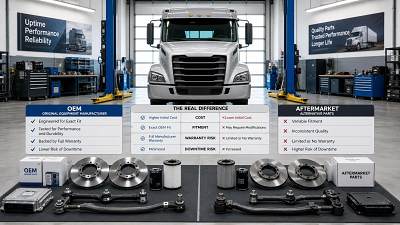
OEM parts, premium aftermarket brands, and economy alternatives may serve the same function, yet pricing differs because of warranty support, traceability, testing, and market reputation.
A final pressure point is order pattern.
Small urgent orders usually carry higher unit cost than forecasted bulk purchases with stable replenishment schedules.
A quick way to read cost drivers
Does a lower truck parts price always mean better savings?
Usually not.
The lower truck parts price can reduce upfront spend, but total cost often increases if service life is shorter or fitment is inconsistent.
This happens often with wear parts.
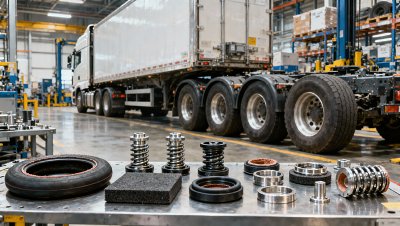
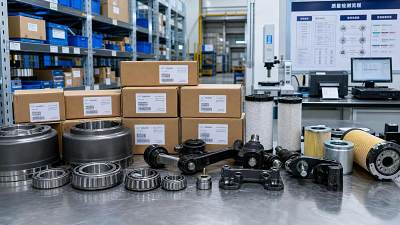
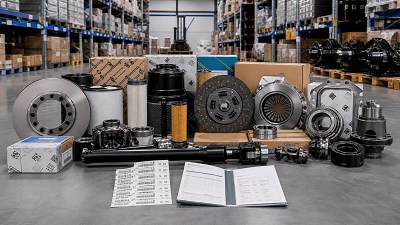
Brake linings, filters, bearings, clutch components, and suspension parts may look similar on paper while performing very differently in daily operations.
A cheaper part becomes expensive when it causes repeat maintenance, unexpected downtime, or higher fuel consumption.
A more reliable way to judge value is to compare landed cost against working life.
That includes unit price, freight, import charges, replacement interval, claim handling, and the operational cost of failure.
For heavy truck fleets, even a small failure rate spread can change the annual budget.
- Check whether the quoted part matches the original technical drawing or approved substitute standard.
- Ask for warranty scope, not just warranty duration.
- Review packaging, labeling, and traceability for cross-border claims.
- Compare replacement cycles across competing offers.
In other words, truck parts price should be read together with lifecycle evidence, not as a stand-alone number.
Which parts categories show the biggest price swings?
Not all categories move in the same way.
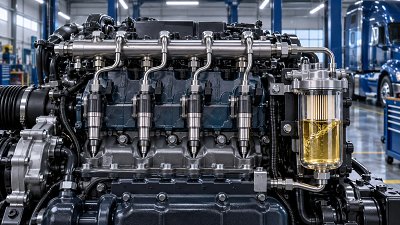
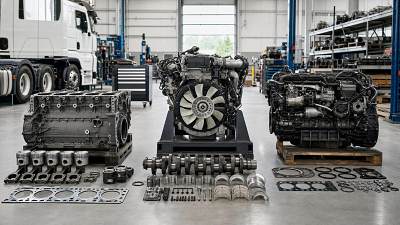
Engine parts and transmission components often react strongly to precision manufacturing cost and brand sensitivity.
Brake systems and suspension parts are influenced by material quality and safety expectations.
Electronic parts behave differently.
Sensors, control modules, and lighting assemblies can see truck parts price changes due to chips, connectors, testing standards, or model compatibility.
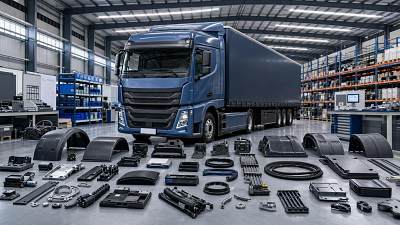
Body parts and cabin accessories are often more freight-sensitive because of volume, packaging, and damage risk.
For construction-related trucks or mining support vehicles, reinforced components usually carry another premium.
The part is not only stronger.
It is also produced for harsher duty cycles, which affects machining, materials, and inspection.
A useful sourcing approach is to separate categories into three pricing groups.
- Stable items, such as standard filters or common fasteners.
- Moderately volatile items, such as brake parts or bearings.
- High-variance items, such as electronics, engine internals, and specialty heavy-duty assemblies.
That structure makes forecasting easier when evaluating replacement budgets across multiple vehicle classes.
How can suppliers be compared without relying only on quoted price?
This is where digital sourcing tools become useful.
A global heavy truck industry platform can shorten the work by showing product ranges, supplier backgrounds, brand coverage, and related market information in one place.
That matters when buying across truck chassis, cabs, trailers, light trucks, construction machinery, and spare parts.
The better comparison method is to score the full offer.
In actual sourcing, transparent comparison often does more to control cost than aggressive negotiation alone.
When does truck parts price fall, and what signals are worth watching?
Prices can ease when raw materials soften, freight normalizes, or supplier competition increases.
They can also fall when demand weakens in some regions while factory capacity remains high.
Still, not every market decline should trigger immediate buying.
Sometimes a lower truck parts price reflects inventory clearance, model changeovers, or inconsistent specification batches.
The more useful signals are these:
- Commodity trends for steel, rubber, and copper.
- Regional freight and port conditions.
- Supplier capacity expansion or consolidation.
- Infrastructure and logistics demand in key export markets.
- Changes in emission rules or truck model updates.
Industry platforms that combine supplier listings with market news and buying guides help track these signals more efficiently.
That is especially useful for cross-border sourcing, where local price trends may not explain the final delivered cost.
What is the safest way to approve a truck parts price decision?
The safest approval path is structured, but it does not need to be slow.
Start by defining the exact part scope, vehicle application, quality tier, and replacement urgency.
Then compare at least three things together: unit price, landed cost, and operational consequence of failure.
Where possible, review supplier history across similar heavy truck or construction transport categories.
A supplier with consistent documentation and wider category experience often creates fewer downstream surprises.
Before closing the decision, confirm these points:
- Quoted truck parts price validity and currency basis.
- Applicable standards, drawings, and interchange references.
- Lead time with shipping assumptions included.
- Warranty procedure, return responsibility, and claim evidence required.
- Future availability for repeat orders.
A sound truck parts price decision is not the cheapest line on a spreadsheet.
It is the one that balances budget control, continuity of supply, and operational reliability across the equipment lifecycle.
The practical next step is to group frequently purchased parts by risk level, compare offers on a landed-cost basis, and use trusted market platforms to validate supplier strength before approval.
Trending News
- How axle load limits affect low bed trailer exports to Southeast Asia
- How to locate a truck exhaust system leak before replacing parts
- When does heavy equipment transport require a lowboy trailer?
- When does a light commercial vehicle for urban delivery save fleet costs?
- How to choose an off road truck for steep and unstable job sites
Tag
Recommended News
 Truck Parts IndustryWhat causes a truck injector to fail prematurely?Truck injector failure can stem from fuel contamination, water, wiring faults, heat, or incorrect installation. Discover practical diagnostic steps to prevent repeat repairs.
 Truck Parts IndustryEU REACH Rule Takes Effect for Truck Rubber PartsEU REACH Rule takes effect for truck rubber parts exported to the EU. Learn how SCIP reporting, SVHC declarations, and supply chain compliance now impact truck manufacturers and suppliers.
 Truck Parts IndustryHow to Evaluate Commercial Vehicle Parts With Eco-Friendly Materials for Durability and ComplianceCommercial vehicle parts with eco-friendly materials require more than green claims. Learn how to assess durability, compliance, and supplier reliability for smarter sourcing.
 Truck Parts IndustryHow to Evaluate a Truck Parts Supplier Beyond Unit PriceTruck parts supplier selection should go beyond unit price. Learn how to assess quality, traceability, compliance, delivery, and support to reduce fleet risk and total cost.
 Truck Parts IndustryVietnam to Require QR Traceability Labels on Imported Heavy-Truck PartsVietnam to Require QR Traceability Labels on Imported Heavy-Truck Parts from Aug 1, 2026. Learn scope, VNQR-2025 rules, VITRAC links, and how to avoid port refusal and fines.
 Truck Parts IndustryHow to Evaluate a Truck Spare Parts Supplier for Long-Term Cost ControlTruck spare parts supplier selection affects far more than price. Learn how to compare quality, delivery, traceability, and hidden costs to protect fleet uptime and control long-term expenses.
 Truck Parts IndustryFuel Injection Pump Failure Signs and What They Mean for Engine PerformanceFuel injection pump failure signs can quickly reduce truck power, raise fuel use, and trigger hard starts. Learn what each symptom means and when to act before costly downtime.
 Truck Parts IndustryExcavator Attachment Selection for Demolition and Site PrepExcavator attachment selection for demolition and site prep: compare breakers, grapples, crushers, and buckets to boost productivity, safety, and ROI.
 Truck Parts IndustryTruck Engine Overhaul or Replacement: Which Costs Less Long Term?Truck engine overhaul or replacement? Compare long-term cost, downtime, fuel efficiency, and reliability to choose the smarter option for your fleet.
 Truck Parts IndustryHow to Choose Excavator Parts That Last LongerExcavator parts buying guide: learn how to choose excavator parts that last longer by comparing fit, material quality, operating conditions, and supplier reliability.
 Truck Parts IndustryAre Eco-Friendly Commercial Vehicle Parts Durable Enough for Daily Use?Commercial vehicle parts with eco-friendly materials can be durable for daily use—if tested right. Explore where they perform best, key risks, and smarter sourcing insights.
 Truck Parts IndustryTruck Parts OEM vs Aftermarket: Cost, Fit, and Warranty RisksTruck parts OEM vs aftermarket: compare true cost, fit accuracy, and warranty risks to reduce downtime, avoid disputes, and make smarter fleet sourcing decisions.
 Truck Parts IndustryTruck Spare Parts Buying Guide: How to Reduce Downtime and Fitment RiskTruck spare parts buying guide for fleet maintenance teams: learn how to reduce downtime, avoid fitment risk, verify suppliers, and make smarter sourcing decisions.
 Truck Parts IndustryHow to Evaluate a Truck Parts Supplier Beyond PriceTruck parts supplier selection should go beyond price. Learn how to compare quality, delivery, service, and total cost to reduce risk and keep fleets running efficiently.
 Truck Parts IndustryHeavy Truck Parts for Construction: Signs of a Reliable ManufacturerHeavy truck parts manufacturer for construction: learn how to identify reliable suppliers through quality control, traceability, testing, and support to reduce downtime and improve fleet safety.
 Truck Parts IndustryHow to Compare Truck Spare Parts Suppliers on Quality and Lead TimeTruck spare parts supplier comparison starts with quality and lead time. Learn how to assess consistency, delivery reliability, and sourcing fit for smarter purchases.
 Truck Parts IndustryEU REACH Sets PAH Limit for Heavy Truck Rubber PartsEU REACH sets a new PAH limit for heavy truck rubber parts, affecting brake hoses, bushings, and export compliance. Learn what suppliers must prepare now to avoid testing delays and customs risks.
 Truck Parts IndustryWhat to Check in a Truck Chassis Supplier Before Fleet ExpansionTruck chassis supplier selection can make or break fleet expansion. Learn what to check on quality, production, delivery, support, and total cost before requesting a quote.
 Truck Parts IndustryCold Storage Truck Parts That Matter Most for Temperature ControlCommercial vehicle parts for cold storage determine real temperature stability. Discover the key truck components that reduce spoilage, improve efficiency, and protect sensitive cargo.
 Truck Parts IndustryHow to Evaluate a Heavy Truck Parts Manufacturer for Long-Term Supply StabilityHeavy truck parts manufacturer selection starts with supply stability. Learn how to assess quality, capacity, lead times, and risk signals for smarter long-term sourcing.
 Truck Parts IndustryEU EPR Rules Extend to Commercial TrailersEU EPR rules now extend to commercial trailers, bringing new registration, reporting, and fee duties from 2027. See how exporters can prepare early to avoid customs delays.
 Truck Parts IndustryTruck Suspension Problems: Signs, Causes, and Fix OptionsTruck suspension issues can lead to tire wear, poor handling, and costly downtime. Learn the key signs, root causes, and best fix options for different truck applications.
 Truck Parts IndustryHow to Choose a Heavy Truck Parts Manufacturer for Construction FleetsHeavy truck parts manufacturer for construction selection starts with uptime, quality, and delivery. Learn how to compare suppliers, reduce fleet risk, and choose with confidence.
 Truck Parts IndustryUS Sets AEBS Rule for Imported Commercial TrailersUS sets AEBS rule for imported commercial trailers starting Oct. 1, 2026. Learn FMVSS No. 127A, SAE J2929, and key compliance steps to avoid CBP entry denial.
 Truck Parts IndustryHow to Choose Commercial Vehicle Parts That Reduce DowntimeCommercial vehicle parts selection can make or break fleet uptime. Learn how to choose parts that improve fit, quality, supply reliability, and lower total downtime cost.