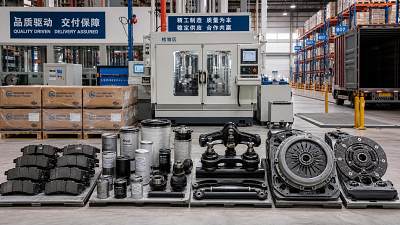
EU REACH Sets PAH Limit for Heavy Truck Rubber Parts
On July 1, 2026, the European Commission formally updated REACH Annex XVII to impose a 0.5 mg/kg limit on eight PAHs in rubber components used in heavy trucks, including suspension bushings, air spring diaphragms, and brake hoses. For companies involved in exporting rubber seals, chassis damping assemblies, and vehicle supply parts, this is not simply a technical specification update; it directly affects compliance review, type-approval testing workflows, and customs clearance readiness, making it a rule change that procurement, certification, and delivery teams need to track closely.
What the new restriction formally covers
The confirmed change is that the European Commission updated REACH Annex XVII on July 1, 2026. The update applies a strict limit of 0.5 mg/kg to eight PAHs in rubber parts used in heavy trucks.
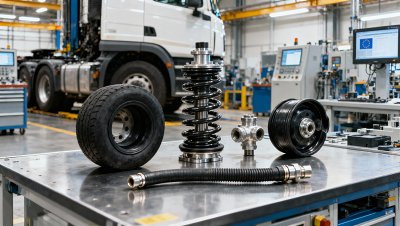
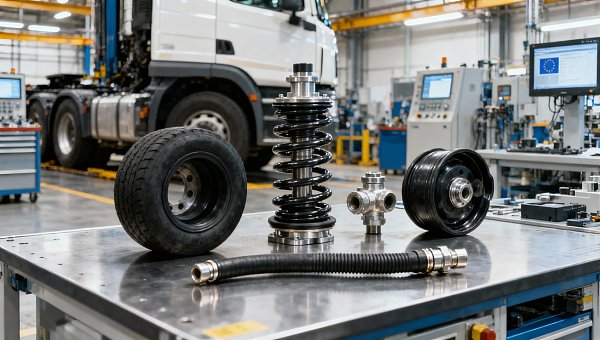
The product scope explicitly mentioned in the provided information includes suspension bushings, air spring diaphragms, and brake hoses. The summary also states that the requirement directly affects the compliance certification and type inspection process for Chinese suppliers exporting rubber sealing parts, chassis vibration-damping components, and vehicle supporting parts.
It is also confirmed that products without a PAHs test report from EUROPOLY or TÜV will be refused customs clearance.
Where the pressure is likely to appear first in the supply chain
Export shipments face a stricter documentation threshold
From an industry perspective, exporters are among the first groups likely to feel the impact because the rule is tied not only to product composition but also to proof of compliance at the point of market entry. The practical pressure point is likely to be whether shipments are supported by the required PAHs test documentation before customs procedures begin.
What deserves closer attention is the connection between regulatory compliance and clearance readiness. For export teams, the rule change raises the importance of checking whether product files, test reports, and type inspection materials are complete before delivery schedules are locked in.
Rubber component manufacturers may need tighter upstream control
Manufacturers of rubber seals, damping parts, and related heavy truck components may be affected because the new limit applies to the chemical content of the finished rubber parts. Analysis shows that this pushes compliance attention upstream into raw material selection, formulation control, and supplier document review, even where the immediate regulatory checkpoint appears later in the certification or customs process.
For production and quality teams, the business impact is likely to appear in sample preparation, internal verification, and coordination with testing bodies. The rule therefore matters not only to exporters but also to factories that support export-oriented assemblies.
Vehicle supporting suppliers and procurement teams may need earlier alignment
Suppliers serving complete vehicle or subsystem programs may face pressure in technical alignment and release timing. Observably, when a new chemical restriction becomes mandatory, procurement and sourcing teams need to confirm whether the supplied part can be backed by the required report within the expected project timeline.
This is especially relevant where purchasing decisions, supplier qualification, and delivery commitments depend on compliance materials being available in parallel with product approval files. In practice, that can affect how buyers review supplier readiness and how supporting vendors prepare bid or supply documents.
Testing and certification coordination becomes a key operational step
The provided information specifically links market access to PAHs reports from EUROPOLY or TÜV. Analysis shows that this makes testing coordination a central operational issue for companies shipping affected rubber components. The rule change is therefore not only about substance limits, but also about whether recognized supporting documents are available at the right stage of trade and inspection.
For compliance teams, this means closer attention to report validity, document completeness, and the consistency between technical files and shipment documentation.
What companies should review now
Check whether affected product categories are already mapped
Companies dealing with heavy truck rubber parts should first verify whether their exported or sourced items fall within the product examples highlighted in the update, such as suspension bushings, air spring diaphragms, and brake hoses, or within the broader product groups mentioned in the summary. Analysis shows that early product mapping is important because the regulatory change is tied to specific component use rather than to a broad industry label alone.
Re-examine compliance files before shipment or project release
What deserves closer attention is whether current compliance files already contain the PAHs evidence required for customs and type inspection processes. Where shipments or supply programs rely on technical dossiers assembled under earlier assumptions, companies may need to review whether those files remain sufficient under the updated Annex XVII requirement.
Watch the handoff between testing, certification, and delivery
Observably, the operational risk is not limited to laboratory testing itself. It also sits in the handoff between internal quality review, external test reporting, certification workflow, and shipment scheduling. Businesses should therefore pay attention to whether test reports are available early enough to support both compliance review and actual delivery commitments.
Track how customers and counterparties update their document requests
The provided information confirms the regulatory change and its immediate relevance to testing reports, but it does not provide detailed implementation language for every downstream process. It is more appropriate to understand this as a reason to monitor how customers, buyers, and project owners revise technical documents, inspection checklists, and supply prerequisites in response to the new requirement.
Why this reads as an execution signal, not a distant policy watch item
Analysis shows that this development is better understood as a rule already tied to market access conditions rather than as a preliminary policy discussion. The mandatory date is explicit, the affected product types are identified in the provided summary, and the customs consequence for products lacking the specified PAHs reports is clearly stated.
At the same time, observably, the market still needs to watch how the requirement is reflected in procurement language, type inspection practice, and the document expectations applied by counterparties in live transactions. That is why this update should be treated both as an executed compliance change and as an area where implementation details still deserve continued attention.
How the sector may need to frame this update
From an industry perspective, the significance of this change lies in the combination of a very low PAHs threshold, a clearly defined heavy truck component focus, and a direct link to certification and customs outcomes. It does not automatically answer every operational question for suppliers, but it does change the baseline for how affected rubber parts should be prepared for export and review.
It is more appropriate to understand this event as a concrete compliance and trade execution signal. The immediate issue is not broad market speculation, but whether companies in the relevant supply chain can align testing, documentation, and delivery processes with the updated REACH requirement.
Basis of this article and what still needs verification
This article is generated based on the user-provided news title, event date, and event summary. For events of this kind, commonly relevant source categories may include official announcements, regulatory authority releases, customs or trade administration information, industry association updates, standard-setting documents, and reporting from authoritative trade media.
No specific official source link was provided in the input, so the exact official reference still needs to be verified on an ongoing basis. Observably, further attention should remain on any detailed policy wording, certification enforcement interpretation, tender document changes, market feedback, and how companies in the supply chain implement the requirement in practice.
Trending News
- How to choose an off road truck for steep and unstable job sites
- How to match crane truck lifting capacity to your jobsite loads
- What drives logging truck cost beyond the base purchase price?
- How to match lowbed trailer deck height to your hauling equipment
- What documents are needed to export a low bed trailer to Southeast Asia?
Tag
Recommended News
 Truck Parts IndustryWhat causes a truck injector to fail prematurely?Truck injector failure can stem from fuel contamination, water, wiring faults, heat, or incorrect installation. Discover practical diagnostic steps to prevent repeat repairs.
 Truck Parts IndustryEU REACH Rule Takes Effect for Truck Rubber PartsEU REACH Rule takes effect for truck rubber parts exported to the EU. Learn how SCIP reporting, SVHC declarations, and supply chain compliance now impact truck manufacturers and suppliers.
 Truck Parts IndustryHow to Evaluate Commercial Vehicle Parts With Eco-Friendly Materials for Durability and ComplianceCommercial vehicle parts with eco-friendly materials require more than green claims. Learn how to assess durability, compliance, and supplier reliability for smarter sourcing.
 Truck Parts IndustryHow to Evaluate a Truck Parts Supplier Beyond Unit PriceTruck parts supplier selection should go beyond unit price. Learn how to assess quality, traceability, compliance, delivery, and support to reduce fleet risk and total cost.
 Truck Parts IndustryVietnam to Require QR Traceability Labels on Imported Heavy-Truck PartsVietnam to Require QR Traceability Labels on Imported Heavy-Truck Parts from Aug 1, 2026. Learn scope, VNQR-2025 rules, VITRAC links, and how to avoid port refusal and fines.
 Truck Parts IndustryHow to Evaluate a Truck Spare Parts Supplier for Long-Term Cost ControlTruck spare parts supplier selection affects far more than price. Learn how to compare quality, delivery, traceability, and hidden costs to protect fleet uptime and control long-term expenses.
 Truck Parts IndustryFuel Injection Pump Failure Signs and What They Mean for Engine PerformanceFuel injection pump failure signs can quickly reduce truck power, raise fuel use, and trigger hard starts. Learn what each symptom means and when to act before costly downtime.
 Truck Parts IndustryExcavator Attachment Selection for Demolition and Site PrepExcavator attachment selection for demolition and site prep: compare breakers, grapples, crushers, and buckets to boost productivity, safety, and ROI.
 Truck Parts IndustryTruck Engine Overhaul or Replacement: Which Costs Less Long Term?Truck engine overhaul or replacement? Compare long-term cost, downtime, fuel efficiency, and reliability to choose the smarter option for your fleet.
 Truck Parts IndustryHow to Choose Excavator Parts That Last LongerExcavator parts buying guide: learn how to choose excavator parts that last longer by comparing fit, material quality, operating conditions, and supplier reliability.
 Truck Parts IndustryAre Eco-Friendly Commercial Vehicle Parts Durable Enough for Daily Use?Commercial vehicle parts with eco-friendly materials can be durable for daily use—if tested right. Explore where they perform best, key risks, and smarter sourcing insights.
 Truck Parts IndustryTruck Parts OEM vs Aftermarket: Cost, Fit, and Warranty RisksTruck parts OEM vs aftermarket: compare true cost, fit accuracy, and warranty risks to reduce downtime, avoid disputes, and make smarter fleet sourcing decisions.
 Truck Parts IndustryTruck Spare Parts Buying Guide: How to Reduce Downtime and Fitment RiskTruck spare parts buying guide for fleet maintenance teams: learn how to reduce downtime, avoid fitment risk, verify suppliers, and make smarter sourcing decisions.
 Truck Parts IndustryHow to Evaluate a Truck Parts Supplier Beyond PriceTruck parts supplier selection should go beyond price. Learn how to compare quality, delivery, service, and total cost to reduce risk and keep fleets running efficiently.
 Truck Parts IndustryHeavy Truck Parts for Construction: Signs of a Reliable ManufacturerHeavy truck parts manufacturer for construction: learn how to identify reliable suppliers through quality control, traceability, testing, and support to reduce downtime and improve fleet safety.
 Truck Parts IndustryHow to Compare Truck Spare Parts Suppliers on Quality and Lead TimeTruck spare parts supplier comparison starts with quality and lead time. Learn how to assess consistency, delivery reliability, and sourcing fit for smarter purchases.
 Truck Parts IndustryEU REACH Sets PAH Limit for Heavy Truck Rubber PartsEU REACH sets a new PAH limit for heavy truck rubber parts, affecting brake hoses, bushings, and export compliance. Learn what suppliers must prepare now to avoid testing delays and customs risks.
 Truck Parts IndustryWhat to Check in a Truck Chassis Supplier Before Fleet ExpansionTruck chassis supplier selection can make or break fleet expansion. Learn what to check on quality, production, delivery, support, and total cost before requesting a quote.
 Truck Parts IndustryCold Storage Truck Parts That Matter Most for Temperature ControlCommercial vehicle parts for cold storage determine real temperature stability. Discover the key truck components that reduce spoilage, improve efficiency, and protect sensitive cargo.
 Truck Parts IndustryHow to Evaluate a Heavy Truck Parts Manufacturer for Long-Term Supply StabilityHeavy truck parts manufacturer selection starts with supply stability. Learn how to assess quality, capacity, lead times, and risk signals for smarter long-term sourcing.
 Truck Parts IndustryEU EPR Rules Extend to Commercial TrailersEU EPR rules now extend to commercial trailers, bringing new registration, reporting, and fee duties from 2027. See how exporters can prepare early to avoid customs delays.
 Truck Parts IndustryTruck Suspension Problems: Signs, Causes, and Fix OptionsTruck suspension issues can lead to tire wear, poor handling, and costly downtime. Learn the key signs, root causes, and best fix options for different truck applications.
 Truck Parts IndustryHow to Choose a Heavy Truck Parts Manufacturer for Construction FleetsHeavy truck parts manufacturer for construction selection starts with uptime, quality, and delivery. Learn how to compare suppliers, reduce fleet risk, and choose with confidence.
 Truck Parts IndustryUS Sets AEBS Rule for Imported Commercial TrailersUS sets AEBS rule for imported commercial trailers starting Oct. 1, 2026. Learn FMVSS No. 127A, SAE J2929, and key compliance steps to avoid CBP entry denial.
 Truck Parts IndustryHow to Choose Commercial Vehicle Parts That Reduce DowntimeCommercial vehicle parts selection can make or break fleet uptime. Learn how to choose parts that improve fit, quality, supply reliability, and lower total downtime cost.