Truck Engine Overhaul or Replacement: Which Costs Less Long Term?
Truck Engine Overhaul or Replacement: Which Costs Less Long Term?
When a truck engine starts losing performance, the first quote rarely tells the full story.
A lower repair bill may look attractive today, yet it can create higher operating costs later.
That is why the real comparison is not overhaul versus replacement alone.
It is total ownership cost, future reliability, and how the truck engine supports revenue over time.
For budget approval, this matters even more in logistics, mining, construction, and regional hauling.
Downtime can quickly outweigh any savings from a cheaper technical decision.
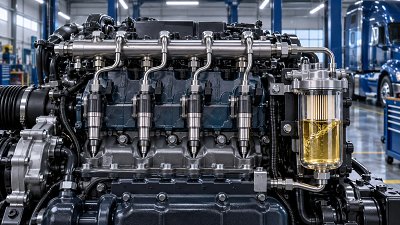
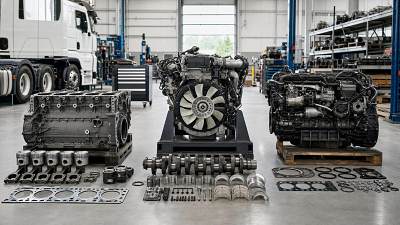
In practical terms, an overhaul rebuilds the existing truck engine using selected new or reconditioned parts.
A replacement installs another engine, often new, remanufactured, or certified used.
Both options can work well, but they perform very differently under different cost conditions.
Start With Total Cost, Not Repair Price
The headline number on a supplier quote is only one part of the decision.
A complete truck engine cost review should include at least five areas.
- Initial parts and labor expense
- Vehicle downtime and missed delivery capacity
- Fuel consumption after repair
- Expected maintenance frequency
- Residual service life of the truck engine
This broader view changes many decisions.
An overhaul may save money upfront, yet repeated service visits can erase that advantage.
A replacement may cost more now, but stable uptime can improve route economics across several years.
In other words, the cheapest truck engine option on paper is not always the least expensive in operation.
When a Truck Engine Overhaul Usually Makes Financial Sense
A truck engine overhaul can be the smarter choice when the core engine block remains sound.
It also works better when failure is limited to wear components rather than major structural damage.
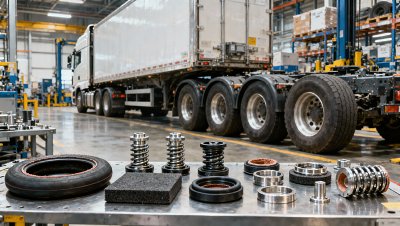
Typical examples include worn piston rings, bearings, liners, gaskets, injectors, or valve train parts.
In these cases, restoring the original truck engine may deliver acceptable life at a lower capital outlay.
Overhaul tends to work best under these conditions
- The truck has moderate mileage for its application
- Service history is complete and maintenance has been consistent
- The engine block, crankshaft, and head are still repairable
- Downtime can be scheduled during a lower demand period
- The fleet plans to keep the vehicle for a shorter remaining term
From a cash flow perspective, overhaul often helps preserve budget flexibility.
That can be useful when several units need attention at the same time.
Still, this savings depends heavily on workmanship quality and parts standards.
A poorly executed truck engine overhaul often creates a second round of costs within months.
When Truck Engine Replacement Becomes the Lower-Risk Investment
Replacement becomes more attractive when the original truck engine has deeper damage.
This includes cracked blocks, severe overheating, catastrophic bearing failure, or repeated contamination events.
At that point, overhaul costs can expand quickly and still leave uncertainty.
A replacement truck engine often offers more predictable performance, warranty support, and service planning.
Replacement is often the better long-term move when
- The existing truck engine has multiple failure points
- The truck operates on high-value routes with little downtime tolerance
- Fuel efficiency has dropped sharply and emissions compliance is a concern
- The chassis and transmission still have strong remaining value
- The fleet plans to operate the truck for several more years
The stronger signal is not just the engine failure itself.
It is whether the business can tolerate another interruption if the first fix underperforms.
For high-utilization fleets, a replacement truck engine often reduces that risk more effectively.
The Hidden Cost Drivers Buyers Often Miss
Long-term engine cost is shaped by more than workshop invoices.
Several hidden factors can shift the final result in a major way.
1. Downtime cost per day
If one truck supports critical contracts, every idle day has a direct revenue cost.
Add rental units, delayed deliveries, driver rescheduling, and customer penalties.
A truck engine replacement can sometimes return a vehicle faster than a complex overhaul.
2. Fuel economy after the repair
Even a small fuel improvement matters on long-haul routes.
A better-performing truck engine may lower monthly operating expense more than expected.
Over a year, that difference can narrow the price gap between overhaul and replacement.
3. Warranty and supplier accountability
Warranty terms are not equal across suppliers.
Some truck engine offers look competitive, but exclude labor, transport, or major wear items.
A stronger warranty lowers financial exposure and simplifies approval decisions.
4. Resale and asset value
For fleets that rotate assets, replacement can support better resale outcomes.
A documented replacement truck engine may be easier to present to future buyers.
A Simple Cost Comparison Framework
To compare options fairly, use a three-year or five-year horizon.
That period usually captures the real impact of a truck engine decision.
Then calculate the expected annual cost of each option.
- Add purchase, installation, and freight.
- Estimate downtime cost in working days.
- Forecast maintenance and unscheduled repair risk.
- Adjust for fuel use and expected service life.
- Subtract any resale value improvement.
This approach gives a clearer answer than a simple quote comparison.
Supplier Questions That Improve the Decision
The quality of a truck engine decision depends on the quality of supplier information.
Before approving either path, ask for details that affect long-term cost.
- What exact parts are included in the truck engine scope?
- Which components are new, remanufactured, or reused?
- What testing standards were applied before delivery?
- What warranty terms apply to parts and labor?
- What is the realistic lead time for installation and return to service?
- What post-sale support is available across regions?
For global sourcing, supplier transparency matters even more.
Reliable B2B platforms can help buyers compare truck engine suppliers more efficiently.
They also make it easier to review product range, certifications, market positioning, and trade experience.
Which Option Usually Costs Less Long Term?
There is no universal answer for every truck engine failure.
If the engine damage is limited and the truck has a shorter remaining service plan, overhaul often wins.
If reliability risk is high and the vehicle still has strong operating value, replacement often costs less over time.
The turning point is usually downtime exposure, not just engine price.
That is why strong procurement decisions balance technical condition with business impact.
In real operations, the best truck engine choice is the one that protects uptime, controls maintenance drift, and fits asset strategy.
A structured supplier review, supported by dependable industry sourcing channels, makes that decision far more accurate.
Before approving the next engine project, compare both paths on a full-life cost basis and request evidence behind every assumption.
Trending News
- How to verify a truck trailer OEM's claimed payload capacity
- How does operating weight affect the price of a new excavator?
- How to compare concrete mixer truck suppliers by total landed cost
- How axle load limits affect low bed trailer exports to Southeast Asia
- How to locate a truck exhaust system leak before replacing parts
Tag
Recommended News
 Truck Parts IndustryWhat causes a truck injector to fail prematurely?Truck injector failure can stem from fuel contamination, water, wiring faults, heat, or incorrect installation. Discover practical diagnostic steps to prevent repeat repairs.
 Truck Parts IndustryEU REACH Rule Takes Effect for Truck Rubber PartsEU REACH Rule takes effect for truck rubber parts exported to the EU. Learn how SCIP reporting, SVHC declarations, and supply chain compliance now impact truck manufacturers and suppliers.
 Truck Parts IndustryHow to Evaluate Commercial Vehicle Parts With Eco-Friendly Materials for Durability and ComplianceCommercial vehicle parts with eco-friendly materials require more than green claims. Learn how to assess durability, compliance, and supplier reliability for smarter sourcing.
 Truck Parts IndustryHow to Evaluate a Truck Parts Supplier Beyond Unit PriceTruck parts supplier selection should go beyond unit price. Learn how to assess quality, traceability, compliance, delivery, and support to reduce fleet risk and total cost.
 Truck Parts IndustryVietnam to Require QR Traceability Labels on Imported Heavy-Truck PartsVietnam to Require QR Traceability Labels on Imported Heavy-Truck Parts from Aug 1, 2026. Learn scope, VNQR-2025 rules, VITRAC links, and how to avoid port refusal and fines.
 Truck Parts IndustryHow to Evaluate a Truck Spare Parts Supplier for Long-Term Cost ControlTruck spare parts supplier selection affects far more than price. Learn how to compare quality, delivery, traceability, and hidden costs to protect fleet uptime and control long-term expenses.
 Truck Parts IndustryFuel Injection Pump Failure Signs and What They Mean for Engine PerformanceFuel injection pump failure signs can quickly reduce truck power, raise fuel use, and trigger hard starts. Learn what each symptom means and when to act before costly downtime.
 Truck Parts IndustryExcavator Attachment Selection for Demolition and Site PrepExcavator attachment selection for demolition and site prep: compare breakers, grapples, crushers, and buckets to boost productivity, safety, and ROI.
 Truck Parts IndustryTruck Engine Overhaul or Replacement: Which Costs Less Long Term?Truck engine overhaul or replacement? Compare long-term cost, downtime, fuel efficiency, and reliability to choose the smarter option for your fleet.
 Truck Parts IndustryHow to Choose Excavator Parts That Last LongerExcavator parts buying guide: learn how to choose excavator parts that last longer by comparing fit, material quality, operating conditions, and supplier reliability.
 Truck Parts IndustryAre Eco-Friendly Commercial Vehicle Parts Durable Enough for Daily Use?Commercial vehicle parts with eco-friendly materials can be durable for daily use—if tested right. Explore where they perform best, key risks, and smarter sourcing insights.
 Truck Parts IndustryTruck Parts OEM vs Aftermarket: Cost, Fit, and Warranty RisksTruck parts OEM vs aftermarket: compare true cost, fit accuracy, and warranty risks to reduce downtime, avoid disputes, and make smarter fleet sourcing decisions.
 Truck Parts IndustryTruck Spare Parts Buying Guide: How to Reduce Downtime and Fitment RiskTruck spare parts buying guide for fleet maintenance teams: learn how to reduce downtime, avoid fitment risk, verify suppliers, and make smarter sourcing decisions.
 Truck Parts IndustryHow to Evaluate a Truck Parts Supplier Beyond PriceTruck parts supplier selection should go beyond price. Learn how to compare quality, delivery, service, and total cost to reduce risk and keep fleets running efficiently.
 Truck Parts IndustryHeavy Truck Parts for Construction: Signs of a Reliable ManufacturerHeavy truck parts manufacturer for construction: learn how to identify reliable suppliers through quality control, traceability, testing, and support to reduce downtime and improve fleet safety.
 Truck Parts IndustryHow to Compare Truck Spare Parts Suppliers on Quality and Lead TimeTruck spare parts supplier comparison starts with quality and lead time. Learn how to assess consistency, delivery reliability, and sourcing fit for smarter purchases.
 Truck Parts IndustryEU REACH Sets PAH Limit for Heavy Truck Rubber PartsEU REACH sets a new PAH limit for heavy truck rubber parts, affecting brake hoses, bushings, and export compliance. Learn what suppliers must prepare now to avoid testing delays and customs risks.
 Truck Parts IndustryWhat to Check in a Truck Chassis Supplier Before Fleet ExpansionTruck chassis supplier selection can make or break fleet expansion. Learn what to check on quality, production, delivery, support, and total cost before requesting a quote.
 Truck Parts IndustryCold Storage Truck Parts That Matter Most for Temperature ControlCommercial vehicle parts for cold storage determine real temperature stability. Discover the key truck components that reduce spoilage, improve efficiency, and protect sensitive cargo.
 Truck Parts IndustryHow to Evaluate a Heavy Truck Parts Manufacturer for Long-Term Supply StabilityHeavy truck parts manufacturer selection starts with supply stability. Learn how to assess quality, capacity, lead times, and risk signals for smarter long-term sourcing.
 Truck Parts IndustryEU EPR Rules Extend to Commercial TrailersEU EPR rules now extend to commercial trailers, bringing new registration, reporting, and fee duties from 2027. See how exporters can prepare early to avoid customs delays.
 Truck Parts IndustryTruck Suspension Problems: Signs, Causes, and Fix OptionsTruck suspension issues can lead to tire wear, poor handling, and costly downtime. Learn the key signs, root causes, and best fix options for different truck applications.
 Truck Parts IndustryHow to Choose a Heavy Truck Parts Manufacturer for Construction FleetsHeavy truck parts manufacturer for construction selection starts with uptime, quality, and delivery. Learn how to compare suppliers, reduce fleet risk, and choose with confidence.
 Truck Parts IndustryUS Sets AEBS Rule for Imported Commercial TrailersUS sets AEBS rule for imported commercial trailers starting Oct. 1, 2026. Learn FMVSS No. 127A, SAE J2929, and key compliance steps to avoid CBP entry denial.
 Truck Parts IndustryHow to Choose Commercial Vehicle Parts That Reduce DowntimeCommercial vehicle parts selection can make or break fleet uptime. Learn how to choose parts that improve fit, quality, supply reliability, and lower total downtime cost.