Heavy Truck Parts for Construction: Signs of a Reliable Manufacturer
Construction fleets work in punishing conditions, where a failed brake chamber, suspension part, or steering component can stop an entire schedule. That is why choosing a reliable heavy truck parts manufacturer for construction matters far beyond price. In road transport equipment, part quality affects uptime, operator safety, maintenance planning, and the long service life expected from trucks working in mining zones, infrastructure projects, and municipal engineering.
The issue has become more important as global sourcing expands. Buyers now have access to wider supply networks, but wider choice also increases variation in quality, documentation, and after-sales response. A dependable supplier is not simply one that ships parts. It is one that delivers consistency, traceability, and clear technical accountability across batches and markets.
Why reliability matters in construction truck parts
Heavy truck parts used in construction face different pressures than parts used only in long-haul logistics. Vehicles move through uneven ground, sharp gradients, overloaded cycles, dust-heavy environments, and frequent stop-start operations.
Under these conditions, small manufacturing weaknesses become large operational risks. A bushing with poor material control may wear early. A low-grade casting may crack under vibration. An inconsistent seal may cause fluid loss and downtime.
For this reason, a heavy truck parts manufacturer for construction should be judged by field performance, not only by catalog breadth. Reliable production supports safer fleets, cleaner inspections, and fewer emergency replacements on active sites.
What separates a dependable manufacturer from a risky vendor
A reliable supplier usually shows strength in several connected areas. No single certificate or brochure claim is enough on its own. The more useful question is whether the manufacturer can prove control from raw material to final delivery.
Stable material and process control
Good manufacturers can explain what materials they use, why they use them, and how they verify batch stability. This is especially important for wear parts, structural parts, rubber elements, fasteners, and brake-related components.
Material certificates, hardness reports, heat treatment records, and dimensional inspection data should be available without hesitation. When these records are incomplete or inconsistent, the risk is usually hidden in production discipline.
Clear quality management systems
A serious heavy truck parts manufacturer for construction normally operates under recognized systems such as ISO 9001 or sector-relevant quality procedures. What matters, though, is how these systems are used in daily operations.
Inspection checkpoints, nonconformance handling, calibration routines, and corrective action processes should be visible. Reliable factories do not treat quality documents as sales attachments. They use them as working tools.
Traceability that survives real-world audits
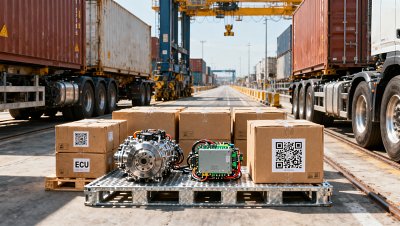
Traceability is a practical safety issue. If a batch problem appears after installation, the supplier should identify affected lots quickly and isolate risk. This requires batch coding, production records, supplier records, and shipment links.
Without traceability, even a minor defect can expand into a costly site-wide replacement exercise. In construction fleets, that creates safety exposure as well as scheduling disruption.
The signals worth checking before approval
When evaluating a heavy truck parts manufacturer for construction, several signals usually reveal whether the supplier is mature enough for demanding applications.
- Consistent part drawings, specifications, and revision control.
- Test reports tied to the actual part number and batch.
- Production capability suited to both volume and repeatability.
- Packaging that protects parts from moisture, dust, and handling damage.
- Technical staff able to answer fitment, tolerance, and application questions.
- A documented response path for complaints, failures, and warranty issues.
These points sound basic, yet they often separate long-term suppliers from short-term trading risks. In practice, poor documentation is often the first visible sign of deeper manufacturing inconsistency.
Where failures usually show up first
Construction use places repeated stress on certain systems. These categories often deserve closer supplier review because failures there can quickly affect safety or vehicle availability.
In actual use, these areas often reveal whether a supplier understands construction applications or only produces for general aftermarket demand. A reliable heavy truck parts manufacturer for construction should already know the stress profile of these systems.
Certification matters, but context matters more
Certifications remain important because they indicate baseline process discipline. However, construction buyers should avoid treating certificates as the final answer. A framed document does not guarantee stable production under changing raw material conditions or high output pressure.
It is more useful to ask how the manufacturer manages incoming material inspection, supplier qualification, process deviations, and field complaints. The strongest suppliers connect certification to everyday control points.
This is also where cross-border sourcing becomes more manageable. On a structured B2B platform with supplier profiles, product categories, and buying guides, buyers can compare claims against documentation depth, application range, and market presence before moving into detailed qualification.
The role of platform-based supplier screening
The heavy truck supply chain is now too broad for decisions based only on price sheets and email promises. Digital industry platforms have become useful because they organize supplier visibility across complete trucks, chassis systems, construction machinery, trailers, and spare parts.
The Global Heavy Truck Industry Platform reflects this shift. It brings together manufacturers, suppliers, distributors, and buyers across the commercial vehicle ecosystem, making it easier to compare sourcing options within one industry-focused environment.
That matters when screening a heavy truck parts manufacturer for construction. Access to product data, brand directories, market insights, and buying references helps reduce guesswork. It also improves early-stage filtering before samples, audits, or contract discussions begin.
For construction-related road transport equipment, this broader view is valuable because the right supplier is rarely judged by one part alone. Buyers often need confidence across multiple systems, replacement cycles, and export support requirements.
Questions that lead to better supplier decisions
A practical review process usually produces better results than a price-led shortlist. The following questions help clarify whether a heavy truck parts manufacturer for construction can support demanding operations.
- Can the supplier provide batch-level inspection records for recent shipments?
- Are failure analysis and corrective action reports available from past issues?
- Do samples match production quality, or are they specially prepared?
- Is the manufacturer experienced in construction, mining, or municipal vehicle applications?
- How quickly can technical issues be escalated and resolved across borders?
- What is the plan for continuity if raw materials or sub-suppliers change?
These checks move the discussion from sales language to operational evidence. They also help identify whether the supplier is ready for long-term partnership rather than isolated transactions.
A better next step than comparing price alone
The best sourcing decisions usually begin with a clear risk map. List the part categories most exposed to safety, downtime, or harsh-site wear. Then compare suppliers against traceability, testing, certification, application experience, and response discipline.
From there, use industry resources and platform-based screening to narrow the field. A reliable heavy truck parts manufacturer for construction should be able to support technical review, not just commercial negotiation.
In a market where equipment uptime and safety performance are tightly linked, reliability is measurable. The most dependable suppliers make that visible early, through records, process control, and consistent support that holds up long after the first shipment arrives.
Trending News
- How to choose an off road truck for steep and unstable job sites
- How to match crane truck lifting capacity to your jobsite loads
- What drives logging truck cost beyond the base purchase price?
- How to match lowbed trailer deck height to your hauling equipment
- What documents are needed to export a low bed trailer to Southeast Asia?
Tag
Recommended News
 Truck Parts IndustryWhat causes a truck injector to fail prematurely?Truck injector failure can stem from fuel contamination, water, wiring faults, heat, or incorrect installation. Discover practical diagnostic steps to prevent repeat repairs.
 Truck Parts IndustryEU REACH Rule Takes Effect for Truck Rubber PartsEU REACH Rule takes effect for truck rubber parts exported to the EU. Learn how SCIP reporting, SVHC declarations, and supply chain compliance now impact truck manufacturers and suppliers.
 Truck Parts IndustryHow to Evaluate Commercial Vehicle Parts With Eco-Friendly Materials for Durability and ComplianceCommercial vehicle parts with eco-friendly materials require more than green claims. Learn how to assess durability, compliance, and supplier reliability for smarter sourcing.
 Truck Parts IndustryHow to Evaluate a Truck Parts Supplier Beyond Unit PriceTruck parts supplier selection should go beyond unit price. Learn how to assess quality, traceability, compliance, delivery, and support to reduce fleet risk and total cost.
 Truck Parts IndustryVietnam to Require QR Traceability Labels on Imported Heavy-Truck PartsVietnam to Require QR Traceability Labels on Imported Heavy-Truck Parts from Aug 1, 2026. Learn scope, VNQR-2025 rules, VITRAC links, and how to avoid port refusal and fines.
 Truck Parts IndustryHow to Evaluate a Truck Spare Parts Supplier for Long-Term Cost ControlTruck spare parts supplier selection affects far more than price. Learn how to compare quality, delivery, traceability, and hidden costs to protect fleet uptime and control long-term expenses.
 Truck Parts IndustryFuel Injection Pump Failure Signs and What They Mean for Engine PerformanceFuel injection pump failure signs can quickly reduce truck power, raise fuel use, and trigger hard starts. Learn what each symptom means and when to act before costly downtime.
 Truck Parts IndustryExcavator Attachment Selection for Demolition and Site PrepExcavator attachment selection for demolition and site prep: compare breakers, grapples, crushers, and buckets to boost productivity, safety, and ROI.
 Truck Parts IndustryTruck Engine Overhaul or Replacement: Which Costs Less Long Term?Truck engine overhaul or replacement? Compare long-term cost, downtime, fuel efficiency, and reliability to choose the smarter option for your fleet.
 Truck Parts IndustryHow to Choose Excavator Parts That Last LongerExcavator parts buying guide: learn how to choose excavator parts that last longer by comparing fit, material quality, operating conditions, and supplier reliability.
 Truck Parts IndustryAre Eco-Friendly Commercial Vehicle Parts Durable Enough for Daily Use?Commercial vehicle parts with eco-friendly materials can be durable for daily use—if tested right. Explore where they perform best, key risks, and smarter sourcing insights.
 Truck Parts IndustryTruck Parts OEM vs Aftermarket: Cost, Fit, and Warranty RisksTruck parts OEM vs aftermarket: compare true cost, fit accuracy, and warranty risks to reduce downtime, avoid disputes, and make smarter fleet sourcing decisions.
 Truck Parts IndustryTruck Spare Parts Buying Guide: How to Reduce Downtime and Fitment RiskTruck spare parts buying guide for fleet maintenance teams: learn how to reduce downtime, avoid fitment risk, verify suppliers, and make smarter sourcing decisions.
 Truck Parts IndustryHow to Evaluate a Truck Parts Supplier Beyond PriceTruck parts supplier selection should go beyond price. Learn how to compare quality, delivery, service, and total cost to reduce risk and keep fleets running efficiently.
 Truck Parts IndustryHeavy Truck Parts for Construction: Signs of a Reliable ManufacturerHeavy truck parts manufacturer for construction: learn how to identify reliable suppliers through quality control, traceability, testing, and support to reduce downtime and improve fleet safety.
 Truck Parts IndustryHow to Compare Truck Spare Parts Suppliers on Quality and Lead TimeTruck spare parts supplier comparison starts with quality and lead time. Learn how to assess consistency, delivery reliability, and sourcing fit for smarter purchases.
 Truck Parts IndustryEU REACH Sets PAH Limit for Heavy Truck Rubber PartsEU REACH sets a new PAH limit for heavy truck rubber parts, affecting brake hoses, bushings, and export compliance. Learn what suppliers must prepare now to avoid testing delays and customs risks.
 Truck Parts IndustryWhat to Check in a Truck Chassis Supplier Before Fleet ExpansionTruck chassis supplier selection can make or break fleet expansion. Learn what to check on quality, production, delivery, support, and total cost before requesting a quote.
 Truck Parts IndustryCold Storage Truck Parts That Matter Most for Temperature ControlCommercial vehicle parts for cold storage determine real temperature stability. Discover the key truck components that reduce spoilage, improve efficiency, and protect sensitive cargo.
 Truck Parts IndustryHow to Evaluate a Heavy Truck Parts Manufacturer for Long-Term Supply StabilityHeavy truck parts manufacturer selection starts with supply stability. Learn how to assess quality, capacity, lead times, and risk signals for smarter long-term sourcing.
 Truck Parts IndustryEU EPR Rules Extend to Commercial TrailersEU EPR rules now extend to commercial trailers, bringing new registration, reporting, and fee duties from 2027. See how exporters can prepare early to avoid customs delays.
 Truck Parts IndustryTruck Suspension Problems: Signs, Causes, and Fix OptionsTruck suspension issues can lead to tire wear, poor handling, and costly downtime. Learn the key signs, root causes, and best fix options for different truck applications.
 Truck Parts IndustryHow to Choose a Heavy Truck Parts Manufacturer for Construction FleetsHeavy truck parts manufacturer for construction selection starts with uptime, quality, and delivery. Learn how to compare suppliers, reduce fleet risk, and choose with confidence.
 Truck Parts IndustryUS Sets AEBS Rule for Imported Commercial TrailersUS sets AEBS rule for imported commercial trailers starting Oct. 1, 2026. Learn FMVSS No. 127A, SAE J2929, and key compliance steps to avoid CBP entry denial.
 Truck Parts IndustryHow to Choose Commercial Vehicle Parts That Reduce DowntimeCommercial vehicle parts selection can make or break fleet uptime. Learn how to choose parts that improve fit, quality, supply reliability, and lower total downtime cost.