How to Evaluate a Truck Parts Supplier Beyond Price
How to Evaluate a Truck Parts Supplier Beyond Price
Choosing a truck parts supplier on price alone often creates hidden costs later.
Low quotes may look attractive during sourcing, but failures appear during operation.
That usually means delayed repairs, unstable vehicle uptime, and rising maintenance pressure.
In road transport equipment, every weak part can affect fleet performance and delivery commitments.
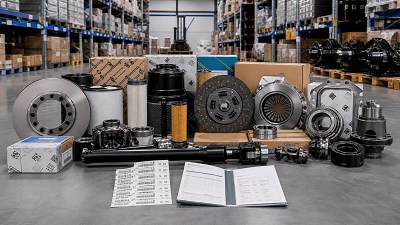
A capable truck parts supplier should support quality, continuity, speed, and long-term purchasing efficiency.
This matters even more when orders involve cross-border shipments and multiple truck models.
The better approach is to evaluate the total business value behind each supplier offer.
Why Price Alone Is a Weak Purchasing Signal
A low unit price does not guarantee a lower total procurement cost.
If a truck parts supplier ships inconsistent parts, replacement cycles become shorter.
That increases labor hours, warranty claims, and unplanned downtime across the fleet.
Delivery delays create another cost layer that many buyers underestimate at the quoting stage.
When critical components arrive late, trucks stay idle and customer schedules start slipping.
A truck parts supplier should therefore be reviewed through a wider risk and value lens.
From recent market shifts, stable supply has become almost as important as quoted price.
Start With Product Quality and Technical Fit
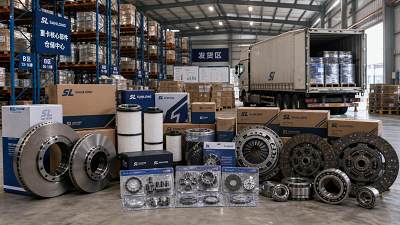
The first test for any truck parts supplier is whether the parts truly fit the application.
Part compatibility should be confirmed by model, axle type, load condition, and operating environment.
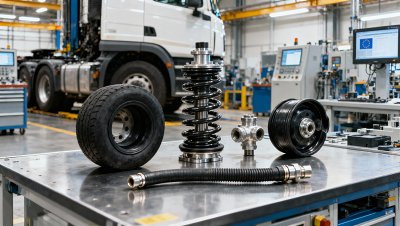
This is especially important for braking, suspension, steering, engine, and transmission components.
A reliable truck parts supplier should provide clear technical drawings, materials data, and standards references.
Ask for test reports, traceability records, and evidence of batch consistency.
If the supplier avoids detailed technical discussion, that is usually a warning sign.
In actual purchasing work, poor fit causes more disputes than obvious visual defects.
What to verify during quality review
- Material grade and manufacturing standard
- Dimensional tolerance and interchangeability
- Surface treatment, wear resistance, and fatigue life
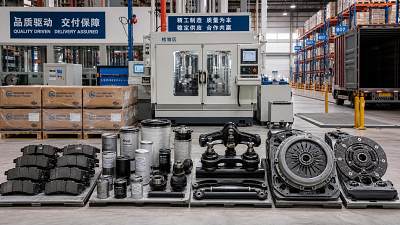
- Inspection process and outgoing quality control
- Field performance under similar road and load conditions
Check Supply Capacity, Not Just Catalog Size
A large catalog does not automatically mean strong supply capability.
Many companies list thousands of items but hold limited stock or rely on unstable subcontracting.
A dependable truck parts supplier should show how orders move from confirmation to shipment.
That includes production planning, inventory depth, lead times, and backup sourcing arrangements.
More importantly, ask how the supplier performs during demand spikes or raw material shortages.
The stronger signal is not a promise, but documented delivery performance over time.
Useful capacity questions
- What is the average lead time for standard and urgent orders?
- Which parts are stocked regularly, and which are built to order?
- How often do shipment dates change after purchase order confirmation?
- Can the truck parts supplier support volume growth over the next twelve months?
Assess Service Responsiveness and Communication Quality
Service quality often decides whether a sourcing relationship stays efficient or becomes costly.
A strong truck parts supplier responds clearly, quickly, and with usable information.
That includes quotation accuracy, document completeness, and issue handling after delivery.
When communication is slow, even simple purchases begin to consume too much internal time.
A practical review should test response speed before a large order is placed.
Send technical questions, revision requests, and delivery scenarios to see how the supplier reacts.
This reveals whether the truck parts supplier is organized or simply eager to close a sale.
Review Commercial Terms Through Total Cost
The quote should be read beyond the visible product price.
A truck parts supplier may offer lower pricing but stricter payment terms or weaker warranty support.
These details directly affect cash flow and after-sales risk.
Evaluate packaging, shipping conditions, defect handling, replacement policy, and claim response time.
The most useful comparison is total landed cost plus operational reliability.
That gives a more realistic view of what each truck parts supplier actually costs.
Look for Reputation, Traceability, and Market Proof
A credible truck parts supplier should have proof beyond its own sales materials.
Check export history, customer references, complaint patterns, and certification records.
Industry platforms can help compare supplier visibility and market activity more efficiently.
This is where a specialized B2B ecosystem becomes useful during supplier screening.
The Global Heavy Truck Industry Platform helps buyers review products, compare suppliers, and identify reliable partners.
Because the platform focuses on the heavy truck supply chain, the search process becomes more targeted.
That saves time when sourcing truck chassis parts, complete truck components, trailers, and spare parts.
Build a Supplier Scorecard Before Final Selection
A scorecard helps remove guesswork from the final decision.
Instead of debating impressions, compare each truck parts supplier against the same weighted criteria.
This method works especially well when several departments influence the purchase.
Quality, delivery, service, and commercial terms should all be measured consistently.
- Product conformity and test evidence
- Lead time stability and supply continuity
- Communication efficiency and problem resolution
- Price competitiveness within total cost
- Track record in similar truck or transport projects
A structured scorecard also makes supplier review easier during future reorders and annual assessments.
Final Decision: Choose the Supplier That Reduces Operational Risk
The best truck parts supplier is not always the one with the cheapest quote.
It is the one that helps maintain uptime, protects purchasing efficiency, and supports business continuity.
When supplier evaluation covers quality, capacity, service, reputation, and total cost, decisions become stronger.
That also creates better long-term leverage than chasing the lowest initial number.
For buyers navigating a global sourcing market, specialized platforms provide a practical advantage.
Use the Global Heavy Truck Industry Platform to compare each truck parts supplier with more confidence and sharper commercial judgment.
Trending News
- When does a light commercial vehicle for urban delivery save fleet costs?
- How to choose an off road truck for steep and unstable job sites
- How to match crane truck lifting capacity to your jobsite loads
- What drives logging truck cost beyond the base purchase price?
- How to match lowbed trailer deck height to your hauling equipment
Tag
Recommended News
 Truck Parts IndustryWhat causes a truck injector to fail prematurely?Truck injector failure can stem from fuel contamination, water, wiring faults, heat, or incorrect installation. Discover practical diagnostic steps to prevent repeat repairs.
 Truck Parts IndustryEU REACH Rule Takes Effect for Truck Rubber PartsEU REACH Rule takes effect for truck rubber parts exported to the EU. Learn how SCIP reporting, SVHC declarations, and supply chain compliance now impact truck manufacturers and suppliers.
 Truck Parts IndustryHow to Evaluate Commercial Vehicle Parts With Eco-Friendly Materials for Durability and ComplianceCommercial vehicle parts with eco-friendly materials require more than green claims. Learn how to assess durability, compliance, and supplier reliability for smarter sourcing.
 Truck Parts IndustryHow to Evaluate a Truck Parts Supplier Beyond Unit PriceTruck parts supplier selection should go beyond unit price. Learn how to assess quality, traceability, compliance, delivery, and support to reduce fleet risk and total cost.
 Truck Parts IndustryVietnam to Require QR Traceability Labels on Imported Heavy-Truck PartsVietnam to Require QR Traceability Labels on Imported Heavy-Truck Parts from Aug 1, 2026. Learn scope, VNQR-2025 rules, VITRAC links, and how to avoid port refusal and fines.
 Truck Parts IndustryHow to Evaluate a Truck Spare Parts Supplier for Long-Term Cost ControlTruck spare parts supplier selection affects far more than price. Learn how to compare quality, delivery, traceability, and hidden costs to protect fleet uptime and control long-term expenses.
 Truck Parts IndustryFuel Injection Pump Failure Signs and What They Mean for Engine PerformanceFuel injection pump failure signs can quickly reduce truck power, raise fuel use, and trigger hard starts. Learn what each symptom means and when to act before costly downtime.
 Truck Parts IndustryExcavator Attachment Selection for Demolition and Site PrepExcavator attachment selection for demolition and site prep: compare breakers, grapples, crushers, and buckets to boost productivity, safety, and ROI.
 Truck Parts IndustryTruck Engine Overhaul or Replacement: Which Costs Less Long Term?Truck engine overhaul or replacement? Compare long-term cost, downtime, fuel efficiency, and reliability to choose the smarter option for your fleet.
 Truck Parts IndustryHow to Choose Excavator Parts That Last LongerExcavator parts buying guide: learn how to choose excavator parts that last longer by comparing fit, material quality, operating conditions, and supplier reliability.
 Truck Parts IndustryAre Eco-Friendly Commercial Vehicle Parts Durable Enough for Daily Use?Commercial vehicle parts with eco-friendly materials can be durable for daily use—if tested right. Explore where they perform best, key risks, and smarter sourcing insights.
 Truck Parts IndustryTruck Parts OEM vs Aftermarket: Cost, Fit, and Warranty RisksTruck parts OEM vs aftermarket: compare true cost, fit accuracy, and warranty risks to reduce downtime, avoid disputes, and make smarter fleet sourcing decisions.
 Truck Parts IndustryTruck Spare Parts Buying Guide: How to Reduce Downtime and Fitment RiskTruck spare parts buying guide for fleet maintenance teams: learn how to reduce downtime, avoid fitment risk, verify suppliers, and make smarter sourcing decisions.
 Truck Parts IndustryHow to Evaluate a Truck Parts Supplier Beyond PriceTruck parts supplier selection should go beyond price. Learn how to compare quality, delivery, service, and total cost to reduce risk and keep fleets running efficiently.
 Truck Parts IndustryHeavy Truck Parts for Construction: Signs of a Reliable ManufacturerHeavy truck parts manufacturer for construction: learn how to identify reliable suppliers through quality control, traceability, testing, and support to reduce downtime and improve fleet safety.
 Truck Parts IndustryHow to Compare Truck Spare Parts Suppliers on Quality and Lead TimeTruck spare parts supplier comparison starts with quality and lead time. Learn how to assess consistency, delivery reliability, and sourcing fit for smarter purchases.
 Truck Parts IndustryEU REACH Sets PAH Limit for Heavy Truck Rubber PartsEU REACH sets a new PAH limit for heavy truck rubber parts, affecting brake hoses, bushings, and export compliance. Learn what suppliers must prepare now to avoid testing delays and customs risks.
 Truck Parts IndustryWhat to Check in a Truck Chassis Supplier Before Fleet ExpansionTruck chassis supplier selection can make or break fleet expansion. Learn what to check on quality, production, delivery, support, and total cost before requesting a quote.
 Truck Parts IndustryCold Storage Truck Parts That Matter Most for Temperature ControlCommercial vehicle parts for cold storage determine real temperature stability. Discover the key truck components that reduce spoilage, improve efficiency, and protect sensitive cargo.
 Truck Parts IndustryHow to Evaluate a Heavy Truck Parts Manufacturer for Long-Term Supply StabilityHeavy truck parts manufacturer selection starts with supply stability. Learn how to assess quality, capacity, lead times, and risk signals for smarter long-term sourcing.
 Truck Parts IndustryEU EPR Rules Extend to Commercial TrailersEU EPR rules now extend to commercial trailers, bringing new registration, reporting, and fee duties from 2027. See how exporters can prepare early to avoid customs delays.
 Truck Parts IndustryTruck Suspension Problems: Signs, Causes, and Fix OptionsTruck suspension issues can lead to tire wear, poor handling, and costly downtime. Learn the key signs, root causes, and best fix options for different truck applications.
 Truck Parts IndustryHow to Choose a Heavy Truck Parts Manufacturer for Construction FleetsHeavy truck parts manufacturer for construction selection starts with uptime, quality, and delivery. Learn how to compare suppliers, reduce fleet risk, and choose with confidence.
 Truck Parts IndustryUS Sets AEBS Rule for Imported Commercial TrailersUS sets AEBS rule for imported commercial trailers starting Oct. 1, 2026. Learn FMVSS No. 127A, SAE J2929, and key compliance steps to avoid CBP entry denial.
 Truck Parts IndustryHow to Choose Commercial Vehicle Parts That Reduce DowntimeCommercial vehicle parts selection can make or break fleet uptime. Learn how to choose parts that improve fit, quality, supply reliability, and lower total downtime cost.