Wing Van vs Box Truck: Which Fits Urban Delivery Better?
Wing Van vs Box Truck: Which Fits Urban Delivery Better?
For urban fleet planners and logistics decision-makers, choosing between a wing van and a box truck can directly affect delivery speed, loading efficiency, and operating costs.
In dense city environments, flexibility and turnaround time matter more than ever. That makes the wing van versus box truck debate a practical business issue, not just a vehicle preference.
This guide compares both options across loading, route efficiency, labor, cargo protection, and long-term cost. The goal is simple: help you choose the better urban delivery vehicle for your operation.
Why This Comparison Matters in Urban Delivery
City logistics has changed. Delivery windows are tighter, road restrictions are stricter, and warehouse space near downtown areas is limited.
At the same time, retailers, distributors, and service fleets need faster unloading with fewer labor bottlenecks. That is where the wing van often enters the conversation.
A box truck remains a common urban delivery choice because it is simple, widely available, and familiar to most drivers and maintenance teams.
Still, a wing van can create a real advantage when side loading, pallet handling, and rapid dock turnover are part of daily operations.
What Is a Wing Van and How Is It Different?
A wing van is a cargo vehicle with side panels that lift upward, creating wide access on one or both sides. It is designed for faster loading and unloading.
A box truck uses a fixed enclosed body with rear access, and sometimes a side door. Its structure is straightforward and well suited to many standard delivery tasks.
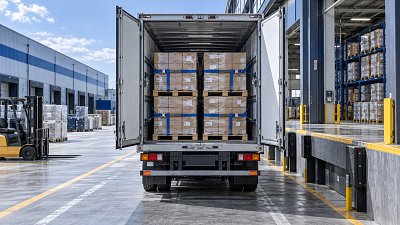
The main difference is cargo access. A wing van allows forklifts to reach freight from the side, while a box truck usually relies on rear entry.
That difference sounds small on paper. In actual urban operations, it can change stop times, loading patterns, and labor requirements.
Core Design Comparison
Where a Wing Van Performs Better
The wing van stands out in operations with repeated loading cycles, palletized goods, and limited dock time. These conditions are common in urban wholesale and retail distribution.
Because the cargo area opens wide, a wing van can reduce handling time at each stop. That often improves route productivity across a full shift.
This advantage becomes clearer when goods are heavy, awkward, or arranged in multiple pallets. Rear-only unloading slows down quickly in those cases.
Best Urban Use Cases for a Wing Van
- Retail replenishment with frequent pallet drops
- Beverage, packaging, and FMCG distribution
- Municipal supply routes with tight unloading windows
- Industrial spare parts delivery to multiple city sites
- Operations using forklifts at both origin and destination
In these settings, a wing van can save minutes at every stop. Across dozens of stops per week, that turns into meaningful labor and utilization gains.
Where a Box Truck Still Makes More Sense
A box truck remains the better fit when routes are varied and cargo types change often. It also works well when loading speed is less critical than vehicle simplicity.
For smaller urban fleets, the box truck can be easier to source, maintain, insure, and deploy across different tasks without much retraining.
It is also more practical where unloading happens by hand, not forklift. In that situation, the side-opening advantage of a wing van matters less.
Best Urban Use Cases for a Box Truck
- Parcel and mixed cargo delivery
- Service fleets carrying tools and equipment
- Routes with low stop density
- Manual unloading at customer locations
- Fleets focused on lower initial purchase cost
If your city delivery model values simplicity and broad versatility, a box truck can still outperform a wing van on total practicality.
Key Decision Factors for Urban Fleet Selection
The right answer depends less on labels and more on route design, cargo flow, and site conditions. A wing van is not automatically better for every city operation.
1. Loading and Unloading Efficiency
If turnaround time drives your margins, the wing van usually has the edge. Side access reduces repositioning and makes forklift entry much faster.
2. Street and Site Constraints
Not every urban site has enough side clearance for a wing van. Narrow alleys, roadside parking, and crowded loading zones can limit its benefit.
In those areas, a box truck with rear unloading may be easier to operate consistently. This is especially true for last-mile routes in older city districts.
3. Cargo Type and Packaging
A wing van works best with palletized, standardized, and forklift-friendly freight. A box truck handles irregular loads more comfortably in many cases.
4. Acquisition and Maintenance Costs
A wing van often costs more upfront because of its specialized body mechanism. It may also need more careful maintenance for hinges, hydraulic systems, and sealing parts.
A box truck is usually less complex. That can lower downtime risk and simplify repairs across a large mixed fleet.
5. Driver and Labor Productivity
When labor costs are rising, a wing van may justify its price through faster cargo handling. Fewer handling steps can also reduce fatigue and damage risk.
Cost Thinking Beyond the Purchase Price
Urban delivery vehicle selection should always consider total cost of operation. Purchase price alone can be misleading.
A wing van may cost more to buy, yet lower stop time, labor hours, and route overruns. That can improve asset utilization in high-frequency delivery networks.
A box truck may appear less advanced, but it often wins where route complexity is moderate and volume does not justify faster side loading.
Questions to Ask Before Buying
- How many stops per day require rapid pallet unloading?
- Do delivery sites have enough side-opening clearance for a wing van?
- Is cargo mostly palletized or mixed and hand-carried?
- How expensive are delivery delays and overtime in your network?
- Can your maintenance team support a wing van body system?
How Global Sourcing Can Improve the Decision
Vehicle selection is easier when buyers can compare multiple suppliers, configurations, and body options in one place. That matters for both wing van and box truck procurement.
The Global Heavy Truck Industry Platform supports this process by connecting buyers with manufacturers and distributors across the commercial vehicle supply chain.
This helps teams evaluate body design, truck chassis compatibility, spare parts support, and supplier reliability before making a purchasing decision.
For companies expanding city distribution fleets, access to supplier comparisons and market insights can reduce sourcing risk and improve negotiation outcomes.
Final Verdict: Wing Van or Box Truck?
If your urban delivery model depends on speed, pallet handling, and short unloading windows, the wing van is often the better choice.
If your operation needs lower complexity, broader route flexibility, and easier maintenance, the box truck may deliver better overall value.
The best decision comes from matching vehicle design to real route conditions. In practice, cargo access, stop frequency, and labor efficiency should guide the choice.
Before purchasing your next urban delivery vehicle, compare supplier options, validate loading scenarios, and model total operating cost. That is where a wing van decision becomes a smart business move.
Trending News
- How to choose an off road truck for steep and unstable job sites
- How to match crane truck lifting capacity to your jobsite loads
- What drives logging truck cost beyond the base purchase price?
- How to match lowbed trailer deck height to your hauling equipment
- What documents are needed to export a low bed trailer to Southeast Asia?
Tag
Recommended News
 Buying GuideHow to choose an off road truck for steep and unstable job sitesChoose the right off road truck for steep, unstable job sites. Compare traction, braking, stability, clearance, payload, and route-test essentials.
 Buying GuideHow to match crane truck lifting capacity to your jobsite loadsCrane truck capacity planning made clear: calculate gross load, radius, rigging, outriggers, and ground conditions to select safer, job-ready lifting equipment.
 Buying GuideHow to match lowbed trailer deck height to your hauling equipmentLowbed trailer deck height guide: match equipment clearance, ramp geometry, axle loads, tractor fit, and route limits for safer, more efficient hauling.
 Buying GuideWhat to verify before choosing a delivery truck supplier for school transportationDelivery truck supplier for school transportation: verify route fit, payload, safety, compliance, service support, and total cost before choosing a reliable partner.
 Buying GuideWhat an excavator manufacturer catalog should show before you compare modelsExcavator manufacturer catalog guide: verify supplier identity, configurations, hydraulics, compliance, parts support, and delivery readiness before comparing models.
 Buying GuideWhat to check before appointing a bulldozer distributorBulldozer distributor selection guide: evaluate service, parts availability, warranty, pricing, compliance, and lifecycle value to reduce downtime and protect fleet investment.
 Buying GuideWhat to verify before choosing a truck cement mixer supplierTruck cement mixer supplier checklist: verify chassis fit, drum quality, hydraulics, compliance, spare parts, and after-sales support before you buy.
 Buying GuideHow to verify a truck spare parts supplier before placing a bulk orderTruck spare parts supplier verification made practical: learn how to check part specifications, factory control, test records, samples, pricing, and delivery capability before placing a bulk order.
 Buying GuideWhat size truck container is right for a typical freight load?Truck container sizing made simple: compare payload, volume, pallet layouts, route access, and loading needs to choose the most efficient freight solution.
 Buying GuideWhat drives semi trailer price differences between similar models?Semi trailer price differences come down to frame materials, axles, suspension, coating, and configuration. Compare specifications line by line to choose lasting value.
 Buying GuideHow to compare excavator manufacturer price lists before requesting quotesCompare an excavator manufacturer price list with confidence. Learn to normalize configurations, calculate landed costs, assess options and service, and create stronger RFQs.
 Buying GuideHow to choose a mixer truck drum capacity for your concrete pourMixer truck capacity guide: match drum size to pour rate, legal payload, site access, and delivery cycles for efficient, reliable concrete placement.
 Buying GuideHow to size a bulldozer for construction site grading workBulldozer for construction sizing guide: match weight, blade, traction, grade control, and transport needs to improve grading productivity and costs.
 Buying GuideHow to assess a truck cement manufacturer’s build quality before orderingTruck cement manufacturer build quality: assess tank steel, welding, chassis integration, pneumatic systems, factory QC, and inspection evidence before ordering.
 Buying GuideWhen does a truck trailer OEM make sense for private-label fleets?Truck trailer OEM programs help private-label fleets cut lifecycle costs, standardize operations, and improve uptime. Learn when customization delivers real commercial value.
 Buying GuideWhat to verify before choosing a water truck OEM for your fleetWater truck OEM selection guide: verify chassis compatibility, tank quality, pump performance, compliance, and service support to build a safer, more reliable fleet.
 Buying GuideHow to size a cab chassis truck for a fire department apparatusCab chassis truck for fire department sizing guide: balance GVWR, axle loads, wheelbase, water tank placement, and mission needs for safer apparatus design.
 Buying GuideWhat to verify before choosing a truck chassis supplierChoose the right truck chassis supplier with a practical checklist for application fit, axle ratings, body integration, quality control, delivery reliability, and after-sales support.
 Buying GuideHow to choose a logging truck for steep and rough forest roadsLogging truck selection for steep, rough forest roads: compare traction, braking, gearing, chassis strength, tires, and supplier support for safer, more reliable hauling.
 Buying GuideHow to choose a flatbed trailer deck length for oversized loadsFlatbed trailer deck length guide for oversized loads: balance cargo support, axle weight, securement space, overhang, and route access for safer transport.
 Buying GuideHow to assess a truck chassis supplier for trailer manufacturingTruck chassis supplier for trailer manufacturing: learn how to assess technical fit, quality control, engineering support, and delivery reliability for smarter sourcing.
 Buying GuideIs the SHACMAN H3000 6×4 Cement Mixer suitable for large projects?SHACMAN H3000 6×4 Cement Mixer: assess payload, cycle time, traction, and service support to see if it can keep large concrete projects moving efficiently.
 Buying GuideHow to evaluate heavy duty trucks for sale in Russia before buyingHeavy duty trucks for sale in Russia: learn how to compare specifications, winter readiness, service support, supplier reliability, and total ownership costs before buying.
 Buying GuideWhat to verify before choosing a logging truck producerChoose a logging truck producer with confidence: verify chassis strength, load security, compliance, service support, and delivery control for demanding forestry routes.
 Buying GuideHow to choose a truck excavator for confined construction sitesTruck excavator selection for confined sites: explore access, reach, stability, attachments, and safety factors to choose a productive, space-efficient solution.