Excavator Attachment Selection for Demolition and Site Prep
Excavator Attachment Selection for Demolition and Site Prep
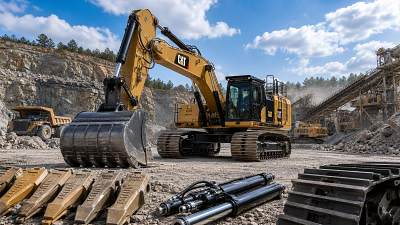
Choosing the right excavator attachment is critical for efficient demolition and site preparation.
The decision affects cycle time, fuel use, machine wear, and site safety.
In practice, one excavator attachment can improve output, while the wrong one can slow the whole job.
For demolition and site prep, attachment selection is rarely about one tool alone.
It is about matching material type, machine class, hydraulic capacity, and production targets.
That is especially important when procurement teams compare suppliers across global equipment markets.
A structured review makes excavator attachment selection more consistent, measurable, and easier to justify.
Start With the Job Profile
Before comparing models, define the actual work package.
Demolition may involve reinforced concrete, steel frames, masonry walls, or mixed debris.
Site prep may focus on clearing, grading, trench shaping, stump removal, or loading broken material.
Each task pushes excavator attachment requirements in a different direction.
- Primary demolition needs impact energy and structural control.
- Secondary demolition needs separation, sorting, and reduction.
- Site clearing needs gripping, lifting, and fast handling.
- Final grading needs precision, finish quality, and visibility.
This first filter prevents a common mistake.
Teams often choose the most powerful excavator attachment, when the better answer is the most suitable one.
Core Excavator Attachment Options
Most demolition and site prep programs rely on a small group of proven attachment types.
Hydraulic Breakers
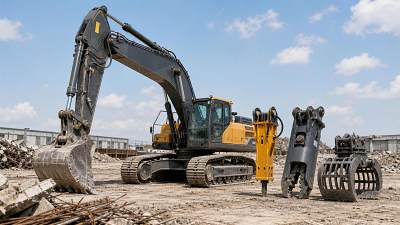
A breaker is the standard excavator attachment for concrete slab removal and hard surface breaking.
It works well for foundations, road sections, and oversized rock during rough site preparation.
Selection should focus on impact frequency, operating pressure, carrier weight, and noise control.
Pulverizers and Crushers
These tools are effective when reinforced concrete must be reduced after initial breakage.
A pulverizer-type excavator attachment can separate concrete from rebar and improve downstream handling.
That usually lowers hauling volume and speeds recycling workflows.
Grapples
A grapple is a flexible excavator attachment for sorting, loading, timber handling, and debris movement.
It is often the most useful tool once structures are down and materials must be separated quickly.
Buckets
Buckets remain essential in site prep, even when specialized tools are available.
General-purpose, ditch-cleaning, rock, and grading buckets all support different finish requirements.
For many contractors, the right bucket is still the highest-utilization excavator attachment on site.
Match the Attachment to the Carrier
Compatibility is where many evaluations become too optimistic.
An excavator attachment may fit physically, but still perform poorly on the wrong machine.
Review the carrier in five areas before shortlisting any attachment.
- Operating weight and stability under full reach.
- Hydraulic flow, pressure, and return line requirements.
- Pin size, linkage geometry, and coupler compatibility.
- Stick and boom strength under dynamic load.
- Auxiliary circuit controls and available guard protection.
This matters even more for high-vibration tools such as breakers.
A mismatched excavator attachment can increase hose failures, bushing wear, and structural fatigue.
Evaluate Productivity, Not Just Tool Price
Initial purchase price is easy to compare, but it rarely tells the full story.
A lower-cost excavator attachment may create longer cycle times or higher maintenance frequency.
In demolition and site prep, productivity should be measured across the whole workflow.
- Volume processed per hour
- Fuel consumed per ton moved or broken
- Attachment changeover time
- Wear part replacement interval
- Operator visibility and handling precision
- Downtime caused by hydraulic or structural issues
From a procurement standpoint, this turns selection into a performance calculation.
The better excavator attachment is usually the one that reduces total cost per completed task.
Safety and Compliance Should Shape the Decision
Demolition equipment is exposed to impact, falling debris, dust, and unstable material shifts.
That means safety features are not secondary extras.
They directly affect whether an excavator attachment is suitable for the job environment.
Key Checks
- Dust suppression options for urban or enclosed demolition sites
- Noise limits for municipal or night operations
- Protective guards for hoses, cylinders, and the operator area
- Locking performance for quick coupler systems
- Traceable service records and manufacturer operating guidance
More buyers now ask for compliance evidence earlier in the sourcing process.
That trend is visible across international heavy equipment trade and platform-based supplier comparison.
Questions to Ask Suppliers Before Purchase
A strong supplier can improve selection quality long before delivery.
When reviewing an excavator attachment, use a question set that tests technical fit and commercial reliability.
- Which carrier classes has this attachment been proven on?
- What hydraulic range is recommended for full performance?
- Which wear parts fail first in demolition or site prep use?
- What is the average service interval under heavy-duty conditions?
- Are spare parts stocked regionally or shipped internationally?
- Can the supplier provide field references or test data?
- What warranty terms apply to hydraulic and structural components?
These questions help separate catalog claims from usable operating value.
They also support better supplier comparison on global B2B equipment platforms.
A Practical Selection Framework
A simple scoring model can keep excavator attachment selection objective.
This kind of framework works well when comparing multiple international suppliers.
It also creates a clear record for internal approval and future equipment planning.
Final Decision Guidance
The best excavator attachment is the one that fits the job, the carrier, and the support network.
For demolition, prioritize controlled force, durability, and debris handling efficiency.
For site prep, focus on versatility, precision, and fast transitions between tasks.
Across both cases, supplier reliability matters almost as much as tool specification.
A disciplined excavator attachment review reduces risk and improves equipment utilization over time.
When sourcing through a global heavy equipment platform, use that advantage to compare technical data, support terms, and supplier credibility before making the final choice.
Trending News
- How to assess a crane truck distributor's spare parts support
- Volvo Group Forms Volvo Mining to Integrate Equipment and Autonomous Solutions
- How to verify spare parts availability with a crane truck supplier
- How to verify a truck trailer OEM's claimed payload capacity
- How does operating weight affect the price of a new excavator?
Tag
Recommended News
 Truck Parts IndustryWhat causes a truck injector to fail prematurely?Truck injector failure can stem from fuel contamination, water, wiring faults, heat, or incorrect installation. Discover practical diagnostic steps to prevent repeat repairs.
 Truck Parts IndustryEU REACH Rule Takes Effect for Truck Rubber PartsEU REACH Rule takes effect for truck rubber parts exported to the EU. Learn how SCIP reporting, SVHC declarations, and supply chain compliance now impact truck manufacturers and suppliers.
 Truck Parts IndustryHow to Evaluate Commercial Vehicle Parts With Eco-Friendly Materials for Durability and ComplianceCommercial vehicle parts with eco-friendly materials require more than green claims. Learn how to assess durability, compliance, and supplier reliability for smarter sourcing.
 Truck Parts IndustryHow to Evaluate a Truck Parts Supplier Beyond Unit PriceTruck parts supplier selection should go beyond unit price. Learn how to assess quality, traceability, compliance, delivery, and support to reduce fleet risk and total cost.
 Truck Parts IndustryVietnam to Require QR Traceability Labels on Imported Heavy-Truck PartsVietnam to Require QR Traceability Labels on Imported Heavy-Truck Parts from Aug 1, 2026. Learn scope, VNQR-2025 rules, VITRAC links, and how to avoid port refusal and fines.
 Truck Parts IndustryHow to Evaluate a Truck Spare Parts Supplier for Long-Term Cost ControlTruck spare parts supplier selection affects far more than price. Learn how to compare quality, delivery, traceability, and hidden costs to protect fleet uptime and control long-term expenses.
 Truck Parts IndustryFuel Injection Pump Failure Signs and What They Mean for Engine PerformanceFuel injection pump failure signs can quickly reduce truck power, raise fuel use, and trigger hard starts. Learn what each symptom means and when to act before costly downtime.
 Truck Parts IndustryExcavator Attachment Selection for Demolition and Site PrepExcavator attachment selection for demolition and site prep: compare breakers, grapples, crushers, and buckets to boost productivity, safety, and ROI.
 Truck Parts IndustryTruck Engine Overhaul or Replacement: Which Costs Less Long Term?Truck engine overhaul or replacement? Compare long-term cost, downtime, fuel efficiency, and reliability to choose the smarter option for your fleet.
 Truck Parts IndustryHow to Choose Excavator Parts That Last LongerExcavator parts buying guide: learn how to choose excavator parts that last longer by comparing fit, material quality, operating conditions, and supplier reliability.
 Truck Parts IndustryAre Eco-Friendly Commercial Vehicle Parts Durable Enough for Daily Use?Commercial vehicle parts with eco-friendly materials can be durable for daily use—if tested right. Explore where they perform best, key risks, and smarter sourcing insights.
 Truck Parts IndustryTruck Parts OEM vs Aftermarket: Cost, Fit, and Warranty RisksTruck parts OEM vs aftermarket: compare true cost, fit accuracy, and warranty risks to reduce downtime, avoid disputes, and make smarter fleet sourcing decisions.
 Truck Parts IndustryTruck Spare Parts Buying Guide: How to Reduce Downtime and Fitment RiskTruck spare parts buying guide for fleet maintenance teams: learn how to reduce downtime, avoid fitment risk, verify suppliers, and make smarter sourcing decisions.
 Truck Parts IndustryHow to Evaluate a Truck Parts Supplier Beyond PriceTruck parts supplier selection should go beyond price. Learn how to compare quality, delivery, service, and total cost to reduce risk and keep fleets running efficiently.
 Truck Parts IndustryHeavy Truck Parts for Construction: Signs of a Reliable ManufacturerHeavy truck parts manufacturer for construction: learn how to identify reliable suppliers through quality control, traceability, testing, and support to reduce downtime and improve fleet safety.
 Truck Parts IndustryHow to Compare Truck Spare Parts Suppliers on Quality and Lead TimeTruck spare parts supplier comparison starts with quality and lead time. Learn how to assess consistency, delivery reliability, and sourcing fit for smarter purchases.
 Truck Parts IndustryEU REACH Sets PAH Limit for Heavy Truck Rubber PartsEU REACH sets a new PAH limit for heavy truck rubber parts, affecting brake hoses, bushings, and export compliance. Learn what suppliers must prepare now to avoid testing delays and customs risks.
 Truck Parts IndustryWhat to Check in a Truck Chassis Supplier Before Fleet ExpansionTruck chassis supplier selection can make or break fleet expansion. Learn what to check on quality, production, delivery, support, and total cost before requesting a quote.
 Truck Parts IndustryCold Storage Truck Parts That Matter Most for Temperature ControlCommercial vehicle parts for cold storage determine real temperature stability. Discover the key truck components that reduce spoilage, improve efficiency, and protect sensitive cargo.
 Truck Parts IndustryHow to Evaluate a Heavy Truck Parts Manufacturer for Long-Term Supply StabilityHeavy truck parts manufacturer selection starts with supply stability. Learn how to assess quality, capacity, lead times, and risk signals for smarter long-term sourcing.
 Truck Parts IndustryEU EPR Rules Extend to Commercial TrailersEU EPR rules now extend to commercial trailers, bringing new registration, reporting, and fee duties from 2027. See how exporters can prepare early to avoid customs delays.
 Truck Parts IndustryTruck Suspension Problems: Signs, Causes, and Fix OptionsTruck suspension issues can lead to tire wear, poor handling, and costly downtime. Learn the key signs, root causes, and best fix options for different truck applications.
 Truck Parts IndustryHow to Choose a Heavy Truck Parts Manufacturer for Construction FleetsHeavy truck parts manufacturer for construction selection starts with uptime, quality, and delivery. Learn how to compare suppliers, reduce fleet risk, and choose with confidence.
 Truck Parts IndustryUS Sets AEBS Rule for Imported Commercial TrailersUS sets AEBS rule for imported commercial trailers starting Oct. 1, 2026. Learn FMVSS No. 127A, SAE J2929, and key compliance steps to avoid CBP entry denial.
 Truck Parts IndustryHow to Choose Commercial Vehicle Parts That Reduce DowntimeCommercial vehicle parts selection can make or break fleet uptime. Learn how to choose parts that improve fit, quality, supply reliability, and lower total downtime cost.