Fuel Tank Truck Capacity vs Route Demand: How to Choose
Fuel Tank Truck Capacity vs Route Demand: How to Choose
Choosing the right fuel tank truck capacity is not just about volume. It is about route demand, delivery rhythm, payload efficiency, and total operating cost.
A fuel tank truck that is too small creates extra trips. One that is too large may increase capital cost, reduce flexibility, and carry unused capacity for long periods.
In practical fleet planning, the best choice comes from matching the truck to real route conditions. That includes distance, unloading pattern, road access, legal limits, and safety requirements.
For buyers comparing suppliers on a global B2B platform, this matters even more. Specs may look similar, but the right fuel tank truck depends on how the vehicle will actually work every day.
Start with Route Demand, Not Tank Size
A common buying mistake is starting from advertised capacity. A better approach starts with route demand and then works backward to the right fuel tank truck specification.
Route demand means more than daily fuel volume. It also includes how fast fuel must arrive, how many stops are needed, and how much reserve is required.
In real operations, two routes with the same volume can need different truck sizes. The difference often comes from timing pressure, road quality, and site unloading constraints.
Key demand questions to answer
- How many liters must the fuel tank truck deliver per day or per shift?
- How many delivery points are on one route?
- What is the average turnaround time, including loading and unloading?
- Is supply steady, or does demand spike during peak construction or mining activity?
- How much emergency reserve is needed if access is delayed?
These answers give a more reliable basis than tank volume alone. They also help separate nominal capacity from useful operational capacity.
Understand the Main Capacity Trade-Offs
A larger fuel tank truck can reduce trip frequency. That sounds attractive, but it also changes axle load, maneuverability, procurement budget, and road compliance.
A smaller unit is easier in tight urban or site conditions. It may also load and unload faster, but the fleet may need more runs to meet the same demand.
When larger capacity makes sense
- Long-distance delivery with limited refilling points
- High-volume industrial or infrastructure sites
- Stable routes with good road access
- Operations where fewer trips reduce labor and fuel cost
When smaller capacity is the better choice
- Narrow roads, bridges, or restricted job sites
- Multi-stop urban distribution
- Uncertain demand with frequent schedule changes
- Projects where lower upfront cost matters more than single-trip volume
This is why fuel tank truck selection is always a balance. Capacity should support route demand without creating waste elsewhere in the operation.
Match Capacity to Delivery Frequency
Delivery frequency often reveals the right answer faster than raw volume. A route needing fast repeat service may perform better with medium-capacity trucks than one oversized tanker.
For example, a construction corridor may consume large fuel volumes. Yet traffic windows, unloading bays, and temporary road access may favor shorter, more frequent cycles.
In that case, a medium fuel tank truck improves scheduling flexibility. It can also reduce downtime if one vehicle is delayed or under maintenance.
A simple planning formula
Use this structure during evaluation:
- Estimate daily route fuel demand.
- Calculate realistic trips per vehicle per day.
- Apply a buffer for delays, weather, and queue time.
- Compare the result against legal payload and site access limits.
This method keeps the fuel tank truck decision tied to actual service performance instead of brochure numbers.
Check Payload, Chassis, and Road Limits
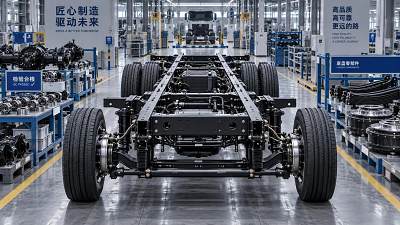
Tank volume is only one part of the vehicle. The chassis, axle setup, and legal weight limit decide whether a given fuel tank truck can use its nominal capacity in practice.
This becomes critical on regional roads, mining roads, and municipal routes. Local regulations can cap gross vehicle weight or restrict larger tankers on specific corridors.
A truck with high stated capacity may not run fully loaded on your route. If that happens, part of the investment becomes stranded capacity.
What to verify with suppliers
- Gross vehicle weight and axle distribution
- Tank material and tare weight
- Compartment layout for mixed delivery needs
- Pump flow rate and unloading system
- Turning radius and suitability for site access
On a global sourcing platform, comparing these details side by side helps buyers avoid misleading capacity comparisons.
Use Route Type to Narrow the Right Fuel Tank Truck
Different route types usually point to different fuel tank truck ranges. The same capacity logic rarely fits urban logistics, mining support, and remote project delivery equally well.
This route-based view usually leads to better procurement outcomes than choosing solely by the largest available tank.
Consider Operating Cost Over the Full Project Cycle
The purchase price matters, but total cost matters more. A fuel tank truck should be evaluated across utilization, maintenance, labor, and route efficiency over the full operating cycle.
A larger truck may lower the cost per delivered liter on stable routes. On changing project sites, that same truck may sit idle or run partially loaded too often.
That is why utilization rate is a better decision metric than headline capacity. A well-matched fuel tank truck produces more value than an oversized unit with weak deployment flexibility.
Cost items worth comparing
- Acquisition cost and financing terms
- Fuel consumption by route condition
- Driver hours and trip frequency
- Maintenance access and spare parts support
- Downtime risk during peak project periods
Avoid Three Common Selection Errors
First, do not size a fuel tank truck only for maximum demand days. That often creates underused capacity for the rest of the year.
Second, do not ignore unloading speed. A truck with the right tank but slow discharge may still fail the route schedule.
Third, do not compare supplier offers without checking service support. In cross-border procurement, after-sales responsiveness affects real operating continuity.
These issues are common in heavy transport procurement. They are also avoidable when route demand data is used early in the buying process.
A Practical Decision Framework
A practical selection process keeps the fuel tank truck aligned with project needs, not assumptions. The following sequence works well for most buyers.
- Map the route: distance, road class, stops, and site access.
- Measure demand: daily liters, peak periods, and reserve needs.
- Define constraints: legal weight, safety rules, and operating hours.
- Compare vehicle options: capacity, chassis, pump system, and compartments.
- Estimate lifecycle cost under normal and peak scenarios.
- Confirm supplier reliability, delivery lead time, and parts support.
This framework makes the choice easier to defend internally. It also creates a cleaner basis for comparing international suppliers and product offers.
Final Takeaway
The right fuel tank truck is the one that matches route demand with the fewest operational compromises. Bigger is not always better, and smaller is not always cheaper.
The strongest decision comes from balancing capacity, frequency, payload, access, and cost across the real project environment. That is the basis for better uptime and better fleet economics.
When evaluating suppliers, use route data as your main filter. It will help you choose a fuel tank truck that works in practice, not just on paper.
Trending News
- CATL Unveils Tianxing II Electric-to-Electric Range-Extended Heavy Truck Solution
- How much torque does a truck engine need for heavy-duty hauling?
- How to assess a crane truck distributor's spare parts support
- Volvo Group Forms Volvo Mining to Integrate Equipment and Autonomous Solutions
- How to verify spare parts availability with a crane truck supplier
Tag
Recommended News
 Buying GuideHow much torque does a truck engine need for heavy-duty hauling?How much truck engine torque do you need? Explore the 1,250–2,050 lb-ft range and learn how load, gearing, and gradients shape the right choice for heavy-duty hauling.
 Buying GuideHow to assess a crane truck distributor's spare parts supportAssess a crane truck distributor's spare parts support with practical checks for stock, delivery, and technical expertise. Discover how to reduce downtime and buy with confidence.
 Buying GuideHow to verify spare parts availability with a crane truck supplierChoosing a crane truck supplier? Learn how to verify spare parts stock, compatibility, delivery times, and support commitments to reduce downtime and buy with confidence.
 Buying GuideHow to verify a truck trailer OEM's claimed payload capacityVerify a truck trailer OEM's payload claim with tare records, load calculations, and structural evidence. Learn key checks to avoid costly mistakes and buy with confidence.
 Buying GuideHow does operating weight affect the price of a new excavator?See how operating weight affects excavator price, transport costs, and productivity. Compare configurations and uncover the best value for your next equipment purchase.
 Buying GuideHow to compare concrete mixer truck suppliers by total landed costCompare truck cement mixer supplier quotes by total landed cost, including freight, duties, and delivery. Uncover hidden charges and choose the best-value truck for your fleet.
 Buying GuideWhen does heavy equipment transport require a lowboy trailer?Does your heavy equipment need a lowboy trailer? Discover how loaded height, weight distribution, loading access, and route limits determine the right choice for safe transport.
 Buying GuideHow to choose an off road truck for steep and unstable job sitesChoose the right off road truck for steep, unstable job sites. Compare traction, braking, stability, clearance, payload, and route-test essentials.
 Buying GuideHow to match crane truck lifting capacity to your jobsite loadsCrane truck capacity planning made clear: calculate gross load, radius, rigging, outriggers, and ground conditions to select safer, job-ready lifting equipment.
 Buying GuideHow to match lowbed trailer deck height to your hauling equipmentLowbed trailer deck height guide: match equipment clearance, ramp geometry, axle loads, tractor fit, and route limits for safer, more efficient hauling.
 Buying GuideWhat to verify before choosing a delivery truck supplier for school transportationDelivery truck supplier for school transportation: verify route fit, payload, safety, compliance, service support, and total cost before choosing a reliable partner.
 Buying GuideWhat an excavator manufacturer catalog should show before you compare modelsExcavator manufacturer catalog guide: verify supplier identity, configurations, hydraulics, compliance, parts support, and delivery readiness before comparing models.
 Buying GuideWhat to check before appointing a bulldozer distributorBulldozer distributor selection guide: evaluate service, parts availability, warranty, pricing, compliance, and lifecycle value to reduce downtime and protect fleet investment.
 Buying GuideWhat to verify before choosing a truck cement mixer supplierTruck cement mixer supplier checklist: verify chassis fit, drum quality, hydraulics, compliance, spare parts, and after-sales support before you buy.
 Buying GuideHow to verify a truck spare parts supplier before placing a bulk orderTruck spare parts supplier verification made practical: learn how to check part specifications, factory control, test records, samples, pricing, and delivery capability before placing a bulk order.
 Buying GuideWhat size truck container is right for a typical freight load?Truck container sizing made simple: compare payload, volume, pallet layouts, route access, and loading needs to choose the most efficient freight solution.
 Buying GuideWhat drives semi trailer price differences between similar models?Semi trailer price differences come down to frame materials, axles, suspension, coating, and configuration. Compare specifications line by line to choose lasting value.
 Buying GuideHow to compare excavator manufacturer price lists before requesting quotesCompare an excavator manufacturer price list with confidence. Learn to normalize configurations, calculate landed costs, assess options and service, and create stronger RFQs.
 Buying GuideHow to choose a mixer truck drum capacity for your concrete pourMixer truck capacity guide: match drum size to pour rate, legal payload, site access, and delivery cycles for efficient, reliable concrete placement.
 Buying GuideHow to size a bulldozer for construction site grading workBulldozer for construction sizing guide: match weight, blade, traction, grade control, and transport needs to improve grading productivity and costs.
 Buying GuideHow to assess a truck cement manufacturer’s build quality before orderingTruck cement manufacturer build quality: assess tank steel, welding, chassis integration, pneumatic systems, factory QC, and inspection evidence before ordering.
 Buying GuideWhen does a truck trailer OEM make sense for private-label fleets?Truck trailer OEM programs help private-label fleets cut lifecycle costs, standardize operations, and improve uptime. Learn when customization delivers real commercial value.
 Buying GuideWhat to verify before choosing a water truck OEM for your fleetWater truck OEM selection guide: verify chassis compatibility, tank quality, pump performance, compliance, and service support to build a safer, more reliable fleet.
 Buying GuideHow to size a cab chassis truck for a fire department apparatusCab chassis truck for fire department sizing guide: balance GVWR, axle loads, wheelbase, water tank placement, and mission needs for safer apparatus design.
 Buying GuideWhat to verify before choosing a truck chassis supplierChoose the right truck chassis supplier with a practical checklist for application fit, axle ratings, body integration, quality control, delivery reliability, and after-sales support.