Truck Air System Problems: Common Failure Points and Fixes
Truck air system problems usually start small, then become expensive
Truck air system faults rarely appear as a single dramatic failure. More often, they begin with slow pressure build, uneven brake response, or moisture where it should not be.
In road transport equipment, those early signs matter because air loss affects braking, suspension, clutch control, and auxiliary functions at the same time.
That is why truck air system maintenance is not only a repair issue. It is also a reliability decision that shapes uptime, safety, and service cost.
Across global logistics fleets, construction sites, mining routes, and municipal operations, the same truck air system can fail for very different reasons.
A highway tractor may suffer from constant cycling and line leakage. A dump truck may face contamination, vibration, and water ingress. The diagnosis path should reflect that difference.
In practice, the better approach is to judge failure points by operating scenario, duty cycle, climate, and component matching, not by symptoms alone.
Why the same truck air system behaves differently in different applications
The truck air system works under pressure, heat, vibration, and repeated contamination exposure. Each application changes those conditions in a different way.
Long-haul transport usually stresses compressor duty time, air dryer efficiency, and small leaks that grow over months.
Construction and municipal work often create a harsher pattern. Short trips, frequent stop-start operation, idling, and dusty environments push valves and drains harder.
Mining and heavy-haul applications add another layer. High load, steep grades, and rough surfaces can shorten hose life and expose weak fittings very quickly.
For this reason, truck air system troubleshooting should start with where the vehicle works, how it loads, and how often pressure-dependent functions cycle.
That operating context also matters when comparing components across regions. On international B2B platforms, identical-looking parts may differ in seal quality, corrosion resistance, and standard compatibility.
In long-haul transport, leaks and dryer performance usually show up first
Highway trucks often run long hours at stable speed. That sounds easier on the truck air system, but it exposes gradual losses very clearly.
A compressor that runs too often is usually the first clue. The problem may be a line fitting, brake chamber leak, governor issue, or air dryer purge valve that is not sealing fully.
When pressure build time increases, many teams replace the compressor first. That is a common misread. In many fleets, the root cause is downstream restriction or air leakage.
Another frequent issue is moisture carryover. If the air dryer cartridge is overloaded or overdue, water enters reservoirs and valves, especially in humid routes.
That can lead to sticky valves, internal corrosion, and frozen lines in cold weather. The fix is not only cartridge replacement. Purge function, heater condition, and compressor oil carryover should also be checked.
What to verify on a line-haul truck
- Pressure build time from low cut-in to cut-out
- Compressor cycling frequency during steady operation
- Air dryer purge sound, timing, and discharge condition
- Reservoir drain condition, especially water and oil traces
- Leak rate after shutdown and overnight parking
On construction and municipal routes, contamination changes the failure pattern
Short-cycle vehicles face a different kind of truck air system stress. Pressure demand rises and falls constantly, while dust, mud, and washdown exposure increase contamination risk.
In these conditions, valves and connectors often fail before major compressor components do. External dirt can damage sealing surfaces or restrict moving parts.
Air suspension circuits may also show uneven behavior. One corner dropping overnight is sometimes blamed on a bag, but the actual source may be a height control valve or fitting.
Another overlooked point is drain management. Vehicles that idle and stop frequently can accumulate more condensate than expected, especially when service intervals are based only on mileage.
That is where application-based maintenance works better than a generic interval. Duty pattern matters more than odometer reading in this segment.
Heavy-haul and mining service put hoses, chambers, and fittings under direct strain
In rough-ground operations, truck air system failures often come from mechanical stress rather than gradual aging alone.
Repeated articulation, high vibration, stone impact, and sustained brake demand can crack lines, loosen fittings, or damage protective routing.
Brake chambers deserve close attention here. External corrosion, rod seal wear, and mounting movement can create leaks that appear only under load.
The truck air system in mining service also tends to collect more abrasive contamination. If filtration quality drops, relay valves and ABS-related pneumatic elements may respond inconsistently.
In this scenario, the best repair is usually a package approach. Replacing one damaged hose without correcting clamp points, shielding, and routing often leads to repeat failure.
Different truck air system scenarios need different judgment priorities
A useful comparison is to separate the visible symptom from the likely operating cause. That makes repair decisions more accurate and avoids unnecessary parts replacement.
The most common failure points are familiar, but the root cause is not always obvious
Most truck air system inspections eventually return to the same components. The difference lies in how they fail and what that failure says about the system.
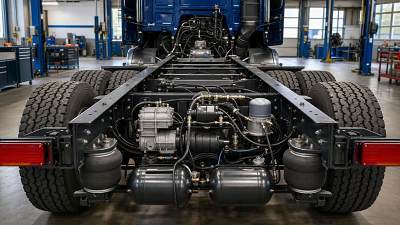
Compressor
Low output, overheating, or oil passing into the air circuit often indicates wear. It can also point to excessive duty caused by unresolved leaks.
Air dryer
A saturated cartridge or failed purge valve allows moisture into the truck air system. In cold regions, this becomes a drivability and safety issue fast.
Reservoirs and drain valves
Water, rust, and sludge inside tanks show that moisture control is already behind schedule. Drains should confirm condition, not reveal surprises.
Hoses, fittings, and chambers
These are common leak points. Soap testing helps, but routing inspection is equally important where vibration or abrasion is severe.
Valves and governors
Erratic cut-in, delayed release, or abnormal purge behavior often traces back to control components, not just supply components.
Where maintenance teams often misjudge truck air system faults
One mistake is treating pressure loss as a compressor problem every time. That can raise cost without fixing the actual leak path.
Another is using mileage alone to schedule truck air system service. Vehicles with heavy idling or constant stops may need shorter moisture-control intervals.
A third misread appears during parts sourcing. Similar dimensions do not guarantee equal material grade, valve calibration, or regional standard fit.
That matters in international trade. When comparing suppliers through a heavy truck industry platform, technical documents and application history should be checked alongside price.
Ignoring compatibility between truck models, axle layouts, brake configurations, and local regulations creates avoidable installation delays later.
Practical fixes that improve truck air system reliability over time
- Record pressure build time and leak-down data before replacing major parts.
- Service the air dryer based on duty pattern, climate, and moisture findings.
- Inspect hose routing, clamps, and abrasion points during every brake-related repair.
- Check for oil contamination when valves fail repeatedly.
- Match replacement parts to working pressure, connector standard, and vehicle application.
- Use supplier comparison data, technical sheets, and brand references when sourcing across markets.
This last point is increasingly important. Digital heavy truck marketplaces now make truck air system parts easier to compare, but better visibility only helps when technical verification stays disciplined.
A better next step is to define the operating scenario before the repair list
Truck air system problems become easier to solve when the operating context leads the diagnosis.
Start by separating long-haul, urban stop-start, construction duty, and heavy-haul use. Then compare pressure behavior, moisture signs, and mechanical stress points.
From there, confirm component compatibility, maintenance interval logic, and replacement quality before committing to larger repairs.
That method reduces repeat failures and supports more reliable sourcing decisions across the global heavy truck supply chain.
For any truck air system review, the useful next move is simple: map the real working scenario, verify the likely failure path, and only then choose the fix.
Trending News
- CATL Unveils Tianxing II Electric-to-Electric Range-Extended Heavy Truck Solution
- How much torque does a truck engine need for heavy-duty hauling?
- How to assess a crane truck distributor's spare parts support
- Volvo Group Forms Volvo Mining to Integrate Equipment and Autonomous Solutions
- How to verify spare parts availability with a crane truck supplier
Tag
Recommended News
 FAQHow to spot early signs of truck hydraulic system failureTruck hydraulic system issues rarely start with total failure. Learn the early signs—pressure loss, noise, leaks, heat, and jerky movement—to prevent downtime and costly repairs.
 FAQHow to Diagnose Common Truck Steering System Problems Before They Cause DowntimeTruck steering system problems can cause costly downtime. Learn how to spot early warning signs, diagnose faults fast, and keep fleets safe and reliable.
 FAQTruck Air System Problems: Common Failure Points and FixesTruck air system problems can start with slow pressure build, leaks, or moisture. Learn common failure points, practical fixes, and how to improve truck uptime and safety.
 FAQExcavator Parts Failure Signs You Should Not IgnoreExcavator parts warning signs often start small. Learn how to spot wear, hydraulic weakness, overheating, and undercarriage damage early to reduce downtime and avoid costly shutdowns.
 FAQTruck Axle Failure Signs and Maintenance Checks That MatterTruck axle warning signs often start with heat, noise, leaks, or uneven tire wear. Learn the key maintenance checks that prevent costly downtime and unsafe failures.
 FAQTruck Wing Loading Problems and How to Prevent DowntimeTruck wing loading problems often start with small daily errors. Learn practical checks, route-based prevention tips, and smart maintenance steps to cut downtime and keep deliveries moving.
 FAQTruck Cement Delivery Problems: Common Causes and Practical FixesTruck cement delivery problems can cause blockages, delays, and waste. Learn the common causes, practical fixes, and smart checks to improve reliability and reduce downtime.
 FAQTruck Refrigerated Unit Failures That Increase Cargo Loss RiskTruck refrigerated failures can quietly raise cargo loss risk. Learn how route type, heat, airflow, seals, and parts planning affect cold-chain reliability.
 FAQTruck Transmission Problems: Early Signs, Causes, and Fix OptionsTruck transmission issues can start with subtle shifts, slipping, or heat buildup. Learn early signs, key causes, and practical repair or rebuild options for every duty cycle.
 FAQTruck Pump Troubleshooting: Common Pressure Loss Causes and FixesTruck pump troubleshooting guide: discover common pressure loss causes, warning signs, and practical fixes to restore hydraulic performance, reduce downtime, and prevent repeat failures.
 FAQHow to Evaluate a Truck Cement Supplier for Delivery RiskTruck cement supplier evaluation starts with delivery risk. Learn how to assess capacity, logistics control, export readiness, and on-time performance before you place an order.
 FAQExcavator Bucket Sizes Explained for Trenching, Loading, and Rock WorkExcavator bucket size affects trenching accuracy, loading speed, and rock work durability. Learn how to choose the right excavator bucket for better productivity and lower wear.
 FAQTruck Battery Problems: Signs, Causes, and FixesTruck battery problems can lead to breakdowns and costly delays. Learn the key warning signs, main causes, and practical fixes to keep heavy trucks reliable and on the road.
 FAQTipper Trailer Payload Limits and Safety RisksTipper trailer payload limits affect braking, stability, and rollover risk. Learn practical safety checks, load control tips, and ways to reduce costly overload damage.
 FAQHow to Qualify a Truck Tipper Supplier for Safety and Build ConsistencyTruck tipper supplier qualification starts with safety. Learn how to assess build consistency, hydraulic reliability, and factory controls to reduce sourcing risk.
 FAQHow to Read a Water Truck Quotation Without Missing Hidden CostsWater truck quotation guide: learn how to spot hidden costs in specs, freight, compliance, spare parts, and warranty so you can compare offers accurately and buy with confidence.
 FAQDelivery Truck Supplier for School Transportation: Safety ChecklistDelivery truck supplier for school transportation: use this safety checklist to compare compliance, braking, visibility, build quality, and supplier reliability before you buy.
 FAQHow ISO Certification Reduces Sourcing Risk in Truck Chassis SupplyHeavy truck chassis manufacturer with ISO certification: discover how certified suppliers reduce sourcing risk, improve traceability, and support safer global truck chassis procurement.
 FAQWater Sprinkler Truck Uses, Tank Sizes, and Road Safety BasicsWater sprinkler truck uses, tank sizes, and road safety basics explained. Learn how to choose the right capacity, improve dust control efficiency, and compare reliable fleet-ready options.
 FAQDelivery Truck for School Transportation: Safety Points Before OrderingDelivery truck supplier for school transportation: review key safety points before ordering, from braking and visibility to compliance and passenger protection.
 FAQDump Truck Sourcing Mistakes That Delay Construction ProjectsDump truck sourcing mistakes can delay construction projects, raise hidden costs, and disrupt site schedules. Learn the key risks to avoid and source smarter for faster, more reliable project delivery.
 FAQIs a Bulldozer for Construction the Right Fit for Your Site ConditionsBulldozer for construction: learn how terrain, soil, slope, and job size determine the right machine fit. Compare site conditions, avoid costly mismatches, and choose with confidence.
 FAQDump Truck OEM Quality Control Points Before Factory AcceptanceDump truck OEM quality control points before factory acceptance: learn the key checks for welding, hydraulics, brakes, and safety to reduce risk, avoid failures, and choose reliable suppliers.
 FAQTruck Trailer Bulk Order: How to Avoid Spec Drift Across BatchesTruck trailer bulk order quality can fail when specs drift across batches. Learn how to lock standards, align suppliers, and protect safety, compliance, and delivery consistency.
 FAQWhat a Dump Truck Distributor Should Offer After Vehicle DeliveryDump truck distributor support matters after delivery. Learn what to expect in spare parts, warranty, training, and technical service to reduce downtime and protect your investment.