China Rolls Out Single-Document Multimodal Customs Model
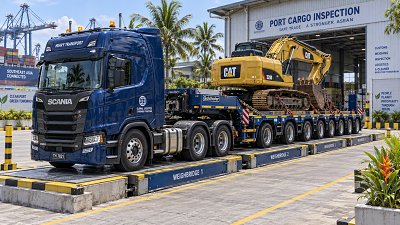
On June 22, 2026, China expanded a new customs supervision model for multimodal transport across 45 pilot cities, allowing companies to complete customs procedures for rail-road and sea-rail shipments through a single application submitted via the international trade single window. For exporters, overseas distributors, and international freight forwarders tied to China-made heavy trucks and semi-trailers, the development is worth close attention because it points to faster cross-border movement and fewer repeated declaration and inspection steps at coastal ports.
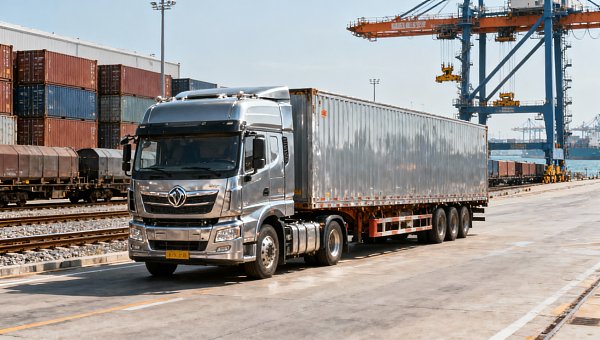
What the nationwide rollout confirms
According to the provided information, the General Administration of Customs, together with China State Railway Group and 24 departments, formally launched the nationwide implementation of the multimodal transport single-document customs supervision model in 45 pilot cities starting on June 22, 2026. Under this model, enterprises need to submit one multimodal transport application through the international trade single window to complete customs clearance for the full journey in rail-road and sea-rail transport. The arrangement also removes the need for repeated declarations and inspections at coastal ports during the same shipment process.
Where the operational impact is likely to be felt
Exporters shipping large transport equipment
From an industry perspective, exporters of heavy trucks and semi-trailers are among the most directly affected participants because their shipments often depend on coordinated inland and port-side logistics. The practical impact is likely to appear in documentation flow, customs handover, and delivery timing, with closer attention needed on whether shipment planning can now be aligned around a single filing path.
Overseas distributors managing delivery commitments
Analysis shows that overseas distributors relying on China-origin vehicle exports may see the main effect in order scheduling and customer delivery coordination. If customs procedures become more streamlined across transport legs, distributors may need to reassess lead-time assumptions, booking coordination, and communication with downstream buyers, while distinguishing policy intent from actual day-to-day execution.
International freight forwarders handling multimodal routes
International freight forwarders are likely to focus on the direct procedural value of the new model. What deserves closer attention is how the single-application mechanism changes document preparation, cargo handoff between transport modes, and compliance management when a shipment no longer requires repeated filing and inspection at coastal ports.
Supply chain service providers supporting compliance
For service providers involved in customs coordination and shipment administration, the influence is likely to center on process design rather than simple volume growth. Observably, the key issue is whether internal systems, supporting documents, and client-facing workflows are ready to work within a single-window filing structure tied to multimodal movement.
What companies should watch in practice
Differentiate policy launch from operational routine
Analysis shows that the national rollout is a confirmed policy step, but businesses still need to monitor how smoothly the model is applied in actual shipments. Companies should pay attention to whether the single-document process is consistently recognized across the full route and whether internal teams understand the new filing path.
Review document readiness before booking cargo
Because the new model centers on one multimodal application through the international trade single window, document quality and submission coordination become more important. Exporters, forwarders, and distributors should closely review whether shipment materials, transport arrangements, and customs-related data are prepared in a format that supports one-time filing.
Track impacts on delivery promises and compliance costs
From an industry perspective, the stated value of the policy lies in shorter logistics timelines and lower overall compliance costs. Companies should therefore focus on whether these benefits appear in real transactions, especially in order fulfillment cycles, cross-border delivery commitments, and internal compliance workloads.
Keep customer and partner communication aligned
For businesses serving overseas buyers, what deserves closer attention is communication across exporters, freight forwarders, and distributors. Where delivery schedules, route design, or customs handling assumptions are being updated, stakeholders should make sure that external commitments reflect actual operating conditions rather than early expectations alone.
Why this looks like more than a short-term procedural change
Observably, this development is not just a routine customs notice for one transport segment. It is more appropriate to understand this as a practical signal that multimodal clearance coordination is being pushed toward a more integrated filing structure. At the same time, it should not yet be treated as a fully settled end state for every shipment scenario, because the difference between national rollout and uniform field execution still requires continued observation.
How to read this development now
At this stage, the most balanced reading is that China has taken a concrete step to simplify multimodal customs handling through a single-document mechanism with direct relevance for cross-border logistics users. For the industry, the importance lies less in headline interpretation and more in whether exporters, distributors, and logistics intermediaries can translate the rule into measurable gains in clearance efficiency, delivery coordination, and compliance management.
Basis of this article
This article is generated based on the user-provided news title, event date, and event summary. The specific official source link was not provided in the input and still requires ongoing verification. For this type of industry update, commonly relevant source categories include official notices, company announcements, industry association releases, authoritative media coverage, and standards-related documents. Further observation should focus on subsequent official wording, rule application in actual shipments, and how the model is implemented in routine cross-border operations.
Trending News
- CATL Unveils Tianxing II Electric-to-Electric Range-Extended Heavy Truck Solution
- How much torque does a truck engine need for heavy-duty hauling?
- How to assess a crane truck distributor's spare parts support
- Volvo Group Forms Volvo Mining to Integrate Equipment and Autonomous Solutions
- How to verify spare parts availability with a crane truck supplier
Tag
Recommended News
 Policy & RegulationsHow axle load limits affect low bed trailer exports to Southeast AsiaPlanning low bed trailer export to Southeast Asia? Learn how axle load limits affect legal payload, axle layouts, and route compliance to avoid costly mistakes before ordering.
 Policy & RegulationsGermany Ends EV Subsidy ExtensionGermany ends EV subsidy extension, reshaping EV and commercial vehicle plans in Europe. See how importers, distributors, and Chinese NEV suppliers should respond.
 Policy & RegulationsEU Rule Sets LCA Certification for Truck ImportsEU Rule Sets LCA Certification for Truck Imports: learn how the new EU LCA and EPD compliance rule will affect truck approvals, export timelines, costs, and delivery planning.
 Policy & RegulationsEU Requires LCA Reports for Imported HDVs from Oct 2026EU LCA reports for imported HDVs become mandatory from Oct 2026. Learn how the new EU heavy-duty vehicle carbon compliance rule affects exporters, suppliers, costs, and delivery readiness.
 Policy & RegulationsChina Tightens Export Filing for New Energy Heavy TrucksChina Tightens Export Filing for New Energy Heavy Trucks: learn how new HS code rules and CNAS carbon-footprint reports may impact customs clearance, compliance, and delivery timelines.
 Policy & RegulationsEU Updates CO2 Rules for Heavy-Duty Vehicle ApprovalEU Updates CO2 Rules for Heavy-Duty Vehicle Approval: learn how new lifecycle carbon and battery due diligence requirements affect EU market access, approval timing, and compliance costs.
 Policy & RegulationsChina Customs Adds New Export Fields for Road Transport EquipmentChina Customs adds new export fields for road transport equipment from Aug 15, 2026. Learn how drive type and certification data may affect compliance, clearance speed, and export planning.
 Policy & RegulationsEU Tightens Truck WVTA Brake and Lighting TestsEU Tightens Truck WVTA Brake and Lighting Tests: learn how Regulation (EU) 2026/1387 reshapes brake response, headlamp compliance, certification timing, and EU market access.
 Policy & RegulationsEU Sets CO2 Rules for New Heavy Trucks from 2027EU Sets CO2 Rules for New Heavy Trucks from 2027: learn how new EU CO2 limits, OBD, and remote data upload requirements could reshape type approval, costs, and delivery planning.
 Policy & RegulationsEU Brings Forward Cybersecurity Approval for Heavy TrucksEU heavy truck cybersecurity approval moves to August 1, 2026. Learn how WVTA, UNECE R155, OTA and telematics rules will impact EU exports, type approval and delivery plans.
 Policy & RegulationsEU Moves Truck Cybersecurity WVTA Forward to Aug 1, 2026EU truck cybersecurity WVTA moves to Aug 1, 2026. Learn how UN R155 and EU 2022/1426 affect heavy truck type approval, exports, suppliers, and compliance planning.
 Policy & RegulationsEU Brings Forward WVTA Cybersecurity Approval for TrucksEU Brings Forward WVTA Cybersecurity Approval for Trucks: learn how the 2026 deadline impacts heavy truck exports, retrofit projects, supplier compliance, costs, and EU market-entry planning.
 Policy & RegulationsEU Brings Forward WVTA Cybersecurity Approval for Heavy TrucksEU heavy truck WVTA cybersecurity approval now starts on August 1, 2026. Learn how EU type approval, CSMS audits, ADAS, OTA, and registration risks affect exporters and manufacturers.
 Policy & RegulationsEU Cybersecurity Approval Rule Takes Effect for Heavy TrucksEU Cybersecurity Approval Rule now reshapes heavy trucks market access. Learn how CSMS, UNECE R155, and WVTA deadlines could impact certification, delivery, and EU export readiness.
 Policy & RegulationsEU Requires EN 15038 Declarations for Truck ImportsEU Requires EN 15038 Declarations for Truck Imports: learn how the new EU rule affects heavy truck customs clearance, compliance timing, and export readiness.
 Policy & RegulationsEU Rule Brings SCIP Filing to Imported Truck Battery PartsSCIP filing for imported truck battery parts becomes critical in the EU from Oct 1, 2026. Learn how the rule impacts heavy-duty truck exports, aftermarket parts, and customs compliance.
 Policy & RegulationsEU REACH Expands to Truck Battery PartsEU REACH expands to truck battery parts, covering lithium-ion battery modules, BMS units, and thermal systems. Learn how SCIP filing, SVHC disclosure, and EU export compliance may affect truck suppliers.
 Policy & RegulationsEU Sets Battery Footprint Rule for Heavy TrucksEU Sets Battery Footprint Rule for Heavy Trucks: learn how the 2027 EU battery carbon footprint requirement could impact type approval, customs clearance, and truck exports.
 Policy & RegulationsEU Requires Certified V2X Modules in Heavy TrucksEU Requires Certified V2X Modules in Heavy Trucks from July 22, 2026. Learn how UN R155 and ETSI EN 303 648 rules will impact EU type approval, registration, and exports.
 Policy & RegulationsEU Tightens V2X Approval for Heavy TrucksHeavy trucks entering the EU face tougher V2X approval from July 22, 2026. Learn how UNECE R155/R156 and EU Type Approval will affect registration, exports, and delivery readiness.
 Policy & RegulationsEU Rule Takes Effect: Heavy Trucks Need V2X from July 22, 2026Heavy trucks entering the EU from July 22, 2026 need V2X modules and UN R155 approval. Learn how this rule impacts compliance, certification, exports, and delivery.
 Policy & RegulationsEU Opens Euro 7 Transition for Heavy TrucksEU Opens Euro 7 Transition for Heavy Trucks: learn how new filing rules, battery carbon footprint declarations, and OBD II checks will impact EU truck exports and compliance planning.
 Policy & RegulationsEPA Update Removes Seven Chinese Diesel Engine ModelsEPA Update Removes Seven Chinese Diesel Engine Models: learn how this EPA compliance change could affect North American truck exports, sourcing, certification, and delivery planning.
 Policy & RegulationsEU Enforces Euro 7 for New Heavy TrucksEU Enforces Euro 7 for New Heavy Trucks: learn how stricter NOx, NH₃, and brake particle certification impacts EU market access, registration timing, and exporter compliance costs.
 Policy & RegulationsLight Duty Truck Manufacturer in USA: Key Compliance ChecksLight duty truck manufacturer in USA selection starts with compliance. Learn the key checks for FMVSS, emissions, load ratings, and traceability before you buy.