Mining Truck Trends in 2026: Payload, Safety, and Total Cost Outlook
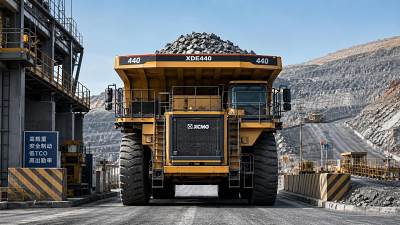
The mining truck market in 2026 is moving beyond simple size comparisons. Payload still matters, but operating decisions now depend just as much on safety technology, energy efficiency, maintenance predictability, and site-level cost control.
That shift is especially relevant across land transport equipment and heavy industrial fleets. A mining truck is no longer judged only by how much material it can move per cycle, but by how well it fits haul roads, loading tools, fuel strategy, digital systems, and uptime targets.
For companies comparing suppliers across regions, the challenge is practical. The right mining truck must deliver tonnage, meet stricter safety expectations, and hold a stable total cost of ownership over years of demanding work.
Why 2026 is a turning point
Several pressures are converging at once. Fuel remains expensive in many markets. Emissions policies are tightening. Mine operators also expect more output from existing assets rather than constant fleet expansion.
At the same time, large open-pit and quarry operations are demanding better visibility into truck performance. Dispatch systems, onboard sensors, and remote diagnostics are changing how a mining truck is specified and managed.
Supply chain transparency also has a bigger role. Global sourcing platforms now help buyers compare complete trucks, chassis, spare parts, and heavy equipment suppliers more efficiently, which shortens evaluation cycles and improves procurement quality.
Payload is still central, but not in isolation
Payload remains the most visible mining truck metric because it directly affects tons moved per shift. Yet in 2026, headline capacity alone can be misleading if it is not matched to route conditions and loading consistency.
A larger mining truck can improve cycle economics when roads are well maintained, gradients are controlled, and the loading fleet is correctly matched. In weaker site conditions, excessive size may reduce flexibility and increase tire, brake, and suspension stress.
What matters more is effective payload. That means the real average load carried safely and repeatedly, without overloading, uneven distribution, or excess idle time at the shovel.
Key payload questions in fleet selection
- Is the mining truck matched to material density and body volume?
- Can haul roads support full-load speeds without added wear?
- Does the excavator or loader pass count align with truck capacity?
- Will payload variation create avoidable fuel or tire penalties?
These questions often separate a productive fleet from an oversized one. In other words, payload strategy is now about balance, not just maximum tonnage.
Safety systems are becoming a buying priority
Safety has moved from compliance language into capital planning. A mining truck working in mixed fleets, variable weather, and round-the-clock schedules needs more than strong braking performance.
In 2026, buyers are paying closer attention to integrated safety systems such as collision awareness, fatigue monitoring, blind-spot support, speed control on gradients, and real-time vehicle health alerts.
These systems do not eliminate operational risk. They do, however, reduce exposure to common loss events, especially where site traffic includes service vehicles, contractors, and pedestrian-restricted maintenance zones.
Where intelligent safety adds value
The benefit is strongest in high-cycle environments. Repeated loading, turning, dumping, and descent braking create patterns where small driver or visibility errors can become expensive incidents.
A mining truck with stronger monitoring capability can improve event reporting, training feedback, and maintenance timing. That supports both insurance control and operational continuity.
Total cost is replacing purchase price as the real benchmark
The biggest change in mining truck evaluation is the growing focus on total cost of ownership. Acquisition cost still shapes budgets, but it rarely predicts full lifecycle value.
Fuel burn, tire life, service intervals, component rebuild schedules, parts availability, and resale or secondary deployment options often determine whether a truck program performs well over time.
A lower-priced mining truck may become expensive if spare parts are slow to source, digital support is weak, or local technical service is limited. By contrast, a higher initial price can be justified by uptime and lower cost per ton.
The cost factors that deserve closer review
- Fuel or energy consumption under real haul conditions
- Tire replacement frequency by road quality and payload discipline
- Availability of critical spare parts in target regions
- Ease of technician training and diagnostic access
- Expected downtime during planned and unplanned maintenance
This is where procurement teams increasingly use B2B industry platforms. Comparing supplier depth, product categories, aftermarket support, and brand presence in one place reduces the risk of narrow decision-making.
Powertrain choices are widening the decision matrix
Diesel continues to dominate much of the mining truck market, especially in remote sites with limited charging or power infrastructure. Even so, hybrid systems, trolley support, and early electrification pathways are gaining attention.
The right choice depends on more than emissions targets. Route length, altitude, ambient temperature, power access, maintenance readiness, and capex planning all affect whether an alternative powertrain makes sense.
For many operations, the near-term opportunity is not a full technology shift. It is improved diesel efficiency, idle reduction, lighter component design, and better power management through software and telemetry.
Different mining environments need different truck logic
Not every mining truck trend applies equally across all sites. A copper mine with long uphill hauls has different priorities from a quarry with shorter cycles and tighter maneuvering space.
That is why fleet planning should start with application fit. Truck class, body type, axle loading, and service package need to reflect the mine’s actual operating profile.
How to assess suppliers in a more connected market
The sourcing process for a mining truck is becoming more data-driven. Buyers now expect access to technical specifications, brand comparisons, spare parts channels, and market references before formal negotiation begins.
This is where a specialized global heavy truck platform becomes useful. A well-structured B2B marketplace can bring together truck manufacturers, component suppliers, distributors, and industry information in one working environment.
That matters because mining equipment decisions are rarely isolated. A truck purchase also touches parts planning, maintenance contracts, fleet compatibility, and long-term supplier reliability.
Signals worth checking during evaluation
- Depth of product portfolio across trucks, machinery, and spare parts
- Regional support presence and response capability
- Clarity of technical documentation and operating data
- Evidence of lifecycle support, not only equipment supply
What to do next with the 2026 mining truck outlook
The most useful next step is to turn broad market trends into a site-specific checklist. Start with haul profile, material type, target payload, safety priorities, and maintenance capability.
Then compare each mining truck option against cost per ton, digital support, parts access, and fleet integration. This approach usually reveals more than a purchase-price comparison alone.
In 2026, the strongest mining truck decisions will come from combining technical fit with supplier transparency. Using trusted industry resources, product directories, and cross-border sourcing insight can make that process more disciplined and more commercially sound.
The market is offering more choice, but also more complexity. A clear framework for payload, safety, and total cost is the best way to identify equipment that can perform reliably long after delivery.
Tag
Recommended News
 Market AnalysisMining Truck Trends in 2026: Payload, Safety, and Total Cost OutlookMining truck trends in 2026: explore payload strategy, smarter safety systems, and total cost insights to choose the right fleet and improve long-term mining performance.
![]() Market AnalysisCrane Truck OEM Trends Shaping 2026 Fleet PlanningCrane truck OEM trends for 2026 fleet planning: compare compliance, uptime, integration, and lifecycle cost across construction, utility, and transport fleets.
Market AnalysisCrane Truck OEM Trends Shaping 2026 Fleet PlanningCrane truck OEM trends for 2026 fleet planning: compare compliance, uptime, integration, and lifecycle cost across construction, utility, and transport fleets. Market AnalysisTruck Tipper OEM or Standard Model: Which Lowers Lifetime Cost?Truck tipper OEM or standard model? Discover which choice cuts lifetime cost through better payload, lower downtime, and stronger resale value for demanding transport operations.
 Market AnalysisDump Truck Distributor Trends in 2026: Margin, Stock, and ServiceDump truck distributor trends in 2026: discover how to protect margin, optimize stock, and strengthen service to stay competitive and win more heavy truck business.
 Market AnalysisGlobal Heavy-Duty EV Battery Prices Drop 8.2% WeeklyHeavy-Duty EV Battery prices drop 8.2% weekly—driven by LMFP scale-up & lower freight. Key insight for global procurement, OEMs & supply chain players.
 Market AnalysisConstruction Machinery Price Trends in 2026: What Is Driving Total Cost UpConstruction machinery price trends in 2026 are driving total ownership costs higher. Discover the key cost factors, scenario-based risks, and smarter buying strategies.
 Market AnalysisChina's Heavy-Duty Truck Export Avg. Price Up 11.3% in Jan–Apr 2026China's heavy-duty truck export avg. price up 11.3% in Jan–Apr 2026 — driven by surging demand for battery-electric tractors and L3 mining trucks.
 Market Analysis2026 China Excavator Manufacturers: What Sets the Best ApartExcavator manufacturer in China selection in 2026 goes beyond price. Discover how top brands stand out in quality, export support, durability, and lifecycle value.
 Market AnalysisHeavy Duty Trucks for Sale in Middle East: Cost and Spec TrendsHeavy duty trucks for sale in Middle East: explore 2024–2025 cost shifts, spec trends, and smart sourcing tips to compare suppliers, reduce fleet risk, and improve long-term ROI.
 Market AnalysisDelivery Truck Supplier with Cost-Effective Solutions: 2026 Market OutlookDelivery truck supplier with cost-effective solutions: explore the 2026 market outlook, compare total ownership costs, supplier reliability, and aftersales support to choose smarter fleet investments.
 Market AnalysisFlatbed Trailer Supplier with Modular Design: Flexibility vs Maintenance CostFlatbed trailer supplier with modular design: compare flexibility, maintenance cost, parts support, and lifecycle value. Use this practical checklist to choose smarter.
 Market AnalysisInfrastructure Projects Need More Than a Machinery SupplierConstruction machinery supplier for infrastructure projects should deliver more than equipment. Learn how to compare reliable partners, reduce risk, and secure lifecycle support.
 Market AnalysisTruck Trailer Distributor Trends Shaping Regional Market Growth in 2026Truck trailer distributor trends for 2026 reveal how regional logistics, compliance, sourcing, and service strategy drive market growth. Explore key insights for smarter expansion.
 Market AnalysisConstruction Machinery Price Trends in 2026: What Shapes Final QuotesConstruction machinery price trends in 2026 depend on specs, compliance, freight, and service. Learn what shapes final quotes and compare suppliers with more confidence.
 Market AnalysisExcavator Manufacturer in China: How to Compare Quality Across FactoriesExcavator manufacturer in China selection is no longer about price alone. Learn how to compare factory quality, reliability, safety, and after-sales support for smarter sourcing.
 Market AnalysisTruck Cement Mixer Manufacturer Comparison: Capacity, Build, and Lead TimeTruck cement mixer manufacturer comparison guide covering capacity, build quality, and lead time to help buyers reduce risk, improve uptime, and choose the right supplier faster.
 Market AnalysisPortable Construction Machinery Supplier Options for Fast-Changing Job SitesExplore how a construction machinery supplier with portable options can help fast-changing job sites stay efficient, reduce relocation delays, and improve uptime with smarter sourcing.
 Market AnalysisWhat Sets a Reliable Truck Trailer Distributor Apart in Regional MarketsTruck trailer distributor selection made easier: discover the key traits that define reliability in regional markets, from stable supply and service support to scalable growth potential.
 Market AnalysisConstruction Machinery Price Swings: What They Mean for 2026 BudgetsConstruction machinery price swings are reshaping 2026 budgets. Learn how volatility affects capex, supplier selection, and timing—and how to cut risk with smarter buying strategies.
 Market AnalysisTruck Cement Exporter Trends in Emerging Infrastructure MarketsTruck cement exporter trends in emerging markets: discover where demand is rising fastest, what buyers expect, and how reliable suppliers win in infrastructure growth.
 Market AnalysisWhat Sets a Reliable Excavator Manufacturer in China ApartExcavator manufacturer in China selection starts with quality, capacity, and service. Discover how to identify reliable suppliers, reduce sourcing risks, and improve long-term equipment value.
 Market AnalysisCrane Truck Price Trends: What Changed and What to ExpectCrane truck price trends explained: discover what changed, which cost drivers matter most, and what buyers should expect next to source smarter and reduce total investment risk.
 Market AnalysisCommercial Trucks Manufacturer in Germany: Quality vs Total CostCommercial trucks manufacturer in Germany choices go beyond build quality. Explore how uptime, compliance, fuel efficiency, and resale value shape total cost and smarter fleet investment.
 Market AnalysisWhen Truck Tipper Wholesale Makes More Sense Than Local SourcingTruck tipper wholesale often beats local sourcing when you need better pricing, broader specs, and stable supply. Learn when wholesale improves fleet value and procurement efficiency.
 Market AnalysisDump Truck Wholesale Margins, Stock Risk, and Model Mix ExplainedDump truck wholesale explained: learn how margins, stock risk, and model mix affect dealer profit. Discover smarter sourcing strategies to improve turnover and scale sales.