Truck Trailer Distributor Trends Shaping Regional Market Growth in 2026
Truck Trailer Distributor Trends Shaping Regional Market Growth in 2026
In 2026, the truck trailer distributor market is changing faster than many regional networks expected.
Logistics expansion, infrastructure spending, and stricter transport rules are reshaping how trailer products move across borders and into local fleets.
For any truck trailer distributor, growth now depends on better supplier selection, smarter stock planning, and stronger regional channel visibility.
This guide explains the main trends influencing regional market growth and offers practical checkpoints for evaluating opportunities in the heavy transport equipment sector.
Why a Structured Review Matters in 2026
Regional demand is no longer shaped by price alone.
A truck trailer distributor must now assess route density, compliance standards, customer financing pressure, and after-sales expectations before expanding product coverage.
Digital B2B platforms are also changing buyer behavior.
With easier supplier comparison and product discovery, regional channel growth increasingly favors distributors that respond quickly with verified information and dependable sourcing options.
A structured review helps reduce weak inventory bets, improve regional fit, and align trailer portfolios with real demand across logistics, construction, mining, and municipal transport.
Key Points to Review Before Expanding a Truck Trailer Distributor Network
- Check whether regional freight growth supports flatbed, tipper, tanker, low-bed, or container trailer demand rather than assuming one trailer segment will fit every local route.
- Confirm axle load regulations, road access limits, and certification rules early, because compliance gaps can delay sales cycles and weaken distributor credibility in new markets.
- Review supplier lead times, CKD or SKD options, and spare parts support to avoid stock shortages that reduce repeat business and service confidence.
- Map infrastructure spending plans, industrial corridor projects, and port upgrades, since these often signal future demand for construction and long-haul trailer categories.
- Compare local financing conditions and customer payment cycles, because trailer purchase decisions often depend on affordability more than headline unit pricing.
- Evaluate digital visibility across B2B marketplaces, search channels, and multilingual catalogs, as online discovery increasingly influences regional distributor growth.
- Assess service network reach, technician training, and parts responsiveness, since after-sales reliability strongly affects customer retention in heavy transport markets.
- Track demand for lighter materials, fuel-saving designs, and safer braking systems, because buyers are looking for lower operating costs and regulatory readiness.
The Main Trends Driving Truck Trailer Distributor Growth
1. Regional logistics corridors are becoming more specialized
Transport demand is splitting into clearer application segments.
A truck trailer distributor serving port logistics needs different trailer mixes than one focused on inland aggregates, agricultural hauling, or municipal engineering support.
2. Cross-border trade is increasing model complexity
Cross-border cargo growth creates opportunities, but specifications vary sharply between neighboring markets.
Trailer dimensions, braking systems, suspension preferences, and document standards can all influence regional distributor competitiveness.
3. Buyers expect stronger supplier transparency
Digital sourcing tools have raised expectations.
The modern truck trailer distributor must provide verified specifications, factory details, delivery schedules, and spare parts commitments with less delay and less ambiguity.
4. Service capacity now shapes sales growth
In many regions, customers compare support coverage as carefully as product price.
Fast parts access, maintenance guidance, and warranty handling often determine whether a truck trailer distributor secures repeat orders.
5. Platform-based sourcing is expanding market reach
Global industry platforms help distributors reach more qualified suppliers and compare product categories efficiently.
This supports faster market entry, broader sourcing, and better positioning across truck chassis, trailers, construction machinery, and spare parts ecosystems.
How These Trends Affect Different Regional Scenarios
Port and container logistics regions
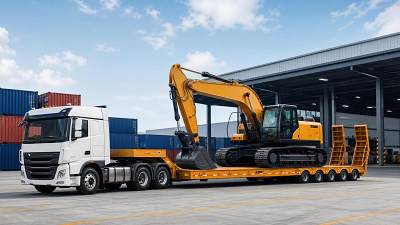
Container traffic favors skeletal trailers, flatbeds, and dependable parts supply.
A truck trailer distributor should check turnaround time, corrosion resistance, and fleet uptime requirements before finalizing a product range.
Mining and heavy construction areas
Demand here often shifts toward low-bed, tipper, and reinforced semi-trailer solutions.
The key checks include structural durability, load distribution, tire support, and local road condition compatibility.
Agricultural and rural transport markets
These markets may value easy maintenance and cost control above advanced specifications.
The right truck trailer distributor strategy often combines simple configurations, accessible spare parts, and practical payload flexibility.
Urban and municipal project zones
Municipal applications usually require compact maneuverability, safety features, and regulatory conformity.
Regional growth improves when trailer offerings match waste handling, public works, and short-haul infrastructure needs.
Commonly Overlooked Risks
Ignoring parts localization
A truck trailer distributor can lose momentum quickly when imported parts are slow, costly, or unavailable for common field repairs.
Expanding too broadly across trailer categories
Adding too many models without regional demand proof often ties up capital and weakens service focus.
Underestimating compliance updates
Brake standards, reflective markings, weight limits, and documentation rules can change faster than inventory plans.
Treating digital visibility as secondary
Without searchable listings and clear product data, even capable distributors become harder to discover in competitive regional markets.
Practical Steps for Better Execution
- Rank regions by freight type, infrastructure spending, and trade access before selecting trailer categories.
- Build a qualified supplier shortlist with clear checks for certification, production capacity, delivery lead times, and after-sales support.
- Launch with a focused trailer portfolio, then expand only after tracking repeat orders, service requests, and route-specific demand patterns.
- Use a global B2B platform to compare products, discover new suppliers, and strengthen cross-border sourcing efficiency.
- Update online catalogs with accurate specifications, application notes, and spare parts details to improve trust and search visibility.
- Review market data quarterly so the truck trailer distributor strategy stays aligned with pricing pressure, compliance shifts, and fleet replacement cycles.
How Industry Platforms Support Regional Expansion
A digital heavy truck industry platform can reduce sourcing friction and improve regional decision quality.
It connects buyers, suppliers, and distributors across truck chassis, complete trucks, trailers, semi-trailers, construction machinery, and spare parts categories.
For a truck trailer distributor, this means easier product discovery, broader supplier access, and more reliable information for comparing commercial options.
Industry news, brand directories, and buying resources also help refine regional planning and identify emerging transport equipment opportunities earlier.
Final Takeaway for 2026
Regional market growth in 2026 will reward the truck trailer distributor that combines local demand insight with disciplined sourcing and service readiness.
The strongest results will come from targeted trailer selection, compliance awareness, dependable parts support, and consistent digital visibility.
Start with a focused regional review, validate suppliers through trusted industry platforms, and build around the trailer segments that match real operating conditions.
That approach creates a more resilient truck trailer distributor strategy and a stronger position in the global heavy transport equipment market.
Trending News
- When does heavy equipment transport require a lowboy trailer?
- When does a light commercial vehicle for urban delivery save fleet costs?
- How to choose an off road truck for steep and unstable job sites
- How to match crane truck lifting capacity to your jobsite loads
- What drives logging truck cost beyond the base purchase price?
Tag
Recommended News
 Market Analysis2026 Construction Machinery Price Trends: What Is Driving Total Equipment Costs?Construction machinery price trends in 2026 are shaped by steel, freight, technology, and compliance. See what really drives total equipment costs and make smarter buying decisions.
 Market AnalysisTruck Parts Price Trends in 2026: What Is Driving Costs?Truck parts price trends in 2026 are reshaping fleet budgets. Discover what drives rising costs, where risks hide, and how smarter sourcing can protect uptime and margins.
 Market AnalysisTruck Parts Price Trends in 2026: What Drives CostsTruck parts price trends in 2026 reveal what drives rising costs across road transport equipment. Explore key cost factors, sourcing risks, and smarter buying strategies.
![]() Market AnalysisDump Truck Manufacturer Trends in 2026: Materials, Emissions, and UptimeDump truck manufacturer trends for 2026: discover how materials, emissions strategy, and uptime planning are reshaping fleet value, supplier selection, and long-term operating performance.
 Market AnalysisConstruction Machinery Price Trends: What to Expect From 2026 Supply CostsConstruction machinery price trends for 2026 may be shaped by steel, freight, labor, and compliance costs. See where prices may rise and how buyers can plan smarter sourcing.
 Market AnalysisBulldozer Producer Comparison: What Matters Beyond Engine Power in 2026Bulldozer producer comparison in 2026 goes beyond engine power. Discover how uptime, parts access, service coverage, and lifecycle value shape the smartest buying decisions.
 Market AnalysisInfrastructure Excavator Demand in 2026: What Manufacturers Need to WatchExcavator manufacturer for infrastructure development trends in 2026: learn what to watch in demand shifts, uptime, emissions, parts, and supplier readiness to stay competitive.
 Market AnalysisExcavator Manufacturer Trends in Infrastructure Development 2026Excavator manufacturer for infrastructure development trends in 2026: compare uptime, telematics, parts support, and sourcing resilience to choose smarter, lower-risk equipment.
 Market AnalysisMining Truck Trends in 2026: Payload, Safety, and Total Cost OutlookMining truck trends in 2026: explore payload strategy, smarter safety systems, and total cost insights to choose the right fleet and improve long-term mining performance.
![]() Market AnalysisCrane Truck OEM Trends Shaping 2026 Fleet PlanningCrane truck OEM trends for 2026 fleet planning: compare compliance, uptime, integration, and lifecycle cost across construction, utility, and transport fleets.
 Market AnalysisTruck Tipper OEM or Standard Model: Which Lowers Lifetime Cost?Truck tipper OEM or standard model? Discover which choice cuts lifetime cost through better payload, lower downtime, and stronger resale value for demanding transport operations.
 Market AnalysisDump Truck Distributor Trends in 2026: Margin, Stock, and ServiceDump truck distributor trends in 2026: discover how to protect margin, optimize stock, and strengthen service to stay competitive and win more heavy truck business.
 Market AnalysisGlobal Heavy-Duty EV Battery Prices Drop 8.2% WeeklyHeavy-Duty EV Battery prices drop 8.2% weekly—driven by LMFP scale-up & lower freight. Key insight for global procurement, OEMs & supply chain players.
 Market AnalysisConstruction Machinery Price Trends in 2026: What Is Driving Total Cost UpConstruction machinery price trends in 2026 are driving total ownership costs higher. Discover the key cost factors, scenario-based risks, and smarter buying strategies.
 Market AnalysisChina's Heavy-Duty Truck Export Avg. Price Up 11.3% in Jan–Apr 2026China's heavy-duty truck export avg. price up 11.3% in Jan–Apr 2026 — driven by surging demand for battery-electric tractors and L3 mining trucks.
 Market Analysis2026 China Excavator Manufacturers: What Sets the Best ApartExcavator manufacturer in China selection in 2026 goes beyond price. Discover how top brands stand out in quality, export support, durability, and lifecycle value.
 Market AnalysisHeavy Duty Trucks for Sale in Middle East: Cost and Spec TrendsHeavy duty trucks for sale in Middle East: explore 2024–2025 cost shifts, spec trends, and smart sourcing tips to compare suppliers, reduce fleet risk, and improve long-term ROI.
 Market AnalysisDelivery Truck Supplier with Cost-Effective Solutions: 2026 Market OutlookDelivery truck supplier with cost-effective solutions: explore the 2026 market outlook, compare total ownership costs, supplier reliability, and aftersales support to choose smarter fleet investments.
 Market AnalysisFlatbed Trailer Supplier with Modular Design: Flexibility vs Maintenance CostFlatbed trailer supplier with modular design: compare flexibility, maintenance cost, parts support, and lifecycle value. Use this practical checklist to choose smarter.
 Market AnalysisInfrastructure Projects Need More Than a Machinery SupplierConstruction machinery supplier for infrastructure projects should deliver more than equipment. Learn how to compare reliable partners, reduce risk, and secure lifecycle support.
 Market AnalysisTruck Trailer Distributor Trends Shaping Regional Market Growth in 2026Truck trailer distributor trends for 2026 reveal how regional logistics, compliance, sourcing, and service strategy drive market growth. Explore key insights for smarter expansion.
 Market AnalysisConstruction Machinery Price Trends in 2026: What Shapes Final QuotesConstruction machinery price trends in 2026 depend on specs, compliance, freight, and service. Learn what shapes final quotes and compare suppliers with more confidence.
 Market AnalysisExcavator Manufacturer in China: How to Compare Quality Across FactoriesExcavator manufacturer in China selection is no longer about price alone. Learn how to compare factory quality, reliability, safety, and after-sales support for smarter sourcing.
 Market AnalysisTruck Cement Mixer Manufacturer Comparison: Capacity, Build, and Lead TimeTruck cement mixer manufacturer comparison guide covering capacity, build quality, and lead time to help buyers reduce risk, improve uptime, and choose the right supplier faster.
 Market AnalysisPortable Construction Machinery Supplier Options for Fast-Changing Job SitesExplore how a construction machinery supplier with portable options can help fast-changing job sites stay efficient, reduce relocation delays, and improve uptime with smarter sourcing.