Heavy Duty Trucks for Sale in Middle East: Cost and Spec Trends
As demand for logistics, construction, and cross-border transport grows, buyers are paying closer attention to heavy duty trucks for sale in Middle East markets. For enterprise decision-makers, understanding current cost shifts, specification trends, and supplier options is essential to securing reliable assets and long-term operational value in a highly competitive regional market.
From GCC highway fleets to quarry operations, truck selection in the region is no longer driven by purchase price alone. Buyers increasingly compare total lifecycle cost, axle configuration, fuel efficiency, heat resistance, payload matching, and after-sales responsiveness across 12 to 60 months of operation.
For companies sourcing through an international B2B channel, the opportunity is broader than before. A specialized platform connecting manufacturers, suppliers, distributors, and buyers can shorten supplier screening cycles, improve specification transparency, and support better cross-border procurement decisions for commercial vehicle fleets.
Middle East Demand Drivers and Why Costs Are Moving
The market for heavy duty trucks for sale in Middle East locations is shaped by 3 major demand engines: regional logistics expansion, infrastructure investment, and industrial haulage. These sectors require different truck types, but all place pressure on fleet uptime, load reliability, and cost predictability.
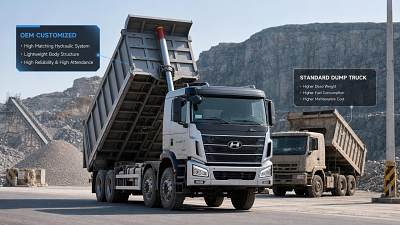
In long-haul logistics, 4x2 and 6x4 tractor heads remain common for container, dry cargo, and refrigerated movement across distances that can exceed 500 to 1,500 km per route cycle. In construction and mining, 6x4 and 8x4 dump trucks are more typical, with emphasis on reinforced suspension and higher gross vehicle weight capacity.
Key Cost Pressures in 2024–2025 Procurement Cycles
Truck prices in the region are influenced by steel cost volatility, engine emission configuration, shipping expense, and spare parts availability. Even when ex-factory pricing appears stable, inland delivery, homologation, body customization, and lead time risk can add 8% to 20% to the effective procurement budget.
Decision-makers also face a trade-off between lower upfront cost and stronger lifecycle value. A truck priced 10% lower may still become more expensive after 24 months if fuel consumption is higher by 2 to 4 liters per 100 km or if maintenance intervals are shorter.
Regional operating factors that influence specification
- Ambient temperatures frequently above 40°C in peak months, requiring stronger cooling systems.
- Mixed road conditions, from modern highways to rough industrial access roads.
- Long duty cycles, often 2 shifts per day for municipal, logistics, or contracting fleets.
- Cross-border operations that require practical parts support and easy serviceability.
The table below outlines how buyer priorities differ by application, helping teams assess heavy duty trucks for sale in Middle East markets based on use case rather than broad category alone.
A clear lesson from current procurement activity is that specification alignment reduces hidden cost. Buyers who define route profile, payload range, and service expectations early can compare suppliers more accurately and avoid overbuying or under-specifying assets.
Specification Trends Buyers Should Track
When reviewing heavy duty trucks for sale in Middle East markets, enterprise buyers are paying closer attention to 5 specification areas: engine output, transmission type, axle layout, cooling performance, and digital fleet support. These areas directly affect fuel burn, uptime, and operator productivity.
Powertrain and axle trends
For highway tractors, engines in the 380 to 480 hp range are widely considered practical for regional freight. For heavy off-road or mixed-terrain operations, buyers may prioritize higher torque output over headline horsepower, especially when climbing grades or carrying dense materials.
Manual transmissions are still relevant in cost-sensitive fleets, but automated manual transmission options are gaining traction where driver efficiency and fuel consistency matter. In many operations, a 6x4 setup offers the best balance between traction and cost, while 8x4 becomes more attractive when payload and body volume are central.
Cab, cooling, and operational comfort
The region’s climate makes cooling package design more than a comfort feature. Buyers increasingly ask about radiator capacity, air intake protection, and AC performance under 45°C ambient temperatures. Cab insulation, sleeper layout, and seat ergonomics also matter on routes exceeding 8 to 12 driving hours.
What a practical specification review should include
- Engine horsepower and torque matched to payload and terrain.
- Transmission type suited to driver profile and route conditions.
- Axle ratio optimized for fuel economy or gradeability.
- Cooling and filtration package suitable for heat and dust.
- Brake system, tire specification, and suspension durability.
- Spare parts lead time and service support within 24 to 72 hours.
The following comparison helps procurement teams assess which specification direction is more suitable for major operating scenarios in the region.
For buyers evaluating multiple brands and suppliers, these differences are more useful than comparing brochures line by line. The goal is to fit the truck to the job cycle, not simply choose the highest-rated or lowest-priced model on paper.
How Enterprise Buyers Can Control Procurement Risk
Buying heavy duty trucks for sale in Middle East channels often involves cross-border negotiation, technical verification, and delivery coordination. The highest procurement risks usually appear in 4 areas: unclear specifications, weak spare parts planning, uncertain lead times, and incomplete supplier validation.
Supplier screening and documentation checks
A disciplined sourcing process should begin with technical comparison, not pricing alone. Procurement teams should request detailed configuration sheets, available axle and engine options, warranty terms, parts support scope, and estimated production plus shipping timelines, which often range from 30 to 90 days depending on customization.
For multinational or regional fleet operators, it is useful to compare at least 3 suppliers across the same application profile. This creates a more realistic basis for evaluating not only unit price, but also supply continuity, documentation quality, and communication speed.
A 5-step procurement control framework
- Define operating scenario, annual mileage, payload, and route condition.
- Shortlist 3 to 5 qualified suppliers with matching product categories.
- Compare technical sheets, commercial terms, and delivery windows.
- Confirm parts support, warranty process, and inspection requirements.
- Finalize contract with acceptance criteria for configuration and shipment.
The table below can serve as a practical checklist when evaluating heavy duty trucks for sale in Middle East procurement projects through a digital B2B sourcing platform.
The strongest sourcing outcomes usually come from combining product comparison with market visibility. A dedicated industry platform helps enterprise buyers review truck categories, compare suppliers, identify suitable partners, and access buying guides that support more informed decisions across multiple markets.
Using a Specialized B2B Platform to Improve Buying Outcomes
A fragmented sourcing process often delays truck acquisition by several weeks. When buyers must search across disconnected websites, message multiple intermediaries, and request basic documents one by one, decision speed drops and comparison quality weakens. This is especially true when fleets need chassis, complete trucks, trailers, or spare parts in one procurement cycle.
A specialized global heavy truck industry platform addresses this challenge by bringing together manufacturers, suppliers, distributors, and buyers in a single digital environment. That means buyers can review product categories such as truck chassis and cab, complete trucks, light trucks, construction machinery, trailers and semi-trailers, plus spare parts through one professional sourcing channel.
Why this matters for enterprise decision-makers
For procurement teams, the value is not only product access but decision efficiency. A well-structured platform can reduce supplier identification time from several weeks to a few days, support side-by-side comparison, and provide industry resources that help assess market trends and operational fit before issuing a final order.
For suppliers and manufacturers, the same environment improves market reach and visibility. For buyers, it increases transparency around available configurations, sourcing options, and collaboration potential across the full heavy truck supply chain.
What buyers should look for on the platform
- Clear categorization by truck type, application, and component range.
- Detailed product information suitable for technical comparison.
- Access to market insights, buying guides, and brand directories.
- Supplier communication channels that support faster RFQ handling.
- Coverage across trucks, trailers, machinery, and spare parts.
For buyers searching heavy duty trucks for sale in Middle East markets, this broader ecosystem is especially useful when projects involve multi-country sourcing, phased fleet expansion, or a mix of road transport and construction applications.
Practical Buying Advice for the Next 12 Months
The next procurement cycle is likely to favor buyers who plan earlier and specify more precisely. Instead of waiting for the lowest spot quotation, companies should map fleet demand 6 to 12 months ahead, especially for projects tied to contract mobilization, municipal tenders, or infrastructure delivery schedules.
When comparing heavy duty trucks for sale in Middle East offers, focus on 3 decision layers: operational fit, delivered cost, and support continuity. If two trucks are close in price, the better choice is often the one with stronger parts access, more suitable cooling protection, and easier maintenance planning.
Common buying mistakes to avoid
- Selecting horsepower based on preference rather than payload analysis.
- Ignoring local climate adaptation for cooling, filtration, and cab systems.
- Comparing base price without logistics, parts, and inspection cost.
- Skipping service response planning for the first 12 months of operation.
For enterprise buyers, the best results come from combining market insight with structured sourcing. A professional heavy truck B2B platform can support that process by connecting buyers with reliable suppliers, expanding access to product options, and making comparison more efficient across the global commercial vehicle ecosystem.
If your team is evaluating heavy duty trucks for sale in Middle East markets for logistics, construction, mining, or cross-border transport, now is a good time to review specification priorities and supplier options. Contact us to get a tailored sourcing plan, compare suitable truck categories, and explore more solutions for your next procurement project.
Trending News
- What documents are needed to export a low bed trailer to Southeast Asia?
- What to verify before choosing a delivery truck supplier for school transportation
- What an excavator manufacturer catalog should show before you compare models
- What to check before appointing a bulldozer distributor
- How to verify supplier reliability when sourcing bulldozers overseas
Tag
Recommended News
 Market Analysis2026 Construction Machinery Price Trends: What Is Driving Total Equipment Costs?Construction machinery price trends in 2026 are shaped by steel, freight, technology, and compliance. See what really drives total equipment costs and make smarter buying decisions.
 Market AnalysisTruck Parts Price Trends in 2026: What Is Driving Costs?Truck parts price trends in 2026 are reshaping fleet budgets. Discover what drives rising costs, where risks hide, and how smarter sourcing can protect uptime and margins.
 Market AnalysisTruck Parts Price Trends in 2026: What Drives CostsTruck parts price trends in 2026 reveal what drives rising costs across road transport equipment. Explore key cost factors, sourcing risks, and smarter buying strategies.
![]() Market AnalysisDump Truck Manufacturer Trends in 2026: Materials, Emissions, and UptimeDump truck manufacturer trends for 2026: discover how materials, emissions strategy, and uptime planning are reshaping fleet value, supplier selection, and long-term operating performance.
 Market AnalysisConstruction Machinery Price Trends: What to Expect From 2026 Supply CostsConstruction machinery price trends for 2026 may be shaped by steel, freight, labor, and compliance costs. See where prices may rise and how buyers can plan smarter sourcing.
 Market AnalysisBulldozer Producer Comparison: What Matters Beyond Engine Power in 2026Bulldozer producer comparison in 2026 goes beyond engine power. Discover how uptime, parts access, service coverage, and lifecycle value shape the smartest buying decisions.
 Market AnalysisInfrastructure Excavator Demand in 2026: What Manufacturers Need to WatchExcavator manufacturer for infrastructure development trends in 2026: learn what to watch in demand shifts, uptime, emissions, parts, and supplier readiness to stay competitive.
 Market AnalysisExcavator Manufacturer Trends in Infrastructure Development 2026Excavator manufacturer for infrastructure development trends in 2026: compare uptime, telematics, parts support, and sourcing resilience to choose smarter, lower-risk equipment.
 Market AnalysisMining Truck Trends in 2026: Payload, Safety, and Total Cost OutlookMining truck trends in 2026: explore payload strategy, smarter safety systems, and total cost insights to choose the right fleet and improve long-term mining performance.
![]() Market AnalysisCrane Truck OEM Trends Shaping 2026 Fleet PlanningCrane truck OEM trends for 2026 fleet planning: compare compliance, uptime, integration, and lifecycle cost across construction, utility, and transport fleets.
 Market AnalysisTruck Tipper OEM or Standard Model: Which Lowers Lifetime Cost?Truck tipper OEM or standard model? Discover which choice cuts lifetime cost through better payload, lower downtime, and stronger resale value for demanding transport operations.
 Market AnalysisDump Truck Distributor Trends in 2026: Margin, Stock, and ServiceDump truck distributor trends in 2026: discover how to protect margin, optimize stock, and strengthen service to stay competitive and win more heavy truck business.
 Market AnalysisGlobal Heavy-Duty EV Battery Prices Drop 8.2% WeeklyHeavy-Duty EV Battery prices drop 8.2% weekly—driven by LMFP scale-up & lower freight. Key insight for global procurement, OEMs & supply chain players.
 Market AnalysisConstruction Machinery Price Trends in 2026: What Is Driving Total Cost UpConstruction machinery price trends in 2026 are driving total ownership costs higher. Discover the key cost factors, scenario-based risks, and smarter buying strategies.
 Market AnalysisChina's Heavy-Duty Truck Export Avg. Price Up 11.3% in Jan–Apr 2026China's heavy-duty truck export avg. price up 11.3% in Jan–Apr 2026 — driven by surging demand for battery-electric tractors and L3 mining trucks.
 Market Analysis2026 China Excavator Manufacturers: What Sets the Best ApartExcavator manufacturer in China selection in 2026 goes beyond price. Discover how top brands stand out in quality, export support, durability, and lifecycle value.
 Market AnalysisHeavy Duty Trucks for Sale in Middle East: Cost and Spec TrendsHeavy duty trucks for sale in Middle East: explore 2024–2025 cost shifts, spec trends, and smart sourcing tips to compare suppliers, reduce fleet risk, and improve long-term ROI.
 Market AnalysisDelivery Truck Supplier with Cost-Effective Solutions: 2026 Market OutlookDelivery truck supplier with cost-effective solutions: explore the 2026 market outlook, compare total ownership costs, supplier reliability, and aftersales support to choose smarter fleet investments.
 Market AnalysisFlatbed Trailer Supplier with Modular Design: Flexibility vs Maintenance CostFlatbed trailer supplier with modular design: compare flexibility, maintenance cost, parts support, and lifecycle value. Use this practical checklist to choose smarter.
 Market AnalysisInfrastructure Projects Need More Than a Machinery SupplierConstruction machinery supplier for infrastructure projects should deliver more than equipment. Learn how to compare reliable partners, reduce risk, and secure lifecycle support.
 Market AnalysisTruck Trailer Distributor Trends Shaping Regional Market Growth in 2026Truck trailer distributor trends for 2026 reveal how regional logistics, compliance, sourcing, and service strategy drive market growth. Explore key insights for smarter expansion.
 Market AnalysisConstruction Machinery Price Trends in 2026: What Shapes Final QuotesConstruction machinery price trends in 2026 depend on specs, compliance, freight, and service. Learn what shapes final quotes and compare suppliers with more confidence.
 Market AnalysisExcavator Manufacturer in China: How to Compare Quality Across FactoriesExcavator manufacturer in China selection is no longer about price alone. Learn how to compare factory quality, reliability, safety, and after-sales support for smarter sourcing.
 Market AnalysisTruck Cement Mixer Manufacturer Comparison: Capacity, Build, and Lead TimeTruck cement mixer manufacturer comparison guide covering capacity, build quality, and lead time to help buyers reduce risk, improve uptime, and choose the right supplier faster.
 Market AnalysisPortable Construction Machinery Supplier Options for Fast-Changing Job SitesExplore how a construction machinery supplier with portable options can help fast-changing job sites stay efficient, reduce relocation delays, and improve uptime with smarter sourcing.