Vietnam Tightens EV-Readiness Gate for Imported Trucks
As of August 1, 2026, Vietnam’s revised TCVN 12345:2026 introduces a clearer compliance gate for imported medium- and heavy-duty trucks by tying import licensing to local third-party testing and issuance of a VCA EV-Ready Certificate. For truck exporters, importers, certification teams, testing service providers, and buyers managing delivery schedules, this matters because the rule change shifts EV-compatibility review from a technical consideration into a mandatory pre-import condition.
What the revised rule now requires
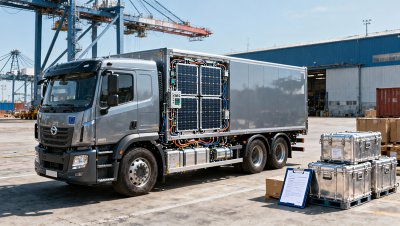
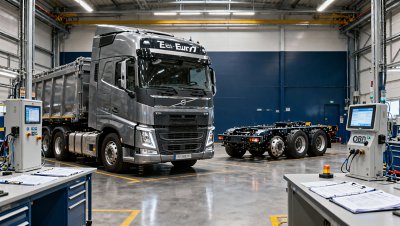
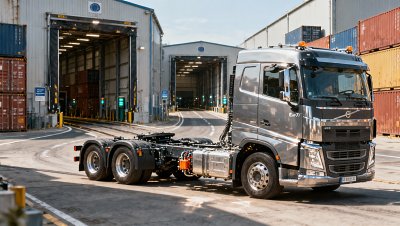
The Vietnam standards and quality authority, VCA, updated the Technical Regulation on Commercial Vehicle Electrification Compatibility, TCVN 12345:2026, on June 28, 2026. Under the updated requirement, starting from August 1, 2026, all imported medium- and heavy-duty trucks, including chassis, tractor units, and dump trucks, must pass testing at a local third-party laboratory and obtain a VCA EV-Ready Certificate before an import license can be issued.
The information provided also states that Chinese vehicle manufacturers were required to submit pre-review materials by July 15. The confirmed change therefore concerns both a certification requirement and a document submission timetable linked to market entry.
Where the immediate pressure is likely to appear
For exporters and import-facing vehicle suppliers
Analysis shows the most direct impact falls on companies shipping covered truck categories into Vietnam. The change affects the market-entry sequence itself: without local testing and the EV-Ready Certificate, the import license is not issued. In practice, these companies should pay close attention to whether product files, technical descriptions, and compliance materials are ready for pre-review and for local laboratory assessment.
For importers, distributors, and procurement teams
From an industry perspective, buyers and channel operators may need to reassess delivery planning, customs preparation, and vehicle sourcing arrangements. Because the new certificate is described as a prerequisite to licensing, procurement teams should closely monitor whether contracted units fall within the covered vehicle scope and whether supporting certification documents are available early enough to avoid disruption at the import stage.
For testing and certification service participants
The rule change also raises the importance of local third-party testing capacity and document coordination. Certification-related service providers and internal compliance teams are likely to see greater operational pressure around test scheduling, dossier completeness, and alignment between submitted technical materials and the local certification path required by VCA.
For after-sales and delivery coordination
Observably, the new requirement may also affect downstream handover timing. Even where sales discussions or procurement decisions have already advanced, delivery execution now depends more directly on whether the covered vehicle has cleared the local testing and certification step. What deserves closer attention is the interface between compliance progress and customer delivery commitments.
Practical points companies should watch now
Check whether the product scope clearly falls within the covered categories
Companies dealing in chassis, tractor units, and dump trucks should first confirm whether the imported configuration is captured by the revised requirement as described. This is a basic but necessary compliance screening step before finalizing shipment, order timing, or import arrangements.
Review document readiness against the pre-review timeline
Analysis shows the July 15 pre-review submission requirement for Chinese vehicle manufacturers is one of the most immediate operational signals in the information provided. Companies connected to those submissions should verify whether technical files and supporting materials have been prepared in a form suitable for review, while recognizing that the detailed document checklist was not provided in the input and therefore still needs confirmation.
Reassess certification timing inside delivery plans
Because the EV-Ready Certificate is now tied to import license issuance, companies should treat certification timing as part of the delivery schedule rather than as a parallel administrative step. Where execution details remain unclear, it is more appropriate to monitor official wording and implementation practice than to assume a uniform processing timeline.
Track how the requirement appears in commercial paperwork
What deserves closer attention is whether the revised rule begins to influence tender documents, purchase conditions, shipment milestones, or supplier qualification language. The input does not provide those downstream changes as confirmed facts, so they should be monitored as potential execution developments rather than assumed outcomes.
How this should be read at this stage
Observation suggests this is best understood as an execution-level compliance signal rather than a general policy discussion. The key point is that EV-compatibility certification is no longer only a technical matter in the background; under the provided information, it becomes a stated precondition for import licensing for covered truck categories.
At the same time, it would be premature to overstate the broader market effect. The available facts confirm the rule revision, the effective date, the covered vehicle types, the local testing requirement, the EV-Ready Certificate requirement, and the pre-review deadline for Chinese manufacturers. Details on enforcement rhythm, laboratory throughput, documentation standards, and market response still require follow-up observation.
Why the market will keep watching this change
In practical terms, the update matters because it shifts compliance work closer to the front of the trade process for imported medium- and heavy-duty trucks entering Vietnam. That can influence certification preparation, import planning, procurement timing, and delivery coordination across several business roles.
Current analysis suggests this is more appropriate to understand as a rule that has entered the implementation stage, while its detailed operating impact still needs to be observed through certification practice, official clarification, and transaction documents used in the market.
Basis of this article and what still needs verification
This article is based on the user-provided news title, event date, and event summary. For developments of this type, relevant source categories typically include official notices, regulator releases, trade or customs authority information, industry association updates, standards organization documents, and reporting by established industry media.
No specific official source link was provided in the input, so the exact source document link still needs to be verified on an ongoing basis. Continued attention should be given to any detailed implementation notice, certification interpretation, changes in tender or procurement documents, industry feedback, and how affected companies are carrying out the new requirement in practice.
Trending News
- How to match lowbed trailer deck height to your hauling equipment
- What documents are needed to export a low bed trailer to Southeast Asia?
- What to verify before choosing a delivery truck supplier for school transportation
- What an excavator manufacturer catalog should show before you compare models
- What to check before appointing a bulldozer distributor
Tag
Recommended News
 Policy & RegulationsGermany Ends EV Subsidy ExtensionGermany ends EV subsidy extension, reshaping EV and commercial vehicle plans in Europe. See how importers, distributors, and Chinese NEV suppliers should respond.
 Policy & RegulationsEU Rule Sets LCA Certification for Truck ImportsEU Rule Sets LCA Certification for Truck Imports: learn how the new EU LCA and EPD compliance rule will affect truck approvals, export timelines, costs, and delivery planning.
 Policy & RegulationsEU Requires LCA Reports for Imported HDVs from Oct 2026EU LCA reports for imported HDVs become mandatory from Oct 2026. Learn how the new EU heavy-duty vehicle carbon compliance rule affects exporters, suppliers, costs, and delivery readiness.
 Policy & RegulationsChina Tightens Export Filing for New Energy Heavy TrucksChina Tightens Export Filing for New Energy Heavy Trucks: learn how new HS code rules and CNAS carbon-footprint reports may impact customs clearance, compliance, and delivery timelines.
 Policy & RegulationsEU Updates CO2 Rules for Heavy-Duty Vehicle ApprovalEU Updates CO2 Rules for Heavy-Duty Vehicle Approval: learn how new lifecycle carbon and battery due diligence requirements affect EU market access, approval timing, and compliance costs.
 Policy & RegulationsChina Customs Adds New Export Fields for Road Transport EquipmentChina Customs adds new export fields for road transport equipment from Aug 15, 2026. Learn how drive type and certification data may affect compliance, clearance speed, and export planning.
 Policy & RegulationsEU Tightens Truck WVTA Brake and Lighting TestsEU Tightens Truck WVTA Brake and Lighting Tests: learn how Regulation (EU) 2026/1387 reshapes brake response, headlamp compliance, certification timing, and EU market access.
 Policy & RegulationsEU Sets CO2 Rules for New Heavy Trucks from 2027EU Sets CO2 Rules for New Heavy Trucks from 2027: learn how new EU CO2 limits, OBD, and remote data upload requirements could reshape type approval, costs, and delivery planning.
 Policy & RegulationsEU Brings Forward Cybersecurity Approval for Heavy TrucksEU heavy truck cybersecurity approval moves to August 1, 2026. Learn how WVTA, UNECE R155, OTA and telematics rules will impact EU exports, type approval and delivery plans.
 Policy & RegulationsEU Moves Truck Cybersecurity WVTA Forward to Aug 1, 2026EU truck cybersecurity WVTA moves to Aug 1, 2026. Learn how UN R155 and EU 2022/1426 affect heavy truck type approval, exports, suppliers, and compliance planning.
 Policy & RegulationsEU Brings Forward WVTA Cybersecurity Approval for TrucksEU Brings Forward WVTA Cybersecurity Approval for Trucks: learn how the 2026 deadline impacts heavy truck exports, retrofit projects, supplier compliance, costs, and EU market-entry planning.
 Policy & RegulationsEU Brings Forward WVTA Cybersecurity Approval for Heavy TrucksEU heavy truck WVTA cybersecurity approval now starts on August 1, 2026. Learn how EU type approval, CSMS audits, ADAS, OTA, and registration risks affect exporters and manufacturers.
 Policy & RegulationsEU Cybersecurity Approval Rule Takes Effect for Heavy TrucksEU Cybersecurity Approval Rule now reshapes heavy trucks market access. Learn how CSMS, UNECE R155, and WVTA deadlines could impact certification, delivery, and EU export readiness.
 Policy & RegulationsEU Requires EN 15038 Declarations for Truck ImportsEU Requires EN 15038 Declarations for Truck Imports: learn how the new EU rule affects heavy truck customs clearance, compliance timing, and export readiness.
 Policy & RegulationsEU Rule Brings SCIP Filing to Imported Truck Battery PartsSCIP filing for imported truck battery parts becomes critical in the EU from Oct 1, 2026. Learn how the rule impacts heavy-duty truck exports, aftermarket parts, and customs compliance.
 Policy & RegulationsEU REACH Expands to Truck Battery PartsEU REACH expands to truck battery parts, covering lithium-ion battery modules, BMS units, and thermal systems. Learn how SCIP filing, SVHC disclosure, and EU export compliance may affect truck suppliers.
 Policy & RegulationsEU Sets Battery Footprint Rule for Heavy TrucksEU Sets Battery Footprint Rule for Heavy Trucks: learn how the 2027 EU battery carbon footprint requirement could impact type approval, customs clearance, and truck exports.
 Policy & RegulationsEU Requires Certified V2X Modules in Heavy TrucksEU Requires Certified V2X Modules in Heavy Trucks from July 22, 2026. Learn how UN R155 and ETSI EN 303 648 rules will impact EU type approval, registration, and exports.
 Policy & RegulationsEU Tightens V2X Approval for Heavy TrucksHeavy trucks entering the EU face tougher V2X approval from July 22, 2026. Learn how UNECE R155/R156 and EU Type Approval will affect registration, exports, and delivery readiness.
 Policy & RegulationsEU Rule Takes Effect: Heavy Trucks Need V2X from July 22, 2026Heavy trucks entering the EU from July 22, 2026 need V2X modules and UN R155 approval. Learn how this rule impacts compliance, certification, exports, and delivery.
 Policy & RegulationsEU Opens Euro 7 Transition for Heavy TrucksEU Opens Euro 7 Transition for Heavy Trucks: learn how new filing rules, battery carbon footprint declarations, and OBD II checks will impact EU truck exports and compliance planning.
 Policy & RegulationsEPA Update Removes Seven Chinese Diesel Engine ModelsEPA Update Removes Seven Chinese Diesel Engine Models: learn how this EPA compliance change could affect North American truck exports, sourcing, certification, and delivery planning.
 Policy & RegulationsEU Enforces Euro 7 for New Heavy TrucksEU Enforces Euro 7 for New Heavy Trucks: learn how stricter NOx, NH₃, and brake particle certification impacts EU market access, registration timing, and exporter compliance costs.
 Policy & RegulationsLight Duty Truck Manufacturer in USA: Key Compliance ChecksLight duty truck manufacturer in USA selection starts with compliance. Learn the key checks for FMVSS, emissions, load ratings, and traceability before you buy.
 Policy & RegulationsEU Enforces Euro 7 Upgrade for Heavy Truck ImportsEU Enforces Euro 7 Upgrade for Heavy Truck Imports: learn how new PN, NH3, brake and tire wear tests affect certification, customs clearance, and on-time EU delivery.