Truck Parts Quality Checks That Reduce Fleet Downtime
Fleet downtime often starts with small issues that could have been caught during routine inspections. For aftermarket maintenance teams, consistent quality checks on truck parts are essential to keeping vehicles road-ready, reducing emergency repairs, and protecting operating margins. From brake components and filters to suspension systems and electrical parts, every replacement decision affects reliability on the road. This guide explains how practical inspection standards and smarter sourcing practices can help maintenance professionals identify dependable parts, avoid premature failures, and support more efficient fleet operations.
For maintenance managers, the challenge is not only finding replacement truck parts quickly. The harder task is verifying whether those parts can withstand repeated braking, heavy payloads, long-haul vibration, dust exposure, and mixed climate conditions over thousands of operating hours.
Why Truck Parts Quality Checks Directly Affect Fleet Availability
A parked truck creates more than repair cost. It disrupts delivery schedules, increases driver waiting time, and may force the fleet to rent substitute vehicles within 24–48 hours. Quality checks reduce this risk before parts reach the workshop bay.
Aftermarket maintenance teams usually handle mixed fleets, including tractors, dump trucks, light trucks, trailers, and construction support vehicles. Each application places different stress on truck parts, so inspection standards must reflect actual duty cycles.
The hidden cost of a small defect
A low-cost seal, sensor, filter, or brake pad can trigger a larger failure if it does not meet dimensional or material expectations. One leaking coolant hose may lead to overheating, engine derating, and several hours of unplanned downtime.
In common fleet workshops, an emergency repair often consumes 2–4 times more labor planning than a scheduled replacement. Mechanics must diagnose under pressure, search stock, confirm fitment, and return the vehicle to service quickly.
Key downtime triggers to monitor
- Repeated fitment issues caused by incorrect dimensions, wrong mounting points, or unclear part references.
- Premature wear in friction, suspension, and driveline components under high-load operating conditions.
- Electrical faults caused by poor connector sealing, weak terminals, or unstable voltage tolerance.
- Contamination-related failures from low-grade filters, seals, and lubrication-related replacement parts.
The goal is to catch risk at 3 points: before purchase, before installation, and after the first service interval. This layered approach helps teams avoid repeating the same failure across multiple vehicles.
Core Inspection Areas for High-Risk Truck Parts
Not every component requires the same inspection depth. Maintenance teams should focus stricter checks on safety-critical, high-frequency, and high-labor truck parts because failures in these groups create the longest recovery time.
A practical workshop checklist should cover at least 6 categories: braking, filtration, suspension, steering, electrical, and sealing parts. These groups appear frequently in preventive maintenance schedules and roadside repair records.
Component-level checks that matter most
The following table gives maintenance teams a structured way to review common truck parts before installation. The values are typical checkpoints, not a substitute for OEM service manuals or vehicle-specific technical guidance.
This comparison shows why one universal inspection rule is not enough. Safety-related truck parts need stricter measurement, while consumables require packaging, cleanliness, and fitment checks to prevent repeat service visits.
Dimensional accuracy and fitment control
Fitment issues waste technician time. A 1–2 mm deviation in a mounting point, hose diameter, or gasket profile may prevent installation or create leakage after several heat cycles.
Maintenance teams should compare samples against original parts, technical drawings, or verified reference units. For frequently used truck parts, keeping 1 approved sample in the parts room helps reduce repeated debate.
Material and surface checks
Surface finish, coating coverage, rubber flexibility, and casting consistency reveal early quality signals. Visible cracks, burrs, corrosion spots, uneven welds, and weak packaging should be recorded before installation.
For high-load vehicles such as dump trucks and semi-trailers, the inspection should also consider vibration resistance, dust protection, and heat exposure. These conditions shorten the life of poorly selected truck parts.
Building a Practical Workshop Quality Check Process
A quality check process does not need to be complicated. It needs to be consistent, documented, and quick enough for daily use. A 5-step workflow can fit most aftermarket maintenance environments.
A 5-step inspection workflow
- Confirm part number, vehicle model, production year, engine type, axle configuration, and application.
- Inspect packaging, labels, protective caps, seals, and storage condition before opening the box.
- Measure key dimensions such as diameter, thickness, thread size, bolt spacing, and connector shape.
- Check surface quality, material condition, movement, sealing faces, and any visible manufacturing defects.
- Record installation result, mileage, mechanic notes, and first follow-up feedback after 7–15 days.
This workflow gives maintenance teams a repeatable record. Over 3–6 months, the data can show which truck parts perform well and which suppliers create recurring issues.
Incoming inspection for parts room control
Incoming inspection should happen before truck parts enter available stock. A technician or parts supervisor can review batch quantity, label accuracy, and any transport damage within the same working day.
For fast-moving consumables, teams may inspect 10% of the batch or at least 3 pieces per delivery. For safety-critical components, a 100% visual check is often more appropriate.
Documentation that improves accountability
A simple record should include supplier name, delivery date, part description, quantity, inspection result, and vehicle application. Photos of defects are useful when requesting replacement or supplier clarification.
Digital records help multi-site fleets compare results across workshops. If the same truck parts fail in 2 or more locations, procurement can pause repeat orders and investigate root causes.
Smarter Sourcing Standards for Aftermarket Maintenance Teams
Quality checks become more effective when procurement decisions are aligned with maintenance feedback. Price alone is not enough, especially when the part requires 1–3 hours of labor to replace.
For global buyers, sourcing truck parts through a professional B2B platform can simplify supplier comparison, product discovery, and communication. It also helps teams evaluate manufacturers, distributors, and spare parts categories in one place.
Supplier comparison factors beyond unit price
The following sourcing matrix helps aftermarket teams judge supplier reliability before placing repeat orders. It is especially useful for fleets operating across logistics, construction, mining, and municipal service routes.
The key conclusion is clear: supplier quality is measured by repeatability, communication, and fitment accuracy. A slightly cheaper component may cost more if it fails early or blocks a scheduled repair slot.
Using a B2B platform to reduce sourcing uncertainty
The Global Heavy Truck Industry Platform supports buyers by organizing suppliers and product categories across the commercial vehicle supply chain. Maintenance teams can compare truck parts, complete trucks, trailers, chassis, and construction machinery resources.
For aftermarket buyers, this digital marketplace is useful when building a broader supplier base. Teams can review product descriptions, communicate requirements, and identify partners for routine replacement and urgent procurement.
Procurement questions to prepare
- Which vehicle models, axle types, engines, and operating routes will use these truck parts?
- What order quantity is needed for 30, 60, or 90 days of maintenance demand?
- Which components require samples, dimensional confirmation, or installation testing before bulk purchase?
- What lead time, packaging method, and after-sales response are acceptable for fleet operations?
Clear requirements prevent vague quotations. They also help suppliers recommend more suitable truck parts based on payload, environment, vehicle age, and service interval expectations.
Field Testing and Feedback After Installation
Quality control should continue after the part is installed. Many defects only appear under load, heat, moisture, or vibration. A short field validation cycle helps fleets avoid larger batch failures.
For new suppliers or unfamiliar truck parts, start with 1–5 vehicles rather than the entire fleet. Track performance for at least one maintenance interval before approving wider use.
What to monitor during the first service interval
After installation, mechanics should monitor noise, heat, leakage, warning lights, vibration, braking feel, steering response, and driver comments. These signals often reveal poor compatibility earlier than mileage alone.
A follow-up inspection after 7–15 days is useful for vehicles in intensive service. For long-haul trucks, the first check can be aligned with the next depot return or scheduled service stop.
Useful performance indicators
- Installation success rate, including whether rework was needed within the first repair shift.
- Early failure rate within 30, 60, and 90 days after replacement.
- Driver-reported symptoms after the vehicle returns to normal route conditions.
- Comparison between expected service life and actual replacement interval.
These indicators help teams separate isolated installation mistakes from part quality problems. If the same truck parts show repeated defects across different technicians, supplier review becomes necessary.
Common mistakes in aftermarket quality control
One mistake is judging truck parts only by appearance. A clean finish does not guarantee correct material strength, sealing performance, or heat resistance under heavy-duty operation.
Another mistake is ignoring driver feedback. Drivers notice changes in braking response, steering feel, engine behavior, and cabin vibration before a diagnostic tool shows a clear fault code.
A third mistake is keeping no failure history. Without records, teams may continue buying the same problematic components because each failure appears to be a separate incident.
Creating a Preventive Parts Strategy for Lower Downtime
A preventive strategy combines inspection, stocking, and sourcing discipline. Instead of reacting when a truck stops, maintenance teams plan truck parts availability around mileage, operating severity, and historical failure patterns.
A basic inventory plan can divide parts into 3 levels: critical safety parts, fast-moving consumables, and slow-moving special items. Each group needs different stock depth and supplier response expectations.
Stock planning for maintenance efficiency
Critical parts should be available for vehicles that cannot safely continue operation, such as brake components, steering items, air system fittings, and essential electrical units.
Consumables such as filters, belts, bulbs, and wiper parts can be planned according to average monthly use. Many workshops review stock levels every 2–4 weeks to prevent shortages.
When to approve a new supplier
A supplier should not be approved only after one successful sample. A better approach includes sample review, small-batch installation, first interval monitoring, and repeat-order consistency checks.
For safety-critical truck parts, teams should require clearer technical communication and traceable delivery information. For low-risk consumables, stable packaging and consistent fitment may be sufficient for approval.
Turning maintenance feedback into buying decisions
The best quality system connects technicians and purchasing staff. Mechanics see the real condition of truck parts after installation, while buyers manage supplier options, lead times, and replacement negotiations.
A monthly 30-minute review can identify repeated issues, update approved supplier lists, and adjust stock levels. This small habit can prevent avoidable downtime across a large fleet.
Reliable truck parts are the result of disciplined inspection, careful sourcing, accurate fitment control, and field feedback. For aftermarket maintenance teams, these practices protect uptime, reduce emergency repairs, and support safer vehicle operation.
The Global Heavy Truck Industry Platform helps fleet buyers and maintenance professionals explore spare parts resources, compare suppliers, and access industry information across the heavy truck ecosystem. To improve your parts sourcing process or discuss specific maintenance requirements, contact us to learn more solutions or request product details.
Trending News
- How does operating weight affect the price of a new excavator?
- How to compare concrete mixer truck suppliers by total landed cost
- How axle load limits affect low bed trailer exports to Southeast Asia
- How to locate a truck exhaust system leak before replacing parts
- When does heavy equipment transport require a lowboy trailer?
Tag
Recommended News
 Truck Parts IndustryWhat causes a truck injector to fail prematurely?Truck injector failure can stem from fuel contamination, water, wiring faults, heat, or incorrect installation. Discover practical diagnostic steps to prevent repeat repairs.
 Truck Parts IndustryEU REACH Rule Takes Effect for Truck Rubber PartsEU REACH Rule takes effect for truck rubber parts exported to the EU. Learn how SCIP reporting, SVHC declarations, and supply chain compliance now impact truck manufacturers and suppliers.
 Truck Parts IndustryHow to Evaluate Commercial Vehicle Parts With Eco-Friendly Materials for Durability and ComplianceCommercial vehicle parts with eco-friendly materials require more than green claims. Learn how to assess durability, compliance, and supplier reliability for smarter sourcing.
 Truck Parts IndustryHow to Evaluate a Truck Parts Supplier Beyond Unit PriceTruck parts supplier selection should go beyond unit price. Learn how to assess quality, traceability, compliance, delivery, and support to reduce fleet risk and total cost.
 Truck Parts IndustryVietnam to Require QR Traceability Labels on Imported Heavy-Truck PartsVietnam to Require QR Traceability Labels on Imported Heavy-Truck Parts from Aug 1, 2026. Learn scope, VNQR-2025 rules, VITRAC links, and how to avoid port refusal and fines.
 Truck Parts IndustryHow to Evaluate a Truck Spare Parts Supplier for Long-Term Cost ControlTruck spare parts supplier selection affects far more than price. Learn how to compare quality, delivery, traceability, and hidden costs to protect fleet uptime and control long-term expenses.
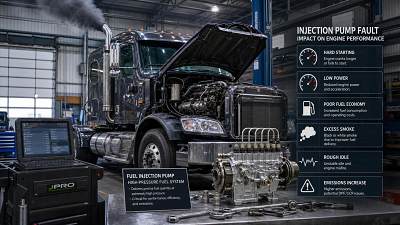
 Truck Parts IndustryFuel Injection Pump Failure Signs and What They Mean for Engine PerformanceFuel injection pump failure signs can quickly reduce truck power, raise fuel use, and trigger hard starts. Learn what each symptom means and when to act before costly downtime.
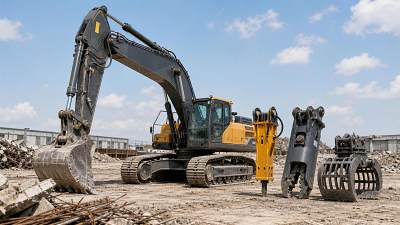
 Truck Parts IndustryExcavator Attachment Selection for Demolition and Site PrepExcavator attachment selection for demolition and site prep: compare breakers, grapples, crushers, and buckets to boost productivity, safety, and ROI.
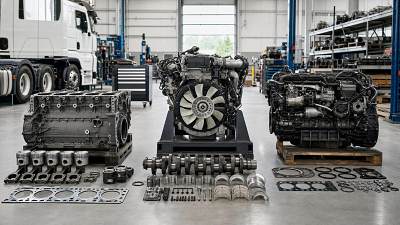
 Truck Parts IndustryTruck Engine Overhaul or Replacement: Which Costs Less Long Term?Truck engine overhaul or replacement? Compare long-term cost, downtime, fuel efficiency, and reliability to choose the smarter option for your fleet.
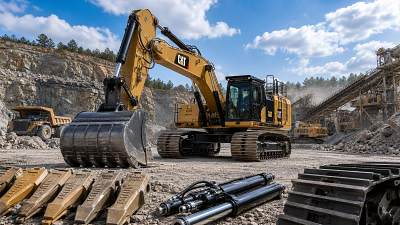
 Truck Parts IndustryHow to Choose Excavator Parts That Last LongerExcavator parts buying guide: learn how to choose excavator parts that last longer by comparing fit, material quality, operating conditions, and supplier reliability.
 Truck Parts IndustryAre Eco-Friendly Commercial Vehicle Parts Durable Enough for Daily Use?Commercial vehicle parts with eco-friendly materials can be durable for daily use—if tested right. Explore where they perform best, key risks, and smarter sourcing insights.
 Truck Parts IndustryTruck Parts OEM vs Aftermarket: Cost, Fit, and Warranty RisksTruck parts OEM vs aftermarket: compare true cost, fit accuracy, and warranty risks to reduce downtime, avoid disputes, and make smarter fleet sourcing decisions.
 Truck Parts IndustryTruck Spare Parts Buying Guide: How to Reduce Downtime and Fitment RiskTruck spare parts buying guide for fleet maintenance teams: learn how to reduce downtime, avoid fitment risk, verify suppliers, and make smarter sourcing decisions.
 Truck Parts IndustryHow to Evaluate a Truck Parts Supplier Beyond PriceTruck parts supplier selection should go beyond price. Learn how to compare quality, delivery, service, and total cost to reduce risk and keep fleets running efficiently.
 Truck Parts IndustryHeavy Truck Parts for Construction: Signs of a Reliable ManufacturerHeavy truck parts manufacturer for construction: learn how to identify reliable suppliers through quality control, traceability, testing, and support to reduce downtime and improve fleet safety.
 Truck Parts IndustryHow to Compare Truck Spare Parts Suppliers on Quality and Lead TimeTruck spare parts supplier comparison starts with quality and lead time. Learn how to assess consistency, delivery reliability, and sourcing fit for smarter purchases.
 Truck Parts IndustryEU REACH Sets PAH Limit for Heavy Truck Rubber PartsEU REACH sets a new PAH limit for heavy truck rubber parts, affecting brake hoses, bushings, and export compliance. Learn what suppliers must prepare now to avoid testing delays and customs risks.
 Truck Parts IndustryWhat to Check in a Truck Chassis Supplier Before Fleet ExpansionTruck chassis supplier selection can make or break fleet expansion. Learn what to check on quality, production, delivery, support, and total cost before requesting a quote.
 Truck Parts IndustryCold Storage Truck Parts That Matter Most for Temperature ControlCommercial vehicle parts for cold storage determine real temperature stability. Discover the key truck components that reduce spoilage, improve efficiency, and protect sensitive cargo.
 Truck Parts IndustryHow to Evaluate a Heavy Truck Parts Manufacturer for Long-Term Supply StabilityHeavy truck parts manufacturer selection starts with supply stability. Learn how to assess quality, capacity, lead times, and risk signals for smarter long-term sourcing.
 Truck Parts IndustryEU EPR Rules Extend to Commercial TrailersEU EPR rules now extend to commercial trailers, bringing new registration, reporting, and fee duties from 2027. See how exporters can prepare early to avoid customs delays.
 Truck Parts IndustryTruck Suspension Problems: Signs, Causes, and Fix OptionsTruck suspension issues can lead to tire wear, poor handling, and costly downtime. Learn the key signs, root causes, and best fix options for different truck applications.
 Truck Parts IndustryHow to Choose a Heavy Truck Parts Manufacturer for Construction FleetsHeavy truck parts manufacturer for construction selection starts with uptime, quality, and delivery. Learn how to compare suppliers, reduce fleet risk, and choose with confidence.
 Truck Parts IndustryUS Sets AEBS Rule for Imported Commercial TrailersUS sets AEBS rule for imported commercial trailers starting Oct. 1, 2026. Learn FMVSS No. 127A, SAE J2929, and key compliance steps to avoid CBP entry denial.
 Truck Parts IndustryHow to Choose Commercial Vehicle Parts That Reduce DowntimeCommercial vehicle parts selection can make or break fleet uptime. Learn how to choose parts that improve fit, quality, supply reliability, and lower total downtime cost.