Choosing a Truck Chassis Supplier for Heavy Haulage Loads
Choosing a Truck Chassis Supplier for Heavy Haulage Loads
Selecting the right truck chassis supplier for heavy haulage is now a strategic technical decision, not a simple purchasing task.
Heavy haulage operations face larger payloads, stricter safety rules, longer routes, and higher expectations for uptime across global land transport markets.
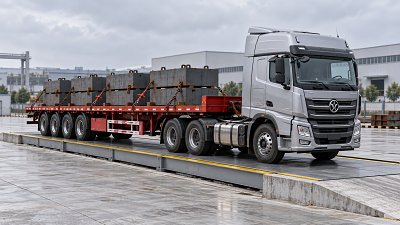
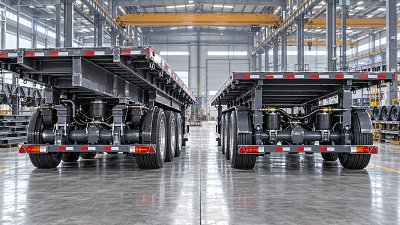
A capable truck chassis supplier for heavy haulage must support structural durability, axle matching, drivetrain integration, compliance, and lifecycle service.
For technical evaluators, the supplier choice directly affects payload efficiency, fatigue resistance, maintenance cost, and long-term fleet reliability.
Heavy Haulage Demand Is Moving Toward Higher Technical Thresholds
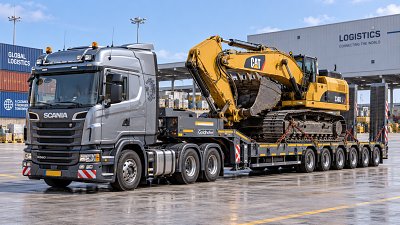
Global logistics, mining, energy construction, and infrastructure projects are expanding the operating envelope of heavy-duty transport equipment.
Loads are becoming heavier, routes are becoming more complex, and equipment utilization is becoming more continuous.
This shift increases the importance of choosing a truck chassis supplier for heavy haulage with proven engineering depth.
Traditional evaluation based on chassis price alone is no longer sufficient for demanding road transport and industrial movement.
Modern heavy haulage requires a chassis platform that balances load capacity, frame rigidity, braking performance, and drivetrain compatibility.
A reliable truck chassis supplier for heavy haulage should provide data-backed specifications, not only promotional capacity claims.
Trend Signals Reshaping Chassis Sourcing Decisions
Several visible signals show why chassis selection is becoming more technical and more globalized.
- Oversized cargo projects require stronger frame structures and special axle layouts.
- Cross-border logistics increases demand for regulatory compatibility and documentation.
- Fleet operators expect longer service intervals and faster spare parts response.
- Low-emission policies influence engine, transmission, and driveline integration.
- Digital sourcing platforms make global supplier comparison more transparent.
These signals raise expectations for every truck chassis supplier for heavy haulage serving international heavy-duty applications.
The Global Heavy Truck Industry Platform reflects this change by connecting buyers with verified commercial vehicle and equipment resources.
What Is Driving the Shift Toward Engineering-Led Supplier Evaluation
The move toward structured supplier assessment is driven by operational risk, technical complexity, and rising lifecycle cost pressure.
A truck chassis supplier for heavy haulage must respond to these drivers with measurable engineering capability.
The best suppliers can explain how frame material, axle distribution, and drivetrain layout support specific heavy transport tasks.
Structural Strength Is Becoming the First Decision Filter
Heavy haulage chassis failure often begins with fatigue, deformation, improper load distribution, or weak mounting interfaces.
Therefore, structural validation should be the first screening step when assessing a truck chassis supplier for heavy haulage.
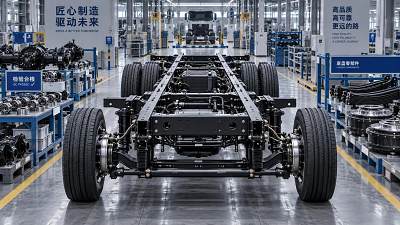
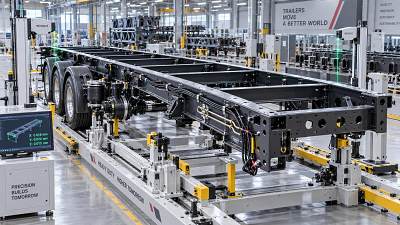
Key technical indicators include frame section size, steel grade, yield strength, torsional resistance, and reinforcement design.
The chassis must also support bodies, cranes, fifth wheels, hydraulic systems, and other heavy-duty adaptations.
Frame and material checks should be evidence-based
- Request frame drawings, load diagrams, and reinforcement details.
- Review material certificates and welding process standards.
- Check fatigue testing, finite element analysis, or field records.
- Confirm mounting points for superstructures and trailer coupling systems.
A qualified truck chassis supplier for heavy haulage should provide engineering documents without excessive delay or ambiguity.
Axle Configuration and Drivetrain Matching Are Gaining Priority
Heavy haulage performance depends on how power, torque, braking force, and ground load are distributed.
This makes axle configuration a central factor when selecting a truck chassis supplier for heavy haulage.
Common configurations may include 6x4, 8x4, 10x4, 6x6, or special multi-axle arrangements.
The right choice depends on route gradient, road condition, trailer type, cargo weight, and maneuverability requirements.
Transmission ratios, engine torque curves, retarders, hub reduction axles, and cooling capacity must be assessed together.
A strong truck chassis supplier for heavy haulage can recommend drivetrain packages based on real operating scenarios.
Compliance and Documentation Are Becoming Competitive Advantages
International heavy transport projects often involve customs review, road permits, safety audits, and environmental requirements.
A truck chassis supplier for heavy haulage should support documentation that reduces approval delays and operational uncertainty.
Relevant documents may include homologation records, emissions certificates, braking compliance, axle load data, and conformity declarations.
Where special applications are involved, documentation for modification compatibility also becomes important.
Suppliers with experience in export markets usually understand how technical files support procurement confidence.
Operational Impact Extends Across the Heavy Transport Chain
The selected chassis affects more than the initial vehicle specification.
It influences trailer pairing, maintenance planning, driver safety, loading methods, and fleet replacement cycles.
A truck chassis supplier for heavy haulage with weak after-sales support can create downtime far beyond the purchase price difference.
- Operations are affected by fuel efficiency, torque delivery, and brake durability.
- Maintenance is affected by parts access, diagnostic tools, and service training.
- Compliance teams depend on accurate technical files and certification support.
- Finance teams monitor lifecycle cost, residual value, and warranty coverage.
This broader impact explains why supplier evaluation should include technical, commercial, and service dimensions.
Key Points to Verify Before Shortlisting a Supplier
A structured checklist helps compare global suppliers consistently and reduces subjective decision-making.
- Confirm proven experience in heavy haulage chassis applications.
- Review payload ratings under realistic duty conditions.
- Check axle, suspension, steering, and brake system suppliers.
- Evaluate customization ability for special bodies or trailers.
- Assess spare parts network and overseas support capability.
- Compare warranty scope, claim process, and service response time.
A dependable truck chassis supplier for heavy haulage should answer these points with verifiable references and technical clarity.
How Digital Platforms Improve Global Supplier Comparison
Digital B2B platforms are changing how heavy truck chassis are discovered, compared, and shortlisted.
The Global Heavy Truck Industry Platform supports product discovery across truck chassis, complete trucks, trailers, machinery, and spare parts.
This helps technical teams compare a truck chassis supplier for heavy haulage against alternative global sources more efficiently.
Supplier profiles, product categories, industry insights, and buying guides reduce information gaps during early-stage evaluation.
Transparent comparison also encourages suppliers to present stronger technical evidence and more complete service commitments.
Practical Evaluation Matrix for Heavy Haulage Chassis Sourcing
The following matrix supports clearer supplier comparison before commercial negotiation.
A truck chassis supplier for heavy haulage scoring well across these areas is more suitable for demanding projects.
Recommended Response Strategy for Future Heavy Haulage Projects
Future sourcing decisions should combine market visibility with deeper technical verification.
First, define payload, route, trailer type, operating hours, climate, and regulatory destination before contacting suppliers.
Second, request technical documents from each truck chassis supplier for heavy haulage under the same comparison format.
Third, prioritize suppliers that can explain design choices according to the specific transport mission.
Finally, verify service support, parts delivery, and warranty terms before confirming the final chassis platform.
Actionable Next Step
Heavy haulage equipment decisions should begin with reliable supplier visibility and structured technical comparison.
Use the Global Heavy Truck Industry Platform to explore qualified chassis suppliers, compare heavy-duty vehicle resources, and review market information.
When evaluating a truck chassis supplier for heavy haulage, focus on evidence, compatibility, compliance, and lifecycle support.
This approach improves sourcing confidence and supports safer, more efficient heavy transport operations worldwide.
Trending News
- How to verify a truck trailer OEM's claimed payload capacity
- How does operating weight affect the price of a new excavator?
- How to compare concrete mixer truck suppliers by total landed cost
- How axle load limits affect low bed trailer exports to Southeast Asia
- How to locate a truck exhaust system leak before replacing parts
Tag
Recommended News
 Buying GuideHow to verify a truck trailer OEM's claimed payload capacityVerify a truck trailer OEM's payload claim with tare records, load calculations, and structural evidence. Learn key checks to avoid costly mistakes and buy with confidence.
 Buying GuideHow does operating weight affect the price of a new excavator?See how operating weight affects excavator price, transport costs, and productivity. Compare configurations and uncover the best value for your next equipment purchase.
 Buying GuideHow to compare concrete mixer truck suppliers by total landed costCompare truck cement mixer supplier quotes by total landed cost, including freight, duties, and delivery. Uncover hidden charges and choose the best-value truck for your fleet.
 Buying GuideWhen does heavy equipment transport require a lowboy trailer?Does your heavy equipment need a lowboy trailer? Discover how loaded height, weight distribution, loading access, and route limits determine the right choice for safe transport.
 Buying GuideHow to choose an off road truck for steep and unstable job sitesChoose the right off road truck for steep, unstable job sites. Compare traction, braking, stability, clearance, payload, and route-test essentials.
 Buying GuideHow to match crane truck lifting capacity to your jobsite loadsCrane truck capacity planning made clear: calculate gross load, radius, rigging, outriggers, and ground conditions to select safer, job-ready lifting equipment.
 Buying GuideHow to match lowbed trailer deck height to your hauling equipmentLowbed trailer deck height guide: match equipment clearance, ramp geometry, axle loads, tractor fit, and route limits for safer, more efficient hauling.
 Buying GuideWhat to verify before choosing a delivery truck supplier for school transportationDelivery truck supplier for school transportation: verify route fit, payload, safety, compliance, service support, and total cost before choosing a reliable partner.
 Buying GuideWhat an excavator manufacturer catalog should show before you compare modelsExcavator manufacturer catalog guide: verify supplier identity, configurations, hydraulics, compliance, parts support, and delivery readiness before comparing models.
 Buying GuideWhat to check before appointing a bulldozer distributorBulldozer distributor selection guide: evaluate service, parts availability, warranty, pricing, compliance, and lifecycle value to reduce downtime and protect fleet investment.
 Buying GuideWhat to verify before choosing a truck cement mixer supplierTruck cement mixer supplier checklist: verify chassis fit, drum quality, hydraulics, compliance, spare parts, and after-sales support before you buy.
 Buying GuideHow to verify a truck spare parts supplier before placing a bulk orderTruck spare parts supplier verification made practical: learn how to check part specifications, factory control, test records, samples, pricing, and delivery capability before placing a bulk order.
 Buying GuideWhat size truck container is right for a typical freight load?Truck container sizing made simple: compare payload, volume, pallet layouts, route access, and loading needs to choose the most efficient freight solution.
 Buying GuideWhat drives semi trailer price differences between similar models?Semi trailer price differences come down to frame materials, axles, suspension, coating, and configuration. Compare specifications line by line to choose lasting value.
 Buying GuideHow to compare excavator manufacturer price lists before requesting quotesCompare an excavator manufacturer price list with confidence. Learn to normalize configurations, calculate landed costs, assess options and service, and create stronger RFQs.
 Buying GuideHow to choose a mixer truck drum capacity for your concrete pourMixer truck capacity guide: match drum size to pour rate, legal payload, site access, and delivery cycles for efficient, reliable concrete placement.
 Buying GuideHow to size a bulldozer for construction site grading workBulldozer for construction sizing guide: match weight, blade, traction, grade control, and transport needs to improve grading productivity and costs.
 Buying GuideHow to assess a truck cement manufacturer’s build quality before orderingTruck cement manufacturer build quality: assess tank steel, welding, chassis integration, pneumatic systems, factory QC, and inspection evidence before ordering.
 Buying GuideWhen does a truck trailer OEM make sense for private-label fleets?Truck trailer OEM programs help private-label fleets cut lifecycle costs, standardize operations, and improve uptime. Learn when customization delivers real commercial value.
 Buying GuideWhat to verify before choosing a water truck OEM for your fleetWater truck OEM selection guide: verify chassis compatibility, tank quality, pump performance, compliance, and service support to build a safer, more reliable fleet.
 Buying GuideHow to size a cab chassis truck for a fire department apparatusCab chassis truck for fire department sizing guide: balance GVWR, axle loads, wheelbase, water tank placement, and mission needs for safer apparatus design.
 Buying GuideWhat to verify before choosing a truck chassis supplierChoose the right truck chassis supplier with a practical checklist for application fit, axle ratings, body integration, quality control, delivery reliability, and after-sales support.
 Buying GuideHow to choose a logging truck for steep and rough forest roadsLogging truck selection for steep, rough forest roads: compare traction, braking, gearing, chassis strength, tires, and supplier support for safer, more reliable hauling.
 Buying GuideHow to choose a flatbed trailer deck length for oversized loadsFlatbed trailer deck length guide for oversized loads: balance cargo support, axle weight, securement space, overhang, and route access for safer transport.
 Buying GuideHow to assess a truck chassis supplier for trailer manufacturingTruck chassis supplier for trailer manufacturing: learn how to assess technical fit, quality control, engineering support, and delivery reliability for smarter sourcing.