Truck Parts Wholesale: How to Balance Price, Quality, and Lead Time
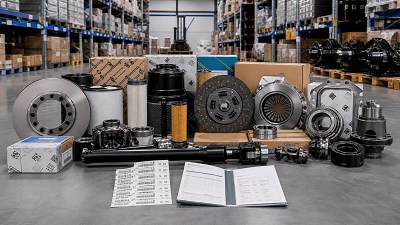
In truck parts wholesale, the cheapest quote rarely creates the lowest total cost. A delayed brake chamber, inconsistent filter, or poor-fit suspension part can interrupt fleet uptime and increase compliance exposure.
The better approach is to balance price, quality, and lead time based on operating scenario. In road transport equipment, each application has different risk tolerance, maintenance cycles, and replacement urgency.
This is where truck parts wholesale decisions become strategic. A reliable sourcing model protects safety performance, reduces hidden costs, and supports stable cross-border supply for heavy trucks and related equipment.
Why application context changes every truck parts wholesale decision
Not all parts serve the same duty cycle. A long-haul tractor, a mining dump truck, and a municipal service vehicle face different load patterns, terrain conditions, and service intervals.
That means truck parts wholesale cannot be evaluated by unit price alone. The right benchmark depends on failure consequences, replacement frequency, technical standards, and shipping urgency.
A low-cost air filter may be acceptable in one scenario. The same sourcing logic may be risky for steering, braking, axle, or suspension components in high-load operations.
For global buyers, supplier comparison should begin with application mapping. This prevents overbuying premium parts for low-risk use and underbuying critical parts for severe-duty conditions.
Scenario 1: Long-haul logistics needs stable truck parts wholesale with predictable replenishment
Long-haul transport depends on uptime, fuel efficiency, and scheduled maintenance. Common demand includes filters, brake linings, clutch parts, lighting, wheel-end components, and engine service kits.
In this setting, truck parts wholesale should prioritize consistency and replenishment speed. Minor quality variation across batches can create uneven wear, extra labor time, and route disruptions.
Key judgment points for long-distance operations
- Batch consistency across recurring orders
- Standardized packaging and labeling accuracy
- Reliable safety stock for fast-moving SKUs
- Clear warranty and traceability records
For these fleets, the best truck parts wholesale model often combines contracted core items with backup suppliers for medium-risk categories. This structure reduces dependence on a single source.
Scenario 2: Construction and mining demand stronger quality verification than lowest price
Construction machinery support trucks and mining transport vehicles work under vibration, overload, dust, and uneven roads. Parts fail faster, and downtime costs are much higher.
Here, truck parts wholesale should focus on durability verification. Price pressure still matters, but field performance, material quality, and technical compliance must lead the evaluation.
What should be checked before ordering
- Material specifications for wear-sensitive parts
- Heat treatment, coating, or sealing quality
- Test reports for fatigue, corrosion, or load capacity
- Compatibility with harsh-environment applications
For severe-duty use, truck parts wholesale should include pre-shipment inspection, sample testing, and production review. These steps cost less than repeated failure in remote project locations.
Scenario 3: Emergency replacement orders require lead time discipline more than broad catalog size
Some orders are planned, while others are urgent. A truck off the road due to a damaged clutch cylinder or brake valve needs immediate parts availability, not just a large digital catalog.
In urgent truck parts wholesale scenarios, supplier responsiveness becomes a core quality indicator. Fast quotation, confirmed stock status, and accurate export packing matter as much as price.
Signals of good lead time control
- Real inventory visibility for critical items
- Published production cycle for non-stock parts
- Flexible shipping options for urgent dispatch
- Quick confirmation of drawings, OEM numbers, and fitment
A useful strategy is to classify parts into emergency, routine, and project-based demand. Then truck parts wholesale planning can match service levels to actual operational urgency.
How demand differs across road transport equipment scenarios
The table below shows why truck parts wholesale evaluation changes by application. It helps compare sourcing priorities before supplier shortlisting and order planning.
A practical truck parts wholesale framework for balancing price, quality, and lead time
A structured sourcing framework makes truck parts wholesale more controllable. It also helps compare international suppliers across different product categories and service capabilities.
1. Segment parts by operational risk
Create at least three groups: safety-critical, wear-intensive, and routine consumables. This prevents using the same sourcing rule for brake valves and cabin lamps.
2. Use total cost, not invoice price
Truck parts wholesale should include freight, duties, rejection rate, installation time, warranty cost, and downtime impact. A lower unit price can become the most expensive option.
3. Verify supplier capability before expanding volume
Check factory specialization, export history, technical documentation, and quality process control. Pilot orders reveal more than broad claims or polished catalogs.
4. Build dual-path supply for critical categories
For essential truck parts wholesale lines, maintain one primary supplier and one qualified backup. This reduces disruption from production delays or shipping uncertainty.
5. Track data after delivery
Monitor failure rates, claim frequency, average lead time, and fill rate. Truck parts wholesale improves when supplier performance is reviewed with actual operating feedback.
Scenario-based recommendations for supplier selection
- For recurring maintenance parts, prefer suppliers with stable stock, repeatable quality, and clear MOQ terms.
- For critical mechanical systems, require drawings, material data, and third-party inspection where necessary.
- For mixed-model fleets, choose truck parts wholesale sources with strong OEM cross-reference capability.
- For cross-border projects, evaluate document accuracy, export packaging, and shipping coordination early.
- For new suppliers, start with limited SKUs and compare delivered performance against benchmark vendors.
Digital sourcing platforms can simplify this process. They help compare products, review supplier scope, and access industry resources across complete trucks, trailers, machinery, and spare parts.
Common mistakes in truck parts wholesale sourcing
One common mistake is treating all replacement parts as commodities. In reality, some categories carry major safety and downtime consequences, especially in heavy-duty road transport equipment.
Another mistake is ignoring fitment detail. Incorrect OEM numbers, drawing mismatches, or overlooked regional specifications can delay installation even when parts arrive on time.
A third mistake is using lead time promises without verification. Truck parts wholesale should confirm stock status, production dates, and shipment milestones before relying on delivery schedules.
Finally, some sourcing decisions overlook long-term supplier value. Responsive communication, technical support, and transparent documentation often save more time than a small unit discount.
Next steps for building a stronger truck parts wholesale strategy
Start by mapping part categories to actual operating scenarios. Then define where price can be optimized, where quality must be verified, and where lead time needs backup planning.
Use a trusted global industry platform to compare suppliers, review product ranges, and access market insights across heavy trucks, trailers, construction machinery, and spare parts.
When truck parts wholesale is guided by scenario-based evaluation, sourcing becomes more predictable, safer, and more cost-effective. That balance is what supports resilient operations in global transport markets.
Trending News
- Soochow Securities: September Heavy Truck Exports Jump; 2026 Wholesale Sales Seen at 1.253m
- DeepWay Enters Malaysia With Electric Heavy Trucks Offering Up to 400 km Range
- XCMG Unveils Cabless L4 Autonomous Electric Yard Truck Concept
- How order size affects wholesale pricing for cement mixer trucks
- Commercial Vehicle Leaders Hold Firm in Q1–Q3 2026 Automotive Influence Index
Tag
Recommended News
 Truck Parts IndustryWhat causes a truck injector to fail prematurely?Truck injector failure can stem from fuel contamination, water, wiring faults, heat, or incorrect installation. Discover practical diagnostic steps to prevent repeat repairs.
 Truck Parts IndustryEU REACH Rule Takes Effect for Truck Rubber PartsEU REACH Rule takes effect for truck rubber parts exported to the EU. Learn how SCIP reporting, SVHC declarations, and supply chain compliance now impact truck manufacturers and suppliers.
 Truck Parts IndustryHow to Evaluate Commercial Vehicle Parts With Eco-Friendly Materials for Durability and ComplianceCommercial vehicle parts with eco-friendly materials require more than green claims. Learn how to assess durability, compliance, and supplier reliability for smarter sourcing.
 Truck Parts IndustryHow to Evaluate a Truck Parts Supplier Beyond Unit PriceTruck parts supplier selection should go beyond unit price. Learn how to assess quality, traceability, compliance, delivery, and support to reduce fleet risk and total cost.
 Truck Parts IndustryVietnam to Require QR Traceability Labels on Imported Heavy-Truck PartsVietnam to Require QR Traceability Labels on Imported Heavy-Truck Parts from Aug 1, 2026. Learn scope, VNQR-2025 rules, VITRAC links, and how to avoid port refusal and fines.
 Truck Parts IndustryHow to Evaluate a Truck Spare Parts Supplier for Long-Term Cost ControlTruck spare parts supplier selection affects far more than price. Learn how to compare quality, delivery, traceability, and hidden costs to protect fleet uptime and control long-term expenses.
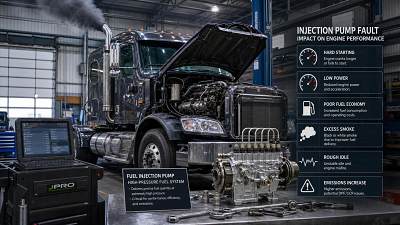
 Truck Parts IndustryFuel Injection Pump Failure Signs and What They Mean for Engine PerformanceFuel injection pump failure signs can quickly reduce truck power, raise fuel use, and trigger hard starts. Learn what each symptom means and when to act before costly downtime.
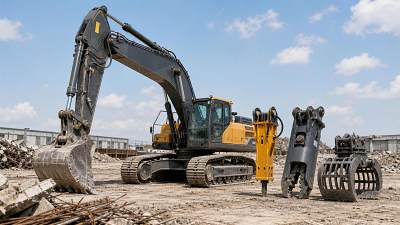
 Truck Parts IndustryExcavator Attachment Selection for Demolition and Site PrepExcavator attachment selection for demolition and site prep: compare breakers, grapples, crushers, and buckets to boost productivity, safety, and ROI.
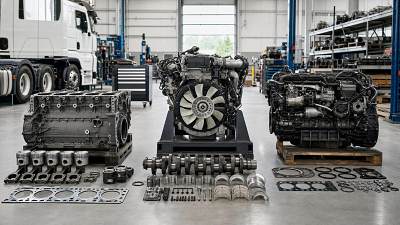
 Truck Parts IndustryTruck Engine Overhaul or Replacement: Which Costs Less Long Term?Truck engine overhaul or replacement? Compare long-term cost, downtime, fuel efficiency, and reliability to choose the smarter option for your fleet.
 Truck Parts IndustryHow to Choose Excavator Parts That Last LongerExcavator parts buying guide: learn how to choose excavator parts that last longer by comparing fit, material quality, operating conditions, and supplier reliability.
 Truck Parts IndustryAre Eco-Friendly Commercial Vehicle Parts Durable Enough for Daily Use?Commercial vehicle parts with eco-friendly materials can be durable for daily use—if tested right. Explore where they perform best, key risks, and smarter sourcing insights.
 Truck Parts IndustryTruck Parts OEM vs Aftermarket: Cost, Fit, and Warranty RisksTruck parts OEM vs aftermarket: compare true cost, fit accuracy, and warranty risks to reduce downtime, avoid disputes, and make smarter fleet sourcing decisions.
 Truck Parts IndustryTruck Spare Parts Buying Guide: How to Reduce Downtime and Fitment RiskTruck spare parts buying guide for fleet maintenance teams: learn how to reduce downtime, avoid fitment risk, verify suppliers, and make smarter sourcing decisions.
 Truck Parts IndustryHow to Evaluate a Truck Parts Supplier Beyond PriceTruck parts supplier selection should go beyond price. Learn how to compare quality, delivery, service, and total cost to reduce risk and keep fleets running efficiently.
 Truck Parts IndustryHeavy Truck Parts for Construction: Signs of a Reliable ManufacturerHeavy truck parts manufacturer for construction: learn how to identify reliable suppliers through quality control, traceability, testing, and support to reduce downtime and improve fleet safety.
 Truck Parts IndustryHow to Compare Truck Spare Parts Suppliers on Quality and Lead TimeTruck spare parts supplier comparison starts with quality and lead time. Learn how to assess consistency, delivery reliability, and sourcing fit for smarter purchases.
 Truck Parts IndustryEU REACH Sets PAH Limit for Heavy Truck Rubber PartsEU REACH sets a new PAH limit for heavy truck rubber parts, affecting brake hoses, bushings, and export compliance. Learn what suppliers must prepare now to avoid testing delays and customs risks.
 Truck Parts IndustryWhat to Check in a Truck Chassis Supplier Before Fleet ExpansionTruck chassis supplier selection can make or break fleet expansion. Learn what to check on quality, production, delivery, support, and total cost before requesting a quote.
 Truck Parts IndustryCold Storage Truck Parts That Matter Most for Temperature ControlCommercial vehicle parts for cold storage determine real temperature stability. Discover the key truck components that reduce spoilage, improve efficiency, and protect sensitive cargo.
 Truck Parts IndustryHow to Evaluate a Heavy Truck Parts Manufacturer for Long-Term Supply StabilityHeavy truck parts manufacturer selection starts with supply stability. Learn how to assess quality, capacity, lead times, and risk signals for smarter long-term sourcing.
 Truck Parts IndustryEU EPR Rules Extend to Commercial TrailersEU EPR rules now extend to commercial trailers, bringing new registration, reporting, and fee duties from 2027. See how exporters can prepare early to avoid customs delays.
 Truck Parts IndustryTruck Suspension Problems: Signs, Causes, and Fix OptionsTruck suspension issues can lead to tire wear, poor handling, and costly downtime. Learn the key signs, root causes, and best fix options for different truck applications.
 Truck Parts IndustryHow to Choose a Heavy Truck Parts Manufacturer for Construction FleetsHeavy truck parts manufacturer for construction selection starts with uptime, quality, and delivery. Learn how to compare suppliers, reduce fleet risk, and choose with confidence.
 Truck Parts IndustryUS Sets AEBS Rule for Imported Commercial TrailersUS sets AEBS rule for imported commercial trailers starting Oct. 1, 2026. Learn FMVSS No. 127A, SAE J2929, and key compliance steps to avoid CBP entry denial.
 Truck Parts IndustryHow to Choose Commercial Vehicle Parts That Reduce DowntimeCommercial vehicle parts selection can make or break fleet uptime. Learn how to choose parts that improve fit, quality, supply reliability, and lower total downtime cost.