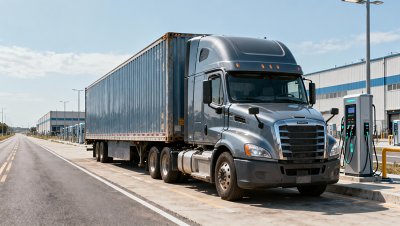
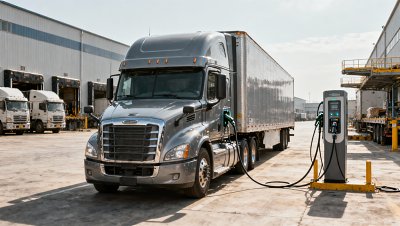
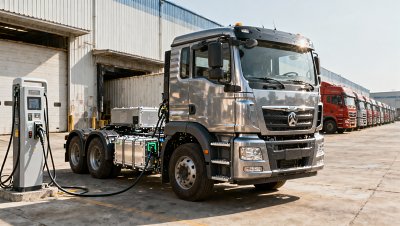
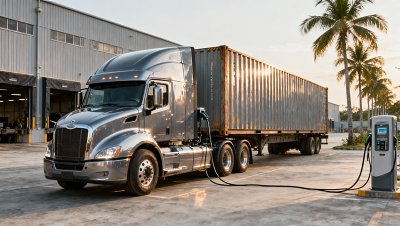
New Energy Heavy Trucks Exceed 50% of China’s Monthly Sales
New energy vehicles accounted for more than half of new heavy-duty truck sales in China in October 2026, according to China Association of Automobile Manufacturers data reported by China National Radio. The monthly figure places new energy models in the majority of sales for the first time described by the report, marking a significant point in the market’s transition.
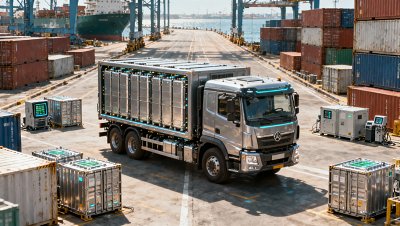
At the same time, several localities are accelerating the development of zero-carbon transport corridors intended to support the use of new energy heavy trucks beyond short-haul operations and into trunk-route logistics. The sales milestone and corridor development point to two related questions: whether the monthly sales share can be sustained, and how readily these vehicles can be used on longer routes.
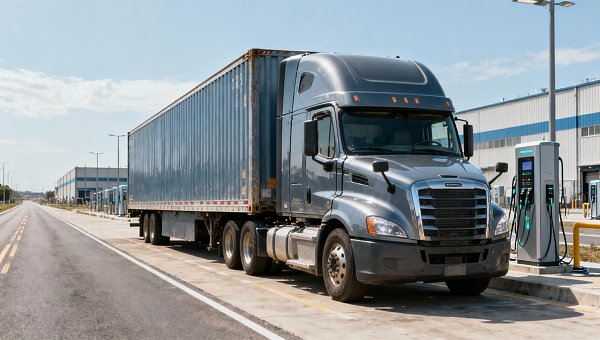
What the sales milestone shows
A share above 50% means new energy models represented a majority of heavy-duty trucks sold during the month. It is a measure of new vehicle sales, however, rather than the composition of all trucks already in service. The figure therefore signals a change in purchasing during October; it does not establish that most heavy trucks on the road are already new energy vehicles.
The distinction also matters over time. One month above the halfway mark is an important observation, but it does not by itself show whether the share will remain above that level in subsequent months. Further sales figures will help establish whether October represents a durable shift in demand.
From short-haul use to trunk routes
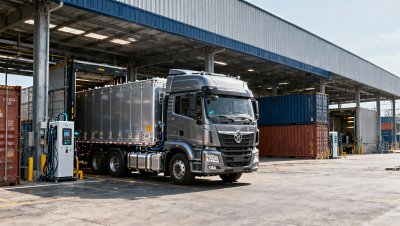
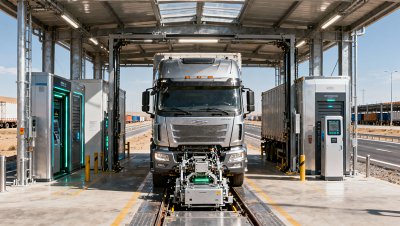
The expansion of zero-carbon transport corridors provides a link between vehicle sales and the way those vehicles may be deployed. Moving from shorter journeys to trunk-route logistics can bring different operating requirements: routes are longer, vehicle schedules may be less flexible, and operators need to consider whether supporting infrastructure fits their journeys.
For fleet operators, the practical question is whether a new energy truck and the facilities available along a route can support the planned service. For vehicle suppliers and infrastructure providers, wider trunk-route use could place greater emphasis on how vehicle capabilities, route arrangements and supporting facilities work together. The pace of that transition will depend on how corridor development matches actual transport needs.
The October sales share is a clear marker of the role new energy models played in new purchases that month. The next evidence to watch is whether their sales share remains high and whether corridor development supports their use across longer-distance freight operations.
Trending News
- New Energy Heavy Trucks Exceed 50% of China’s Monthly Sales
- How to check if truck parts are compatible with your vehicle
- How to assess a truck parts manufacturer's quality control
- FMCSA Removes 133 ELDs; ATA Backs Action and Plans Third-Party Certification
- How to choose a replacement truck wing that fits your vehicle
Tag
Recommended News
 New Energy TrucksNew Energy Heavy Trucks Exceed 50% of China’s Monthly SalesNew energy heavy trucks topped 50% of China’s monthly sales in October 2026. Explore what this milestone and zero-carbon corridors mean for long-haul freight.
 New Energy TrucksCAAM: New-Energy Heavy Trucks Exceed 50% Monthly Penetration in ChinaNew-energy heavy trucks exceeded 50% monthly penetration in China in October 2026, CAAM reports. Explore what this milestone means for manufacturers and fleets.
 New Energy TrucksElectric Trucks Exceed 50% of China's Heavy-Duty Sales in SeptemberElectric heavy-duty trucks reportedly reached 50.3% of China's September sales. Explore what this milestone could mean for fleet buyers and suppliers.
 New Energy TrucksDeepWay Enters Malaysia With Electric Heavy Trucks Offering Up to 400 km RangeDeepWay electric heavy trucks enter Malaysia with up to 400 km of stated range and prices from RM750,000. Explore models, route suitability and potential fleet operating savings.
 New Energy TrucksChina’s New Energy Heavy Truck Sales Share Exceeds 50% in September 2026China’s new energy heavy truck sales share reached 50.28% in September 2026. Explore what this milestone means for fleet operators, operating costs and service support.
 New Energy TrucksCATL Unveils Tianxing II Electric-to-Electric Range-Extended Heavy Truck SolutionCATL Tianxing II Electric-to-Electric Range-Extended Heavy Truck Solution signals a new era for battery swapping, fleet procurement, and logistics coordination. Explore key industry impacts and practical considerations.
 New Energy TrucksMIIT’s 404th Notice Clears Swap-Body Electric Trucks for ExportMIIT’s 404th notice approves FAW Jiefang swap-body electric trucks for export, boosting CE/ECE and UN R100 compliance readiness for global buyers.
 New Energy TrucksBrazil ANP Clears Three Chinese Battery Makers for Truck Swap NetworkBrazil ANP clears CATL, BYD FinDreams Battery, and Gotion for the truck swap network, opening new opportunities in Brazil’s electric heavy truck and battery-swapping market.
![]() New Energy TrucksEPA Phase 3 Rule Adds CIM Requirement for Hybrid HD TrucksEPA Phase 3 Rule adds CIM requirement for hybrid HD trucks from MY2027. Learn what U.S. importers, exporters, and OEMs must review now to stay compliant and market-ready.
 New Energy TrucksEPA Phase 3 Rule Adds Carbon Monitoring to N3 TrucksEPA Phase 3 Rule adds carbon monitoring to N3 trucks sold in the U.S. Learn how CARB-CIM v2.1, EPA validation, and 2027 deadlines impact exporters and heavy truck compliance.
 New Energy TrucksEU Battery Rule Starts July 5: 20% Recycled Cobalt Required for Heavy-Truck Power BatteriesEU Battery Rule starts July 5: heavy-truck power batteries entering the EU must disclose recycled content, including 20% recycled cobalt. Learn the compliance impact for exporters and suppliers.
 New Energy TrucksBrazil Tightens Local Battery Testing for NEV TrucksBrazil Tightens Local Battery Testing for NEV Trucks: learn how INMETRO’s new Brazil battery testing rule reshapes certification, delivery timelines, and market access for imported heavy-duty trucks.
 New Energy TrucksMexico Enforces Local Battery Thermal Runaway TestsMexico Enforces Local Battery Thermal Runaway Tests for imported new energy heavy trucks under NOM-042-SEMARNAT-2026. Learn the new Mexico compliance path, local lab testing rules, and what exporters must do now.
 New Energy TrucksIndonesia Extends B30 Rule, Tightens Imported Truck CertificationIndonesia extends B30 through 2027 and tightens imported truck certification. Learn how B30 adaptability testing affects diesel tractor truck exports, compliance costs, and delivery timelines.
 New Energy TrucksBrazil Sets H₂ Leak Monitoring Rule for Gas Tractor ImportsBrazil sets H₂ leak monitoring rule for gas tractor imports from Sept. 1, 2026. Learn how ANP, ABNT, and INMETRO requirements could impact compliance, certification, and delivery plans.
 New Energy TrucksEU Battery Rule Reshapes China E-Truck ExportsEU Battery Rule Reshapes China E-Truck Exports: learn how new UN38.3, IEC 62619, and carbon footprint requirements could impact compliance, lead times, and EU delivery plans.
 New Energy TrucksEU Battery Rules Raise Export Bar for China E-TrucksEU Battery Rules are raising the export bar for China e-trucks. Learn how battery passport registration, carbon footprint data, and supply-chain readiness will shape EU market access by 2026.
 New Energy TrucksBrazil ANP Rule Extends H₂ Leak Monitoring to Imported Gas TrucksBrazil ANP Rule extends H₂ leak monitoring to imported gas trucks, reshaping LNG/CNG export compliance, certification, and delivery planning for Brazil-bound heavy vehicles.
 New Energy TrucksEU Rule Sets Battery Passport Requirement for Imported E-TrucksEU battery passport requirement for imported e-trucks takes effect Aug 1, 2026. Learn the customs risks, compliance documents, and actions exporters, battery suppliers, and EU importers should review now.
 New Energy TrucksMexico PACK Launch Reshapes Heavy Truck Battery FlowsMexico PACK launch reshapes heavy truck battery flows as CATL starts mass production in Mexico, highlighting USMCA origin, AEO support, and localized delivery advantages for North America.
 New Energy TrucksBattery-Swap Corridor Opens on China-Mongolia RouteBattery-swap corridor opens on the China-Mongolia route, bringing 12 fast-swap stations, TIR booking access, and new opportunities for cross-border electric heavy truck logistics.
 New Energy TrucksCalifornia Sets 10% ZEV Truck Floor for 2027California sets a 10% ZEV truck floor for 2027, reshaping medium- and heavy-duty truck registrations, fleet buying, and charging plans. Learn what businesses should do now.
 New Energy TrucksChina CV Exports Rise as E-Trucks Gain New MarketsChina CV exports surge as e-trucks win new markets. Explore growth data, localized adaptation, compliance, and service strategies shaping commercial vehicle success in Latin America and Southeast Asia.
 New Energy TrucksBrazil ANP Sets 2027 Green Truck RuleBrazil ANP’s 2027 green truck rule reshapes municipal fleet procurement, driving demand for electric and hydrogen heavy-duty trucks, certification support, and market-entry planning.
 New Energy TrucksEU Tightens Battery Passport Rules for Heavy TrucksEU battery passport rules for heavy trucks now require ISO 14067 carbon verification. Learn how exporters, OEMs, and battery suppliers can prepare for compliance.