EU Tightens Battery Passport Rules for Heavy Trucks
On June 1, 2026, the European Commission issued Implementing Regulation (EU) 2026/1102, introducing mandatory dual verification for imported new energy heavy-duty trucks. The measure affects pure electric and hydrogen fuel-cell heavy trucks, including chassis, and is especially relevant to vehicle exporters, battery system suppliers, carbon verification providers, import distributors, and supply chain service companies because battery passport data must now be linked with ISO 14067 carbon footprint verification.
Event Overview
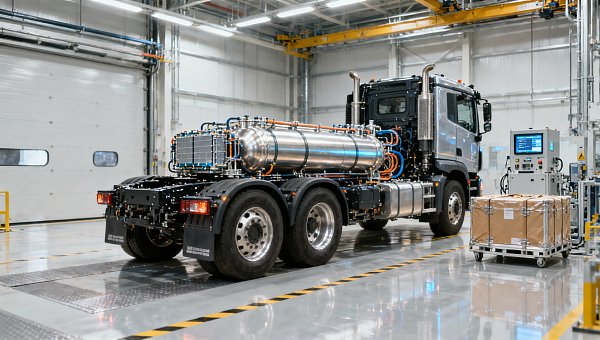
The European Commission published Implementing Regulation (EU) 2026/1102 on June 1, 2026. From that date, all imported pure electric and hydrogen fuel-cell heavy-duty trucks, including chassis, are subject to a dual-track verification mechanism covering the battery passport and carbon footprint reporting.
According to the disclosed information, the new requirement is added to the existing battery passport framework under Regulation (EU) 2023/1542. Importers must submit a carbon footprint report for the full life cycle of the vehicle battery system, calculated and verified by an EU-recognised body in accordance with ISO 14067. The verified data must also be embedded in the digital battery passport.
The first round of spot checks will cover the top 10 Chinese brands by export volume. No further details on inspection frequency, brand names, or additional implementation procedures have been confirmed in the provided information.
Subsectors and Supply Chain Roles Affected
Direct Export and Import Trade Companies
Direct exporters and importers of new energy heavy-duty trucks are affected because customs-facing documentation now involves not only the battery passport but also an ISO 14067-based carbon footprint report. The impact is likely to appear in document preparation, shipment timing, compliance communication with European counterparties, and the coordination of verified digital passport data before import submission.
From an industry perspective, companies handling cross-border truck transactions may need to treat carbon footprint verification as a pre-shipment compliance item rather than a post-sale documentation task.
Heavy-Duty Truck and Chassis Manufacturers
Manufacturers of pure electric and hydrogen fuel-cell heavy trucks, including chassis suppliers, are directly exposed because the regulation applies to complete vehicles and chassis entering the EU market. The core impact is the need to ensure that battery system data can be calculated, verified, and embedded into a digital passport in a format acceptable under the new verification requirement.
Analysis shows that manufacturers exporting to the EU may face closer scrutiny over the consistency between vehicle documentation, battery passport data, and verified carbon footprint information.
Battery System Suppliers and Integrators
Battery system suppliers and integrators are affected because the required carbon footprint calculation concerns the full life cycle of the vehicle battery system. Their data may become a key input for vehicle manufacturers and importers preparing ISO 14067 verification materials.
From an industry perspective, the practical pressure is likely to concentrate on data traceability, documentation alignment, and the ability to provide information that can be reviewed by an EU-recognised verification body.
Carbon Verification and Digital Passport Service Providers
Service providers involved in carbon accounting, ISO 14067 verification support, and digital battery passport systems may see a more clearly defined role in the import compliance process. The disclosed requirement specifies that the carbon footprint must be calculated and verified by an EU-recognised body and that the data must be embedded in the digital passport.
Observably, this increases the importance of connecting carbon report outputs with digital passport records rather than treating them as separate compliance files.
Channel Distribution and Supply Chain Service Companies
European distributors, logistics coordinators, and supply chain service companies supporting imported new energy trucks may be affected by documentation readiness and inspection coordination. If required files are incomplete or inconsistent, delivery schedules and handover processes could face operational uncertainty.
Current attention should be placed on the import stage, because the measure applies to imported vehicles and chassis and the first spot checks will cover leading Chinese export brands.
What Companies and Practitioners Should Watch and How to Respond
Track Official Implementation Details
Companies should closely follow subsequent European Commission guidance, inspection procedures, and any clarification related to Implementing Regulation (EU) 2026/1102. The currently disclosed information confirms the dual verification requirement, but details such as sampling procedures, review timelines, and document submission formats remain areas for continued observation.
Identify Affected Product Lines and Export Routes
Exporters and manufacturers should first determine whether their products fall within the covered scope: pure electric heavy-duty trucks, hydrogen fuel-cell heavy-duty trucks, and related chassis imported into the EU. For companies with multiple vehicle categories, current work should focus on the EU-bound models that include battery systems requiring passport and carbon footprint data.
Prepare Battery System Carbon Data Before Shipment
Because the carbon footprint report must be calculated and verified according to ISO 14067 by an EU-recognised body, companies should avoid leaving data collection until the final import stage. Practical preparation may include aligning battery system information, confirming the data needed for life-cycle carbon calculation, and ensuring that verified results can be incorporated into the digital battery passport.
Separate Policy Signals from Operational Readiness
Analysis shows that the regulation is already an active compliance requirement for covered imports, while some operational details may still require ongoing monitoring. Companies should therefore avoid treating the development as a distant policy signal. At the same time, they should distinguish confirmed requirements from unconfirmed assumptions and base business decisions on official documentation and verified buyer requirements.
Editor’s View / Industry Observation
From an industry perspective, this development means that battery compliance for new energy heavy-duty trucks entering the EU is moving from product identification and passport disclosure toward a combined data verification model. The key change is not only the existence of a digital battery passport, but the requirement that ISO 14067-based carbon footprint data be verified and embedded in that passport.
Analysis shows that this is more than a general policy signal for exporters of covered vehicles, because the requirement applies from June 1, 2026, and the first round of spot checks is set to cover the top 10 Chinese brands by export volume. However, it should not be interpreted beyond the confirmed scope. The available information concerns imported pure electric and hydrogen fuel-cell heavy-duty trucks, including chassis, and does not provide confirmed details on other vehicle categories.
Current attention is therefore best placed on compliance readiness, documentation consistency, and the connection between battery passport systems and carbon footprint verification. The issue deserves continued monitoring because future official clarification may determine how companies manage submission formats, inspection workflows, and coordination with EU-recognised verification bodies.
Conclusion
The June 1, 2026 implementation of the EU’s dual verification requirement marks a more demanding compliance environment for imported new energy heavy-duty trucks. For exporters, manufacturers, battery system suppliers, and import channels, the main significance lies in the need to connect battery passport data with ISO 14067 carbon footprint verification.
More appropriately, this development should be understood as an active compliance requirement within a defined product scope, while certain operational details still require continued observation. Companies currently engaged in EU-bound electric or hydrogen heavy-duty truck business should focus on verified data preparation, product scope review, and close tracking of official implementation updates.
Information Sources
- European Commission: Implementing Regulation (EU) 2026/1102, published on June 1, 2026.
- Regulation (EU) 2023/1542: Existing battery passport framework referenced in the disclosed information.
- ISO 14067: Carbon footprint calculation and verification standard referenced in the disclosed requirement.
Items requiring continued observation include detailed inspection procedures, document submission formats, review timelines, and any further official clarification on implementation practice.
Trending News
- CATL Unveils Tianxing II Electric-to-Electric Range-Extended Heavy Truck Solution
- How much torque does a truck engine need for heavy-duty hauling?
- How to assess a crane truck distributor's spare parts support
- Volvo Group Forms Volvo Mining to Integrate Equipment and Autonomous Solutions
- How to verify spare parts availability with a crane truck supplier
Tag
Recommended News
 New Energy TrucksCATL Unveils Tianxing II Electric-to-Electric Range-Extended Heavy Truck SolutionCATL Tianxing II Electric-to-Electric Range-Extended Heavy Truck Solution signals a new era for battery swapping, fleet procurement, and logistics coordination. Explore key industry impacts and practical considerations.
 New Energy TrucksMIIT’s 404th Notice Clears Swap-Body Electric Trucks for ExportMIIT’s 404th notice approves FAW Jiefang swap-body electric trucks for export, boosting CE/ECE and UN R100 compliance readiness for global buyers.
 New Energy TrucksBrazil ANP Clears Three Chinese Battery Makers for Truck Swap NetworkBrazil ANP clears CATL, BYD FinDreams Battery, and Gotion for the truck swap network, opening new opportunities in Brazil’s electric heavy truck and battery-swapping market.
![]() New Energy TrucksEPA Phase 3 Rule Adds CIM Requirement for Hybrid HD TrucksEPA Phase 3 Rule adds CIM requirement for hybrid HD trucks from MY2027. Learn what U.S. importers, exporters, and OEMs must review now to stay compliant and market-ready.
New Energy TrucksEPA Phase 3 Rule Adds CIM Requirement for Hybrid HD TrucksEPA Phase 3 Rule adds CIM requirement for hybrid HD trucks from MY2027. Learn what U.S. importers, exporters, and OEMs must review now to stay compliant and market-ready. New Energy TrucksEPA Phase 3 Rule Adds Carbon Monitoring to N3 TrucksEPA Phase 3 Rule adds carbon monitoring to N3 trucks sold in the U.S. Learn how CARB-CIM v2.1, EPA validation, and 2027 deadlines impact exporters and heavy truck compliance.
 New Energy TrucksEU Battery Rule Starts July 5: 20% Recycled Cobalt Required for Heavy-Truck Power BatteriesEU Battery Rule starts July 5: heavy-truck power batteries entering the EU must disclose recycled content, including 20% recycled cobalt. Learn the compliance impact for exporters and suppliers.
 New Energy TrucksBrazil Tightens Local Battery Testing for NEV TrucksBrazil Tightens Local Battery Testing for NEV Trucks: learn how INMETRO’s new Brazil battery testing rule reshapes certification, delivery timelines, and market access for imported heavy-duty trucks.
 New Energy TrucksMexico Enforces Local Battery Thermal Runaway TestsMexico Enforces Local Battery Thermal Runaway Tests for imported new energy heavy trucks under NOM-042-SEMARNAT-2026. Learn the new Mexico compliance path, local lab testing rules, and what exporters must do now.
 New Energy TrucksIndonesia Extends B30 Rule, Tightens Imported Truck CertificationIndonesia extends B30 through 2027 and tightens imported truck certification. Learn how B30 adaptability testing affects diesel tractor truck exports, compliance costs, and delivery timelines.
 New Energy TrucksBrazil Sets H₂ Leak Monitoring Rule for Gas Tractor ImportsBrazil sets H₂ leak monitoring rule for gas tractor imports from Sept. 1, 2026. Learn how ANP, ABNT, and INMETRO requirements could impact compliance, certification, and delivery plans.
 New Energy TrucksEU Battery Rule Reshapes China E-Truck ExportsEU Battery Rule Reshapes China E-Truck Exports: learn how new UN38.3, IEC 62619, and carbon footprint requirements could impact compliance, lead times, and EU delivery plans.
 New Energy TrucksEU Battery Rules Raise Export Bar for China E-TrucksEU Battery Rules are raising the export bar for China e-trucks. Learn how battery passport registration, carbon footprint data, and supply-chain readiness will shape EU market access by 2026.
 New Energy TrucksBrazil ANP Rule Extends H₂ Leak Monitoring to Imported Gas TrucksBrazil ANP Rule extends H₂ leak monitoring to imported gas trucks, reshaping LNG/CNG export compliance, certification, and delivery planning for Brazil-bound heavy vehicles.
 New Energy TrucksEU Rule Sets Battery Passport Requirement for Imported E-TrucksEU battery passport requirement for imported e-trucks takes effect Aug 1, 2026. Learn the customs risks, compliance documents, and actions exporters, battery suppliers, and EU importers should review now.
 New Energy TrucksMexico PACK Launch Reshapes Heavy Truck Battery FlowsMexico PACK launch reshapes heavy truck battery flows as CATL starts mass production in Mexico, highlighting USMCA origin, AEO support, and localized delivery advantages for North America.
 New Energy TrucksBattery-Swap Corridor Opens on China-Mongolia RouteBattery-swap corridor opens on the China-Mongolia route, bringing 12 fast-swap stations, TIR booking access, and new opportunities for cross-border electric heavy truck logistics.
 New Energy TrucksCalifornia Sets 10% ZEV Truck Floor for 2027California sets a 10% ZEV truck floor for 2027, reshaping medium- and heavy-duty truck registrations, fleet buying, and charging plans. Learn what businesses should do now.
 New Energy TrucksChina CV Exports Rise as E-Trucks Gain New MarketsChina CV exports surge as e-trucks win new markets. Explore growth data, localized adaptation, compliance, and service strategies shaping commercial vehicle success in Latin America and Southeast Asia.
 New Energy TrucksBrazil ANP Sets 2027 Green Truck RuleBrazil ANP’s 2027 green truck rule reshapes municipal fleet procurement, driving demand for electric and hydrogen heavy-duty trucks, certification support, and market-entry planning.
 New Energy TrucksEU Tightens Battery Passport Rules for Heavy TrucksEU battery passport rules for heavy trucks now require ISO 14067 carbon verification. Learn how exporters, OEMs, and battery suppliers can prepare for compliance.
 New Energy TrucksYantai Port Aluminum Ore Logistics Boosts NEV Dump Truck OrdersYantai Port aluminum ore logistics surge drives NEV dump truck orders—42% short-haul haulage rise, 35% QoQ EV demand spike. Act now.
 New Energy TrucksChina Adds Tractor-Trailer Battery-Swap Systems to Subsidy ProgramTractor-trailer battery-swap systems now qualify for China’s new energy subsidy—up to ¥32,000 per unit. Key update for陆路运输设备 manufacturers, logistics fleets, and EV infrastructure providers.
 New Energy TrucksChina Introduces Subsidies for EV Bus & Battery ReplacementEV bus & battery replacement subsidies now live in China—up to ¥12,000/unit for medium/heavy-duty tractors & refrigerated semi-trailers. Act now!
 New Energy TrucksWorld's Largest Methanol-Fueled Container Ship NamedWorld's largest methanol-fueled container ship named — accelerating green adoption across land-based port handling equipment, yard tractors, stacker cranes & reach stackers.
 New Energy TrucksKunming Launches Jacaranda-Themed EV Buses; Design Draws Interest from South AmericaKunming's jacaranda-themed EV buses showcase China's design-led electric bus innovation — drawing strong interest from South America's transport operators.