Brazil Tightens Local Battery Testing for NEV Trucks
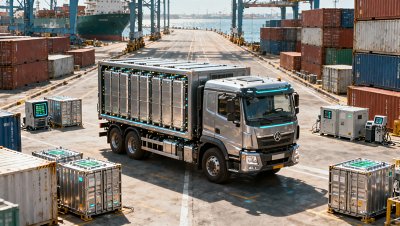
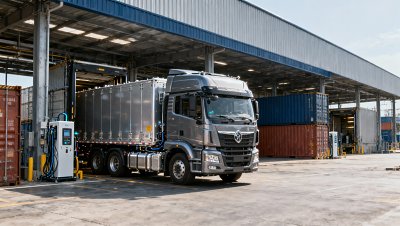
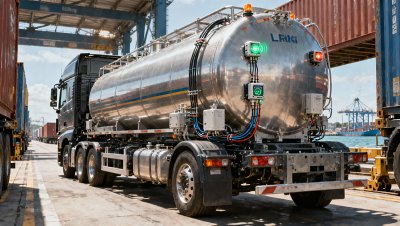
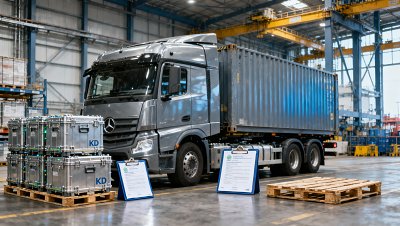
On July 2, 2026, Brazil’s INMETRO updated Portaria No. 142/2026 and set a new compliance condition for imported new energy heavy-duty trucks, including battery-electric and hydrogen fuel models: their battery systems must complete a local accelerated cycle life test in Brazilian laboratories. For truck importers, battery system suppliers, certification teams, and delivery planning functions, this matters because it changes the market-access path itself, adds a minimum test duration of eight weeks, and removes a previously accepted route based only on China’s GB/T 31484 certification.
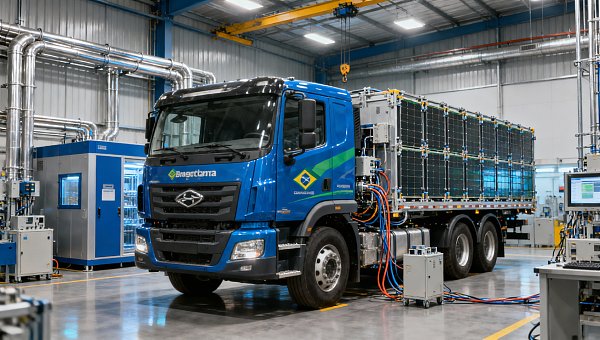
What the updated rule now requires
According to the information provided, INMETRO revised Portaria No. 142/2026 on July 2, 2026. Under the updated requirement, all imported new energy heavy-duty trucks, covering both pure electric and hydrogen fuel vehicles, must have their battery systems tested in local Brazilian laboratories.
The required procedure is a 500-cycle accelerated cycle life test under high-temperature and high-humidity conditions, based on ABNT NBR IEC 62660-2:2026. The test period must be no shorter than eight weeks.
The earlier route that accepted only China’s GB/T 31484 certification has been cancelled.
Where the immediate pressure may appear across the chain
Market-entry planning for importers and trading companies
From an industry perspective, importers and direct trade companies may be affected first because the change sits at the point of product access. The impact is likely to show up in certification scheduling, launch timing, and shipment planning. What deserves closer attention is whether internal project timelines, customer delivery commitments, and import documentation workflows were built around the previously accepted GB/T 31484 path.
Battery system suppliers and vehicle manufacturers
For battery system suppliers and vehicle manufacturers, the main issue is not only the technical test itself but also the shift in compliance location. Analysis shows that teams responsible for battery validation, homologation, and export readiness will need to focus on whether their current evidence package is sufficient for the Brazilian local-lab process required under ABNT NBR IEC 62660-2:2026.
Supply chain and delivery coordination teams
Supply chain service providers and delivery coordination functions may also feel the effect because the rule introduces a test cycle of at least eight weeks. Observably, this can become a practical issue in order sequencing, buffer planning, and cross-border handover timing. Even without adding assumptions about shipment volumes or backlog, the compliance lead time itself becomes a point that operations teams need to account for.
Procurement and end-user project stakeholders
For procurement teams and end-user project stakeholders buying imported new energy heavy-duty trucks, the relevant concern is execution certainty. Analysis shows that procurement reviews may need to pay closer attention to testing status, supporting documents, and delivery windows, especially where vehicle acceptance depends on confirmed regulatory completion rather than factory-side certification already obtained elsewhere.
What companies should watch now
Whether official wording is followed by further implementation detail
What deserves closer attention is whether subsequent official communication clarifies operational details around local laboratory testing, acceptance procedures, or supporting documentation. The rule change is already clear on the local-test requirement and the cancellation of the GB/T 31484-only route, but companies should continue tracking whether additional procedural interpretation emerges.
How the eight-week minimum affects commercial commitments
Businesses involved in offers, contracts, and delivery planning should examine whether current lead times still reflect the new minimum testing period. This is a practical issue for sales coordination, customer communication, and internal approval milestones, particularly for imported heavy-duty truck programs aimed at the Brazilian market.
Whether supplier files and compliance packages are aligned with the new basis
Analysis shows that companies should review the structure of their compliance files against the new local testing requirement under ABNT NBR IEC 62660-2:2026. The key point is not to assume that previously accepted certification evidence remains sufficient after the cancellation of the GB/T 31484-only route.
How to separate policy text from executable workflow
Observably, one of the main operational risks in changes like this is treating the publication of a rule as identical to a fully settled execution process. Companies should therefore distinguish between the confirmed policy requirement and the practical workflow needed to complete local testing, manage documents, and communicate realistic timelines to customers and partners.
Why this reads as more than a routine compliance update
Analysis shows that this development is best understood as a concrete market-access adjustment rather than a minor documentation revision. The confirmed change is narrow in scope but direct in effect: local Brazilian testing is now required for the battery systems of imported new energy heavy-duty trucks, and an earlier alternative path has been removed.
At the same time, it is more appropriate to understand this as an active regulatory signal that still requires continued observation in practice. The text provided confirms the rule change itself, but the full business impact will depend on how companies adapt their testing schedules, compliance preparation, and delivery planning around it.
How to read the signal at this stage
At this stage, the most balanced reading is that Brazil has made local battery-system verification a more explicit condition for imported new energy heavy-duty trucks. That has immediate relevance for certification strategy and project timing, but it should not yet be overstated beyond the facts provided. For industry participants, the practical significance lies in aligning compliance pathways, lead-time assumptions, and customer commitments with the new requirement now in force.
Basis of this article
This article is based on the user-provided news title, event date, and event summary concerning INMETRO’s July 2, 2026 update to Portaria No. 142/2026. For this type of industry development, commonly relevant source categories may include official regulatory notices, company disclosures, industry association updates, authoritative media reporting, and standards documentation.
A specific official source link was not provided in the input, so the exact publication record should continue to be verified. The main areas for follow-up are any further official clarification on implementation details, local laboratory execution requirements, and how the updated rule is applied in actual import and certification workflows.
Trending News
- When does a light commercial vehicle for urban delivery save fleet costs?
- How to choose an off road truck for steep and unstable job sites
- How to match crane truck lifting capacity to your jobsite loads
- What drives logging truck cost beyond the base purchase price?
- How to match lowbed trailer deck height to your hauling equipment
Tag
Recommended News
 New Energy TrucksMIIT’s 404th Notice Clears Swap-Body Electric Trucks for ExportMIIT’s 404th notice approves FAW Jiefang swap-body electric trucks for export, boosting CE/ECE and UN R100 compliance readiness for global buyers.
 New Energy TrucksBrazil ANP Clears Three Chinese Battery Makers for Truck Swap NetworkBrazil ANP clears CATL, BYD FinDreams Battery, and Gotion for the truck swap network, opening new opportunities in Brazil’s electric heavy truck and battery-swapping market.
![]() New Energy TrucksEPA Phase 3 Rule Adds CIM Requirement for Hybrid HD TrucksEPA Phase 3 Rule adds CIM requirement for hybrid HD trucks from MY2027. Learn what U.S. importers, exporters, and OEMs must review now to stay compliant and market-ready.
New Energy TrucksEPA Phase 3 Rule Adds CIM Requirement for Hybrid HD TrucksEPA Phase 3 Rule adds CIM requirement for hybrid HD trucks from MY2027. Learn what U.S. importers, exporters, and OEMs must review now to stay compliant and market-ready. New Energy TrucksEPA Phase 3 Rule Adds Carbon Monitoring to N3 TrucksEPA Phase 3 Rule adds carbon monitoring to N3 trucks sold in the U.S. Learn how CARB-CIM v2.1, EPA validation, and 2027 deadlines impact exporters and heavy truck compliance.
 New Energy TrucksEU Battery Rule Starts July 5: 20% Recycled Cobalt Required for Heavy-Truck Power BatteriesEU Battery Rule starts July 5: heavy-truck power batteries entering the EU must disclose recycled content, including 20% recycled cobalt. Learn the compliance impact for exporters and suppliers.
 New Energy TrucksBrazil Tightens Local Battery Testing for NEV TrucksBrazil Tightens Local Battery Testing for NEV Trucks: learn how INMETRO’s new Brazil battery testing rule reshapes certification, delivery timelines, and market access for imported heavy-duty trucks.
 New Energy TrucksMexico Enforces Local Battery Thermal Runaway TestsMexico Enforces Local Battery Thermal Runaway Tests for imported new energy heavy trucks under NOM-042-SEMARNAT-2026. Learn the new Mexico compliance path, local lab testing rules, and what exporters must do now.
 New Energy TrucksIndonesia Extends B30 Rule, Tightens Imported Truck CertificationIndonesia extends B30 through 2027 and tightens imported truck certification. Learn how B30 adaptability testing affects diesel tractor truck exports, compliance costs, and delivery timelines.
 New Energy TrucksBrazil Sets H₂ Leak Monitoring Rule for Gas Tractor ImportsBrazil sets H₂ leak monitoring rule for gas tractor imports from Sept. 1, 2026. Learn how ANP, ABNT, and INMETRO requirements could impact compliance, certification, and delivery plans.
 New Energy TrucksEU Battery Rule Reshapes China E-Truck ExportsEU Battery Rule Reshapes China E-Truck Exports: learn how new UN38.3, IEC 62619, and carbon footprint requirements could impact compliance, lead times, and EU delivery plans.
 New Energy TrucksEU Battery Rules Raise Export Bar for China E-TrucksEU Battery Rules are raising the export bar for China e-trucks. Learn how battery passport registration, carbon footprint data, and supply-chain readiness will shape EU market access by 2026.
 New Energy TrucksBrazil ANP Rule Extends H₂ Leak Monitoring to Imported Gas TrucksBrazil ANP Rule extends H₂ leak monitoring to imported gas trucks, reshaping LNG/CNG export compliance, certification, and delivery planning for Brazil-bound heavy vehicles.
 New Energy TrucksEU Rule Sets Battery Passport Requirement for Imported E-TrucksEU battery passport requirement for imported e-trucks takes effect Aug 1, 2026. Learn the customs risks, compliance documents, and actions exporters, battery suppliers, and EU importers should review now.
 New Energy TrucksMexico PACK Launch Reshapes Heavy Truck Battery FlowsMexico PACK launch reshapes heavy truck battery flows as CATL starts mass production in Mexico, highlighting USMCA origin, AEO support, and localized delivery advantages for North America.
 New Energy TrucksBattery-Swap Corridor Opens on China-Mongolia RouteBattery-swap corridor opens on the China-Mongolia route, bringing 12 fast-swap stations, TIR booking access, and new opportunities for cross-border electric heavy truck logistics.
 New Energy TrucksCalifornia Sets 10% ZEV Truck Floor for 2027California sets a 10% ZEV truck floor for 2027, reshaping medium- and heavy-duty truck registrations, fleet buying, and charging plans. Learn what businesses should do now.
 New Energy TrucksChina CV Exports Rise as E-Trucks Gain New MarketsChina CV exports surge as e-trucks win new markets. Explore growth data, localized adaptation, compliance, and service strategies shaping commercial vehicle success in Latin America and Southeast Asia.
 New Energy TrucksBrazil ANP Sets 2027 Green Truck RuleBrazil ANP’s 2027 green truck rule reshapes municipal fleet procurement, driving demand for electric and hydrogen heavy-duty trucks, certification support, and market-entry planning.
 New Energy TrucksEU Tightens Battery Passport Rules for Heavy TrucksEU battery passport rules for heavy trucks now require ISO 14067 carbon verification. Learn how exporters, OEMs, and battery suppliers can prepare for compliance.
 New Energy TrucksYantai Port Aluminum Ore Logistics Boosts NEV Dump Truck OrdersYantai Port aluminum ore logistics surge drives NEV dump truck orders—42% short-haul haulage rise, 35% QoQ EV demand spike. Act now.
 New Energy TrucksChina Adds Tractor-Trailer Battery-Swap Systems to Subsidy ProgramTractor-trailer battery-swap systems now qualify for China’s new energy subsidy—up to ¥32,000 per unit. Key update for陆路运输设备 manufacturers, logistics fleets, and EV infrastructure providers.
 New Energy TrucksChina Introduces Subsidies for EV Bus & Battery ReplacementEV bus & battery replacement subsidies now live in China—up to ¥12,000/unit for medium/heavy-duty tractors & refrigerated semi-trailers. Act now!
 New Energy TrucksWorld's Largest Methanol-Fueled Container Ship NamedWorld's largest methanol-fueled container ship named — accelerating green adoption across land-based port handling equipment, yard tractors, stacker cranes & reach stackers.
 New Energy TrucksKunming Launches Jacaranda-Themed EV Buses; Design Draws Interest from South AmericaKunming's jacaranda-themed EV buses showcase China's design-led electric bus innovation — drawing strong interest from South America's transport operators.
 New Energy TrucksNanning IRP Launches Smart EV Freight Charging & Swapping StationNanning IRP’s smart EV freight charging & swapping station — China’s first for cross-border heavy-duty trucks — boosts efficiency, cuts downtime, and sets a new benchmark for China–ASEAN green logistics.