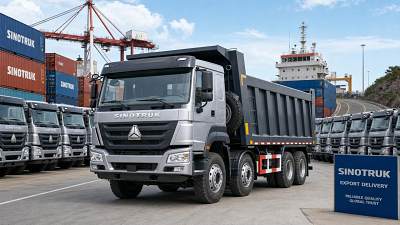
Manzhouli Highway Port 24-Hour Freight Clearance: Heavy-Duty Truck Exports Up 2.9x
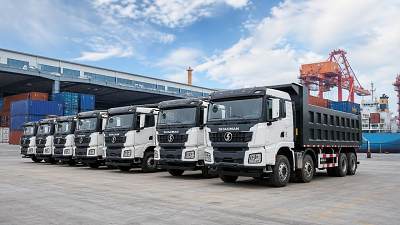
On May 14, 2026, one year after the full implementation of 24-hour freight clearance at Manzhouli Highway Port, export volumes of heavy-duty trucks, mining dump trucks, and all-terrain crane chassis surged — drawing attention from cross-border automotive OEMs, heavy equipment exporters, logistics integrators, and Eurasian supply chain service providers. This milestone reflects a structural shift in land-based equipment trade infrastructure between China and Russia/Mongolia/Central Asia.
Event Overview
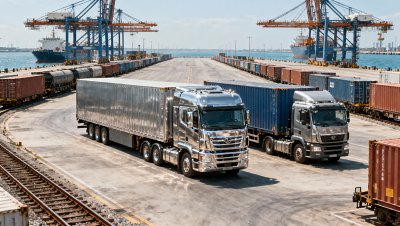
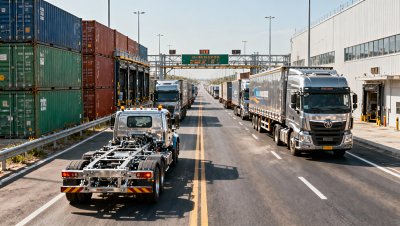
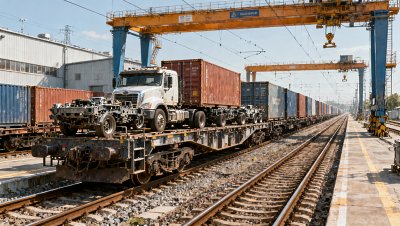
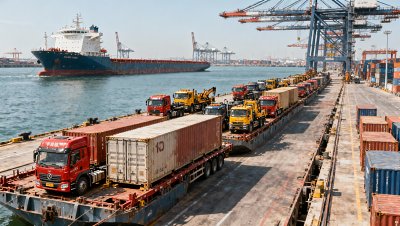
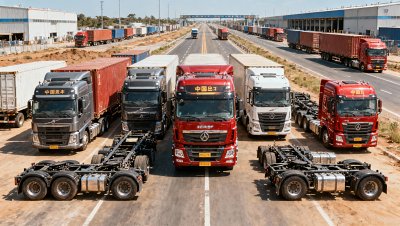
According to data released by Manzhouli Customs, from May 15, 2025 to May 14, 2026, the export value of heavy-duty trucks, mining dump trucks, and all-terrain crane chassis via Manzhouli Highway Port reached RMB 17.84 billion, up 3.1 times year-on-year. The port recorded a peak daily outbound vehicle clearance of 604 units. The ‘Highway Manifest Management 2.0 + Smart Gate’ system has been fully deployed, enabling ‘release upon arrival’ for complete vehicle exports. Buyers in Russia, Mongolia, and Central Asia now benefit from more predictable delivery timelines and reduced port demurrage costs.
Industries Affected
Direct Exporters (OEMs & Tier-1 Equipment Manufacturers)
These enterprises are directly exposed to border clearance efficiency gains. Faster release cycles reduce inventory holding time at the port and lower working capital pressure tied to transit delays. The 2.9-fold volume increase signals growing demand elasticity — but only for products compliant with destination-market certification, documentation, and manifest formatting standards under the new 2.0 system.
Supply Chain & Logistics Service Providers
Firms offering cross-border trucking, customs brokerage, or bonded warehousing near Manzhouli face revised operational benchmarks. With ‘release upon arrival’ now standard, pre-clearance coordination — including electronic manifest submission, axle-load verification, and chassis VIN validation — becomes non-negotiable. Delays now stem less from customs processing and more from upstream documentation gaps or vehicle readiness.
Aftermarket & Spare Parts Distributors
While not directly exporting vehicles, distributors supporting Russian/Mongolian end-users must align with evolving shipment patterns. Increased heavy-vehicle exports correlate with rising demand for compatible spare parts, service manuals in local languages, and warranty claim workflows accepted by Chinese OEMs — all requiring updated logistics tagging and traceability integration with the 2.0 manifest system.
What Enterprises and Practitioners Should Monitor and Do
Track official updates on manifest compliance thresholds
The ‘Highway Manifest Management 2.0’ system imposes stricter data field requirements (e.g., chassis number granularity, cargo weight per axle, destination importer registration). Exporters should monitor announcements from Manzhouli Customs or the General Administration of Customs of China (GACC) for any phased enforcement deadlines or pilot expansions to other ports.
Validate documentation readiness for priority export categories
Heavy-duty trucks, mining dump trucks, and crane chassis are currently the highest-performing categories — but also subject to tighter scrutiny. Firms should audit current export documentation (including conformity certificates, bilingual technical specs, and EAEU/Russian GOST alignment) to avoid hold-ups at the smart gate, where automated checks trigger manual review if fields are incomplete.
Distinguish between policy rollout and actual throughput capacity
Although ‘24-hour clearance’ is operational, peak daily clearance remains capped at 604 vehicles — indicating physical infrastructure (e.g., inspection bays, parking lanes, weighbridge throughput) still constrains scalability. Exporters planning volume ramp-ups should assess real-world slot availability during high-demand periods (e.g., Q4 2026), rather than assuming unlimited capacity post-policy launch.
Prepare for downstream cost reallocation
Lower demurrage costs at Manzhouli may shift cost pressure upstream — e.g., to inland transport reliability, factory-to-port transit scheduling, or manifest error correction turnaround. Logistics teams should revise internal SLAs with hauliers and document processors, emphasizing timeliness in pre-arrival data submission to maintain ‘release upon arrival’ eligibility.
Editorial Perspective / Industry Observation
Observably, this milestone is less about sudden market expansion and more about infrastructure maturation — converting latent export capacity into measurable throughput. The 3.1x value growth outpaces the 2.9x unit growth cited in the headline, suggesting higher average transaction values (e.g., more premium crane chassis or upgraded mining trucks), not just volume scaling. Analysis shows the ‘24-hour’ designation functions primarily as a process-level enabler: it compresses dwell time but does not alter tariff regimes, sanctions compliance obligations, or destination-market technical barriers. From an industry perspective, this is best understood as a logistical inflection point — one that rewards precision in documentation and coordination, not just scale.
It is not yet a broad-based signal for new market entry, but rather a validation of execution discipline among existing players serving Russia, Mongolia, and Central Asia. Sustained impact depends on whether similar systems roll out at other land ports (e.g., Khorgos, Eren), and whether manifest interoperability improves across China’s land-border customs network.
Concluding, this development signifies improved operational predictability — not automatic growth. It rewards firms already active in Eurasian heavy-equipment trade who prioritize compliance rigor and cross-border process integration. For others, it underscores that infrastructure upgrades alone do not substitute for localized market knowledge, certification alignment, or resilient inland logistics.
Information Source: Manzhouli Customs (official data release, May 2026). Note: Future expansion of the ‘Highway Manifest Management 2.0’ system to additional ports or product categories remains under observation and is not confirmed in current public information.
Recommended News
 Truck ExportUS Truck Tariff Stays in Place, KD Plants Become Key RouteUS truck tariff stays in place through 2026, pushing KD plants to the forefront. Learn how truck tariffs, localized assembly, parts sourcing, and service networks are reshaping market access.
 Truck ExportHow to Evaluate Low Bed Trailer Export Options for Mining ProjectsLow bed trailer export for mining requires more than a low quote. Learn how to compare capacity, compliance, route fit, and supplier support for safer, smarter project delivery.
 Truck ExportRCEP Rule Update Ties ASEAN Tariff-Free Trailer Exports to 45% RVCRCEP rule update reshapes ASEAN tariff-free trailer exports: semi-trailers now need 45% RVC and compliant local processing value. Learn what exporters must do to secure zero-tariff access.
 Truck ExportDump Truck Exporter Checklist: Cost, Compliance, Lead TimeDump truck exporter checklist covering total cost, compliance, factory strength, lead time, and after-sales support. Compare suppliers smarter and reduce sourcing risk.
 Truck ExportChina Customs Rolls Out Single-Bill Multimodal ClearanceChina Customs rolls out single-bill multimodal clearance nationwide, helping heavy truck and vehicle exporters cut clearance time, reduce logistics costs, and improve delivery planning.
 Truck ExportChina Customs Rolls Out Single-Document Intermodal ClearanceChina Customs single-document intermodal clearance is now live in 45 cities, helping heavy truck and construction machinery exporters cut duplicate declarations, speed export clearance, and plan deliveries with more confidence.
 Truck ExportTruck Tipper Exporter: 7 Cost Risks to Review Before OrderingTruck tipper exporter selection goes beyond price. Discover 7 hidden cost risks that affect freight, compliance, quality, uptime, and long-term supply before you order.
 Truck ExportHeavy Equipment Export for Mining Operations: Cost and Delivery RisksHeavy equipment export for mining operations: uncover hidden landed costs, delivery risks, supplier gaps, and practical ways to protect mining project timelines and budgets.
 Truck ExportChina Customs Rolls Out Single-Document Multimodal Export ClearanceChina Customs rolls out single-document multimodal export clearance, cutting repeated inspections and speeding heavy truck exports. See how it can reduce delays, costs, and delivery uncertainty.
 Truck ExportVietnam Drafts 15% Green Surcharge on Used ImportsVietnam drafts a 15% green surcharge on used imports of older trucks and buses. Learn how Euro 5 rules may reshape sourcing, compliance, and fleet planning.
![]() Truck ExportWhat to Check Before Choosing a Dump Truck Supplier in BrazilLooking for a dump truck supplier in Brazil? Learn the key checks on quality, delivery, compliance, parts support, and total cost to choose a reliable partner with confidence.
Truck ExportWhat to Check Before Choosing a Dump Truck Supplier in BrazilLooking for a dump truck supplier in Brazil? Learn the key checks on quality, delivery, compliance, parts support, and total cost to choose a reliable partner with confidence. Truck ExportTIR Road Freight Expansion Opens China-Central Asia-Russia Truck RouteTIR road freight expansion opens a faster China-Central Asia-Russia truck route, cutting sea transit by 12–18 days and reshaping vehicle export planning, procurement, and delivery execution.
 Truck ExportChina Pilots Single-Document Multimodal Customs for Truck ExportsChina Pilots Single-Document Multimodal Customs for Truck Exports: learn how the new pilot can speed truck chassis filings, cut delays, and lower compliance costs for global buyers.
 Truck ExportEast Corridor Rail Volume Tops 3,000, Lifting Truck Export ReliabilityEast Corridor rail volume tops 3,000, boosting China-Europe Railway Express reliability for truck export, chassis and parts delivery. Explore how steadier routes and smoother customs can improve Europe-bound logistics planning.
 Truck ExportSemi Trailer Supplier Checklist for Export OrdersSemi trailer supplier checklist for export orders: verify quality, documents, pricing risks, and after-sales support to choose a reliable partner and avoid costly delays.
 Truck ExportDalian–Middle East Route Opens for Truck ExportsDalian–Middle East Route Opens for Truck Exports: explore a new direct option for heavy-duty trucks, special vehicles, and KD kits with more flexible multimodal delivery planning.
 Truck ExportTruck Tipper Distributor Selection: Margin, Support, TerritoryTruck tipper distributor selection starts with margin, after-sales support, and territory protection. Learn how to compare suppliers, reduce risk, and choose a profitable long-term partner.
 Truck ExportDump Truck Exporter Checklist: Cost, Lead Time, ComplianceDump truck exporter checklist covering total landed cost, realistic lead time, and compliance essentials. Compare suppliers smarter, reduce delivery risk, and source with confidence.
 Truck ExportChina’s Zero-Tariff Move Cuts Africa Truck Import CostsChina’s Zero-Tariff Move Cuts Africa Truck Import Costs. Learn how lower duties on trucks, chassis, axles, and braking systems may reshape African sourcing, pricing, and delivery plans.
![]() Truck ExportWhat to Check Before Choosing a Truck Tipper ExporterTruck tipper exporter selection starts with the right checks. Learn how to compare quality, compliance, customization, and after-sales support before placing an order.
Truck ExportWhat to Check Before Choosing a Truck Tipper ExporterTruck tipper exporter selection starts with the right checks. Learn how to compare quality, compliance, customization, and after-sales support before placing an order. Truck ExportChina Opens U.S. Trade Barrier Probe on Green RulesChina Opens U.S. Trade Barrier Probe on Green Rules: discover how this China-U.S. trade review could affect new energy heavy-duty truck batteries, electronic control systems, compliance, and export market access.
 Truck ExportChina Share Rises as Indonesia Trailer Imports JumpChina’s share rises as Indonesia trailer imports jump 41.2%, boosting opportunities in semi-trailers, refrigerated trailers, logistics fleets, and supply-chain services.
 Truck ExportHow to Choose a Reliable Dump Truck Exporter in 2026Find a reliable dump truck exporter in 2026 with tips on compliance, specs, delivery, after-sales support, and scenario-based sourcing for global projects.
 Truck ExportRCEP E-Certs Speed China-Vietnam Vehicle ClearanceRCEP e-certs accelerate China-Vietnam vehicle clearance with real-time origin checks, helping exporters cut delays, align VIN data, and move land transport equipment faster.
 Truck ExportVietnam Requires Local After-Sales Pledge for TrucksVietnam’s new local after-sales pledge for imported heavy trucks reshapes compliance, warranty, parts response, and port acceptance for exporters and importers.