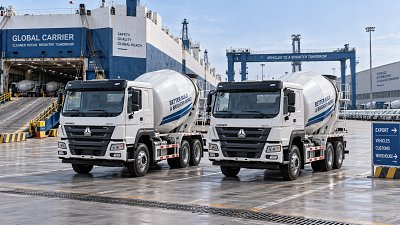
Truck Cement Mixer Price: What Drives Total Cost in 2026
For finance approvers evaluating fleet or project equipment in 2026, understanding truck cement mixer price means looking beyond the sticker figure. Total cost is shaped by chassis configuration, drum capacity, engine standards, maintenance needs, delivery timelines, and supplier reliability. This introduction outlines the key cost drivers buyers should compare before approving budgets, contracts, and long-term procurement decisions.
What Finance Approvers Are Really Buying When They Review Truck Cement Mixer Price
When buyers search for truck cement mixer price, the real intent is rarely limited to a simple list price. Finance approvers usually want to estimate total acquisition exposure, operating cost, asset life, and procurement risk.
In 2026, the headline quote matters less than the full cost structure. A lower initial offer can become more expensive if the unit has weaker fuel efficiency, shorter component life, delayed delivery, or poor after-sales support.
For budget approval, the key question is not “What does one mixer truck cost?” It is “What will this truck cost our business over its usable life, and what risks are embedded in the purchase?”
The Biggest Cost Drivers Behind Truck Cement Mixer Price in 2026
The first major driver is chassis specification. Mixer trucks built on heavier-duty chassis with stronger frames, better axles, and higher payload tolerance usually cost more, but they may deliver longer service life.
Engine power and emission level also influence price significantly. In many export markets, engines meeting stricter emission rules raise procurement cost, yet they can improve compliance and reduce future replacement or restriction risks.
Drum volume is another direct factor. A larger drum increases vehicle value, but it also affects axle load, fuel consumption, tire wear, route flexibility, and sometimes local road access conditions.
Hydraulic systems, drum material thickness, blade design, and water system configuration also shape pricing. These technical details are easy to overlook during approval, but they strongly affect productivity, maintenance frequency, and residual value.
Why the Lowest Quotation Often Fails the Total Cost Test
A low quotation can look attractive in procurement reviews, especially when capital budgets are tight. However, finance teams should test whether the supplier reduced cost through lower-grade steel, weaker hydraulic components, or minimal service coverage.
Cheaper units may require more unscheduled downtime, more parts replacement, and more operator intervention. Over several years, these issues can increase cost per delivered cubic meter well above a higher-quality alternative.
Price comparisons should therefore be normalized. If one quote includes spare parts, commissioning support, and a warranty package while another does not, comparing base numbers alone can create a misleading procurement decision.
How Chassis and Powertrain Choices Affect Budget Approval
For finance approvers, the chassis is not just a mechanical base. It is the foundation of durability, safety, and operating efficiency. A poor chassis match can shorten service life even if the mixer body itself looks acceptable.
Engine size should align with route conditions, payload expectations, and work intensity. Underpowered units may reduce purchase price, but they can increase fuel consumption under load and accelerate drivetrain wear.
Transmission choice matters too. In some regions, manual transmissions keep upfront cost lower and simplify maintenance. In others, automated options may improve driver productivity and reduce misuse, especially in congested urban construction environments.
Axle configuration should be assessed carefully. A 6x4, 8x4, or other layout changes carrying capacity, compliance, maneuverability, and operating economics. The right configuration depends on road conditions and job-site duty cycles.
Drum Capacity Is a Revenue Question, Not Only a Price Question
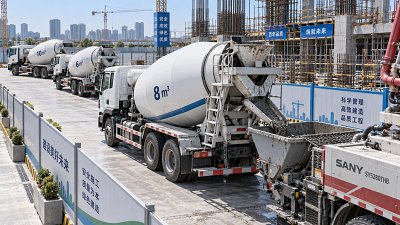
Many buyers focus on whether an 8 cubic meter or 10 cubic meter mixer costs more. Finance approvers should instead ask how drum size influences dispatch efficiency, project schedules, and revenue per trip.
A larger drum may reduce the number of trips required for high-volume projects. That can improve utilization and reduce labor cost per cubic meter delivered. However, it may also limit use on narrow roads or weaker surfaces.
Smaller units can fit municipal, urban, or restricted-access operations better. In those cases, lower volume may produce stronger real-world returns because the truck can complete more reliable cycles with fewer route constraints.
The right decision comes from matching drum capacity to project mix, not from assuming bigger is always better. Capacity should support both operational output and local compliance requirements.
Maintenance Cost Is One of the Most Underrated Parts of Truck Cement Mixer Price
Finance teams often approve based on purchase price and expected depreciation, yet maintenance can materially reshape total ownership economics. Mixer trucks operate in demanding conditions, and wear patterns can be severe.
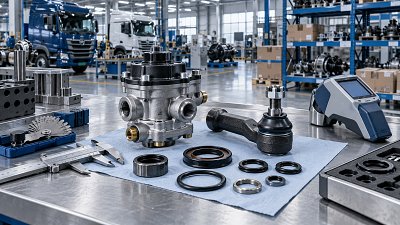
High-impact cost areas include hydraulic pumps, reducers, rollers, drum blades, tires, suspension parts, and engine-related service items. Replacement frequency depends heavily on build quality, operating discipline, and parts availability.
Service access is just as important as service intervals. If spare parts must be imported slowly or sourced from multiple channels, downtime costs may exceed any savings achieved at the point of purchase.
To evaluate realistically, buyers should request maintenance schedules, common failure data, expected annual parts consumption, and local service capability. These factors often separate a sound investment from an apparently cheap liability.
Delivery Time, Supply Chain Stability, and Contract Timing Also Change Real Cost
In 2026, truck cement mixer price is influenced not only by specifications but also by production schedules, shipping conditions, and raw material fluctuations. A delayed truck can create hidden project losses.
If a contractor must rent substitute equipment because ordered units arrive late, total project cost rises immediately. For finance approvers, delayed deployment should be treated as a measurable financial risk, not merely an operational inconvenience.
Lead times may vary due to chassis availability, export documentation, seasonal demand, and destination port congestion. A supplier offering a stable delivery plan may generate better value than one with a lower but uncertain quote.
Contract structure should define production milestones, payment triggers, delay responsibility, and inspection terms. Stronger contract discipline helps protect budgets from timeline-related cost leakage.
How Supplier Reliability Impacts Financial Risk
Supplier quality is a major but often underweighted component of truck cement mixer price. Two suppliers may offer similar specifications, yet the financial risk profile can be completely different.
Reliable suppliers usually provide clearer documentation, more consistent production standards, better pre-shipment inspection processes, and stronger after-sales communication. These qualities reduce the chance of costly disputes or underperforming assets.
Finance approvers should check export history, reference projects, warranty scope, spare parts readiness, and technical support responsiveness. These factors affect whether the truck remains productive after delivery, not just whether it arrives.
For cross-border purchases, it is also wise to review payment terms, compliance documents, and dispute-handling procedures. A well-structured supplier relationship lowers exposure beyond the unit price itself.
Questions Finance Approvers Should Ask Before Signing Off
Before approving any purchase, finance teams should ask for a full breakdown of what the quotation includes. This should cover chassis brand, drum volume, engine standard, transmission type, warranty terms, and optional equipment.
They should also ask for estimated annual operating cost under expected working conditions. This includes fuel use, preventive maintenance, likely wear parts, tire consumption, and any specialized service requirements.
Another critical question is asset utilization. If the truck will operate below capacity for much of the year, the investment case may weaken unless the unit supports broader project or fleet flexibility.
Finally, finance approvers should ask what the replacement, resale, or redeployment path looks like after the primary project period. Residual value can materially influence total investment quality.
A Practical Framework for Comparing Quotes in 2026
A strong approval process starts by separating purchase price from total cost of ownership. Build a comparison sheet that includes base price, freight, duties, taxes, commissioning, spare parts, training, and warranty support.
Then estimate three-year or five-year operating cost using realistic assumptions for fuel, maintenance, downtime, and utilization. This gives a clearer view of the actual economic difference between competing offers.
Next, score supply risk factors such as lead time reliability, service network strength, parts support, and document quality. These items do not always appear in quotations, but they often determine whether the asset performs as expected.
Finally, compare the truck’s capability with project needs. The best financial choice is usually the one that balances cost, durability, deployment speed, and operational fit rather than the one with the cheapest invoice amount.
What a Smart Approval Decision Looks Like
A smart approval decision recognizes that truck cement mixer price is only the starting point. The better investment is the unit that supports stable operations, predictable maintenance, acceptable compliance, and reliable supplier support.
For many buyers in 2026, this means selecting equipment with a slightly higher upfront cost but stronger lifecycle economics. Such a choice often protects margins better across construction, infrastructure, and municipal delivery work.
Finance approvers should work closely with operations, procurement, and technical teams to validate assumptions. Cross-functional review reduces the chance of approving a truck that fits a budget sheet but fails in field conditions.
When the evaluation process is disciplined, buyers can negotiate more effectively, justify budgets more clearly, and reduce long-term ownership surprises.
Conclusion
Understanding truck cement mixer price in 2026 requires more than checking a quotation. Finance approvers need to evaluate chassis quality, drum capacity, engine standard, maintenance burden, lead time, supplier reliability, and long-term operating impact.
The most useful comparison is not the lowest initial number, but the total financial outcome over the life of the asset. A well-chosen mixer truck can improve uptime, control project risk, and support stronger returns.
For companies sourcing through global B2B channels, better decisions come from structured comparison, supplier verification, and realistic lifecycle costing. That is the approach most likely to turn a price inquiry into a sound investment decision.
Trending News
- How to choose a refrigerated truck for multi-stop urban deliveries
- Tata Motors Returns to Q2 Profit on Strong Commercial Vehicle Demand
- How to load an excavator onto a lowbed trailer without tipping
- China’s New Energy Heavy Truck Sales Share Exceeds 50% in September 2026
- CATL Unveils Heavy-Truck Battery Range Extension, Signs Deals for 13,000 Vehicles
Tag
Recommended News
 Buying GuideHow to choose a refrigerated truck for multi-stop urban deliveriesKeep your truck refrigerated through every urban delivery stop. Learn how to compare cooling capacity, payload and door layouts to protect cargo and choose the right vehicle.
 Buying GuideHow much torque does a truck engine need for heavy-duty hauling?How much truck engine torque do you need? Explore the 1,250–2,050 lb-ft range and learn how load, gearing, and gradients shape the right choice for heavy-duty hauling.
 Buying GuideHow to assess a crane truck distributor's spare parts supportAssess a crane truck distributor's spare parts support with practical checks for stock, delivery, and technical expertise. Discover how to reduce downtime and buy with confidence.
 Buying GuideHow to verify spare parts availability with a crane truck supplierChoosing a crane truck supplier? Learn how to verify spare parts stock, compatibility, delivery times, and support commitments to reduce downtime and buy with confidence.
 Buying GuideHow to verify a truck trailer OEM's claimed payload capacityVerify a truck trailer OEM's payload claim with tare records, load calculations, and structural evidence. Learn key checks to avoid costly mistakes and buy with confidence.
 Buying GuideHow does operating weight affect the price of a new excavator?See how operating weight affects excavator price, transport costs, and productivity. Compare configurations and uncover the best value for your next equipment purchase.
 Buying GuideHow to compare concrete mixer truck suppliers by total landed costCompare truck cement mixer supplier quotes by total landed cost, including freight, duties, and delivery. Uncover hidden charges and choose the best-value truck for your fleet.
 Buying GuideWhen does heavy equipment transport require a lowboy trailer?Does your heavy equipment need a lowboy trailer? Discover how loaded height, weight distribution, loading access, and route limits determine the right choice for safe transport.
 Buying GuideHow to choose an off road truck for steep and unstable job sitesChoose the right off road truck for steep, unstable job sites. Compare traction, braking, stability, clearance, payload, and route-test essentials.
 Buying GuideHow to match crane truck lifting capacity to your jobsite loadsCrane truck capacity planning made clear: calculate gross load, radius, rigging, outriggers, and ground conditions to select safer, job-ready lifting equipment.
 Buying GuideHow to match lowbed trailer deck height to your hauling equipmentLowbed trailer deck height guide: match equipment clearance, ramp geometry, axle loads, tractor fit, and route limits for safer, more efficient hauling.
 Buying GuideWhat to verify before choosing a delivery truck supplier for school transportationDelivery truck supplier for school transportation: verify route fit, payload, safety, compliance, service support, and total cost before choosing a reliable partner.
 Buying GuideWhat an excavator manufacturer catalog should show before you compare modelsExcavator manufacturer catalog guide: verify supplier identity, configurations, hydraulics, compliance, parts support, and delivery readiness before comparing models.
 Buying GuideWhat to check before appointing a bulldozer distributorBulldozer distributor selection guide: evaluate service, parts availability, warranty, pricing, compliance, and lifecycle value to reduce downtime and protect fleet investment.
 Buying GuideWhat to verify before choosing a truck cement mixer supplierTruck cement mixer supplier checklist: verify chassis fit, drum quality, hydraulics, compliance, spare parts, and after-sales support before you buy.
 Buying GuideHow to verify a truck spare parts supplier before placing a bulk orderTruck spare parts supplier verification made practical: learn how to check part specifications, factory control, test records, samples, pricing, and delivery capability before placing a bulk order.
 Buying GuideWhat size truck container is right for a typical freight load?Truck container sizing made simple: compare payload, volume, pallet layouts, route access, and loading needs to choose the most efficient freight solution.
 Buying GuideWhat drives semi trailer price differences between similar models?Semi trailer price differences come down to frame materials, axles, suspension, coating, and configuration. Compare specifications line by line to choose lasting value.
 Buying GuideHow to compare excavator manufacturer price lists before requesting quotesCompare an excavator manufacturer price list with confidence. Learn to normalize configurations, calculate landed costs, assess options and service, and create stronger RFQs.
 Buying GuideHow to choose a mixer truck drum capacity for your concrete pourMixer truck capacity guide: match drum size to pour rate, legal payload, site access, and delivery cycles for efficient, reliable concrete placement.
 Buying GuideHow to size a bulldozer for construction site grading workBulldozer for construction sizing guide: match weight, blade, traction, grade control, and transport needs to improve grading productivity and costs.
 Buying GuideHow to assess a truck cement manufacturer’s build quality before orderingTruck cement manufacturer build quality: assess tank steel, welding, chassis integration, pneumatic systems, factory QC, and inspection evidence before ordering.
 Buying GuideWhen does a truck trailer OEM make sense for private-label fleets?Truck trailer OEM programs help private-label fleets cut lifecycle costs, standardize operations, and improve uptime. Learn when customization delivers real commercial value.
 Buying GuideWhat to verify before choosing a water truck OEM for your fleetWater truck OEM selection guide: verify chassis compatibility, tank quality, pump performance, compliance, and service support to build a safer, more reliable fleet.
 Buying GuideHow to size a cab chassis truck for a fire department apparatusCab chassis truck for fire department sizing guide: balance GVWR, axle loads, wheelbase, water tank placement, and mission needs for safer apparatus design.