Excavator Attachment Choices for Faster Site Work
Choosing the right excavator attachment can make daily site work faster, safer, and more efficient for operators.
From digging and grading to breaking concrete or handling materials, each attachment affects machine performance, fuel use, and jobsite productivity.
For contractors, fleet managers, and equipment users, understanding attachment options helps reduce downtime and get more value from every excavator.
What Operators Really Need From an Excavator Attachment
Most operators are not searching for theory. They want to know which attachment will finish the task faster without damaging the machine.
The right answer depends on soil, material, working space, hydraulic capacity, carrier size, and how often the attachment will be used.
A good excavator attachment should match the job first, then match the machine. Oversizing may look productive but often slows performance.
Undersizing creates another problem. The attachment may survive, but the operator needs more passes, more fuel, and more working hours.
Faster site work usually comes from better matching, not simply buying the biggest bucket, strongest breaker, or most expensive tool.
Start With the Job, Not the Attachment Catalog
Before choosing any attachment, define the main task clearly. Digging trenches, grading pads, breaking concrete, and loading scrap require different tools.
Operators should also consider whether the excavator performs one repeated task or moves between several jobs during the same workday.
For single-purpose work, a dedicated attachment can deliver higher productivity. For mixed work, versatility and quick change capability matter more.
Material condition is equally important. Wet clay, loose sand, reinforced concrete, frozen ground, and demolition debris all behave differently under load.
When the attachment fits the material, the machine works smoothly. When it does not, cycle times increase and components wear faster.
Bucket Choices That Affect Daily Production
Buckets are the most common excavator attachment, but small differences in shape, width, teeth, and capacity greatly affect site performance.
General-purpose buckets suit common excavation, light trenching, and loading. They are practical where soil conditions change during the day.
Heavy-duty buckets are better for abrasive soil, compacted ground, gravel, and tough construction sites where bucket wear is a constant concern.
Rock buckets use reinforced structures and stronger teeth. They are valuable in quarry, mining, road construction, and hard digging applications.
Grading buckets are wider and smoother. They help operators finish slopes, clean ditches, shape pads, and reduce manual ground correction.
For faster work, bucket width should match trench specifications, dumping height, machine stability, and available breakout force, not just capacity.
Hydraulic Breakers for Concrete, Rock, and Demolition
A hydraulic breaker is often the fastest solution when operators need to remove concrete slabs, foundations, asphalt, or oversized rock.
The key is matching impact energy and oil flow to the excavator. Poor matching causes weak blows, overheating, or premature seal failure.
Operators should avoid using breakers as pry bars. Side loading damages bushings, tool retainers, and internal components over time.
Breaker productivity also depends on working technique. Short bursts, correct tool angle, and moving after cracks appear improve efficiency.
For demolition crews, breaker selection should consider noise limits, vibration control, tool availability, and service support in the operating region.
Grapples and Thumbs for Faster Material Handling
When the job involves sorting, loading, grabbing, or placing irregular materials, a grapple or hydraulic thumb can transform excavator productivity.
Grapples are common in demolition, scrap handling, forestry, land clearing, and recycling yards where material size is not uniform.
A hydraulic thumb adds holding ability to a bucket. It is useful for rocks, logs, concrete pieces, and mixed debris.
Fixed thumbs cost less but limit flexibility. Hydraulic thumbs allow better control, especially when operators handle changing material throughout the day.
The best choice depends on how much precision is required. Grapples usually handle volume, while thumbs add control to digging machines.
Augers, Rippers, and Compactors for Specialized Site Work
Some jobs become much faster when operators use specialized attachments instead of forcing a bucket to perform every task.
Augers are valuable for fencing, utility poles, foundation holes, tree planting, and sign installation where repeated drilling is required.
Rippers help loosen hardpan, frost, shale, and compacted ground before excavation. They reduce strain on buckets and improve digging speed.
Plate compactors mounted on excavators help compact trenches, slopes, and confined areas where rollers or manual compactors are difficult to use.
These attachments may not run every day, but they can remove bottlenecks that would otherwise delay the entire site schedule.
Quick Couplers Can Save More Time Than Operators Expect
A quick coupler allows operators to change attachments faster, making the excavator more useful across different tasks during one shift.
Manual couplers reduce changeover time compared with direct pin mounting, but they still require the operator to leave the cab.
Hydraulic quick couplers are faster and more convenient. They are especially valuable on sites using buckets, breakers, grapples, and compactors.
Safety must remain the priority. Couplers should have reliable locking systems, clear indicators, and proper inspection before each work session.
A coupler adds weight and changes geometry slightly. Operators should understand how this affects breakout force, reach, and lifting capacity.
How Attachment Weight Changes Machine Performance
Attachment weight is one of the most overlooked factors, yet it directly affects stability, lifting ability, swing speed, and fuel use.
A heavy excavator attachment may reduce usable payload. This is important when loading trucks, lifting pipes, or placing heavy materials.
Excessive front weight can make the machine feel unstable, especially at long reach, on slopes, or on soft ground.
Operators should check machine charts and manufacturer recommendations before using large attachments, particularly on compact or reduced-tail-swing excavators.
Balanced matching keeps the excavator responsive. It also protects boom, arm, pins, bushings, swing motors, and hydraulic components.
Hydraulic Flow and Pressure Must Match the Tool
Many high-performance attachments rely on the excavator hydraulic system. If flow and pressure are wrong, the tool cannot work correctly.
Breakers, grapples, augers, crushers, mulchers, and compactors all have specific hydraulic requirements that should be checked before purchase.
Too little flow makes the attachment slow. Too much flow can cause overheating, seal damage, vibration problems, or shortened service life.
Operators should confirm auxiliary hydraulic lines, return line setup, control modes, and oil cleanliness before using demanding attachments.
For fleets with mixed excavator brands, compatibility checks are essential. One attachment may not perform equally across every carrier.
Wear Parts and Maintenance Affect Real Productivity
An attachment that works well on the first day can still become expensive if wear parts are hard to source.
Bucket teeth, cutting edges, breaker tools, grapple tines, pins, bushings, hoses, and seals all influence long-term operating cost.
Operators should inspect attachments daily for cracks, loose hardware, oil leakage, worn pins, and abnormal movement during operation.
Simple maintenance habits prevent downtime. Greasing, cleaning coupler areas, checking hydraulic connections, and replacing worn parts early protect productivity.
When comparing suppliers, buyers should ask about spare parts availability, technical documentation, warranty terms, and regional service support.
Operator Technique Matters as Much as Attachment Selection
The best excavator attachment will not deliver full value if operators use poor technique or ignore safe operating limits.
Efficient operators plan the work face, minimize unnecessary swing, position trucks correctly, and keep the machine stable before loading.
With buckets, consistent cutting angles improve filling and reduce drag. With breakers, steady positioning produces better fracture patterns.
With grapples or thumbs, smooth controls prevent dropped loads and reduce stress on attachment structures and hydraulic cylinders.
Training should include attachment limits, daily inspection, emergency procedures, and correct use of quick couplers and hydraulic controls.
Choosing Attachments for Different Site Conditions
Urban construction sites often need compact tools, lower noise, fast changeovers, and attachments that work safely around utilities.
Road construction commonly requires buckets, breakers, compactors, rippers, and grading tools to handle excavation, preparation, and finishing work.
Mining and quarry operations need stronger structures, wear-resistant materials, and attachments designed for high impact and abrasive conditions.
Demolition sites benefit from breakers, grapples, shears, crushers, and sorting tools that reduce manual handling and truck loading delays.
Agricultural and municipal users often prefer versatile attachments because machines may switch between drainage, maintenance, clearing, and repair tasks.
Buying, Renting, or Sharing Attachments
Not every excavator attachment needs to be purchased. Rental can be smarter when the job is short, seasonal, or uncertain.
Buying makes sense when the attachment is used frequently, saves significant labor, or supports a core service offered by the contractor.
Rental gives operators access to specialized tools without long-term ownership cost, but availability and condition must be checked carefully.
For fleet managers, sharing attachments across compatible machines can improve utilization, provided pin dimensions and hydraulic requirements are managed.
The decision should consider purchase price, expected hours, maintenance cost, downtime risk, transport needs, and resale value.
How to Evaluate Suppliers and Product Quality
Attachment quality varies widely. A low initial price may become expensive if steel quality, welding, or hydraulic components are weak.
Buyers should review product specifications, machine compatibility, material grade, weld quality, hydraulic component brands, and documented operating limits.
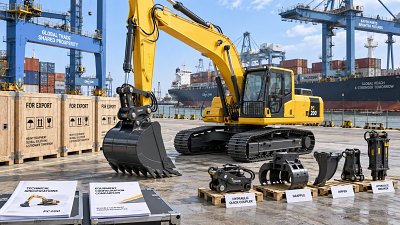
For international sourcing, clear communication matters. Drawings, pin measurements, coupler type, hydraulic data, and working application should be confirmed.
Reliable suppliers provide technical guidance, packing standards, spare parts support, and realistic lead times for cross-border equipment delivery.
A professional B2B platform helps users compare suppliers, discover product options, and reduce uncertainty before making purchasing decisions.
A Practical Attachment Selection Checklist
Operators and buyers can avoid many mistakes by using a simple checklist before selecting any excavator attachment for site work.
First, define the main task, material type, required production rate, site restrictions, and whether the attachment will be used daily.
Second, confirm carrier weight class, pin size, coupler type, hydraulic flow, pressure, auxiliary lines, and lifting capacity.
Third, compare attachment weight, working width, wear parts, maintenance points, expected service life, and operator skill requirements.
Finally, consider supplier support, spare parts availability, warranty coverage, and whether rental or purchase provides the better return.
Conclusion: Faster Work Comes From Better Matching
The right excavator attachment is not simply the strongest, widest, or most expensive option. It is the tool that fits the job.
Operators should focus on material, machine compatibility, hydraulic performance, attachment weight, maintenance needs, and safe working technique.
Contractors and fleet managers gain the most value when attachments reduce cycle time, limit downtime, and expand machine versatility.
By making attachment choices carefully, every excavator can become a more productive machine across construction, demolition, mining, and municipal work.