Truck Steel Grades: Strength, Weight, and Cost Tradeoffs
Selecting the right truck steel is a critical engineering decision that affects payload capacity, structural durability, fuel efficiency, and total lifecycle cost.
For technical evaluators, the best grade is not simply the strongest option. It is the grade that matches load paths, manufacturing limits, and service conditions.
What Evaluators Really Need to Decide
Most searches for truck steel grades come from buyers, engineers, or sourcing teams comparing specifications across chassis, cabs, trailers, and heavy-duty components.
The core intent is practical: identify which steel grade delivers enough strength without creating unacceptable penalties in cost, weight, fabrication, or repairability.
Technical evaluators usually care less about textbook metallurgy and more about whether a supplier’s steel choice supports real operating performance.
The most useful evaluation therefore connects mechanical properties to payload, fatigue life, corrosion exposure, welding methods, forming operations, and lifecycle economics.
A well-selected truck steel improves structural efficiency. A poorly matched grade can increase cracking risk, production delays, field repair difficulty, or unnecessary procurement cost.
Why “Stronger Steel” Is Not Always Better
Higher yield strength allows thinner sections, which can reduce vehicle mass and increase payload capacity within legal axle and gross weight limits.
However, higher-strength steels often demand tighter control during forming, welding, cutting, and heat input management to preserve mechanical properties.
If the design cannot use thinner gauges safely, the higher grade may add cost without meaningful weight savings or durability improvement.
For heavy trucks, material selection should begin with structural requirements, not grade popularity. The load case determines the value of strength.
Frame rails, crossmembers, brackets, suspension parts, cab structures, and trailer decks face different stress cycles and manufacturing constraints.
A single truck steel specification rarely fits every part. Mixed-grade strategies often deliver better cost and performance than uniform material selection.
Key Steel Grade Categories Used in Heavy Trucks
Commercial vehicle structures commonly use mild steel, high-strength low-alloy steel, advanced high-strength steel, and wear-resistant steel for demanding applications.
Mild carbon steel remains attractive for low-stress brackets, non-critical panels, and components requiring excellent formability, weldability, and low procurement cost.
High-strength low-alloy steel, often called HSLA, offers improved yield strength with acceptable weldability and is widely used in frames and structural members.
Advanced high-strength steels can provide greater strength-to-weight efficiency, especially in cab safety structures and selected components requiring crash performance.
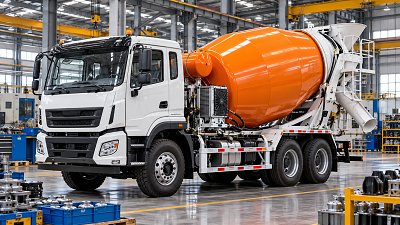
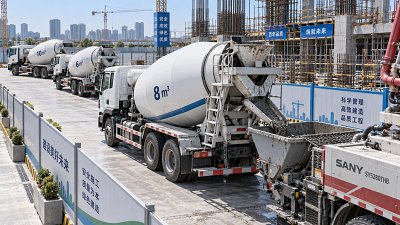
Wear-resistant steels are used where abrasion matters, including dump bodies, mixer components, mining trucks, and trailers carrying rock or aggregate.
For global sourcing, evaluators should confirm equivalent standards carefully, because ASTM, EN, JIS, GB, and proprietary grades may not match perfectly.
Strength Metrics That Matter in Truck Steel
Yield strength is often the first number evaluated because it defines when steel begins permanent deformation under load.
Tensile strength indicates ultimate resistance before fracture, but it should not be assessed separately from elongation and toughness.
Elongation reflects ductility, which affects forming behavior, crash energy absorption, and resistance to brittle failure under unexpected overloads.
Impact toughness is critical for trucks operating in cold regions, mining sites, construction zones, and applications exposed to shock loading.
Fatigue strength deserves special attention because truck frames and trailers experience millions of stress cycles during real service life.
A grade with impressive static strength may still underperform if weld details, notches, holes, or residual stresses reduce fatigue durability.
Weight Reduction: Where High-Strength Steel Creates Real Value
Truck operators value weight reduction because every kilogram saved can support higher payload, better fuel efficiency, or improved range for electric platforms.
High-strength truck steel creates value when engineers can reduce thickness while maintaining stiffness, buckling resistance, fatigue life, and regulatory compliance.
Frame rails are a common target, but stiffness and local buckling limits may prevent aggressive thickness reduction in some designs.
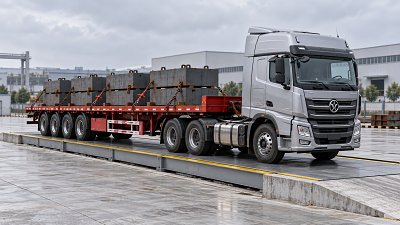
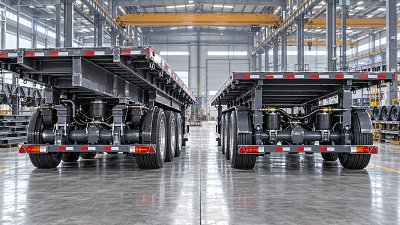
Trailer structures can benefit significantly when high-strength steel allows lighter beams, crossmembers, side panels, and floors without sacrificing load capacity.
Cab components may use advanced grades to strengthen occupant protection while minimizing mass above the chassis, improving stability and efficiency.
The strongest business case appears in weight-sensitive applications where payload revenue, fuel cost, and legal weight limits directly affect profitability.
Cost Tradeoffs Beyond the Steel Purchase Price
Material price is only one part of the cost equation. Processing, scrap rate, tooling, welding, inspection, and repair must also be included.
Higher-strength grades usually cost more per ton, but thinner sections may reduce total material consumption and freight cost.
If forming complexity increases scrap or requires new tooling, the apparent savings from lighter gauge material can disappear quickly.
Welding productivity also affects cost. Some grades require controlled preheat, consumables, procedures, or post-weld inspection to avoid cracking.
Procurement risk matters for international buyers. A grade available locally may have lower delivered cost than a specialized imported material.
Lifecycle cost should include downtime, repair availability, corrosion performance, fatigue failures, and residual value at resale or fleet retirement.
Weldability and Fabrication Risks Evaluators Should Check
Weldability is a decisive factor because many truck structures rely on welded assemblies rather than isolated stamped or bolted components.
As strength increases, carbon equivalent and alloy content may increase, raising sensitivity to hydrogen cracking and heat-affected zone softening.
Technical evaluators should request welding procedure specifications, qualification records, recommended consumables, and heat input limits from the supplier.
Formability must also be checked. Minimum bend radius, springback, edge cracking risk, and hole expansion performance affect production quality.
Laser cutting, plasma cutting, drilling, and punching may behave differently across grades, especially where edge quality influences fatigue performance.
A supplier’s ability to process truck steel consistently is often as important as the nominal grade listed on the specification sheet.
Application-Based Grade Selection
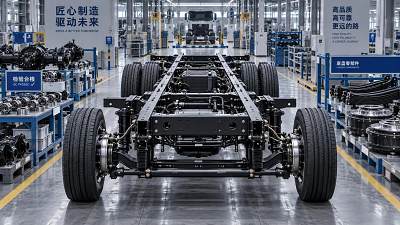
For chassis frames, HSLA grades are common because they balance strength, weldability, toughness, and cost for long structural members.
Very high-strength frame materials can reduce weight, but engineers must evaluate torsional stiffness, hole fatigue, and repair practices carefully.
For cab structures, the priority often shifts toward crashworthiness, dimensional precision, corrosion protection, and compatibility with forming processes.
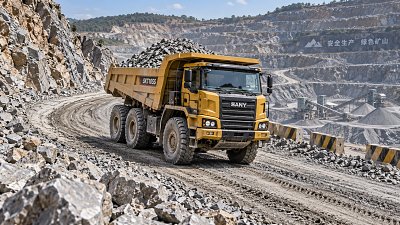
For dump bodies and mining applications, abrasion resistance can matter more than maximum yield strength, especially when hauling stone, ore, or demolition waste.
For trailers, higher-strength steel may improve payload economics, but floor design, crossmember spacing, and connection details must be verified.
For brackets and auxiliary mounts, using premium grades may be unnecessary unless the part faces high cyclic stress or packaging constraints.
How to Compare Supplier Specifications
When comparing suppliers, evaluators should avoid treating grade names as complete evidence of equivalence or quality.
Request mill certificates that show chemistry, yield strength, tensile strength, elongation, impact values, thickness tolerance, and heat number traceability.
Check whether the values are minimum guaranteed properties, typical values, or single-batch test results presented as representative performance.
Ask whether steel properties remain stable across thickness ranges, because heavy truck components often use plates with different gauges.
Confirm compliance with recognized standards and ask how the supplier controls rolling, cooling, straightening, and surface quality.
For critical structures, material validation should include sample forming, welding trials, fatigue testing, or finite element model correlation.
Common Mistakes in Truck Steel Evaluation
One common mistake is selecting a high-strength grade to reduce weight without redesigning the component geometry.
If thickness remains unchanged, the buyer pays for extra strength while gaining little improvement in payload or fuel efficiency.
Another mistake is focusing on yield strength while ignoring fatigue-sensitive weld locations, holes, cut edges, and mounting interfaces.
Some buyers also underestimate repair complexity, especially for fleets operating far from specialized service centers or certified welding support.
Overlooking corrosion protection is another risk. Coating compatibility, galvanizing behavior, and paint adhesion can influence long-term durability.
The best evaluations combine material grade, design detail, fabrication process, operating environment, and maintenance capability into one decision framework.
A Practical Decision Framework
Start by identifying the component’s main failure mode: yielding, fatigue, buckling, impact, wear, corrosion, or manufacturing distortion.
Then define whether weight reduction has measurable economic value through payload gains, fuel savings, emissions reduction, or battery range improvement.
Next, compare candidate truck steel grades using both mechanical properties and production feasibility, not material strength alone.
Estimate total cost per finished component, including yield loss, processing time, tooling wear, welding controls, inspection, and logistics.
Finally, validate assumptions through prototype testing or supplier engineering data before committing to large procurement volumes.
This approach helps technical teams avoid both under-specification and over-specification, improving reliability while controlling capital and operating costs.
When Premium Steel Grades Are Worth the Cost
Premium grades are most justified when the design can convert higher strength into thinner sections and measurable weight reduction.
They are also valuable where structural failure would cause high downtime, safety risk, warranty cost, or mission failure.
Specialized steels may be necessary for severe-duty applications, including mining haulage, construction fleets, military logistics, and high-utilization trailers.
For standard duty vehicles, mid-range HSLA steel may provide the best balance of cost, durability, supply reliability, and repairability.
The evaluation should consider fleet operating profile. Highway logistics, urban delivery, off-road construction, and port operations impose very different loads.
A technically superior grade can still be the wrong choice if it complicates sourcing, field service, or supplier qualification.
Questions to Ask Before Final Selection
Before approving a truck steel grade, evaluators should ask whether the selected material directly supports the component’s engineering objective.
Can the design safely reduce thickness, or is stiffness the limiting factor rather than strength?
Are welding procedures qualified for the selected grade, thickness range, joint type, and production environment?
Does the supplier provide traceable certificates, stable quality control, and internationally recognized material standards?
Will repair teams in target markets understand the material and have access to proper welding procedures?
Has total lifecycle cost been compared against lower-cost alternatives with similar field performance?
Conclusion: Choose Truck Steel by System Value
The right truck steel grade is the one that delivers the required performance at the lowest acceptable lifecycle risk and cost.
High-strength steel can create major advantages in payload, efficiency, and structural optimization, but only when design and manufacturing support it.
Technical evaluators should compare grades through strength, fatigue behavior, weldability, formability, corrosion protection, availability, and repair practicality.
For global truck procurement, supplier capability and documentation quality are as important as the grade name itself.
A disciplined evaluation process helps buyers select materials that improve vehicle performance while avoiding unnecessary complexity and cost.
In heavy truck applications, the best steel decision is not maximum strength. It is the best balance between strength, weight, cost, and service reliability.