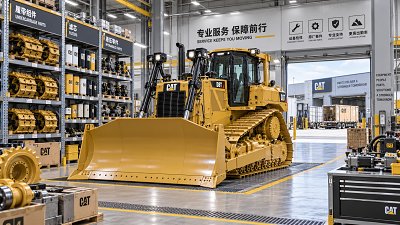
BULLDOZER for Mining Operations: Key Performance Checks
BULLDOZER for Mining Operations: Key Performance Checks
Selecting a BULLDOZER for mining operations requires more than comparing horsepower or blade capacity.
For technical evaluation, real value comes from checking traction, structure, hydraulics, fuel use, safety, and maintenance under harsh working conditions.
A suitable BULLDOZER for mining operations should support stable production, predictable lifecycle cost, and reliable uptime in open-pit mines, quarries, and bulk handling sites.
Why Mining Scenarios Change Bulldozer Requirements
Mining terrain is not uniform. Ground pressure, slope angle, abrasive material, and operating cycles vary greatly between sites.
A machine that performs well in road construction may fail quickly in sharp rock, loose overburden, or continuous push-loading work.
That is why a BULLDOZER for mining operations must be checked by scenario, not only by catalog specifications.
The best evaluation links each application with measurable requirements, including drawbar pull, blade control, undercarriage life, cooling capacity, and service access.
Open-Pit Overburden Removal: Check Traction and Push Efficiency
In open-pit overburden work, bulldozers move loose soil, mixed rock, and weathered layers before excavation or haul road development.
The first performance check is traction efficiency. Track slip wastes fuel, reduces production, and accelerates undercarriage wear.
A BULLDOZER for mining operations should match operating weight, track shoe type, and ground pressure with the actual pit floor condition.
High torque at low speed is valuable because mining push cycles often demand steady force rather than fast travel speed.
Operators should also verify blade penetration, material rolling behavior, and response when pushing uphill or across uneven benches.
Key checks for overburden removal
- Confirm drawbar pull under loaded blade conditions.
- Check track slip on wet, dry, and compacted surfaces.
- Review blade capacity against real material density.
- Assess transmission cooling during long push cycles.
Quarry Face Support: Check Structural Strength and Undercarriage Protection
Quarry applications expose machines to sharp aggregates, fractured stone, dust, and frequent reverse travel near loading zones.
A BULLDOZER for mining operations in quarry service needs reinforced frames, protected hydraulic lines, and durable guarding around vulnerable components.
Structural fatigue is a major concern because impact loading can occur when the blade contacts boulders or compacted blasted material.
The undercarriage should be inspected for roller sealing, track link quality, sprocket durability, and resistance to abrasive contamination.
For quarry face support, uptime often depends on small protection details that are not visible in headline specifications.
Structural points worth verifying
- Blade arm welding quality and stress distribution.
- Belly guards for rock impact protection.
- Final drive sealing against dust and grit.
- Cab isolation for vibration-heavy quarry work.
Haul Road Building: Check Grading Accuracy and Hydraulic Response
Mining haul roads affect truck fuel consumption, tire life, cycle time, and site safety.
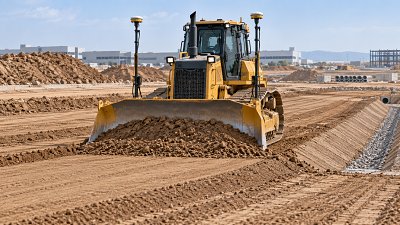
When a BULLDOZER for mining operations is used for haul road building, fine control becomes as important as pushing force.
Hydraulic response should be smooth, predictable, and powerful enough to maintain grade while cutting or spreading material.
Blade angle, tilt speed, and control sensitivity directly influence road crown, drainage channels, and surface uniformity.
Compatibility with grade control systems may add value where digital mine management and precision earthmoving are priorities.
Haul road performance indicators
- Blade lift and tilt response at low engine speed.
- Stable straight-line tracking during long passes.
- Visibility to blade corners and road edges.
- Hydraulic temperature stability during continuous grading.
Stockpile and Bulk Material Handling: Check Cycle Time and Fuel Economy
Stockpile management involves short-cycle pushing, trimming, reclaim support, and material consolidation around crushers or conveyor feed areas.
A BULLDOZER for mining operations in this environment must balance quick response with efficient fuel performance.
Repeated forward-reverse cycles can increase fuel burn, transmission heat, brake load, and operator fatigue.
Evaluation should include average cycle time, idle control, power mode options, and fuel consumption per moved volume.
For coal, ore, sand, or aggregate stockpiles, blade configuration should match flow behavior and density.
Useful checks for stockpile work
- Measure forward-reverse shifting smoothness.
- Compare fuel use in standard and economy modes.
- Check cooling performance near dusty crushers.
- Review cab filtration for airborne particles.
Different Mining Scenarios Require Different Performance Priorities
The same BULLDOZER for mining operations may perform differently when moved from overburden stripping to road maintenance or stockpile pushing.
A structured comparison helps clarify which parameters should influence the final selection decision.
How to Match Machine Configuration with Site Conditions
Configuration decisions should start from material type, working gradient, climate, altitude, and daily operating hours.
A BULLDOZER for mining operations in hot regions needs strong cooling, protected air intake, and easy radiator cleaning access.
Cold environments require starting reliability, hydraulic oil suitability, cab heating, and electrical system protection.
High-altitude mines may need power derating checks because reduced air density can affect engine output and thermal performance.
Configuration suggestions by condition
- Use heavy-duty track shoes for rocky, abrasive surfaces.
- Select wider shoes only when low ground pressure is essential.
- Choose reinforced blades for hard, dense, or blasted material.
- Specify enhanced filtration where dust exposure is constant.
- Consider telematics for fuel tracking and preventive maintenance.
The right BULLDOZER for mining operations should not be oversized without reason.
Excessive size may increase transport cost, fuel use, ground damage, and maintenance complexity.
Safety and Operator Environment Checks in Mining Sites
Mining equipment safety is closely linked with visibility, stability, braking control, warning systems, and operator fatigue management.
A BULLDOZER for mining operations should provide strong ROPS and FOPS protection, especially near benches, stockpiles, and loading zones.
Camera systems, mirrors, proximity alarms, and lighting packages improve awareness in dusty, low-light, or congested areas.
Cab layout also matters. Controls should reduce repetitive strain during long shifts and frequent direction changes.
Noise, vibration, seating quality, and climate control directly influence productivity and safe decision-making.
Maintenance Access and Lifecycle Cost Should Be Verified Early
Purchase price is only one part of the economic picture.
A BULLDOZER for mining operations should be evaluated through cost per operating hour and expected component life.
Service points should be accessible, clearly grouped, and designed for safe inspection in field conditions.
Undercarriage cost is especially important because tracks, rollers, idlers, and sprockets often represent a major maintenance expense.
Reliable parts supply and technical documentation can reduce downtime when equipment works far from major service centers.
Lifecycle cost questions to ask
- What is the expected undercarriage life in abrasive mining ground?
- How often are hydraulic filters, fluids, and wear parts replaced?
- Are diagnostic tools available for local maintenance teams?
- Can critical spare parts be supplied within the required downtime window?
Common Misjudgments When Evaluating Mining Bulldozers
One common mistake is choosing engine power without checking how much force reaches the ground.
Another mistake is using blade capacity as the main productivity indicator, while ignoring material density and rolling resistance.
Some evaluations overlook cooling systems, although overheating can stop production during long pushes or high-temperature operation.
A BULLDOZER for mining operations should never be judged only by brochure values measured in ideal conditions.
Field trials, reference projects, component inspection, and maintenance data provide more reliable evidence.
Ignored points that often affect uptime
- Dust sealing around electrical connectors.
- Radiator cleaning convenience after dusty shifts.
- Operator visibility during reverse travel.
- Ground pressure suitability on soft dump areas.
- Transport dimensions between pits or job sites.
Using Digital Sourcing to Compare Mining Bulldozer Options
Global equipment sourcing increasingly depends on transparent product data, supplier comparison, and fast technical communication.
The Global Heavy Truck Industry Platform supports discovery across construction machinery, complete trucks, trailers, chassis, and spare parts.
For a BULLDOZER for mining operations, digital comparison can narrow choices before detailed engineering review begins.
Useful comparison fields include engine rating, operating weight, blade type, track specification, hydraulic capacity, emissions compliance, and service support.
Supplier background, export experience, documentation quality, and spare parts capability should be reviewed together with machine specifications.
Practical Evaluation Workflow Before Final Selection
A disciplined evaluation workflow helps reduce specification risk and improves long-term equipment value.
- Define the main mining scenario and secondary tasks.
- Collect material density, slope, climate, and working hour data.
- Shortlist machines by weight class and blade configuration.
- Check traction, hydraulics, structure, cooling, and safety systems.
- Compare lifecycle cost, parts supply, and maintenance support.
- Request site references, inspection reports, or demonstration data.
This process makes the selection of a BULLDOZER for mining operations more evidence-based and less dependent on isolated specification claims.
Conclusion: Match the Bulldozer to the Mining Task
The best BULLDOZER for mining operations is the one that fits the site’s real production cycle, terrain, material, and maintenance capability.
Traction, structural durability, hydraulic response, fuel efficiency, safety systems, and serviceability should be checked together.
A scenario-based review helps avoid overbuying, under-specifying, or selecting a machine unsuited to harsh mining conditions.
To move forward, compare qualified suppliers, request detailed specifications, and verify whether each BULLDOZER for mining operations matches your working environment.
Through structured sourcing and technical comparison, mining equipment decisions become clearer, faster, and more aligned with long-term productivity.
Trending News
- CATL Unveils Heavy-Truck Battery Range Extension, Signs Deals for 13,000 Vehicles
- CATL Unveils Tianxing II Electric-to-Electric Range-Extended Heavy Truck Solution
- How much torque does a truck engine need for heavy-duty hauling?
- How to assess a crane truck distributor's spare parts support
- Volvo Group Forms Volvo Mining to Integrate Equipment and Autonomous Solutions
Tag
Recommended News
 Buying GuideHow much torque does a truck engine need for heavy-duty hauling?How much truck engine torque do you need? Explore the 1,250–2,050 lb-ft range and learn how load, gearing, and gradients shape the right choice for heavy-duty hauling.
 Buying GuideHow to assess a crane truck distributor's spare parts supportAssess a crane truck distributor's spare parts support with practical checks for stock, delivery, and technical expertise. Discover how to reduce downtime and buy with confidence.
 Buying GuideHow to verify spare parts availability with a crane truck supplierChoosing a crane truck supplier? Learn how to verify spare parts stock, compatibility, delivery times, and support commitments to reduce downtime and buy with confidence.
 Buying GuideHow to verify a truck trailer OEM's claimed payload capacityVerify a truck trailer OEM's payload claim with tare records, load calculations, and structural evidence. Learn key checks to avoid costly mistakes and buy with confidence.
 Buying GuideHow does operating weight affect the price of a new excavator?See how operating weight affects excavator price, transport costs, and productivity. Compare configurations and uncover the best value for your next equipment purchase.
 Buying GuideHow to compare concrete mixer truck suppliers by total landed costCompare truck cement mixer supplier quotes by total landed cost, including freight, duties, and delivery. Uncover hidden charges and choose the best-value truck for your fleet.
 Buying GuideWhen does heavy equipment transport require a lowboy trailer?Does your heavy equipment need a lowboy trailer? Discover how loaded height, weight distribution, loading access, and route limits determine the right choice for safe transport.
 Buying GuideHow to choose an off road truck for steep and unstable job sitesChoose the right off road truck for steep, unstable job sites. Compare traction, braking, stability, clearance, payload, and route-test essentials.
 Buying GuideHow to match crane truck lifting capacity to your jobsite loadsCrane truck capacity planning made clear: calculate gross load, radius, rigging, outriggers, and ground conditions to select safer, job-ready lifting equipment.
 Buying GuideHow to match lowbed trailer deck height to your hauling equipmentLowbed trailer deck height guide: match equipment clearance, ramp geometry, axle loads, tractor fit, and route limits for safer, more efficient hauling.
 Buying GuideWhat to verify before choosing a delivery truck supplier for school transportationDelivery truck supplier for school transportation: verify route fit, payload, safety, compliance, service support, and total cost before choosing a reliable partner.
 Buying GuideWhat an excavator manufacturer catalog should show before you compare modelsExcavator manufacturer catalog guide: verify supplier identity, configurations, hydraulics, compliance, parts support, and delivery readiness before comparing models.
 Buying GuideWhat to check before appointing a bulldozer distributorBulldozer distributor selection guide: evaluate service, parts availability, warranty, pricing, compliance, and lifecycle value to reduce downtime and protect fleet investment.
 Buying GuideWhat to verify before choosing a truck cement mixer supplierTruck cement mixer supplier checklist: verify chassis fit, drum quality, hydraulics, compliance, spare parts, and after-sales support before you buy.
 Buying GuideHow to verify a truck spare parts supplier before placing a bulk orderTruck spare parts supplier verification made practical: learn how to check part specifications, factory control, test records, samples, pricing, and delivery capability before placing a bulk order.
 Buying GuideWhat size truck container is right for a typical freight load?Truck container sizing made simple: compare payload, volume, pallet layouts, route access, and loading needs to choose the most efficient freight solution.
 Buying GuideWhat drives semi trailer price differences between similar models?Semi trailer price differences come down to frame materials, axles, suspension, coating, and configuration. Compare specifications line by line to choose lasting value.
 Buying GuideHow to compare excavator manufacturer price lists before requesting quotesCompare an excavator manufacturer price list with confidence. Learn to normalize configurations, calculate landed costs, assess options and service, and create stronger RFQs.
 Buying GuideHow to choose a mixer truck drum capacity for your concrete pourMixer truck capacity guide: match drum size to pour rate, legal payload, site access, and delivery cycles for efficient, reliable concrete placement.
 Buying GuideHow to size a bulldozer for construction site grading workBulldozer for construction sizing guide: match weight, blade, traction, grade control, and transport needs to improve grading productivity and costs.
 Buying GuideHow to assess a truck cement manufacturer’s build quality before orderingTruck cement manufacturer build quality: assess tank steel, welding, chassis integration, pneumatic systems, factory QC, and inspection evidence before ordering.
 Buying GuideWhen does a truck trailer OEM make sense for private-label fleets?Truck trailer OEM programs help private-label fleets cut lifecycle costs, standardize operations, and improve uptime. Learn when customization delivers real commercial value.
 Buying GuideWhat to verify before choosing a water truck OEM for your fleetWater truck OEM selection guide: verify chassis compatibility, tank quality, pump performance, compliance, and service support to build a safer, more reliable fleet.
 Buying GuideHow to size a cab chassis truck for a fire department apparatusCab chassis truck for fire department sizing guide: balance GVWR, axle loads, wheelbase, water tank placement, and mission needs for safer apparatus design.
 Buying GuideWhat to verify before choosing a truck chassis supplierChoose the right truck chassis supplier with a practical checklist for application fit, axle ratings, body integration, quality control, delivery reliability, and after-sales support.