Truck Fleet Planning Tips for Lower Downtime
Truck Fleet Planning Tips for Lower Downtime
For demanding transport, construction, and infrastructure schedules, every idle vehicle can delay milestones and raise operating costs.
Effective truck fleet planning reduces downtime by aligning vehicle availability, maintenance cycles, driver resources, and supplier support with real project needs.
A structured truck fleet strategy also improves procurement, spare parts readiness, asset utilization, and long-term profitability.
Downtime Pressure Is Rising Across Heavy Transport Operations
Global logistics, mining, infrastructure, and municipal engineering are becoming more schedule-sensitive.
This shift makes truck fleet reliability a direct factor in delivery performance, contract stability, and customer satisfaction.
Older planning methods often treated vehicles as replaceable assets, not connected operating resources.
That approach is becoming less effective as fuel costs, labor shortages, emissions rules, and parts supply risks increase.
Modern truck fleet planning now requires visibility across vehicles, routes, workshops, spare parts, driver schedules, and supplier networks.
Downtime is no longer only a maintenance issue. It is a planning, procurement, data, and supply chain challenge.
Key Signals Showing Fleet Planning Must Become More Predictive
Several market signals show why truck fleet decisions need more accurate forecasting and stronger operational coordination.
These signals indicate that truck fleet planning must move from reactive repair to preventive resource management.
The strongest operations use data, supplier intelligence, and maintenance discipline before failures affect project continuity.
Why Downtime Often Starts Before a Vehicle Breaks Down
A vehicle may stop because of a mechanical fault, but the root cause often appears earlier.
Poor specification, weak spare parts planning, overloaded duty cycles, and unclear inspection routines gradually create failure conditions.
- Vehicle selection does not match payload, terrain, or operating hours.
- Maintenance intervals ignore dust, heat, hills, or stop-start routes.
- Parts inventories focus on low-cost items, not failure-critical components.
- Driver feedback is not connected to maintenance planning.
- Supplier response times are not tested before urgent repair needs.
A reliable truck fleet therefore begins with matching assets to work conditions, not simply buying available vehicles.
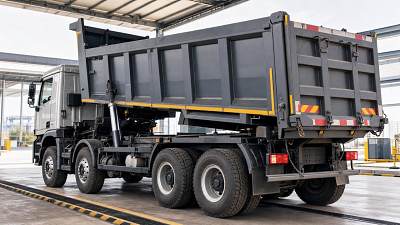
This is especially important for dump trucks, tractor units, concrete mixers, tankers, and heavy-duty chassis.
Fleet Size Decisions Are Shifting From Quantity to Availability
Adding more vehicles does not always lower downtime. In many cases, it increases maintenance burden and capital pressure.
The better question is how many working trucks are available during peak demand, maintenance windows, and route disruptions.
A truck fleet should be planned around availability rate, not only total vehicle count.
Useful planning indicators include daily utilization, repair hours, standby ratio, loaded mileage, empty return distance, and seasonal demand swings.
This availability-based method supports a leaner truck fleet with stronger uptime performance.
Vehicle Specification Has a Direct Impact on Downtime
A poorly specified truck can spend more time in repair than in productive service.
The right engine power, axle capacity, suspension, braking system, transmission, and tire configuration reduce stress during daily operation.
For long-haul logistics, fuel efficiency, driver comfort, and service network coverage may be decisive.
For mining or construction, chassis strength, ground clearance, cooling capacity, and dust resistance become more important.
A mixed truck fleet may need standardized core components to simplify maintenance and spare parts management.
- Match payload capacity with legal limits and actual cargo density.
- Choose drivetrain specifications based on road grade and surface quality.
- Confirm cooling performance for hot regions or slow heavy hauling.
- Evaluate cab ergonomics for long operating hours.
- Check local availability of service tools and diagnostic systems.
Better specification reduces premature wear and helps the truck fleet remain predictable under pressure.
Maintenance Planning Is Becoming a Data-Driven Discipline
Fixed maintenance schedules are useful, but they are not enough for every operating environment.
A truck fleet running in dust, heat, mud, or overloaded routes needs adjusted intervals and closer inspection.
Telematics, inspection reports, fuel records, tire data, and fault codes can reveal patterns before breakdowns occur.
The planning goal is to service vehicles before productivity is affected, not after a roadside failure.
- Group vehicles by duty cycle, not only by model year.
- Record recurring faults by route, driver, load, and component.
- Schedule inspections around operating peaks and project milestones.
- Use fault trends to update parts purchasing priorities.
- Review downtime causes every month and adjust maintenance rules.
Data-driven maintenance helps a truck fleet avoid repeated failures and unnecessary workshop congestion.
Spare Parts Strategy Is Now a Core Uptime Factor
Even a minor part can stop a heavy truck when it is unavailable at the right time.
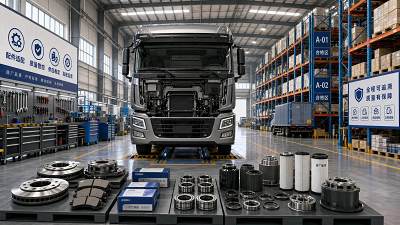
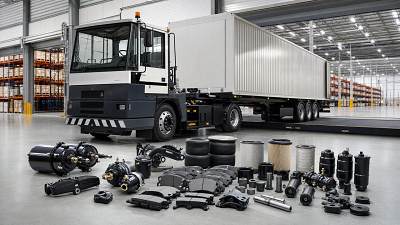
Brake components, filters, belts, sensors, tires, clutch parts, and electrical modules deserve careful inventory planning.
A resilient truck fleet needs fast access to both routine consumables and failure-critical spare parts.
Inventory should reflect vehicle age, route severity, supplier lead time, and past failure history.
Strong supplier relationships improve parts availability and help the truck fleet recover faster from unexpected failures.
Supplier Evaluation Is Expanding Beyond Purchase Price
The lowest purchase price may not produce the lowest lifetime operating cost.
Downtime, delayed parts, weak documentation, and limited technical support can quickly erase upfront savings.
A truck fleet procurement decision should consider service coverage, parts supply, warranty handling, export experience, and technical transparency.
International B2B platforms can support supplier comparison by centralizing product categories, brand information, market insights, and buying guides.
This matters for complete trucks, truck chassis and cab units, light trucks, trailers, construction machinery, and spare parts.
- Compare suppliers by delivery reliability, not only quotation value.
- Check whether parts catalogs and technical documents are accessible.
- Review global export cases in similar working conditions.
- Confirm after-sales response channels before final ordering.
- Use market insights to avoid outdated or unsupported configurations.
Better supplier evaluation strengthens truck fleet uptime from the procurement stage onward.
Operational Coordination Reduces Hidden Waiting Time
Not all downtime is mechanical. Vehicles also wait for loading, unloading, dispatch instructions, permits, or driver availability.
These hidden delays reduce truck fleet productivity and distort maintenance planning.
Route planning, loading schedules, depot layout, fueling arrangements, and workshop capacity should be coordinated together.
If maintenance is planned during operating peaks, vehicle shortages will still occur even with reliable trucks.
If loading points are congested, new trucks may only increase queue time instead of output.
A balanced truck fleet plan links assets, drivers, routes, materials, workshops, and dispatch rules in one operating rhythm.
How Different Business Areas Feel the Impact
Downtime affects each business area differently, but the consequences are connected across the whole operation.
This cross-functional view helps a truck fleet become a managed performance system, not a collection of vehicles.
Core Priorities for a Lower-Downtime Truck Fleet
Several priorities deserve continuous attention when planning a reliable truck fleet.
- Asset fit: Select trucks according to load, road, climate, and operating intensity.
- Maintenance timing: Adjust service intervals using data from actual working conditions.
- Parts readiness: Stock critical items based on failure risk and supplier lead time.
- Supplier resilience: Evaluate technical support, documentation, delivery performance, and warranty processes.
- Model standardization: Reduce unnecessary complexity across engines, axles, filters, tires, and diagnostics.
- Performance review: Track availability, repair time, utilization, fuel use, and repeated faults.
These priorities create a practical foundation for truck fleet planning in heavy transport and land equipment operations.
Practical Planning Framework for the Next Operating Cycle
A structured framework helps convert downtime analysis into clear action.
This cycle should be repeated regularly as routes, contracts, regulations, and equipment conditions change.
The truck fleet that adapts fastest usually maintains better uptime than the fleet with only more vehicles.
Next Steps for Stronger Uptime and Smarter Sourcing
Lower downtime begins with a clear view of current fleet performance and future operating requirements.
Review vehicle availability, repair history, parts delays, supplier response times, and route-specific operating stress.
Then compare truck models, spare parts sources, trailers, chassis options, and construction machinery support through reliable industry resources.
A global heavy truck industry platform can simplify product discovery, supplier comparison, and market research for international sourcing.
With better data and stronger supplier visibility, a truck fleet can become more available, predictable, and cost-efficient.
Use the next planning cycle to identify weak points, update procurement criteria, and build a truck fleet strategy focused on uptime.
Trending News
- CATL Unveils Heavy-Truck Battery Range Extension, Signs Deals for 13,000 Vehicles
- CATL Unveils Tianxing II Electric-to-Electric Range-Extended Heavy Truck Solution
- How much torque does a truck engine need for heavy-duty hauling?
- How to assess a crane truck distributor's spare parts support
- Volvo Group Forms Volvo Mining to Integrate Equipment and Autonomous Solutions
Tag
Recommended News
 Fleet ManagementWhen does a light commercial vehicle for urban delivery save fleet costs?Light commercial vehicle for urban delivery: learn when route density, payload utilization, access, and driver productivity can reduce fleet cost per successful stop.
 Fleet ManagementHeavy Truck Specs That Matter Most for Long-Term Fleet PlanningHeavy truck specs that truly shape long-term fleet success: compare payload, torque, axle setup, fuel efficiency, and parts support to cut downtime and plan smarter.
 Fleet ManagementTruck Parts Supplier Risks That Affect Long-Term Fleet CostsTruck parts supplier risks can quietly increase long-term fleet costs through downtime, poor fitment, and supply delays. Learn how to choose smarter and protect uptime.
 Fleet ManagementSemi Trailer Distributor Red Flags That Can Delay Fleet ExpansionSemi trailer distributor warning signs can stall fleet expansion fast. Learn the key red flags in inventory, delivery, support, and compliance before you buy.
 Fleet ManagementLogistics Transportation Trends Reshaping Fleet Cost ControlLogistics transportation trends are redefining fleet cost control. Discover how data, sourcing, and equipment strategy help fleets cut risk, improve utilization, and stay competitive.
 Fleet ManagementOff Road Truck Safety Risks and Maintenance Checks Before DeploymentOff road truck safety starts before deployment. Learn key risks, maintenance checks, and inspection steps to reduce downtime, protect crews, and keep every jobsite moving.
 Fleet ManagementTruck Fleet Cost Control: 7 Metrics That Matter in 2026Truck fleet cost control in 2026 starts with 7 key metrics. Learn how fuel, uptime, utilization, downtime, and TCO reveal hidden costs and smarter sourcing decisions.
 Fleet ManagementHeavy Truck Fuel Efficiency: What Impacts Operating CostsHeavy truck fuel efficiency directly impacts operating costs. Learn how design, payload, maintenance, and driver behavior affect fuel use and smarter truck buying decisions.
 Fleet ManagementTruck Fleet Planning Tips for Lower DowntimeTruck fleet planning tips to cut downtime, improve uptime, optimize maintenance, manage spare parts, and build a more reliable, cost-efficient transport operation.
 Fleet ManagementTruck Tipper Safety Checks Before Daily OperationTruck tipper daily safety checks made simple: inspect hydraulics, brakes, tires, lights, loads, and tipping stability to reduce downtime and operate with confidence.
 Fleet ManagementDump Truck Supplier Risks in Mining ProjectsFind out how to choose a reliable dump truck supplier for mining industry projects, reduce sourcing risks, secure parts support, and improve uptime in harsh mining operations.
 Fleet ManagementBest Commercial Vehicle Parts for Warehouse Fleets with High Stop-Start UseCommercial vehicle parts for warehouse fleets should handle heavy stop-start use with fewer failures. Discover proven brake, battery, suspension, and steering choices that cut downtime.
 Fleet ManagementDelivery Truck Supplier in USA: What Matters Most for Fleet ExpansionDelivery truck supplier in USA selection impacts uptime, cost, and fleet growth. Learn how to compare suppliers by route needs, service support, and long-term scalability.
 Fleet ManagementHow to Choose Commercial Vehicle Parts for Warehouse Fleet UptimeCommercial vehicle parts for warehouse fleets directly impact uptime. Learn how to choose durable, accurate-fit parts and reliable suppliers to reduce downtime and control maintenance costs.
 Fleet ManagementWhy a Light Duty Truck Manufacturer in USA Still Matters for Fleet ReliabilityLight duty truck manufacturer in USA choices still shape fleet uptime, parts access, and lifecycle value. See what buyers should compare for more reliable operations.
 Fleet ManagementHow to Plan a Dump Truck Bulk Order for Multi-Site ProjectsDump truck bulk order planning for multi-site projects made simple. Learn how to balance specs, delivery, support, and total cost for smarter fleet decisions.
 Fleet ManagementWhat Makes a Delivery Truck Supplier Cost-Effective in Real OperationsDelivery truck supplier with cost-effective solutions: learn how to cut fuel, maintenance, and downtime costs with a practical checklist for smarter fleet purchasing.
 Fleet ManagementHow Low-Maintenance Truck Spare Parts Suppliers Help Cut DowntimeTruck spare parts supplier with low maintenance benefits help fleets cut downtime, speed repairs, and lower service costs. Discover how smarter sourcing boosts uptime.
 Fleet ManagementHow Commercial Vehicle Parts for Warehouse Improve Daily UptimeCommercial vehicle parts for warehouse operations help reduce downtime, improve safety, and keep trucks and trailers moving efficiently. Discover how the right parts boost daily uptime.
 Fleet ManagementCommercial Vehicle Parts for Cold Storage: Reducing Failure in Daily UseCommercial vehicle parts for cold storage help reduce daily failures, protect cargo quality, and improve fleet uptime. Discover scenario-based maintenance insights for refrigerated transport.
 Fleet ManagementDelivery Truck Supplier in USA: What to Compare Before Expanding a FleetDelivery truck supplier in USA comparison guide for fleet expansion. Learn how to evaluate quality, service, parts support, and lifecycle cost before you invest.
 Fleet ManagementBest Commercial Vehicle Parts for Warehouse OperationsCommercial vehicle parts for warehouse operations should boost safety, uptime, and load control. Explore the best brake, tire, steering, and lighting solutions for efficient fleet performance.
 Fleet ManagementTruck Cement Mixer Supplier: What to Check Before Fleet ExpansionTruck cement mixer supplier selection can make or break fleet expansion. Learn the key checks on quality, compliance, parts support, and total cost before you buy.
 Fleet ManagementTruck Trailer Supplier Checklist for Long-Haul Fleet ExpansionTruck trailer supplier checklist for long-haul fleet expansion: compare compliance, lifecycle cost, delivery, and support to reduce sourcing risk and scale with confidence.
 Fleet ManagementIs a Lightweight Semi Trailer Manufacturer the Right Fit for High-Frequency RoutesFind out if a semi trailer manufacturer with lightweight design is the smart choice for high-frequency routes, balancing payload, durability, compliance, and long-term fleet savings.