Mexico Requires NOM-043 for Chinese Trucks
Image Placement Plan
Place

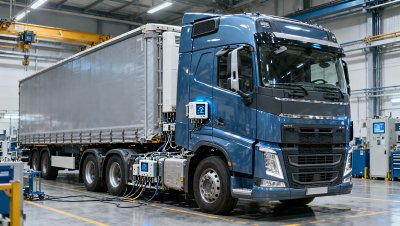
On June 1, 2026, a new Mexican rule took effect requiring medium and heavy trucks imported from China with GVW of 3.5 tons or above to obtain NOM-043-SEMARNAT-2025 certification, affecting cross-border vehicle trade because uncertified vehicles will be refused customs clearance.
What Has Been Confirmed About the New Requirement
According to the provided event summary, Mexico's Ministry of Economy implemented the new requirement on June 1, 2026. The rule applies to all medium and heavy trucks imported from China with a gross vehicle weight of at least 3.5 tons.
The required certification is NOM-043-SEMARNAT-2025, a mandatory environmental and noise emissions certification. Test reports must be issued by laboratories recognized in Mexico.
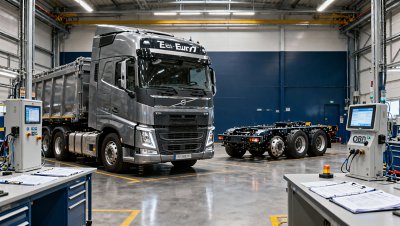
The certification scope covers 12 indicators, including engine exhaust emissions, braking noise and OBD system compatibility. The first-time application cycle has been extended to 28 working days. Vehicles without the required certification will be denied customs clearance.
How the Rule May Reshape Business Operations
Direct trading companies face a stricter customs gate
Companies directly involved in importing qualifying trucks are affected because certification is now tied to customs clearance. The impact is most visible in order confirmation, shipment scheduling, customs documentation and delivery commitments. These companies may need to verify certification status before dispatch rather than treating compliance as a post-arrival formality.
Raw material and component procurement teams need earlier alignment
From an industry perspective, procurement functions may be affected because the certification indicators involve emissions, noise and OBD compatibility. Although the rule is applied to finished vehicles, procurement teams supporting truck production may need to pay closer attention to whether purchased materials, components or equipment can support the required testing outcomes and technical documentation.
Manufacturing and processing operations must link testing to production readiness
Manufacturers and vehicle preparation operations may face additional coordination pressure because the certification covers 12 indicators and requires reports from recognized laboratories in Mexico. The affected business steps may include technical specification review, pre-shipment inspection, product configuration control and document preparation for certification submission.
Supply chain service providers must factor in longer compliance lead times
Logistics, customs brokerage and compliance service providers may be affected because uncertified vehicles will be refused clearance. The first-time application cycle of 28 working days means service providers may need to adjust shipment planning, document collection timelines and risk communication with importers.
Compliance Priorities for Companies Handling Truck Imports
Confirm certification status before shipment release
Companies should check whether each applicable truck model has completed NOM-043-SEMARNAT-2025 certification before shipment arrangements are finalized. Because clearance refusal is stated as the consequence for uncertified vehicles, certification review should be treated as a pre-shipment control point.
Prepare documentation for the 12 required indicators
The certification involves engine exhaust emissions, braking noise, OBD system compatibility and other indicators. Companies may need to organize technical files, test-related materials and product configuration records so that laboratory reports and certification applications can be supported without unnecessary delay.
Adjust delivery plans around the 28-working-day first application cycle
The extended first-time application period may affect delivery schedules, purchase contracts and inventory planning. Importers and exporters should review whether existing timelines allow enough space for certification handling before customs clearance.
Review supplier capability and technical consistency
For manufacturers and procurement teams, supplier qualification management may require closer attention to components or systems related to emissions, noise control and OBD compatibility. Consistent technical specifications can help reduce the risk of mismatches during certification review.
Industry Observation: Compliance Is Moving Upstream
Analysis shows that this rule should be understood not only as a customs requirement but also as a signal that environmental and noise compliance may become more integrated into import planning for commercial vehicles.
From an industry perspective, the key change is the timing of compliance work. When certification is linked to customs clearance and laboratory reports are required, importers and manufacturers may need to move testing coordination, document preparation and specification alignment earlier in the transaction process.
What deserves closer attention is the practical execution of the 12-indicator certification. The available information confirms the requirement and the first-time application cycle, but it does not provide further operational details. Therefore, companies should avoid assuming that previous document routines will be sufficient.
A Measured View on the Market Impact
The June 1, 2026 requirement introduces a clearer compliance threshold for Chinese medium and heavy trucks entering Mexico. Its immediate significance lies in the connection between NOM-043-SEMARNAT-2025 certification and customs clearance.
A rational conclusion is that companies with early certification preparation, coordinated technical documents and realistic delivery schedules may be better positioned to manage the transition. However, the actual impact will depend on how certification procedures and clearance practices are implemented in subsequent operations.
Information Basis and Items to Monitor
This article is based on the provided news title, event date and event summary. Specific official source links were not provided in the input and should be verified continuously.
For ongoing monitoring, companies should follow policy implementation details, certification execution criteria, recognized laboratory requirements, tender document changes, customs clearance practices and industry feedback related to NOM-043-SEMARNAT-2025.
Trending News
- CATL Unveils Heavy-Truck Battery Range Extension, Signs Deals for 13,000 Vehicles
- CATL Unveils Tianxing II Electric-to-Electric Range-Extended Heavy Truck Solution
- How much torque does a truck engine need for heavy-duty hauling?
- How to assess a crane truck distributor's spare parts support
- Volvo Group Forms Volvo Mining to Integrate Equipment and Autonomous Solutions
Tag
Recommended News
 Policy & RegulationsHow axle load limits affect low bed trailer exports to Southeast AsiaPlanning low bed trailer export to Southeast Asia? Learn how axle load limits affect legal payload, axle layouts, and route compliance to avoid costly mistakes before ordering.
 Policy & RegulationsGermany Ends EV Subsidy ExtensionGermany ends EV subsidy extension, reshaping EV and commercial vehicle plans in Europe. See how importers, distributors, and Chinese NEV suppliers should respond.
 Policy & RegulationsEU Rule Sets LCA Certification for Truck ImportsEU Rule Sets LCA Certification for Truck Imports: learn how the new EU LCA and EPD compliance rule will affect truck approvals, export timelines, costs, and delivery planning.
 Policy & RegulationsEU Requires LCA Reports for Imported HDVs from Oct 2026EU LCA reports for imported HDVs become mandatory from Oct 2026. Learn how the new EU heavy-duty vehicle carbon compliance rule affects exporters, suppliers, costs, and delivery readiness.
 Policy & RegulationsChina Tightens Export Filing for New Energy Heavy TrucksChina Tightens Export Filing for New Energy Heavy Trucks: learn how new HS code rules and CNAS carbon-footprint reports may impact customs clearance, compliance, and delivery timelines.
 Policy & RegulationsEU Updates CO2 Rules for Heavy-Duty Vehicle ApprovalEU Updates CO2 Rules for Heavy-Duty Vehicle Approval: learn how new lifecycle carbon and battery due diligence requirements affect EU market access, approval timing, and compliance costs.
 Policy & RegulationsChina Customs Adds New Export Fields for Road Transport EquipmentChina Customs adds new export fields for road transport equipment from Aug 15, 2026. Learn how drive type and certification data may affect compliance, clearance speed, and export planning.
 Policy & RegulationsEU Tightens Truck WVTA Brake and Lighting TestsEU Tightens Truck WVTA Brake and Lighting Tests: learn how Regulation (EU) 2026/1387 reshapes brake response, headlamp compliance, certification timing, and EU market access.
 Policy & RegulationsEU Sets CO2 Rules for New Heavy Trucks from 2027EU Sets CO2 Rules for New Heavy Trucks from 2027: learn how new EU CO2 limits, OBD, and remote data upload requirements could reshape type approval, costs, and delivery planning.
 Policy & RegulationsEU Brings Forward Cybersecurity Approval for Heavy TrucksEU heavy truck cybersecurity approval moves to August 1, 2026. Learn how WVTA, UNECE R155, OTA and telematics rules will impact EU exports, type approval and delivery plans.
 Policy & RegulationsEU Moves Truck Cybersecurity WVTA Forward to Aug 1, 2026EU truck cybersecurity WVTA moves to Aug 1, 2026. Learn how UN R155 and EU 2022/1426 affect heavy truck type approval, exports, suppliers, and compliance planning.
 Policy & RegulationsEU Brings Forward WVTA Cybersecurity Approval for TrucksEU Brings Forward WVTA Cybersecurity Approval for Trucks: learn how the 2026 deadline impacts heavy truck exports, retrofit projects, supplier compliance, costs, and EU market-entry planning.
 Policy & RegulationsEU Brings Forward WVTA Cybersecurity Approval for Heavy TrucksEU heavy truck WVTA cybersecurity approval now starts on August 1, 2026. Learn how EU type approval, CSMS audits, ADAS, OTA, and registration risks affect exporters and manufacturers.
 Policy & RegulationsEU Cybersecurity Approval Rule Takes Effect for Heavy TrucksEU Cybersecurity Approval Rule now reshapes heavy trucks market access. Learn how CSMS, UNECE R155, and WVTA deadlines could impact certification, delivery, and EU export readiness.
 Policy & RegulationsEU Requires EN 15038 Declarations for Truck ImportsEU Requires EN 15038 Declarations for Truck Imports: learn how the new EU rule affects heavy truck customs clearance, compliance timing, and export readiness.
 Policy & RegulationsEU Rule Brings SCIP Filing to Imported Truck Battery PartsSCIP filing for imported truck battery parts becomes critical in the EU from Oct 1, 2026. Learn how the rule impacts heavy-duty truck exports, aftermarket parts, and customs compliance.
 Policy & RegulationsEU REACH Expands to Truck Battery PartsEU REACH expands to truck battery parts, covering lithium-ion battery modules, BMS units, and thermal systems. Learn how SCIP filing, SVHC disclosure, and EU export compliance may affect truck suppliers.
 Policy & RegulationsEU Sets Battery Footprint Rule for Heavy TrucksEU Sets Battery Footprint Rule for Heavy Trucks: learn how the 2027 EU battery carbon footprint requirement could impact type approval, customs clearance, and truck exports.
 Policy & RegulationsEU Requires Certified V2X Modules in Heavy TrucksEU Requires Certified V2X Modules in Heavy Trucks from July 22, 2026. Learn how UN R155 and ETSI EN 303 648 rules will impact EU type approval, registration, and exports.
 Policy & RegulationsEU Tightens V2X Approval for Heavy TrucksHeavy trucks entering the EU face tougher V2X approval from July 22, 2026. Learn how UNECE R155/R156 and EU Type Approval will affect registration, exports, and delivery readiness.
 Policy & RegulationsEU Rule Takes Effect: Heavy Trucks Need V2X from July 22, 2026Heavy trucks entering the EU from July 22, 2026 need V2X modules and UN R155 approval. Learn how this rule impacts compliance, certification, exports, and delivery.
 Policy & RegulationsEU Opens Euro 7 Transition for Heavy TrucksEU Opens Euro 7 Transition for Heavy Trucks: learn how new filing rules, battery carbon footprint declarations, and OBD II checks will impact EU truck exports and compliance planning.
 Policy & RegulationsEPA Update Removes Seven Chinese Diesel Engine ModelsEPA Update Removes Seven Chinese Diesel Engine Models: learn how this EPA compliance change could affect North American truck exports, sourcing, certification, and delivery planning.
 Policy & RegulationsEU Enforces Euro 7 for New Heavy TrucksEU Enforces Euro 7 for New Heavy Trucks: learn how stricter NOx, NH₃, and brake particle certification impacts EU market access, registration timing, and exporter compliance costs.
 Policy & RegulationsLight Duty Truck Manufacturer in USA: Key Compliance ChecksLight duty truck manufacturer in USA selection starts with compliance. Learn the key checks for FMVSS, emissions, load ratings, and traceability before you buy.