Truck Parts Supplier Risks That Affect Long-Term Fleet Costs
Truck Parts Supplier Risks That Affect Long-Term Fleet Costs
Choosing the wrong truck parts supplier can raise fleet costs in ways that do not appear on the first quote.
A lower unit price may look attractive, yet hidden risks often show up later through downtime, repeat replacements, warranty disputes, and unstable lead times.
For procurement decisions, the real issue is total lifecycle cost, not only purchase cost.
That is why evaluating a truck parts supplier requires a broader view of quality control, technical support, supply continuity, and operational fit.
In practical terms, a supplier can affect maintenance scheduling, workshop efficiency, fleet uptime, and even asset resale value.
The following sections focus on the supplier risks that most directly influence long-term fleet costs and procurement confidence.
Why Supplier Risk Matters More Than Initial Price
Truck fleets operate under pressure from fuel costs, utilization targets, delivery deadlines, and maintenance budgets.
In that environment, each part replacement has a cost beyond the invoice.
There is labor, vehicle idle time, possible roadside failure, emergency freight, and lost service capacity.
A weak truck parts supplier increases the chance that these indirect costs become routine rather than exceptional.
This also means procurement teams should compare suppliers by cost stability over time.
A supplier that helps reduce unplanned maintenance often delivers better value than one offering the cheapest catalog price.
Risk 1: Inconsistent Product Quality
Quality inconsistency is one of the most expensive truck parts supplier risks.
A part may pass visual inspection yet fail early under real load, heat, vibration, or road conditions.
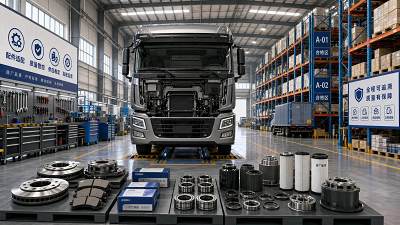
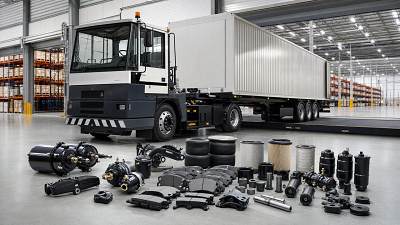
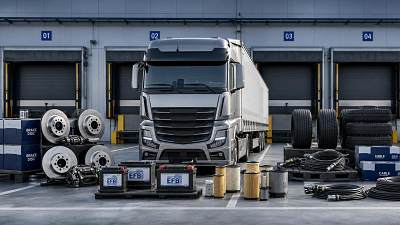
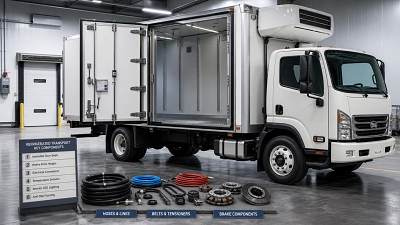
This is common with brake components, suspension parts, seals, bearings, filters, and electrical assemblies.
The immediate result is replacement cost, but the larger impact is operational disruption.
Repeated failures also reduce confidence in preventive maintenance plans.
When a truck parts supplier cannot maintain consistent manufacturing standards across batches, forecasting becomes harder.
A fleet may overstock safety inventory simply to protect itself from uncertain quality.
Warning signs usually include:
- Different finish, weight, or fit across the same SKU
- High variation in failure rates by shipment
- Limited test reports or unclear traceability records
- Frequent changes in production source without notice
Risk 2: Poor Fitment and Technical Mismatch
Not every problem comes from poor material quality.
A truck parts supplier may deliver components that are technically acceptable but wrong for the fleet configuration.
That can happen with axle ratios, brake systems, cab variants, emissions systems, or region-specific model differences.
Poor fitment creates workshop delays and unnecessary return handling.
More importantly, improper parts can damage connected systems or reduce safety performance.
In actual fleet operations, even a small mismatch can keep a revenue vehicle off the road for days.
A capable truck parts supplier should support cross-referencing, VIN-related checks, and application validation before shipment.
Risk 3: Unstable Lead Times and Supply Interruptions
Lead time instability is often underestimated during supplier selection.
Yet for fleet maintenance, an uncertain delivery window can be as costly as a defective part.
If a truck parts supplier misses delivery commitments, planned maintenance may turn into emergency repair.
That usually increases labor cost, rush freight expense, and parts substitution risk.
From recent market changes, this issue has become more visible across global sourcing programs.
Port disruption, raw material fluctuation, and uneven regional capacity can all affect supplier reliability.
That is why buyers should test not only price competitiveness but also replenishment discipline.
Key evaluation points include:
- Average lead time by product family
- On-time delivery rate over the last twelve months
- Backup production or alternate stocking arrangements
- Communication speed when delays appear
Risk 4: Weak Warranty and Claims Handling
A warranty has little value if the claims process is slow, unclear, or defensive.
Some truck parts supplier relationships look workable until the first field failure occurs.
Then the buyer faces requests for excessive evidence, long response cycles, or disputes over usage conditions.
This slows cost recovery and creates internal friction between procurement, maintenance, and finance teams.
A reliable truck parts supplier should have a documented claims path, batch traceability, and a realistic turnaround commitment.
When those elements are missing, the buyer often absorbs the real loss.
Risk 5: Limited Documentation and Compliance Visibility
Documentation may seem administrative, but it directly affects sourcing risk.
A truck parts supplier that cannot provide clear specifications, inspection records, or compliance documents creates uncertainty.
That uncertainty matters even more in cross-border procurement.
Import procedures, customer audits, and safety reviews all depend on accurate records.
If documentation is incomplete, approval cycles slow down and replacement planning becomes less precise.
For long-term fleet programs, strong documentation also supports better vendor comparison over time.
Risk 6: Lack of Supply Chain Transparency
Another expensive risk is not knowing who actually makes the product.
Some trading companies present themselves as a truck parts supplier without clear control over factories or batch consistency.
That does not automatically mean poor performance, but it raises control questions.
When production shifts between factories, quality baselines, materials, and lead times may change without notice.
This makes long-term cost planning less reliable.
A stronger sourcing model is one where the supplier can explain manufacturing origin, quality checkpoints, and continuity planning in practical detail.
How to Compare Truck Parts Supplier Options More Accurately
A better evaluation process uses both commercial and operational indicators.
That helps separate a low-price offer from a low-risk offer.
Practical Questions Before You Shortlist a Supplier
A shortlist becomes more reliable when questions are specific and measurable.
- What is the documented return or defect rate for the target parts category?
- How does the truck parts supplier validate fitment for mixed-brand fleets?
- What service level is maintained during peak demand periods?
- Can the supplier provide batch traceability and inspection reports?
- How quickly are warranty cases acknowledged and resolved?
- What contingency plan exists for supply disruption or factory change?
These questions push the conversation beyond catalog claims.
They also help compare each truck parts supplier using evidence instead of assumptions.
Using Better Market Visibility to Reduce Procurement Risk
In global sourcing, better decisions depend on better visibility.
A professional industry platform can help buyers compare supplier capabilities, product range, and market presence more efficiently.
For the heavy truck sector, that matters because categories are broad and applications vary widely.
The Global Heavy Truck Industry Platform supports this process by connecting buyers with manufacturers and suppliers across the heavy truck supply chain.
It also provides access to product discovery tools, supplier comparison, market insights, and professional buying resources.
That broader market view can make truck parts supplier evaluation faster, more consistent, and easier to defend internally.
Conclusion
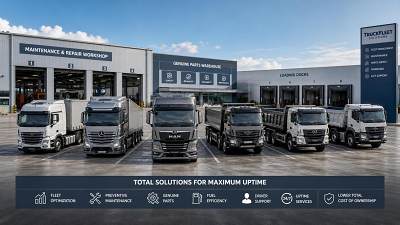
The right truck parts supplier helps control more than purchase cost.
It supports uptime, predictable maintenance, smoother claims handling, and stronger long-term budgeting.
The wrong truck parts supplier usually creates hidden cost through failure risk, supply delay, technical mismatch, and weak accountability.
For better procurement outcomes, compare suppliers using evidence tied to lifecycle cost, not price alone.
A structured review of quality, fitment support, delivery performance, and transparency will lead to more reliable sourcing decisions over time.
Trending News
- When does a light commercial vehicle for urban delivery save fleet costs?
- How to choose an off road truck for steep and unstable job sites
- How to match crane truck lifting capacity to your jobsite loads
- What drives logging truck cost beyond the base purchase price?
- How to match lowbed trailer deck height to your hauling equipment
Tag
Recommended News
 Fleet ManagementWhen does a light commercial vehicle for urban delivery save fleet costs?Light commercial vehicle for urban delivery: learn when route density, payload utilization, access, and driver productivity can reduce fleet cost per successful stop.
 Fleet ManagementHeavy Truck Specs That Matter Most for Long-Term Fleet PlanningHeavy truck specs that truly shape long-term fleet success: compare payload, torque, axle setup, fuel efficiency, and parts support to cut downtime and plan smarter.
 Fleet ManagementTruck Parts Supplier Risks That Affect Long-Term Fleet CostsTruck parts supplier risks can quietly increase long-term fleet costs through downtime, poor fitment, and supply delays. Learn how to choose smarter and protect uptime.
 Fleet ManagementSemi Trailer Distributor Red Flags That Can Delay Fleet ExpansionSemi trailer distributor warning signs can stall fleet expansion fast. Learn the key red flags in inventory, delivery, support, and compliance before you buy.
 Fleet ManagementLogistics Transportation Trends Reshaping Fleet Cost ControlLogistics transportation trends are redefining fleet cost control. Discover how data, sourcing, and equipment strategy help fleets cut risk, improve utilization, and stay competitive.
 Fleet ManagementOff Road Truck Safety Risks and Maintenance Checks Before DeploymentOff road truck safety starts before deployment. Learn key risks, maintenance checks, and inspection steps to reduce downtime, protect crews, and keep every jobsite moving.
 Fleet ManagementTruck Fleet Cost Control: 7 Metrics That Matter in 2026Truck fleet cost control in 2026 starts with 7 key metrics. Learn how fuel, uptime, utilization, downtime, and TCO reveal hidden costs and smarter sourcing decisions.
 Fleet ManagementHeavy Truck Fuel Efficiency: What Impacts Operating CostsHeavy truck fuel efficiency directly impacts operating costs. Learn how design, payload, maintenance, and driver behavior affect fuel use and smarter truck buying decisions.
 Fleet ManagementTruck Fleet Planning Tips for Lower DowntimeTruck fleet planning tips to cut downtime, improve uptime, optimize maintenance, manage spare parts, and build a more reliable, cost-efficient transport operation.
 Fleet ManagementTruck Tipper Safety Checks Before Daily OperationTruck tipper daily safety checks made simple: inspect hydraulics, brakes, tires, lights, loads, and tipping stability to reduce downtime and operate with confidence.
 Fleet ManagementDump Truck Supplier Risks in Mining ProjectsFind out how to choose a reliable dump truck supplier for mining industry projects, reduce sourcing risks, secure parts support, and improve uptime in harsh mining operations.
 Fleet ManagementBest Commercial Vehicle Parts for Warehouse Fleets with High Stop-Start UseCommercial vehicle parts for warehouse fleets should handle heavy stop-start use with fewer failures. Discover proven brake, battery, suspension, and steering choices that cut downtime.
 Fleet ManagementDelivery Truck Supplier in USA: What Matters Most for Fleet ExpansionDelivery truck supplier in USA selection impacts uptime, cost, and fleet growth. Learn how to compare suppliers by route needs, service support, and long-term scalability.
 Fleet ManagementHow to Choose Commercial Vehicle Parts for Warehouse Fleet UptimeCommercial vehicle parts for warehouse fleets directly impact uptime. Learn how to choose durable, accurate-fit parts and reliable suppliers to reduce downtime and control maintenance costs.
 Fleet ManagementWhy a Light Duty Truck Manufacturer in USA Still Matters for Fleet ReliabilityLight duty truck manufacturer in USA choices still shape fleet uptime, parts access, and lifecycle value. See what buyers should compare for more reliable operations.
 Fleet ManagementHow to Plan a Dump Truck Bulk Order for Multi-Site ProjectsDump truck bulk order planning for multi-site projects made simple. Learn how to balance specs, delivery, support, and total cost for smarter fleet decisions.
 Fleet ManagementWhat Makes a Delivery Truck Supplier Cost-Effective in Real OperationsDelivery truck supplier with cost-effective solutions: learn how to cut fuel, maintenance, and downtime costs with a practical checklist for smarter fleet purchasing.
 Fleet ManagementHow Low-Maintenance Truck Spare Parts Suppliers Help Cut DowntimeTruck spare parts supplier with low maintenance benefits help fleets cut downtime, speed repairs, and lower service costs. Discover how smarter sourcing boosts uptime.
 Fleet ManagementHow Commercial Vehicle Parts for Warehouse Improve Daily UptimeCommercial vehicle parts for warehouse operations help reduce downtime, improve safety, and keep trucks and trailers moving efficiently. Discover how the right parts boost daily uptime.
 Fleet ManagementCommercial Vehicle Parts for Cold Storage: Reducing Failure in Daily UseCommercial vehicle parts for cold storage help reduce daily failures, protect cargo quality, and improve fleet uptime. Discover scenario-based maintenance insights for refrigerated transport.
 Fleet ManagementDelivery Truck Supplier in USA: What to Compare Before Expanding a FleetDelivery truck supplier in USA comparison guide for fleet expansion. Learn how to evaluate quality, service, parts support, and lifecycle cost before you invest.
 Fleet ManagementBest Commercial Vehicle Parts for Warehouse OperationsCommercial vehicle parts for warehouse operations should boost safety, uptime, and load control. Explore the best brake, tire, steering, and lighting solutions for efficient fleet performance.
 Fleet ManagementTruck Cement Mixer Supplier: What to Check Before Fleet ExpansionTruck cement mixer supplier selection can make or break fleet expansion. Learn the key checks on quality, compliance, parts support, and total cost before you buy.
 Fleet ManagementTruck Trailer Supplier Checklist for Long-Haul Fleet ExpansionTruck trailer supplier checklist for long-haul fleet expansion: compare compliance, lifecycle cost, delivery, and support to reduce sourcing risk and scale with confidence.
 Fleet ManagementIs a Lightweight Semi Trailer Manufacturer the Right Fit for High-Frequency RoutesFind out if a semi trailer manufacturer with lightweight design is the smart choice for high-frequency routes, balancing payload, durability, compliance, and long-term fleet savings.